
Browse by Genre
Industrial Music / Industrial Metal / Aggro Industrial / Electro Metal
Industrial Noise / Power Noise / Harsh Noise
Synth Pop / Electro Pop / Synth-Electronica
Techno / Trance / Goa / Drum'n'Bass / Jungle / Tribal / Trip-Hop
Ambient / Electronica / Ethereal / Dub / Soundscapes / Abstract
Experimental / Avantgarde / Weird & Wired / Glitch / Noise / Field Recording
Dark / Gothic / Wave / New Wave / Dark Wave / Industrial Gothic
New Music / Downtown / Avantgarde Jazz / New Classical / World
Search Reviews
Music Reviews
Only Now / Jaijiu: Rebel Cry

Artist: Only Now / Jaijiu (@)
Title: Rebel Cry
Format: Download Only (MP3 + Lossless)
Label: Kush Arora Productions
Rated:

Title: Rebel Cry
Format: Download Only (MP3 + Lossless)
Label: Kush Arora Productions
Rated:
There are records that ask to be understood. "Rebel Cry" seems far more interested in short-circuiting the nervous system.
The collaboration between Indo-Californian producer Kush Arora, operating under his Only Now alias, and Buenos Aires-based experimentalist Jaijiu arrives like a small but concentrated act of sonic sabotage. Across four tracks and barely fourteen minutes, "Rebel Cry" dismantles the comforting geography of club music, then rebuilds it from fragments of global percussion, industrial abrasion, mutant bass pressure, and rhythmic structures that appear to have survived a collision between several continents. It is less a meeting point than a controlled pile-up. Remarkably, it works.
Arora has spent years constructing one of the most distinctive vocabularies in contemporary bass music. His work consistently folds elements of Punjabi and Hindustani traditions into environments contaminated by noise, doom, soundsystem culture, and industrial electronics. Yet what makes Only Now particularly compelling is that heritage never functions as decoration or branding. Instead, traditional rhythmic languages become unstable matter, subjected to pressure until they mutate into something simultaneously ancient and futuristic. Jaijiu approaches a similar process from a Latin American perspective, dismantling familiar club forms and reconstructing them into fractured post-club architectures that feel both physical and strangely hallucinatory.
The title track wastes no time establishing its intentions. Percussion arrives in dense clusters, darting between grime-like aggression, distorted hand drums, and rhythmic patterns that seem perpetually on the verge of outrunning themselves. The production possesses an almost architectural quality. Every sound occupies a sharply defined position while the overall structure threatens collapse at any moment. Listening becomes a peculiar balancing act between bodily surrender and analytical survival.
"Rebel Cry Pt. 2" pushes even further into instability. The track behaves like a machine experiencing ecstatic failure. Metallic impacts ricochet across the stereo field, fragments of baile funk emerge only to disintegrate seconds later, while vocal snippets from Arora's daughter function less as melodic anchors than as ghostly coordinates inside the chaos. The description of an "unhinged gamelan session" is surprisingly accurate. One imagines traditional instruments waking up one morning and discovering they have been uploaded into a malfunctioning cybernetic dream.
The remix section avoids the common trap of redundancy. Chrisman, whose work through the Nyege Nyege and Hakuna Kulala ecosystem has consistently explored radical approaches to rhythm, transforms the material into something darker and more predatory. His version feels designed for those moments in a club when collective euphoria begins developing teeth. Jaijiu's own remix, meanwhile, strips the track back into a hypnotic low-end ritual, proving that minimalism can sometimes feel more dangerous than maximalism.
What makes "Rebel Cry" particularly fascinating is its refusal to perform the kind of sanitized multiculturalism that often accompanies discussions of global electronic music. This is not a diplomatic summit between traditions. It is an argument, a celebration, a demolition site, and occasionally a rave. Indian percussion, kuduro energy, baile funk mutations, dancehall weight, industrial textures, and post-club abstraction do not politely coexist. They wrestle for space. The friction becomes the point.
There is also something quietly political in the record's construction. Not because it delivers slogans or manifestos, but because it proposes connection without flattening difference. Arora, Jaijiu, and Chrisman operate across vastly different cultural and geographical contexts, yet the music thrives precisely because none of those identities are diluted. The result feels genuinely international rather than merely globalized, which in 2026 is a rarer achievement than marketing departments would like us to believe.
"Rebel Cry" may frustrate listeners searching for clean genre labels or comfortable rhythmic stability. Its pleasures are more volatile. This is body music for uncertain times: ecstatic, fractured, relentless, and stubbornly alive. Four tracks that feel like they were assembled from sparks flying between distant electrical grids.
Some records ask you to enter their world. "Rebel Cry" kicks the door off its hinges and drags the world inside.
The collaboration between Indo-Californian producer Kush Arora, operating under his Only Now alias, and Buenos Aires-based experimentalist Jaijiu arrives like a small but concentrated act of sonic sabotage. Across four tracks and barely fourteen minutes, "Rebel Cry" dismantles the comforting geography of club music, then rebuilds it from fragments of global percussion, industrial abrasion, mutant bass pressure, and rhythmic structures that appear to have survived a collision between several continents. It is less a meeting point than a controlled pile-up. Remarkably, it works.
Arora has spent years constructing one of the most distinctive vocabularies in contemporary bass music. His work consistently folds elements of Punjabi and Hindustani traditions into environments contaminated by noise, doom, soundsystem culture, and industrial electronics. Yet what makes Only Now particularly compelling is that heritage never functions as decoration or branding. Instead, traditional rhythmic languages become unstable matter, subjected to pressure until they mutate into something simultaneously ancient and futuristic. Jaijiu approaches a similar process from a Latin American perspective, dismantling familiar club forms and reconstructing them into fractured post-club architectures that feel both physical and strangely hallucinatory.
The title track wastes no time establishing its intentions. Percussion arrives in dense clusters, darting between grime-like aggression, distorted hand drums, and rhythmic patterns that seem perpetually on the verge of outrunning themselves. The production possesses an almost architectural quality. Every sound occupies a sharply defined position while the overall structure threatens collapse at any moment. Listening becomes a peculiar balancing act between bodily surrender and analytical survival.
"Rebel Cry Pt. 2" pushes even further into instability. The track behaves like a machine experiencing ecstatic failure. Metallic impacts ricochet across the stereo field, fragments of baile funk emerge only to disintegrate seconds later, while vocal snippets from Arora's daughter function less as melodic anchors than as ghostly coordinates inside the chaos. The description of an "unhinged gamelan session" is surprisingly accurate. One imagines traditional instruments waking up one morning and discovering they have been uploaded into a malfunctioning cybernetic dream.
The remix section avoids the common trap of redundancy. Chrisman, whose work through the Nyege Nyege and Hakuna Kulala ecosystem has consistently explored radical approaches to rhythm, transforms the material into something darker and more predatory. His version feels designed for those moments in a club when collective euphoria begins developing teeth. Jaijiu's own remix, meanwhile, strips the track back into a hypnotic low-end ritual, proving that minimalism can sometimes feel more dangerous than maximalism.
What makes "Rebel Cry" particularly fascinating is its refusal to perform the kind of sanitized multiculturalism that often accompanies discussions of global electronic music. This is not a diplomatic summit between traditions. It is an argument, a celebration, a demolition site, and occasionally a rave. Indian percussion, kuduro energy, baile funk mutations, dancehall weight, industrial textures, and post-club abstraction do not politely coexist. They wrestle for space. The friction becomes the point.
There is also something quietly political in the record's construction. Not because it delivers slogans or manifestos, but because it proposes connection without flattening difference. Arora, Jaijiu, and Chrisman operate across vastly different cultural and geographical contexts, yet the music thrives precisely because none of those identities are diluted. The result feels genuinely international rather than merely globalized, which in 2026 is a rarer achievement than marketing departments would like us to believe.
"Rebel Cry" may frustrate listeners searching for clean genre labels or comfortable rhythmic stability. Its pleasures are more volatile. This is body music for uncertain times: ecstatic, fractured, relentless, and stubbornly alive. Four tracks that feel like they were assembled from sparks flying between distant electrical grids.
Some records ask you to enter their world. "Rebel Cry" kicks the door off its hinges and drags the world inside.
Simon Berz: Tectonic

Artist: Simon Berz (@)
Title: Tectonic
Format: LP
Label: Karlrecords (http://www.karlrecords.net/) (@)
Rated:
Title: Tectonic
Format: LP
Label: Karlrecords (http://www.karlrecords.net/) (@)
Rated:
Simon Berz has spent much of his artistic life questioning a distinction that most musicians take for granted: where does an instrument end and where does the world begin? On "Tectonic", the Swiss drummer, sound artist, educator, and instrument builder offers perhaps his most comprehensive answer yet, assembling a body of work that treats geological matter not as inspiration but as an active participant in the creative process.
Over three decades, Berz has cultivated a uniquely nomadic practice, moving between improvised music, sound art, performance, and installation. His collaborations span an astonishing range of personalities, from avant-garde improvisers and electronic experimenters to figures rooted in dub, jazz, and rock. Yet despite these encounters, his artistic identity remains remarkably singular. Rather than centering virtuosity, Berz focuses on relationships: between materials and technologies, landscapes and memory, gesture and resonance.
"Tectonic" gathers traces of journeys undertaken across Iceland, Indonesia, Japan, and other locations, but it would be misleading to call it a travelogue. The album feels more like a study of physical processes. The track titles themselves suggest sedimentation, transformation, interruption, and emergence. Listening becomes an encounter with forms of time that operate far beyond human scales.
The record opens with "Deep Time", an apt introduction to an album concerned with durations measured not in minutes but in millennia. Layers of percussion, electronic treatment, and resonant stone textures establish an environment where rhythm behaves less like a grid and more like a natural force. The music advances through accumulation and pressure rather than conventional development.
One of the album's greatest strengths is its refusal to settle into a single identity. Moments of percussive insistence occasionally hint at club music, while elsewhere the material drifts toward electroacoustic abstraction. Certain passages evoke ritual performance; others suggest field recording, sound sculpture, or contemporary composition. Berz moves freely among these territories without appearing interested in belonging to any of them.
The basalt stones at the heart of the project are crucial, not because they provide unusual sounds, but because they alter the listener's perception of causality. It often becomes difficult to determine what originates from a struck surface, what emerges from electronic manipulation, and what belongs to the surrounding acoustic environment. The resulting ambiguity gives the album much of its fascination.
Tracks such as "Lithification" and "Emergent Terrain" reveal Berz's talent for balancing complexity with immediacy. Despite the conceptual framework underpinning the work, the music never feels academic. There is a direct physicality to these pieces, a sense that sound is being pushed, scraped, fractured, and reshaped in real time. One can almost imagine the materials resisting the performer, negotiating their own role in the composition.
The influence of Berz's international encounters also becomes apparent throughout the record. Rather than presenting cultural references as exotic decoration, he absorbs lessons from different sonic traditions into a broader investigation of resonance and rhythm. The result feels genuinely collaborative, even when no obvious collaborator is present.
Particularly impressive is the album's handling of space. Every sound seems carefully positioned, yet nothing feels static. Frequencies drift, textures overlap, and resonances linger like afterimages. The music constantly reminds us that listening is a spatial experience as much as a temporal one.
The closing sections leave an especially strong impression. Rather than building toward a climax, the album gradually reveals itself as an ecosystem of interconnected gestures. Sounds appear, transform, disappear, and leave traces behind, much like geological formations themselves.
What ultimately distinguishes "Tectonic" is its ability to transform an ambitious concept into a genuinely engaging listening experience. Many works inspired by natural processes end up illustrating ideas. Berz instead creates a world governed by those ideas. The album does not merely reference stone, landscape, or geological history; it adopts their logic.
In an era where experimental music often oscillates between technological fetishism and nostalgic organicism, "Tectonic" proposes a more interesting possibility: that matter, technology, and human imagination are not opposing forces at all, but different manifestations of the same ongoing process of transformation. The rocks, it turns out, were never silent. We simply needed someone patient enough to listen.
Over three decades, Berz has cultivated a uniquely nomadic practice, moving between improvised music, sound art, performance, and installation. His collaborations span an astonishing range of personalities, from avant-garde improvisers and electronic experimenters to figures rooted in dub, jazz, and rock. Yet despite these encounters, his artistic identity remains remarkably singular. Rather than centering virtuosity, Berz focuses on relationships: between materials and technologies, landscapes and memory, gesture and resonance.
"Tectonic" gathers traces of journeys undertaken across Iceland, Indonesia, Japan, and other locations, but it would be misleading to call it a travelogue. The album feels more like a study of physical processes. The track titles themselves suggest sedimentation, transformation, interruption, and emergence. Listening becomes an encounter with forms of time that operate far beyond human scales.
The record opens with "Deep Time", an apt introduction to an album concerned with durations measured not in minutes but in millennia. Layers of percussion, electronic treatment, and resonant stone textures establish an environment where rhythm behaves less like a grid and more like a natural force. The music advances through accumulation and pressure rather than conventional development.
One of the album's greatest strengths is its refusal to settle into a single identity. Moments of percussive insistence occasionally hint at club music, while elsewhere the material drifts toward electroacoustic abstraction. Certain passages evoke ritual performance; others suggest field recording, sound sculpture, or contemporary composition. Berz moves freely among these territories without appearing interested in belonging to any of them.
The basalt stones at the heart of the project are crucial, not because they provide unusual sounds, but because they alter the listener's perception of causality. It often becomes difficult to determine what originates from a struck surface, what emerges from electronic manipulation, and what belongs to the surrounding acoustic environment. The resulting ambiguity gives the album much of its fascination.
Tracks such as "Lithification" and "Emergent Terrain" reveal Berz's talent for balancing complexity with immediacy. Despite the conceptual framework underpinning the work, the music never feels academic. There is a direct physicality to these pieces, a sense that sound is being pushed, scraped, fractured, and reshaped in real time. One can almost imagine the materials resisting the performer, negotiating their own role in the composition.
The influence of Berz's international encounters also becomes apparent throughout the record. Rather than presenting cultural references as exotic decoration, he absorbs lessons from different sonic traditions into a broader investigation of resonance and rhythm. The result feels genuinely collaborative, even when no obvious collaborator is present.
Particularly impressive is the album's handling of space. Every sound seems carefully positioned, yet nothing feels static. Frequencies drift, textures overlap, and resonances linger like afterimages. The music constantly reminds us that listening is a spatial experience as much as a temporal one.
The closing sections leave an especially strong impression. Rather than building toward a climax, the album gradually reveals itself as an ecosystem of interconnected gestures. Sounds appear, transform, disappear, and leave traces behind, much like geological formations themselves.
What ultimately distinguishes "Tectonic" is its ability to transform an ambitious concept into a genuinely engaging listening experience. Many works inspired by natural processes end up illustrating ideas. Berz instead creates a world governed by those ideas. The album does not merely reference stone, landscape, or geological history; it adopts their logic.
In an era where experimental music often oscillates between technological fetishism and nostalgic organicism, "Tectonic" proposes a more interesting possibility: that matter, technology, and human imagination are not opposing forces at all, but different manifestations of the same ongoing process of transformation. The rocks, it turns out, were never silent. We simply needed someone patient enough to listen.
schntzl: Fata Morgana
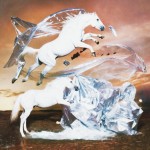
There is something deeply Belgian about "Fata Morgana". Not just because schntzl emerge from that fertile stretch of Europe where surrealism seems less an artistic movement than a weather condition, but because the album treats contradiction as a native language. It is playful and abrasive, euphoric and claustrophobic, emotionally sincere and faintly ridiculous in the same breath. Like finding enlightenment inside a malfunctioning arcade cabinet while someone in the next room is aggressively remixing a rave from 1997.
The duo of Hendrik Lasure and Casper Van De Velde have long occupied an unusual position within contemporary experimental music. Both are highly respected figures in Belgium’s jazz ecosystem, yet schntzl has never behaved like a “jazz project” in any conventional sense. Improvisation is certainly central, but it is weaponized less for virtuoso display than for destabilization. Their music continuously sabotages its own momentum, constructing shimmering emotional architectures only to kick holes through the walls moments later. On earlier releases, especially "Holiday", there was still a trace of chamber-like intimacy lingering beneath the electronics. "Fata Morgana" feels far less interested in comfort. Here, trance is not a genre reference but a psychological state: repetition stretched until it becomes delirium.
The title itself is perfect. A fata morgana is a mirage, an illusion hovering at the edge of perception, and the album constantly behaves like one. Sounds appear solid before dissolving into vapor. Rhythms suggest club propulsion before mutating into fractured abstraction. Hooks emerge like half-remembered dreams from a childhood spent too close to cheap CD-ROM games and overlit shopping centers. The duo understands that nostalgia is most effective when slightly poisoned.
“Magicland” opens the record like the entrance to an abandoned amusement park where the rides still function despite obvious electrical hazards. The synths glitter with synthetic optimism while the percussion twitches underneath like machinery overdue for maintenance. From there, “Fanta Merino” unfolds into one of the album’s strongest pieces, balancing trance-inflected arpeggios with an undercurrent of unease. schntzl seem fascinated by what happens when ecstatic forms are denied emotional resolution. Every build-up threatens catharsis, then sidesteps it with a smirk.
That balance between sincerity and sabotage becomes one of the record’s great strengths. “Tamagotchi Baby” could almost collapse under the weight of its own absurd title, yet beneath the irony lies something strangely tender. The duo clearly understands the emotional residue embedded inside obsolete digital culture. Their references are not lazy retro gestures aimed at people who miss flip phones and glow sticks. Instead, these sounds resemble archaeological fragments from a civilization that believed technology would make everyone happier before social media turned human consciousness into a shopping mall food court with anxiety disorders.
There are moments throughout "Fata Morgana" where the influence of artists like Oneohtrix Point Never or Giant Claw becomes perceptible in the hyper-digital processing and collapsing textures, but schntzl avoid imitation through sheer volatility. The drumming in particular gives the music an unstable physicality. Van De Velde never settles into predictable pulse mechanics; his rhythms constantly feel on the verge of outrunning the tracks themselves. Meanwhile Lasure’s synth work oscillates between luminous beauty and total sensory overload.
“Oasis” and “The Hill” briefly allow air into the system. These tracks reveal the duo’s remarkable understanding of pacing. Beneath all the fragmentation lies an intuitive compositional intelligence. Even the album’s most chaotic passages are carefully balanced. Nothing overstays its welcome. At just over thirty-five minutes, "Fata Morgana" understands a truth many experimental albums forget: disorientation is far more effective in concentrated doses. Nobody wants to wander endlessly through someone else’s conceptual maze. Human beings get tired. They start checking emails. Civilization collapses.
The emotional centerpiece may well be “My Singing Heart”, where sentimentality finally surfaces without disguise. Yet even here, schntzl resist straightforward beauty. The melody flickers through layers of distortion like a damaged transmission trying to remember itself. It is moving precisely because it feels unstable, never fully secured against collapse.
What ultimately makes "Fata Morgana" compelling is the sense that schntzl are less interested in genre than in perception itself. Their music continuously asks how much instability a listener can tolerate before confusion transforms into revelation. The album behaves like a hall of mirrors where every reflection carries a different emotional temperature. Some are euphoric, some vaguely menacing, some unexpectedly funny. A few feel strangely intimate, as though the machines themselves have become emotionally overextended.
And perhaps that is the album’s quiet achievement. Beneath the digital chaos, the kitsch loops, the trance ghosts and absurd detours, "Fata Morgana" is fundamentally about human interaction: two musicians listening, reacting, interrupting, destabilizing, rescuing each other in real time. Improvisation here becomes a social act, a negotiation between competing impulses. The mirage never fully disappears because neither artist allows the other to settle into certainty.
In a musical landscape increasingly obsessed with frictionless perfection, schntzl instead celebrate instability, awkwardness, overload and ecstatic imbalance. "Fata Morgana" does not offer escape from the modern condition. It simply throws brighter colors onto the collapse and hands you a pair of broken 3D glasses to watch it through.
The duo of Hendrik Lasure and Casper Van De Velde have long occupied an unusual position within contemporary experimental music. Both are highly respected figures in Belgium’s jazz ecosystem, yet schntzl has never behaved like a “jazz project” in any conventional sense. Improvisation is certainly central, but it is weaponized less for virtuoso display than for destabilization. Their music continuously sabotages its own momentum, constructing shimmering emotional architectures only to kick holes through the walls moments later. On earlier releases, especially "Holiday", there was still a trace of chamber-like intimacy lingering beneath the electronics. "Fata Morgana" feels far less interested in comfort. Here, trance is not a genre reference but a psychological state: repetition stretched until it becomes delirium.
The title itself is perfect. A fata morgana is a mirage, an illusion hovering at the edge of perception, and the album constantly behaves like one. Sounds appear solid before dissolving into vapor. Rhythms suggest club propulsion before mutating into fractured abstraction. Hooks emerge like half-remembered dreams from a childhood spent too close to cheap CD-ROM games and overlit shopping centers. The duo understands that nostalgia is most effective when slightly poisoned.
“Magicland” opens the record like the entrance to an abandoned amusement park where the rides still function despite obvious electrical hazards. The synths glitter with synthetic optimism while the percussion twitches underneath like machinery overdue for maintenance. From there, “Fanta Merino” unfolds into one of the album’s strongest pieces, balancing trance-inflected arpeggios with an undercurrent of unease. schntzl seem fascinated by what happens when ecstatic forms are denied emotional resolution. Every build-up threatens catharsis, then sidesteps it with a smirk.
That balance between sincerity and sabotage becomes one of the record’s great strengths. “Tamagotchi Baby” could almost collapse under the weight of its own absurd title, yet beneath the irony lies something strangely tender. The duo clearly understands the emotional residue embedded inside obsolete digital culture. Their references are not lazy retro gestures aimed at people who miss flip phones and glow sticks. Instead, these sounds resemble archaeological fragments from a civilization that believed technology would make everyone happier before social media turned human consciousness into a shopping mall food court with anxiety disorders.
There are moments throughout "Fata Morgana" where the influence of artists like Oneohtrix Point Never or Giant Claw becomes perceptible in the hyper-digital processing and collapsing textures, but schntzl avoid imitation through sheer volatility. The drumming in particular gives the music an unstable physicality. Van De Velde never settles into predictable pulse mechanics; his rhythms constantly feel on the verge of outrunning the tracks themselves. Meanwhile Lasure’s synth work oscillates between luminous beauty and total sensory overload.
“Oasis” and “The Hill” briefly allow air into the system. These tracks reveal the duo’s remarkable understanding of pacing. Beneath all the fragmentation lies an intuitive compositional intelligence. Even the album’s most chaotic passages are carefully balanced. Nothing overstays its welcome. At just over thirty-five minutes, "Fata Morgana" understands a truth many experimental albums forget: disorientation is far more effective in concentrated doses. Nobody wants to wander endlessly through someone else’s conceptual maze. Human beings get tired. They start checking emails. Civilization collapses.
The emotional centerpiece may well be “My Singing Heart”, where sentimentality finally surfaces without disguise. Yet even here, schntzl resist straightforward beauty. The melody flickers through layers of distortion like a damaged transmission trying to remember itself. It is moving precisely because it feels unstable, never fully secured against collapse.
What ultimately makes "Fata Morgana" compelling is the sense that schntzl are less interested in genre than in perception itself. Their music continuously asks how much instability a listener can tolerate before confusion transforms into revelation. The album behaves like a hall of mirrors where every reflection carries a different emotional temperature. Some are euphoric, some vaguely menacing, some unexpectedly funny. A few feel strangely intimate, as though the machines themselves have become emotionally overextended.
And perhaps that is the album’s quiet achievement. Beneath the digital chaos, the kitsch loops, the trance ghosts and absurd detours, "Fata Morgana" is fundamentally about human interaction: two musicians listening, reacting, interrupting, destabilizing, rescuing each other in real time. Improvisation here becomes a social act, a negotiation between competing impulses. The mirage never fully disappears because neither artist allows the other to settle into certainty.
In a musical landscape increasingly obsessed with frictionless perfection, schntzl instead celebrate instability, awkwardness, overload and ecstatic imbalance. "Fata Morgana" does not offer escape from the modern condition. It simply throws brighter colors onto the collapse and hands you a pair of broken 3D glasses to watch it through.
Werner Durand & John Krausbauer: Black Seraphim

Artist: Werner Durand & John Krausbauer (http://wernerdurand.com/) (@)
Title: Black Seraphim
Format: CD + Download
Label: Moving Furniture Records (@)
Rated:

Title: Black Seraphim
Format: CD + Download
Label: Moving Furniture Records (@)
Rated:
There is something wonderfully stubborn about drone music when it refuses transcendence as a shortcut and instead drags you through the tunnel inch by inch, like a monk carrying a broken amplifier through a sandstorm. by Werner Durand and John Krausbauer understands this perfectly. It is not interested in decorating a room, assisting mindfulness apps, or politely dissolving into the background while someone reorganizes their spice rack. This record wants to occupy physical space. Slowly. Completely. Like weather. Or grief. Or a neighbor practicing tuba at 2 a.m. with spiritual conviction.
The collaboration itself makes immediate sense once the music begins. Durand has spent decades constructing his own wind instruments based on just intonation, operating somewhere between ethnomusicology, sound sculpture, and ancient ritual accidentally intercepted by modern microphones. Krausbauer, meanwhile, has long treated the violin less as a melodic instrument and more as a carrier wave for altered states, his work often circling around sustained harmonic density and psychoacoustic immersion. Together, they produce something that feels less “performed” than summoned.
The single 27-minute composition unfolds like a slow geological event. Not dramatic in the cinematic sense, but tectonic. The tones arrive layered and thick, buzzing with harmonic friction, creating the peculiar sensation that the music is simultaneously static and constantly mutating. Tiny overtone shifts begin to feel enormous after a while. Human perception starts recalibrating itself. Five minutes in, you are listening to drones. Fifteen minutes in, the drones are listening to you. Twenty-five minutes in, you briefly consider whether linear time was merely an administrative error invented by train schedules.
Durand’s self-built reeds give the piece its strangely organic turbulence. Their textures breathe and rasp in ways synthesizers rarely can. There is air in the sound, pressure, saliva, wood, friction. Krausbauer’s violin does not counterbalance this so much as haunt it, stretching long tones into spectral smears that hover above the mix like exhausted angels reconsidering their employment status. The title "Black Seraphim" suddenly feels apt: sacred imagery dragged through soot and electrical hum.
What makes the album compelling is its refusal to become merely “deep”. Drone records sometimes suffer from a kind of spiritual tourism, where endless sustain gets mistaken for profundity simply because nothing happens for a while. Here, however, the density matters. The tuning systems matter. The interaction between overtones feels deliberate and alive, drawing from traditions of minimalism, just intonation, and non-Western modal thinking without turning the music into an academic demonstration. You can hear echoes of Éliane Radigue in the devotion to gradual transformation, and perhaps traces of La Monte Young in the obsession with sustained harmonic environments, but the emotional atmosphere is darker, dirtier, less celestial. More basement ritual than cosmic enlightenment.
The recording also benefits from its physical imperfections. There is grain in the sound, a tactile roughness that prevents the piece from floating into sterile abstraction. It reminds you that drone music, at its best, is deeply corporeal. Frequencies vibrate through muscle and bone before they become intellectual ideas. The body understands first. The brain arrives later carrying explanatory paperwork nobody requested.
Released by Moving Furniture Records, a label that has quietly become one of the more reliable homes for contemporary drone and microtonal exploration, "Black Seraphim" fits naturally into a catalog devoted to patience, resonance, and altered listening states. Yet even within that context, this collaboration feels unusually concentrated, stripped of ornament, almost severe in its dedication to sustained presence.
In an era where music is increasingly consumed while doing six other things simultaneously, "Black Seraphim" demands singular attention. Not aggressively, not theatrically. It simply waits, humming in the corner like an ancient machine that knows human beings will eventually grow tired of notifications and come crawling back to vibration itself. A grim little miracle, really.
The collaboration itself makes immediate sense once the music begins. Durand has spent decades constructing his own wind instruments based on just intonation, operating somewhere between ethnomusicology, sound sculpture, and ancient ritual accidentally intercepted by modern microphones. Krausbauer, meanwhile, has long treated the violin less as a melodic instrument and more as a carrier wave for altered states, his work often circling around sustained harmonic density and psychoacoustic immersion. Together, they produce something that feels less “performed” than summoned.
The single 27-minute composition unfolds like a slow geological event. Not dramatic in the cinematic sense, but tectonic. The tones arrive layered and thick, buzzing with harmonic friction, creating the peculiar sensation that the music is simultaneously static and constantly mutating. Tiny overtone shifts begin to feel enormous after a while. Human perception starts recalibrating itself. Five minutes in, you are listening to drones. Fifteen minutes in, the drones are listening to you. Twenty-five minutes in, you briefly consider whether linear time was merely an administrative error invented by train schedules.
Durand’s self-built reeds give the piece its strangely organic turbulence. Their textures breathe and rasp in ways synthesizers rarely can. There is air in the sound, pressure, saliva, wood, friction. Krausbauer’s violin does not counterbalance this so much as haunt it, stretching long tones into spectral smears that hover above the mix like exhausted angels reconsidering their employment status. The title "Black Seraphim" suddenly feels apt: sacred imagery dragged through soot and electrical hum.
What makes the album compelling is its refusal to become merely “deep”. Drone records sometimes suffer from a kind of spiritual tourism, where endless sustain gets mistaken for profundity simply because nothing happens for a while. Here, however, the density matters. The tuning systems matter. The interaction between overtones feels deliberate and alive, drawing from traditions of minimalism, just intonation, and non-Western modal thinking without turning the music into an academic demonstration. You can hear echoes of Éliane Radigue in the devotion to gradual transformation, and perhaps traces of La Monte Young in the obsession with sustained harmonic environments, but the emotional atmosphere is darker, dirtier, less celestial. More basement ritual than cosmic enlightenment.
The recording also benefits from its physical imperfections. There is grain in the sound, a tactile roughness that prevents the piece from floating into sterile abstraction. It reminds you that drone music, at its best, is deeply corporeal. Frequencies vibrate through muscle and bone before they become intellectual ideas. The body understands first. The brain arrives later carrying explanatory paperwork nobody requested.
Released by Moving Furniture Records, a label that has quietly become one of the more reliable homes for contemporary drone and microtonal exploration, "Black Seraphim" fits naturally into a catalog devoted to patience, resonance, and altered listening states. Yet even within that context, this collaboration feels unusually concentrated, stripped of ornament, almost severe in its dedication to sustained presence.
In an era where music is increasingly consumed while doing six other things simultaneously, "Black Seraphim" demands singular attention. Not aggressively, not theatrically. It simply waits, humming in the corner like an ancient machine that knows human beings will eventually grow tired of notifications and come crawling back to vibration itself. A grim little miracle, really.
Hora Lunga: New Age Music Vol. 2-3
There is a particular kind of experimental record that behaves less like music and more like overhearing somebody think in several rooms at once. "New Age Music Vol. 2-3" by Hora Lunga belongs firmly to that tradition. Across twenty-two miniature pieces, many barely surviving the two-minute mark, the album refuses the basic courtesies listeners have been trained to expect. Themes appear, fracture, wander into static, collide with voices, vanish into unfinished gestures. And somehow, against the odds and against modern attention economies designed to liquefy concentration into algorithmic soup, it remains strangely intimate.
The title itself is an excellent prank. “New Age Music” traditionally evokes healing flutes, wellness spas, and the sort of ambient drift played in yoga studios where everyone pretends not to resent the price of oat milk. Hora Lunga’s version feels more like new age music after the age itself has collapsed under administrative paperwork and emotional buffering wheels. The spirituality here is anxious, fragmented, urban. Not transcendence through purity, but transcendence through overload. A search for fragile coherence inside informational debris.
Based in Switzerland, Hora Lunga operates in a slippery zone between experimental songwriting, collage composition, improvisation, and sound art. Previous collaborations, including the widely praised work with Argentine cellist Violeta García, already suggested an artist more interested in permeability than genre identity. On "New Age Music Vol. 2-3", that permeability becomes the central architecture. Guests drift through the record like passing thoughts rather than featured performers. Voices arrive partially formed, instrumental ideas dissolve before they can stabilize, and tracks frequently behave like interrupted diary entries recovered from damaged hard drives.
Yet the album never feels random. That is the deceptive trick at work here. Underneath the fragmentation lies an almost obsessive sensitivity to pacing, texture, and interruption. The sequencing creates a peculiar rhythm of emotional approach and withdrawal. One track opens a small emotional window, the next immediately smears fingerprints across the glass. “Hearing Through the Wall” floats with ghostly vulnerability, while “CTRL Z” folds longing into digital exhaustion, sounding like somebody attempting to emotionally reverse an entire decade with a keyboard shortcut. Humanity keeps trying to undo itself through interfaces. The computer, naturally, remains unimpressed.
The brevity of many tracks gives the record a curious anti-monumental quality. Nothing insists on its own importance for too long. “DJ” and “Karma 3” arrive like sketches overheard from another apartment. “78927908092907” barely exists before disappearing again, functioning almost like an accidental voicemail from an alternate timeline. Even the titles contribute to the atmosphere of unstable memory: "An Open Suitcase", "Less Of Me", "113kmh", "If You Are Dreaming That A Tiger Is Chasing You". They read like fragmented notes left behind by someone traveling through emotional states rather than physical locations.
There is humor hidden in the album too, though it is dry enough to evaporate if stared at directly. A track called “Doom Metal” does not particularly resemble doom metal. “House Music” similarly avoids any obvious obligation to the genre it references. Hora Lunga seems fascinated by labels precisely because of how poorly they contain experience. Genres here become loose signposts rather than destinations, tiny bureaucratic attempts to classify sounds already escaping classification.
Sonically, the record often feels handmade in the best sense. Not “lo-fi” as aesthetic branding, but genuinely tactile. You can almost hear the room around the recordings, the instability of decisions being made in real time. Fragments of voice, rough edits, sudden shifts in proximity, and uneven layering create the sensation of music assembled from lived moments rather than perfected sessions. The mastering by Anne Taegert preserves this instability beautifully, allowing the record to breathe without sanding down its edges into sterile sophistication.
What makes "New Age Music Vol. 2-3" compelling is its refusal to convert vulnerability into spectacle. Contemporary experimental music often falls into one of two traps: intellectual sterility or exaggerated emotional branding. Hora Lunga avoids both by remaining elusive. The album reveals personal traces constantly, but never in ways that feel performative. It behaves like a notebook someone forgot to hide, not a confession strategically optimized for emotional engagement metrics. Which, in 2026, feels almost revolutionary.
The closing track, “If You Are Dreaming That A Tiger Is Chasing You”, encapsulates the album’s strange emotional logic perfectly. The title suggests panic, danger, subconscious pursuit. Yet the music itself drifts with an almost resigned tenderness, as if the chase has lasted so long that fear has transformed into companionship. That may be the hidden emotional core of the record: learning to coexist with instability instead of conquering it.
By the end, "New Age Music Vol. 2-3" feels less like a collection of songs than a cartography of unfinished thoughts, emotional glitches, and fleeting recognitions. It asks for active listening not because it is difficult in the academic sense, but because it mirrors the fragmented condition of contemporary consciousness itself. Tiny signals fighting to remain human inside endless noise.
Not bad for a CD-R that sounds like it was assembled from dreams, transit stations, voice notes, and the emotional residue left behind after too many browser tabs remain open at 3 a.m. Humanity continues inventing smarter machines while still struggling to understand its own interior static. Hora Lunga, at least, has the decency to make that confusion sound oddly beautiful.
The title itself is an excellent prank. “New Age Music” traditionally evokes healing flutes, wellness spas, and the sort of ambient drift played in yoga studios where everyone pretends not to resent the price of oat milk. Hora Lunga’s version feels more like new age music after the age itself has collapsed under administrative paperwork and emotional buffering wheels. The spirituality here is anxious, fragmented, urban. Not transcendence through purity, but transcendence through overload. A search for fragile coherence inside informational debris.
Based in Switzerland, Hora Lunga operates in a slippery zone between experimental songwriting, collage composition, improvisation, and sound art. Previous collaborations, including the widely praised work with Argentine cellist Violeta García, already suggested an artist more interested in permeability than genre identity. On "New Age Music Vol. 2-3", that permeability becomes the central architecture. Guests drift through the record like passing thoughts rather than featured performers. Voices arrive partially formed, instrumental ideas dissolve before they can stabilize, and tracks frequently behave like interrupted diary entries recovered from damaged hard drives.
Yet the album never feels random. That is the deceptive trick at work here. Underneath the fragmentation lies an almost obsessive sensitivity to pacing, texture, and interruption. The sequencing creates a peculiar rhythm of emotional approach and withdrawal. One track opens a small emotional window, the next immediately smears fingerprints across the glass. “Hearing Through the Wall” floats with ghostly vulnerability, while “CTRL Z” folds longing into digital exhaustion, sounding like somebody attempting to emotionally reverse an entire decade with a keyboard shortcut. Humanity keeps trying to undo itself through interfaces. The computer, naturally, remains unimpressed.
The brevity of many tracks gives the record a curious anti-monumental quality. Nothing insists on its own importance for too long. “DJ” and “Karma 3” arrive like sketches overheard from another apartment. “78927908092907” barely exists before disappearing again, functioning almost like an accidental voicemail from an alternate timeline. Even the titles contribute to the atmosphere of unstable memory: "An Open Suitcase", "Less Of Me", "113kmh", "If You Are Dreaming That A Tiger Is Chasing You". They read like fragmented notes left behind by someone traveling through emotional states rather than physical locations.
There is humor hidden in the album too, though it is dry enough to evaporate if stared at directly. A track called “Doom Metal” does not particularly resemble doom metal. “House Music” similarly avoids any obvious obligation to the genre it references. Hora Lunga seems fascinated by labels precisely because of how poorly they contain experience. Genres here become loose signposts rather than destinations, tiny bureaucratic attempts to classify sounds already escaping classification.
Sonically, the record often feels handmade in the best sense. Not “lo-fi” as aesthetic branding, but genuinely tactile. You can almost hear the room around the recordings, the instability of decisions being made in real time. Fragments of voice, rough edits, sudden shifts in proximity, and uneven layering create the sensation of music assembled from lived moments rather than perfected sessions. The mastering by Anne Taegert preserves this instability beautifully, allowing the record to breathe without sanding down its edges into sterile sophistication.
What makes "New Age Music Vol. 2-3" compelling is its refusal to convert vulnerability into spectacle. Contemporary experimental music often falls into one of two traps: intellectual sterility or exaggerated emotional branding. Hora Lunga avoids both by remaining elusive. The album reveals personal traces constantly, but never in ways that feel performative. It behaves like a notebook someone forgot to hide, not a confession strategically optimized for emotional engagement metrics. Which, in 2026, feels almost revolutionary.
The closing track, “If You Are Dreaming That A Tiger Is Chasing You”, encapsulates the album’s strange emotional logic perfectly. The title suggests panic, danger, subconscious pursuit. Yet the music itself drifts with an almost resigned tenderness, as if the chase has lasted so long that fear has transformed into companionship. That may be the hidden emotional core of the record: learning to coexist with instability instead of conquering it.
By the end, "New Age Music Vol. 2-3" feels less like a collection of songs than a cartography of unfinished thoughts, emotional glitches, and fleeting recognitions. It asks for active listening not because it is difficult in the academic sense, but because it mirrors the fragmented condition of contemporary consciousness itself. Tiny signals fighting to remain human inside endless noise.
Not bad for a CD-R that sounds like it was assembled from dreams, transit stations, voice notes, and the emotional residue left behind after too many browser tabs remain open at 3 a.m. Humanity continues inventing smarter machines while still struggling to understand its own interior static. Hora Lunga, at least, has the decency to make that confusion sound oddly beautiful.