
Browse by Genre
Industrial Music / Industrial Metal / Aggro Industrial / Electro Metal
Industrial Noise / Power Noise / Harsh Noise
Synth Pop / Electro Pop / Synth-Electronica
Techno / Trance / Goa / Drum'n'Bass / Jungle / Tribal / Trip-Hop
Ambient / Electronica / Ethereal / Dub / Soundscapes / Abstract
Experimental / Avantgarde / Weird & Wired / Glitch / Noise / Field Recording
Dark / Gothic / Wave / New Wave / Dark Wave / Industrial Gothic
New Music / Downtown / Avantgarde Jazz / New Classical / World
Search Reviews
Music Reviews
NeBeLNeST: Saalfelden 2007

In the history of progressive music, there are bands that build careers and bands that become legends almost by accident. NeBeLNeST belongs firmly to the second category. Active on the fringes of the French avant-progressive underground, they spent years creating music that seemed perpetually too restless for any single scene. Too aggressive for traditional symphonic prog, too composed for noise rock, too strange for post-rock, and too passionate to remain comfortably academic. Their disappearance left behind a relatively small discography, but one that continues to cast a surprisingly long shadow.
"Saalfelden 2007" captures the group during its final chapter, though it hardly sounds like a farewell. Quite the opposite: it sounds like a band discovering fresh reserves of energy just as the road beneath it is beginning to vanish.
Recorded at Austria's renowned Saalfelden Jazz Festival, the performance finds NeBeLNeST operating as a five-piece and performing with the confidence of musicians who have survived enough setbacks to stop fearing them. By this point, lineup changes, logistical headaches, financial absurdities, and the usual catalogue of progressive-rock misfortunes had become almost routine. The miracle is not that the band eventually disappeared. The miracle is that it managed to sound this alive beforehand.
What immediately strikes the listener is the physicality of the music. Progressive rock is often accused, sometimes fairly, of existing primarily from the neck upward. NeBeLNeST never received that memo. Their compositions are labyrinthine, certainly, but they move with the urgency of a creature trying to escape its own maze. The influence of groups such as King Crimson, Univers Zero, and the Rock in Opposition tradition can be detected in the architecture, yet the emotional temperature is considerably higher. These pieces do not unfold politely. They lunge, twist, collide and regroup.
"Nova Express" arrives like a transmission intercepted from a parallel twentieth century, where jazz, chamber music, psychedelia, and post-punk were never separated into different record-store bins. The band's gift lies in making complexity feel instinctive. Meter changes, harmonic detours, and abrupt shifts of mood emerge not as displays of virtuosity but as natural consequences of the music's internal logic.
Throughout the set, darkness functions less as an aesthetic choice than as a gravitational force. The ominous textures of "The Old Ones" and the cosmic unease of "Crab Nebula" suggest a universe that is vast, mysterious, and only occasionally interested in human concerns. Yet NeBeLNeST avoids the theatrical gloom that often accompanies this territory. Their music feels curious rather than despairing. It peers into the abyss, certainly, but also appears genuinely interested in what the abyss might have to say back.
The centerpiece "ReDRuM" demonstrates one of the group's greatest strengths: their ability to balance precision and volatility. The ensemble plays with remarkable discipline, but there is always the sensation that everything could come apart at any moment. That tension generates much of the excitement. Listening to NeBeLNeST is sometimes like watching an elaborate mechanical clock assembled during a thunderstorm.
The final pairing of "Pillars Of Birth" and "The Last Nahja" provides the emotional core of the performance. Here the band's symphonic ambitions become fully apparent. Melodies emerge from dense instrumental conversations, only to dissolve again into passages of collective exploration. Rather than building toward triumphant resolution, the music remains suspended between arrival and departure. In retrospect, knowing that this would become NeBeLNeST's final live document lends these moments an unintended poignancy.
What makes "Saalfelden 2007" particularly compelling is that it avoids the trap of archival releases that exist primarily for completists. This is not a historical curiosity preserved under glass. It is a vibrant, fully convincing performance that stands comfortably beside the band's studio work. If anything, the live setting reveals qualities that recordings sometimes struggled to capture: the raw momentum, the sense of risk, and the sheer pleasure these musicians found in navigating impossibly intricate terrain together.
There is a certain irony in the fact that a band so fascinated by labyrinths ultimately vanished into one of its own. Yet this recording suggests that disappearance is not always the opposite of survival. Nearly two decades after the performance took place, "Saalfelden 2007" reminds us that some groups leave behind more than a catalogue. They leave behind a way of thinking about music.
NeBeLNeST never seemed interested in making listeners comfortable. They preferred opening secret doors and seeing who was willing to follow. This recording finds those doors wide open, revealing a world where progressive rock remains dangerous, imaginative, and gloriously unwilling to sit still.
"Saalfelden 2007" captures the group during its final chapter, though it hardly sounds like a farewell. Quite the opposite: it sounds like a band discovering fresh reserves of energy just as the road beneath it is beginning to vanish.
Recorded at Austria's renowned Saalfelden Jazz Festival, the performance finds NeBeLNeST operating as a five-piece and performing with the confidence of musicians who have survived enough setbacks to stop fearing them. By this point, lineup changes, logistical headaches, financial absurdities, and the usual catalogue of progressive-rock misfortunes had become almost routine. The miracle is not that the band eventually disappeared. The miracle is that it managed to sound this alive beforehand.
What immediately strikes the listener is the physicality of the music. Progressive rock is often accused, sometimes fairly, of existing primarily from the neck upward. NeBeLNeST never received that memo. Their compositions are labyrinthine, certainly, but they move with the urgency of a creature trying to escape its own maze. The influence of groups such as King Crimson, Univers Zero, and the Rock in Opposition tradition can be detected in the architecture, yet the emotional temperature is considerably higher. These pieces do not unfold politely. They lunge, twist, collide and regroup.
"Nova Express" arrives like a transmission intercepted from a parallel twentieth century, where jazz, chamber music, psychedelia, and post-punk were never separated into different record-store bins. The band's gift lies in making complexity feel instinctive. Meter changes, harmonic detours, and abrupt shifts of mood emerge not as displays of virtuosity but as natural consequences of the music's internal logic.
Throughout the set, darkness functions less as an aesthetic choice than as a gravitational force. The ominous textures of "The Old Ones" and the cosmic unease of "Crab Nebula" suggest a universe that is vast, mysterious, and only occasionally interested in human concerns. Yet NeBeLNeST avoids the theatrical gloom that often accompanies this territory. Their music feels curious rather than despairing. It peers into the abyss, certainly, but also appears genuinely interested in what the abyss might have to say back.
The centerpiece "ReDRuM" demonstrates one of the group's greatest strengths: their ability to balance precision and volatility. The ensemble plays with remarkable discipline, but there is always the sensation that everything could come apart at any moment. That tension generates much of the excitement. Listening to NeBeLNeST is sometimes like watching an elaborate mechanical clock assembled during a thunderstorm.
The final pairing of "Pillars Of Birth" and "The Last Nahja" provides the emotional core of the performance. Here the band's symphonic ambitions become fully apparent. Melodies emerge from dense instrumental conversations, only to dissolve again into passages of collective exploration. Rather than building toward triumphant resolution, the music remains suspended between arrival and departure. In retrospect, knowing that this would become NeBeLNeST's final live document lends these moments an unintended poignancy.
What makes "Saalfelden 2007" particularly compelling is that it avoids the trap of archival releases that exist primarily for completists. This is not a historical curiosity preserved under glass. It is a vibrant, fully convincing performance that stands comfortably beside the band's studio work. If anything, the live setting reveals qualities that recordings sometimes struggled to capture: the raw momentum, the sense of risk, and the sheer pleasure these musicians found in navigating impossibly intricate terrain together.
There is a certain irony in the fact that a band so fascinated by labyrinths ultimately vanished into one of its own. Yet this recording suggests that disappearance is not always the opposite of survival. Nearly two decades after the performance took place, "Saalfelden 2007" reminds us that some groups leave behind more than a catalogue. They leave behind a way of thinking about music.
NeBeLNeST never seemed interested in making listeners comfortable. They preferred opening secret doors and seeing who was willing to follow. This recording finds those doors wide open, revealing a world where progressive rock remains dangerous, imaginative, and gloriously unwilling to sit still.
Gabriel Vicéns: Niebla
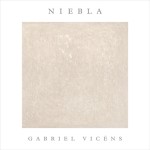
Fog is an appropriate title, because "Niebla" rarely allows the listener the comfort of a fixed horizon. What appears solid suddenly dissolves. Rhythms emerge and disappear. Melodies take shape only to be swallowed by collective improvisation. Certainties are treated with suspicion. Yet beneath this shifting surface lies a remarkably coherent artistic vision.
For his fifth album, Gabriel Vicéns continues the path that has made him one of the more distinctive voices in contemporary jazz: a refusal to choose between tradition and experimentation. Born in Puerto Rico and based in New York, Vicéns has spent years developing a musical language that acknowledges cultural inheritance without allowing it to become a museum exhibit. On "Niebla", Afro-Puerto Rican rhythmic traditions, modern jazz, chamber-like sensitivity, and free improvisation coexist not as separate ingredients but as parts of a single ecosystem.
The album's title proves revealing in more ways than one. Fog obscures distances, alters perception, and forces attention toward the immediate moment. Listening to these compositions produces a similar effect. The music constantly shifts between propulsion and suspension, making time itself feel unstable. One moment the ensemble surges forward with extraordinary momentum; the next, it seems content to linger inside a single gesture, examining it from multiple angles as though searching for hidden meanings.
Vicéns' guitar occupies a fascinating role within this environment. Despite his formidable technical abilities, he rarely behaves like a traditional jazz guitar hero. Solos emerge organically from the ensemble rather than dominating it. Even when his playing becomes fiery, there remains a sense of dialogue rather than conquest. This is refreshing. The history of jazz contains no shortage of musicians who approached every performance as a competitive sport. "Niebla" prefers conversation to victory.
The ensemble deserves enormous credit for the album's success. Alto saxophonist Roman Filiú brings both lyricism and volatility, capable of turning a phrase from tender reflection into urgent declaration within a few measures. Pianist Vitor Gonçalves contributes textures that frequently blur the boundary between harmony and atmosphere. Meanwhile, bassist Rick Rosato, drummer E.J. Strickland, and percussionist Victor Pablo create a rhythmic foundation that remains flexible even at its most intricate.
What distinguishes "Niebla" from many contemporary jazz recordings is its treatment of silence. Modern virtuosity often behaves like a nervous condition, terrified of leaving any space unfilled. Vicéns seems comfortable allowing music to breathe. Certain passages derive their power not from density but from restraint. The pauses become structural elements, shaping the listener's experience as profoundly as the notes themselves.
The Puerto Rican elements woven throughout the record are equally compelling because they never feel ornamental. Rhythmic traditions associated with bomba and plena are not presented as cultural decoration or historical references. Instead, they function as living forces within the music's architecture. The connection to ancestry is present, but so is the desire to push beyond inherited forms. The result feels less like preservation and more like continuation.
Particularly striking is the way several compositions navigate multiple temporal dimensions simultaneously. Some sections feel rooted in communal memory, carrying echoes of centuries-old traditions. Others sound entirely contemporary, even speculative. At times the band seems to inhabit both worlds at once. This creates an unusual tension: the music feels deeply grounded while remaining perpetually in motion.
The longer pieces, especially "Ramaje" and "900-50-80", reveal Vicéns at his most ambitious. Rather than relying on conventional development, these works unfold like landscapes. Themes appear, vanish, re-emerge transformed. Improvisation serves not as ornamentation but as a method of discovery. The musicians do not merely perform the compositions; they actively investigate them.
There is also a visual quality running throughout the album, perhaps unsurprising given Vicéns' parallel work as a visual artist. Sounds are arranged with a painter's sensitivity to texture, contrast, and negative space. Certain passages feel almost sculptural, as though carved rather than composed.
By the time the closing sequence arrives, "Niebla" has accomplished something increasingly rare: it has altered the listener's perception of duration. The album's seventy minutes never feel rushed, yet neither do they drift aimlessly. Instead, they encourage a different relationship with attention itself. In a culture obsessed with speed, efficiency, and immediate conclusions, Vicéns proposes something far less fashionable: uncertainty.
That uncertainty becomes the album's greatest strength. Like fog, "Niebla" does not obscure reality so much as reveal that reality was never as straightforward as it appeared. Through its fusion of ancestral rhythms, adventurous improvisation, and temporal exploration, Gabriel Vicéns has created a work that is intellectually stimulating without becoming academic, emotionally resonant without becoming sentimental, and technically dazzling without ever forgetting its humanity. Some albums provide answers. "Niebla" asks better questions. And unlike most questions, these linger long after the music has faded.
For his fifth album, Gabriel Vicéns continues the path that has made him one of the more distinctive voices in contemporary jazz: a refusal to choose between tradition and experimentation. Born in Puerto Rico and based in New York, Vicéns has spent years developing a musical language that acknowledges cultural inheritance without allowing it to become a museum exhibit. On "Niebla", Afro-Puerto Rican rhythmic traditions, modern jazz, chamber-like sensitivity, and free improvisation coexist not as separate ingredients but as parts of a single ecosystem.
The album's title proves revealing in more ways than one. Fog obscures distances, alters perception, and forces attention toward the immediate moment. Listening to these compositions produces a similar effect. The music constantly shifts between propulsion and suspension, making time itself feel unstable. One moment the ensemble surges forward with extraordinary momentum; the next, it seems content to linger inside a single gesture, examining it from multiple angles as though searching for hidden meanings.
Vicéns' guitar occupies a fascinating role within this environment. Despite his formidable technical abilities, he rarely behaves like a traditional jazz guitar hero. Solos emerge organically from the ensemble rather than dominating it. Even when his playing becomes fiery, there remains a sense of dialogue rather than conquest. This is refreshing. The history of jazz contains no shortage of musicians who approached every performance as a competitive sport. "Niebla" prefers conversation to victory.
The ensemble deserves enormous credit for the album's success. Alto saxophonist Roman Filiú brings both lyricism and volatility, capable of turning a phrase from tender reflection into urgent declaration within a few measures. Pianist Vitor Gonçalves contributes textures that frequently blur the boundary between harmony and atmosphere. Meanwhile, bassist Rick Rosato, drummer E.J. Strickland, and percussionist Victor Pablo create a rhythmic foundation that remains flexible even at its most intricate.
What distinguishes "Niebla" from many contemporary jazz recordings is its treatment of silence. Modern virtuosity often behaves like a nervous condition, terrified of leaving any space unfilled. Vicéns seems comfortable allowing music to breathe. Certain passages derive their power not from density but from restraint. The pauses become structural elements, shaping the listener's experience as profoundly as the notes themselves.
The Puerto Rican elements woven throughout the record are equally compelling because they never feel ornamental. Rhythmic traditions associated with bomba and plena are not presented as cultural decoration or historical references. Instead, they function as living forces within the music's architecture. The connection to ancestry is present, but so is the desire to push beyond inherited forms. The result feels less like preservation and more like continuation.
Particularly striking is the way several compositions navigate multiple temporal dimensions simultaneously. Some sections feel rooted in communal memory, carrying echoes of centuries-old traditions. Others sound entirely contemporary, even speculative. At times the band seems to inhabit both worlds at once. This creates an unusual tension: the music feels deeply grounded while remaining perpetually in motion.
The longer pieces, especially "Ramaje" and "900-50-80", reveal Vicéns at his most ambitious. Rather than relying on conventional development, these works unfold like landscapes. Themes appear, vanish, re-emerge transformed. Improvisation serves not as ornamentation but as a method of discovery. The musicians do not merely perform the compositions; they actively investigate them.
There is also a visual quality running throughout the album, perhaps unsurprising given Vicéns' parallel work as a visual artist. Sounds are arranged with a painter's sensitivity to texture, contrast, and negative space. Certain passages feel almost sculptural, as though carved rather than composed.
By the time the closing sequence arrives, "Niebla" has accomplished something increasingly rare: it has altered the listener's perception of duration. The album's seventy minutes never feel rushed, yet neither do they drift aimlessly. Instead, they encourage a different relationship with attention itself. In a culture obsessed with speed, efficiency, and immediate conclusions, Vicéns proposes something far less fashionable: uncertainty.
That uncertainty becomes the album's greatest strength. Like fog, "Niebla" does not obscure reality so much as reveal that reality was never as straightforward as it appeared. Through its fusion of ancestral rhythms, adventurous improvisation, and temporal exploration, Gabriel Vicéns has created a work that is intellectually stimulating without becoming academic, emotionally resonant without becoming sentimental, and technically dazzling without ever forgetting its humanity. Some albums provide answers. "Niebla" asks better questions. And unlike most questions, these linger long after the music has faded.
OD: Svalr

Artist: OD
Title: Svalr
Format: Download Only (MP3 + Lossless)
Label: Driftworks/Audiobulb (@)
Rated:

Title: Svalr
Format: Download Only (MP3 + Lossless)
Label: Driftworks/Audiobulb (@)
Rated:
Most travel albums promise transportation. They invite listeners to visit distant places without leaving their chairs, a service humanity seems increasingly fond of. Why endure freezing temperatures, unpredictable weather, and the possibility of being stared down by a polar bear when a pair of headphones can simulate the experience with considerably lower insurance costs?
Yet "Svalr", the debut release by OD, is not interested in tourism. It is interested in presence.
OD is the musical alias of Alex O'Donovan, whose contribution to the collaborative SITE series, curated by Driftworks and Audiobulb, takes listeners to the Arctic archipelago of Svalbard. The premise of the series is deceptively simple: artists transform a specific location into an audio-geography, blending environmental recordings and artistic interpretation into a portrait of place. What makes "Svalr" remarkable is how thoroughly it embraces both halves of that equation. This is neither a straightforward field-recording document nor a conventional ambient album. It exists somewhere in between, where observation becomes composition and landscape becomes memory.
The project emerged from an expedition undertaken alongside sculptor and installation artist Andreea Ionascu. Armed with an arsenal of recording devices that sounds more like scientific equipment than musical gear, O'Donovan collected sounds from glaciers, fjords, wildlife, permafrost, underwater environments, and human infrastructure. Hydrophones listened beneath the water's surface, geophones traced subterranean vibrations, electromagnetic microphones intercepted technological signals, and custom-built devices captured details that normally escape human perception.
The result is an album that often feels less like listening and more like eavesdropping on the hidden conversations of matter itself.
One of the most fascinating ideas behind "Svalr" is the discovery of an unexpected harmonic relationship across the environment. Ice, rock formations, human constructions, frozen terrain, and animal life appeared to resonate within similar tonal regions, creating an accidental orchestra assembled by geology rather than intention. O'Donovan's compositional approach respects this phenomenon. Rather than overwhelming the source material with excessive processing, he allows these natural resonances to remain central, adding only restrained electronic interventions where necessary.
"Arrival" opens the record with a sense of cautious wonder. The sounds feel suspended between documentation and dream, as though the listener is adjusting to an environment where familiar acoustic reference points no longer apply. The Arctic appears not as a postcard landscape but as a living system, vast enough to dwarf human perspective.
Throughout the album, time behaves strangely. Perhaps this reflects the reality of Svalbard itself, where continuous daylight during parts of the year erodes ordinary temporal boundaries. Tracks unfold without obvious destinations, drifting between textural subtlety and moments of looming tension. Listening becomes an exercise in recalibrating perception. The ear stops searching for events and begins noticing conditions.
"Impermanence" and "Pale" are especially effective in this regard. Their restrained atmospheres evoke environments that appear static from a distance but reveal constant microscopic activity when examined closely. Ice shifts. Water moves. Wind reshapes surfaces. Nothing is truly still, even when everything appears frozen.
The album's centrepiece, "Crushing", extends this idea into more dramatic territory. Lasting nearly ten minutes, it captures the overwhelming physical presence of the Arctic landscape without resorting to cinematic spectacle. Noise emerges not as aggression but as pressure. The track feels geological rather than musical, unfolding with the indifferent force of natural processes that existed long before human observers arrived and will continue long after they leave.
What distinguishes "Svalr" from many environmental recordings is its awareness of contradiction. Svalbard may appear remote, but the album repeatedly reminds us that remoteness no longer guarantees isolation. Human influence reaches even here, filtering into fragile ecosystems through climate change, technology, and global interconnectedness. The landscape becomes a witness to consequences generated thousands of miles away. In this sense, the album quietly addresses the Anthropocene without turning itself into a lecture. The message resides within the sounds themselves.
The closing track, "Permabloom", offers no easy resolution. Instead, it leaves the listener suspended between fragility and endurance. The title itself suggests a paradox: permanence and transformation occupying the same space. It is an appropriate conclusion for a work preoccupied with environments that seem eternal yet are changing before our eyes.
What makes "Svalr" memorable is not simply its technical achievement or its field-recording pedigree. It is the humility embedded within the project. O'Donovan approaches the Arctic not as a conqueror, documentarian, or environmental spokesperson, but as an attentive listener. The album repeatedly suggests that landscapes possess their own forms of expression, provided someone is willing to slow down enough to hear them.
In an age obsessed with louder signals, faster communication, and constant visibility, "Svalr" proposes a different relationship with the world. It asks us to pay attention to what exists beneath perception, to the vibrations hidden inside ice, water, stone, and silence. The experience is less like visiting a place than like briefly sharing its nervous system.
For forty minutes, the Arctic does not become understandable. It becomes audible. That turns out to be far more interesting.
Yet "Svalr", the debut release by OD, is not interested in tourism. It is interested in presence.
OD is the musical alias of Alex O'Donovan, whose contribution to the collaborative SITE series, curated by Driftworks and Audiobulb, takes listeners to the Arctic archipelago of Svalbard. The premise of the series is deceptively simple: artists transform a specific location into an audio-geography, blending environmental recordings and artistic interpretation into a portrait of place. What makes "Svalr" remarkable is how thoroughly it embraces both halves of that equation. This is neither a straightforward field-recording document nor a conventional ambient album. It exists somewhere in between, where observation becomes composition and landscape becomes memory.
The project emerged from an expedition undertaken alongside sculptor and installation artist Andreea Ionascu. Armed with an arsenal of recording devices that sounds more like scientific equipment than musical gear, O'Donovan collected sounds from glaciers, fjords, wildlife, permafrost, underwater environments, and human infrastructure. Hydrophones listened beneath the water's surface, geophones traced subterranean vibrations, electromagnetic microphones intercepted technological signals, and custom-built devices captured details that normally escape human perception.
The result is an album that often feels less like listening and more like eavesdropping on the hidden conversations of matter itself.
One of the most fascinating ideas behind "Svalr" is the discovery of an unexpected harmonic relationship across the environment. Ice, rock formations, human constructions, frozen terrain, and animal life appeared to resonate within similar tonal regions, creating an accidental orchestra assembled by geology rather than intention. O'Donovan's compositional approach respects this phenomenon. Rather than overwhelming the source material with excessive processing, he allows these natural resonances to remain central, adding only restrained electronic interventions where necessary.
"Arrival" opens the record with a sense of cautious wonder. The sounds feel suspended between documentation and dream, as though the listener is adjusting to an environment where familiar acoustic reference points no longer apply. The Arctic appears not as a postcard landscape but as a living system, vast enough to dwarf human perspective.
Throughout the album, time behaves strangely. Perhaps this reflects the reality of Svalbard itself, where continuous daylight during parts of the year erodes ordinary temporal boundaries. Tracks unfold without obvious destinations, drifting between textural subtlety and moments of looming tension. Listening becomes an exercise in recalibrating perception. The ear stops searching for events and begins noticing conditions.
"Impermanence" and "Pale" are especially effective in this regard. Their restrained atmospheres evoke environments that appear static from a distance but reveal constant microscopic activity when examined closely. Ice shifts. Water moves. Wind reshapes surfaces. Nothing is truly still, even when everything appears frozen.
The album's centrepiece, "Crushing", extends this idea into more dramatic territory. Lasting nearly ten minutes, it captures the overwhelming physical presence of the Arctic landscape without resorting to cinematic spectacle. Noise emerges not as aggression but as pressure. The track feels geological rather than musical, unfolding with the indifferent force of natural processes that existed long before human observers arrived and will continue long after they leave.
What distinguishes "Svalr" from many environmental recordings is its awareness of contradiction. Svalbard may appear remote, but the album repeatedly reminds us that remoteness no longer guarantees isolation. Human influence reaches even here, filtering into fragile ecosystems through climate change, technology, and global interconnectedness. The landscape becomes a witness to consequences generated thousands of miles away. In this sense, the album quietly addresses the Anthropocene without turning itself into a lecture. The message resides within the sounds themselves.
The closing track, "Permabloom", offers no easy resolution. Instead, it leaves the listener suspended between fragility and endurance. The title itself suggests a paradox: permanence and transformation occupying the same space. It is an appropriate conclusion for a work preoccupied with environments that seem eternal yet are changing before our eyes.
What makes "Svalr" memorable is not simply its technical achievement or its field-recording pedigree. It is the humility embedded within the project. O'Donovan approaches the Arctic not as a conqueror, documentarian, or environmental spokesperson, but as an attentive listener. The album repeatedly suggests that landscapes possess their own forms of expression, provided someone is willing to slow down enough to hear them.
In an age obsessed with louder signals, faster communication, and constant visibility, "Svalr" proposes a different relationship with the world. It asks us to pay attention to what exists beneath perception, to the vibrations hidden inside ice, water, stone, and silence. The experience is less like visiting a place than like briefly sharing its nervous system.
For forty minutes, the Arctic does not become understandable. It becomes audible. That turns out to be far more interesting.
Félicia Atkinson & Christina Vantzou: Reflections Vol. 3: Water Poems

Artist: Félicia Atkinson & Christina Vantzou (@)
Title: Reflections Vol. 3: Water Poems
Format: LP
Label: RVNG Intl. (@)
Rated:

Title: Reflections Vol. 3: Water Poems
Format: LP
Label: RVNG Intl. (@)
Rated:
Reflections Vol. 3: Water Poems arrives like a sealed bottle drifting through a world that has forgotten how to open things gently. Inside, Félicia Atkinson and Christina Vantzou don’t really collaborate in the usual sense. They interlace tides. Two coastal minds exchanging weather reports in a language made of breath, pause, and half-erased ink.
Released on RVNG Intl., the third installment of the "Reflections" series behaves less like an album and more like a slowly dissolving ritual object. It refuses the basic social contract of songs: no hooks, no obvious arrival points, no polite introductions. Just immersion, immediate and slightly disorienting, like stepping into water that remembers your name before you do.
The sea here is not metaphor in the decorative sense. It is infrastructure. It supports everything, leaks into everything, occasionally replaces everything. Voices don’t narrate; they hover, as if language itself had become porous and forgot where sentences end. Spoken fragments drift in close-mic intimacy, then dissolve into electro-acoustic mist, as if grammar had been left out overnight to rust in salt air.
Musically, the record moves through chamber-like pianism, vibraphone shimmer, field recordings, Mellotron haze, and low-pressure synth textures that feel less composed than discovered. Tracks such as “Film Still / The Sea” don’t open doors so much as submerge them. Even the more structured passages behave like they are temporarily borrowing form, planning to give it back later.
There’s a quiet tension running through it: Atkinson’s long-standing interest in language as tactile material meets Vantzou’s cinematic sense of suspended time. One tends to speak in fragments that feel like thoughts still drying; the other frames silence with a precision that makes it feel almost architectural. Together, they build something that resembles a shared hallucination with excellent acoustics.
The record was shaped across Hydra, Rome, and Normandy, and those locations are not romantic backdrop trivia. They function more like geological co-authors. Stone, salt, and altitude seep into the mix, as if the environments refused to stay outside the microphones. Even the pacing feels tidal: expansion, withdrawal, return, hesitation.
Guest contributions, including John Also Bennett on the closing piece “Scorpio Purple Skies”, add a final stretch of cosmic drift, where the ocean seems to briefly remember it might also be a sky in disguise. Nothing resolves. It just deepens.
There is also an ecological undercurrent that never becomes sermon. It sits underneath the sound like submerged debris that still somehow shapes the current. The gesture toward conservation feels less like messaging and more like attention itself turned into ethics: listening as responsibility, perception as a fragile form of care.
In the end, "Water Poems" doesn’t offer clarity. It offers pressure and suspension. The kind of listening state where time stops behaving and starts leaking. A record that doesn’t ask to be understood, only entered - and then left slightly changed, like skin after too long in seawater.
Released on RVNG Intl., the third installment of the "Reflections" series behaves less like an album and more like a slowly dissolving ritual object. It refuses the basic social contract of songs: no hooks, no obvious arrival points, no polite introductions. Just immersion, immediate and slightly disorienting, like stepping into water that remembers your name before you do.
The sea here is not metaphor in the decorative sense. It is infrastructure. It supports everything, leaks into everything, occasionally replaces everything. Voices don’t narrate; they hover, as if language itself had become porous and forgot where sentences end. Spoken fragments drift in close-mic intimacy, then dissolve into electro-acoustic mist, as if grammar had been left out overnight to rust in salt air.
Musically, the record moves through chamber-like pianism, vibraphone shimmer, field recordings, Mellotron haze, and low-pressure synth textures that feel less composed than discovered. Tracks such as “Film Still / The Sea” don’t open doors so much as submerge them. Even the more structured passages behave like they are temporarily borrowing form, planning to give it back later.
There’s a quiet tension running through it: Atkinson’s long-standing interest in language as tactile material meets Vantzou’s cinematic sense of suspended time. One tends to speak in fragments that feel like thoughts still drying; the other frames silence with a precision that makes it feel almost architectural. Together, they build something that resembles a shared hallucination with excellent acoustics.
The record was shaped across Hydra, Rome, and Normandy, and those locations are not romantic backdrop trivia. They function more like geological co-authors. Stone, salt, and altitude seep into the mix, as if the environments refused to stay outside the microphones. Even the pacing feels tidal: expansion, withdrawal, return, hesitation.
Guest contributions, including John Also Bennett on the closing piece “Scorpio Purple Skies”, add a final stretch of cosmic drift, where the ocean seems to briefly remember it might also be a sky in disguise. Nothing resolves. It just deepens.
There is also an ecological undercurrent that never becomes sermon. It sits underneath the sound like submerged debris that still somehow shapes the current. The gesture toward conservation feels less like messaging and more like attention itself turned into ethics: listening as responsibility, perception as a fragile form of care.
In the end, "Water Poems" doesn’t offer clarity. It offers pressure and suspension. The kind of listening state where time stops behaving and starts leaking. A record that doesn’t ask to be understood, only entered - and then left slightly changed, like skin after too long in seawater.
Stabbed by Prongs: Static Skin

Artist: Stabbed by Prongs (@)
Title: Static Skin
Format: Download Only (MP3 + Lossless)
Label: self-released
Rated:
Title: Static Skin
Format: Download Only (MP3 + Lossless)
Label: self-released
Rated:
There is a long tradition in industrial music of treating human relationships as collateral damage. Machines grind, cities decay, systems collapse, and somewhere in the background a couple is having a very bad conversation under fluorescent lighting. "Static Skin", the second full-length release from Stabbed By Prongs, turns that perspective inside out. The machinery remains, humming ominously beneath the surface, but the real fractures occur between people.
Stabbed By Prongs is the studio project of Buffalo-based musician and producer Craig Drabik. After years spent playing in various bands before stepping away from music, he returned to creative work during the pandemic, channeling both personal reflection and the broader social unease of the period into a dark electronic project. While the DNA of industrial heavyweights and 1990s electronic acts remains present, "Static Skin" feels less like an exercise in genre revival and more like an attempt to explore emotional vulnerabilities through mechanical means.
The album thrives on contrast. EBM-driven percussion collides with electro textures, industrial grit meets moments of unexpected warmth, and a rotating cast of vocalists continually shifts the emotional perspective. Rather than presenting a single narrator, the record unfolds like a collection of interconnected viewpoints, each illuminating a different facet of intimacy, insecurity, longing, or disillusionment.
Opening track "Corpus" establishes the album's psychological territory immediately. Beneath its darkly seductive atmosphere lies a portrait of uncertainty and self-doubt. The music projects strength while simultaneously revealing the cracks underneath, creating a tension that becomes one of the album's defining characteristics.
"Another Realm" follows with a more melancholic tone, exploring emotional distance in an age where communication has never been easier and genuine connection often feels strangely elusive. The track captures the peculiar loneliness of trying to maintain closeness across invisible barriers, transforming digital-era intimacy into something both hopeful and fragile.
One of the album's greatest strengths is its use of multiple vocalists. Returning collaborators Ry White, Andy Breton, Kimberly Kornmeier, and Lail Brown each bring distinct personalities to the material, while Gabrielle Emerson's contribution adds a fresh dimension. Their varied performances prevent the album from becoming emotionally monochromatic, allowing each track to occupy its own psychological landscape.
The expansive "Pyromancer" provides one of the record's most intriguing detours. Moving away from straightforward industrial aggression, it drifts into a hypnotic electro-trip-hop environment where atmosphere becomes as important as rhythm. The track unfolds gradually, less interested in immediate impact than in creating a slow-burning sense of immersion.
Elsewhere, "Violent Delights" examines the corrosive dynamics of manipulation and emotional control. Rather than depicting conflict as explosive drama, the song presents it as something methodical and consuming, a process that quietly reshapes ident. The longing expressed here is not entirely comforting; it exists alongside the risk of losing oneself in another person. That ambiguity gives the finale its power. The album repeatedly returns to the idea that intimacy can be both refuge and threat, sanctuary and erosion.
What makes "Static Skin" particularly effective is its refusal to choose between emotional honesty and dancefloor energy. The rhythms remain kinetic, often forceful, yet the record's real momentum comes from its exploration of human connection. Every beat seems to push outward while every lyric pulls inward.
The result is an album that understands a curious truth about industrial and dark electronic music: beneath the machinery, beneath the distortion, beneath the synthetic surfaces, there is often a deeply human concern. "Static Skin" embraces that contradiction. It is an album of hard edges surrounding fragile emotions, a collection of songs where movement and introspection coexist without cancelling one another out.
Rather than merely revisiting the sounds of classic industrial and electro traditions, Stabbed By Prongs uses them as a framework for examining contemporary anxieties about identity, trust, and connection. The record leaves behind a lingering impression that the most complex systems are not technological at all, but emotional. Those systems are messy, unpredictable, and prone to failure. They are also the reason albums like "Static Skin" resonate long after the final beat fades.
Stabbed By Prongs is the studio project of Buffalo-based musician and producer Craig Drabik. After years spent playing in various bands before stepping away from music, he returned to creative work during the pandemic, channeling both personal reflection and the broader social unease of the period into a dark electronic project. While the DNA of industrial heavyweights and 1990s electronic acts remains present, "Static Skin" feels less like an exercise in genre revival and more like an attempt to explore emotional vulnerabilities through mechanical means.
The album thrives on contrast. EBM-driven percussion collides with electro textures, industrial grit meets moments of unexpected warmth, and a rotating cast of vocalists continually shifts the emotional perspective. Rather than presenting a single narrator, the record unfolds like a collection of interconnected viewpoints, each illuminating a different facet of intimacy, insecurity, longing, or disillusionment.
Opening track "Corpus" establishes the album's psychological territory immediately. Beneath its darkly seductive atmosphere lies a portrait of uncertainty and self-doubt. The music projects strength while simultaneously revealing the cracks underneath, creating a tension that becomes one of the album's defining characteristics.
"Another Realm" follows with a more melancholic tone, exploring emotional distance in an age where communication has never been easier and genuine connection often feels strangely elusive. The track captures the peculiar loneliness of trying to maintain closeness across invisible barriers, transforming digital-era intimacy into something both hopeful and fragile.
One of the album's greatest strengths is its use of multiple vocalists. Returning collaborators Ry White, Andy Breton, Kimberly Kornmeier, and Lail Brown each bring distinct personalities to the material, while Gabrielle Emerson's contribution adds a fresh dimension. Their varied performances prevent the album from becoming emotionally monochromatic, allowing each track to occupy its own psychological landscape.
The expansive "Pyromancer" provides one of the record's most intriguing detours. Moving away from straightforward industrial aggression, it drifts into a hypnotic electro-trip-hop environment where atmosphere becomes as important as rhythm. The track unfolds gradually, less interested in immediate impact than in creating a slow-burning sense of immersion.
Elsewhere, "Violent Delights" examines the corrosive dynamics of manipulation and emotional control. Rather than depicting conflict as explosive drama, the song presents it as something methodical and consuming, a process that quietly reshapes ident. The longing expressed here is not entirely comforting; it exists alongside the risk of losing oneself in another person. That ambiguity gives the finale its power. The album repeatedly returns to the idea that intimacy can be both refuge and threat, sanctuary and erosion.
What makes "Static Skin" particularly effective is its refusal to choose between emotional honesty and dancefloor energy. The rhythms remain kinetic, often forceful, yet the record's real momentum comes from its exploration of human connection. Every beat seems to push outward while every lyric pulls inward.
The result is an album that understands a curious truth about industrial and dark electronic music: beneath the machinery, beneath the distortion, beneath the synthetic surfaces, there is often a deeply human concern. "Static Skin" embraces that contradiction. It is an album of hard edges surrounding fragile emotions, a collection of songs where movement and introspection coexist without cancelling one another out.
Rather than merely revisiting the sounds of classic industrial and electro traditions, Stabbed By Prongs uses them as a framework for examining contemporary anxieties about identity, trust, and connection. The record leaves behind a lingering impression that the most complex systems are not technological at all, but emotional. Those systems are messy, unpredictable, and prone to failure. They are also the reason albums like "Static Skin" resonate long after the final beat fades.