
Saturday, August 8, 2026
Browse by Genre
Industrial Music / Industrial Metal / Aggro Industrial / Electro Metal
Industrial Noise / Power Noise / Harsh Noise
Synth Pop / Electro Pop / Synth-Electronica
Techno / Trance / Goa / Drum'n'Bass / Jungle / Tribal / Trip-Hop
Ambient / Electronica / Ethereal / Dub / Soundscapes / Abstract
Experimental / Avantgarde / Weird & Wired / Glitch / Noise / Field Recording
Dark / Gothic / Wave / New Wave / Dark Wave / Industrial Gothic
New Music / Downtown / Avantgarde Jazz / New Classical / World
Search Reviews
Music Reviews
Christof Migone: oo
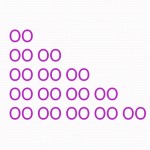

There are records that ask you to listen carefully. There are records that ask you to listen differently. Then there is "oo", which first asks you to reconsider the alphabet and eventually makes you wonder whether the letter “o” has been quietly plotting against you.
Christof Migone's latest release consists of five pieces, all built around the obsessive doubling of that most rounded of vowels. The titles progressively accumulate "o"s, the sounds move insistently across the stereo field, and language begins to wobble under the pressure of its own repetition. It sounds like a simple premise. It isn't. Migone has spent much of his career discovering just how unstable the apparently simple things are: the voice, the body, a word, a recording, a gesture, a noise.
Born in Geneva in 1964 and based in Canada, Migone occupies an unusual territory between sound art, performance, writing and experimental music. His work has repeatedly investigated voice and language not as transparent vehicles for meaning but as physical phenomena, complete with saliva, breath, hesitation, rhythm, failure and all the other inconvenient evidence that there is an actual body attached to the mouth producing them. His extensive work as an artist, writer, curator and teacher has included collaborations, installations, performances and recordings, as well as the influential writings collected in "Sonic Somatic". He also co-founded Squint Press with Alexandre St-Onge, making this release part of an artistic ecosystem in which sounds, words and concepts are allowed to contaminate one another. With "oo", the contamination is delightfully literal.
The five pieces inhabit a stereo field divided almost absurdly cleanly between left and right. One “oo” occupies one side, another answers from the other. Gradually, the distinction between call and response, original and reflection, utterance and echo begins to become unstable. The repeated vowel stops behaving like language and starts behaving like an object. This is where the record becomes considerably more interesting than a clever formal exercise.
Migone's "o" is not merely pronounced. It is stretched, interrupted, multiplied, displaced and made to stumble. The electronic apparatus does not construct some grand synthetic environment around the voice. Instead, it behaves more like an extension of the vocal tract, a prosthesis that allows the mouth to occupy more than one place at once. Technology becomes bodily rather than monumental. There is no electronic cathedral here, no grand architecture waiting for the listener to admire it from a respectful distance. The machine is practically sticking its fingers into the mouth. The result is strangely intimate.
The sounds have an almost cartoonish quality at times, but the humour is never detached from the physicality of the performance. Repetition makes the vowel increasingly strange. Say “oo” once and it is simply a sound. Say it enough times and it begins to lose its linguistic identity. Keep going and eventually you are left with something closer to breath, pulse and resonance. Meaning does not disappear so much as become embarrassed and leave the room.
This is a recurring concern in Migone's practice. His long engagement with stuttering, vocalisation, sonic writing and the body has consistently challenged the assumption that speech exists primarily to transmit information. In "oo", the problem is approached through an almost comically minimal means. There is barely anything to work with, and therefore nowhere for the sound to hide.
The first piece establishes the basic mechanism, but the subsequent tracks complicate it through accumulation. As the number of "o"s increases in the titles, the listener becomes increasingly aware of the difference between visual language and audible language. The written word promises an expanding sequence; the ear encounters repetition. The eye counts. The body listens. That tension is central to the album.
The relationship with Migone's Stéréoophonie project, developed with Simon Brown and Julie Doucet, gives "oo" a larger conceptual background. That earlier project similarly played with doubled vowels, stereo space, polyphony and the destabilisation of textual meaning. A related book, Stéréoophonie, was also published in 2026. Yet "oo" does not require knowledge of that lineage to function. The conceptual scaffolding is there, but it does not need to be assembled before the music can begin. This is important because conceptual art can sometimes behave like an entrance exam: understand the theory first, then you may be permitted to enjoy the object. Migone is considerably more generous.
You can simply listen to two vowels bouncing around the room. And, eventually, you will probably start hearing much more.
There is a peculiar rhythmic quality to the pieces, too. Migone describes them as songs, and although they have almost nothing to do with conventional songwriting, the description makes sense. Each piece establishes its own peculiar groove through repetition and interruption. The voice becomes percussion without quite becoming speech; the stereo movements become choreography without requiring any visible dancer. It is dance music for the organs. The hips are largely irrelevant. The mouth, lungs and gut are where the beat is happening.
This bodily quality also keeps "oo" from becoming merely cerebral. The record is undeniably conceptual, but the concept is continually subjected to physical reality. Breath gets in the way. Pronunciation becomes texture. Repetition becomes exertion. The human voice refuses to remain a clean symbol. It insists on being flesh.
That may be why the apparent silliness of the project gradually acquires something almost poignant. The repeated "o" starts as a typographical joke and ends up exposing one of the oldest peculiarities of human communication: we have invented elaborate systems of language, then spend our lives rediscovering that underneath the words there is only breath making shapes.
Migone's electronic manipulation intensifies this contradiction. The voice is multiplied but never becomes anonymous. Its doubling produces an uncanny sensation of companionship, as if one mouth had somehow split into two. Left and right become psychological as well as spatial positions. The sound travels, returns, hesitates, mirrors itself. The stereo field becomes a small theatre in which identity is repeatedly doubled and displaced.
There is also something quietly absurd about the precision of it all. An entire CD has been constructed around one vowel, yet the more carefully you listen, the less trivial the vowel becomes. This is the great trap of "oo": it makes the listener laugh at the premise and then catches them taking the premise seriously.
By the final piece, the accumulation of "o"s feels almost architectural. Not because the music has become enormous, but because the smallest possible material has acquired enough repetition to develop its own internal geography. The vowel is no longer a letter. It is a place.
And perhaps that is what Migone does best. He takes things we normally pass through without noticing and makes them impossible to ignore. A word becomes a sound. A sound becomes a body. A body becomes a stereo image. A stereo image becomes a conceptual problem. Then, just when you think you've figured it out, the whole thing makes another stupid little noise and starts again.
"oo" is therefore playful without being frivolous, conceptual without becoming explanatory, and bodily without indulging in the usual theatre of transgression. Its real subject is not the vowel itself but the instability of perception: how repetition alters recognition, how placement alters identity, how language becomes music once meaning is made to wait.
It is a small record with an unusually large appetite for mischief.
And somewhere between the first “oo” and the fifth, the alphabet begins to look less like a system and more like a box of strange little creatures that we have foolishly assumed were under control.
Christof Migone's latest release consists of five pieces, all built around the obsessive doubling of that most rounded of vowels. The titles progressively accumulate "o"s, the sounds move insistently across the stereo field, and language begins to wobble under the pressure of its own repetition. It sounds like a simple premise. It isn't. Migone has spent much of his career discovering just how unstable the apparently simple things are: the voice, the body, a word, a recording, a gesture, a noise.
Born in Geneva in 1964 and based in Canada, Migone occupies an unusual territory between sound art, performance, writing and experimental music. His work has repeatedly investigated voice and language not as transparent vehicles for meaning but as physical phenomena, complete with saliva, breath, hesitation, rhythm, failure and all the other inconvenient evidence that there is an actual body attached to the mouth producing them. His extensive work as an artist, writer, curator and teacher has included collaborations, installations, performances and recordings, as well as the influential writings collected in "Sonic Somatic". He also co-founded Squint Press with Alexandre St-Onge, making this release part of an artistic ecosystem in which sounds, words and concepts are allowed to contaminate one another. With "oo", the contamination is delightfully literal.
The five pieces inhabit a stereo field divided almost absurdly cleanly between left and right. One “oo” occupies one side, another answers from the other. Gradually, the distinction between call and response, original and reflection, utterance and echo begins to become unstable. The repeated vowel stops behaving like language and starts behaving like an object. This is where the record becomes considerably more interesting than a clever formal exercise.
Migone's "o" is not merely pronounced. It is stretched, interrupted, multiplied, displaced and made to stumble. The electronic apparatus does not construct some grand synthetic environment around the voice. Instead, it behaves more like an extension of the vocal tract, a prosthesis that allows the mouth to occupy more than one place at once. Technology becomes bodily rather than monumental. There is no electronic cathedral here, no grand architecture waiting for the listener to admire it from a respectful distance. The machine is practically sticking its fingers into the mouth. The result is strangely intimate.
The sounds have an almost cartoonish quality at times, but the humour is never detached from the physicality of the performance. Repetition makes the vowel increasingly strange. Say “oo” once and it is simply a sound. Say it enough times and it begins to lose its linguistic identity. Keep going and eventually you are left with something closer to breath, pulse and resonance. Meaning does not disappear so much as become embarrassed and leave the room.
This is a recurring concern in Migone's practice. His long engagement with stuttering, vocalisation, sonic writing and the body has consistently challenged the assumption that speech exists primarily to transmit information. In "oo", the problem is approached through an almost comically minimal means. There is barely anything to work with, and therefore nowhere for the sound to hide.
The first piece establishes the basic mechanism, but the subsequent tracks complicate it through accumulation. As the number of "o"s increases in the titles, the listener becomes increasingly aware of the difference between visual language and audible language. The written word promises an expanding sequence; the ear encounters repetition. The eye counts. The body listens. That tension is central to the album.
The relationship with Migone's Stéréoophonie project, developed with Simon Brown and Julie Doucet, gives "oo" a larger conceptual background. That earlier project similarly played with doubled vowels, stereo space, polyphony and the destabilisation of textual meaning. A related book, Stéréoophonie, was also published in 2026. Yet "oo" does not require knowledge of that lineage to function. The conceptual scaffolding is there, but it does not need to be assembled before the music can begin. This is important because conceptual art can sometimes behave like an entrance exam: understand the theory first, then you may be permitted to enjoy the object. Migone is considerably more generous.
You can simply listen to two vowels bouncing around the room. And, eventually, you will probably start hearing much more.
There is a peculiar rhythmic quality to the pieces, too. Migone describes them as songs, and although they have almost nothing to do with conventional songwriting, the description makes sense. Each piece establishes its own peculiar groove through repetition and interruption. The voice becomes percussion without quite becoming speech; the stereo movements become choreography without requiring any visible dancer. It is dance music for the organs. The hips are largely irrelevant. The mouth, lungs and gut are where the beat is happening.
This bodily quality also keeps "oo" from becoming merely cerebral. The record is undeniably conceptual, but the concept is continually subjected to physical reality. Breath gets in the way. Pronunciation becomes texture. Repetition becomes exertion. The human voice refuses to remain a clean symbol. It insists on being flesh.
That may be why the apparent silliness of the project gradually acquires something almost poignant. The repeated "o" starts as a typographical joke and ends up exposing one of the oldest peculiarities of human communication: we have invented elaborate systems of language, then spend our lives rediscovering that underneath the words there is only breath making shapes.
Migone's electronic manipulation intensifies this contradiction. The voice is multiplied but never becomes anonymous. Its doubling produces an uncanny sensation of companionship, as if one mouth had somehow split into two. Left and right become psychological as well as spatial positions. The sound travels, returns, hesitates, mirrors itself. The stereo field becomes a small theatre in which identity is repeatedly doubled and displaced.
There is also something quietly absurd about the precision of it all. An entire CD has been constructed around one vowel, yet the more carefully you listen, the less trivial the vowel becomes. This is the great trap of "oo": it makes the listener laugh at the premise and then catches them taking the premise seriously.
By the final piece, the accumulation of "o"s feels almost architectural. Not because the music has become enormous, but because the smallest possible material has acquired enough repetition to develop its own internal geography. The vowel is no longer a letter. It is a place.
And perhaps that is what Migone does best. He takes things we normally pass through without noticing and makes them impossible to ignore. A word becomes a sound. A sound becomes a body. A body becomes a stereo image. A stereo image becomes a conceptual problem. Then, just when you think you've figured it out, the whole thing makes another stupid little noise and starts again.
"oo" is therefore playful without being frivolous, conceptual without becoming explanatory, and bodily without indulging in the usual theatre of transgression. Its real subject is not the vowel itself but the instability of perception: how repetition alters recognition, how placement alters identity, how language becomes music once meaning is made to wait.
It is a small record with an unusually large appetite for mischief.
And somewhere between the first “oo” and the fifth, the alphabet begins to look less like a system and more like a box of strange little creatures that we have foolishly assumed were under control.
Matthias Muche’s BONECRUSHER: Densities - for 12 trombones & percussion
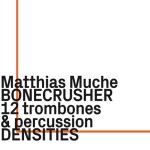
Artist: Matthias Muche’s BONECRUSHER (@)
Title: Densities - for 12 trombones & percussion
Format: Download Only (MP3 + Lossless)
Label: Hat Hut Records (@)
Rated:

Title: Densities - for 12 trombones & percussion
Format: Download Only (MP3 + Lossless)
Label: Hat Hut Records (@)
Rated:
There are twelve trombones on "Densities". This is the sort of information that ought to be stated early, partly because it is impressive, and partly because twelve trombones sound like the beginning of either a magnificent musical experiment or an exceptionally elaborate way of upsetting the neighbours.
Matthias Muche’s BONECRUSHER belongs firmly to the first category. Since its formation, the ensemble has treated the trombone less as a brass instrument in the conventional sense than as a complicated physical apparatus: a column of air, a collection of vibrating surfaces, a system of valves, slides, breath and resonance capable of producing sounds that seem to belong to several musical families at once. On "Densities", this idea has matured into something remarkably cohesive. The thirteen musicians do not merely produce a large sound. They create a body.
Muche, a Cologne-based composer and trombonist, has spent much of his career investigating precisely this territory, where instrumental technique becomes inseparable from the physical behaviour of sound. His work has earned him recognition including the WDR Jazz Prize for improvisation, but "Densities" makes little interest in credentials. The music is too busy examining the molecular structure of a trombone to worry about its résumé.
The album begins with “Butter”, and the title is almost perversely gentle considering what follows. The trombones accumulate in layers, initially suggesting a low-frequency weather system before gradually revealing the extraordinary number of events occurring inside it. Air becomes grain; tones become pressure; individual attacks dissolve into a thickened acoustic surface. The impression is not of twelve players standing next to one another but of one enormous instrument discovering that it has twelve mouths.
That distinction is crucial. Much of the fascination here comes from the way BONECRUSHER constantly shifts the listener’s perception of scale. A sound that initially seems monumental can suddenly disclose a tiny tremor inside it. A seemingly continuous drone turns out to be composed of subtly moving pitches and timbral variations. The music therefore possesses an unusual kind of depth: not the depth produced by reverberation or electronics, but one created entirely by the internal friction of acoustic material.
“Quater” pushes this principle further. Microtonal movements, abrupt articulations and overlapping gestures create a situation in which apparent disorder gradually reveals a remarkably precise organisation. The trombones seem to smear themselves across one another, yet small harmonic relationships keep emerging from the confusion. There is something almost tactile about it, as though the composition were being kneaded into shape rather than conventionally played.
This is where Muche’s compositional thinking becomes particularly compelling. The large ensemble is not used simply to amplify an idea. It changes the nature of the idea itself. Music written for one trombone can contain ambiguity, breath and physical instability; multiplied by twelve, those properties become architecture. A gesture is no longer merely a gesture. It becomes a surface, a pressure field, a mass with edges.
Matthias Müller’s “Up & Down” approaches the same problem from another direction. Its sustained harmonies and carefully controlled internal movement make the ensemble appear almost static at first, although the apparent stillness is constantly being modified. The trombones breathe into one another, generating small shifts in colour and pitch that gradually alter the whole structure. It is an excellent demonstration of how much movement can be hidden inside a sound that, from a distance, appears motionless.
Then comes Johannes Bauer’s “Brass / Breath / Brisk”, originally conceived in the late 1990s and here transformed from its solo/tape origins into an ensemble piece through the work of Jeb Bishop, Matthias Müller and Muche. The historical dimension matters. Bauer, who died in 2016, was one of the great European trombonists of free improvisation, and his presence is felt not through nostalgia but through the physical unruliness of the material. The piece has a rougher grain than the preceding works, with blocks of brass colliding, separating and reforming while Etienne Nillesen’s prepared snare provides a wonderfully economical counterweight.
Nillesen deserves particular attention because his percussion does not behave like percussion in any ordinary orchestral sense. The snare becomes another resonating object, sometimes sharply articulated, sometimes almost suspended within the brass. Its presence prevents the twelve trombones from becoming an entirely self-contained organism. It punctures the mass, gives it a skeleton, occasionally reminds us that rhythm has not been abolished, merely buried somewhere under several tonnes of brass.
And that is perhaps the central achievement of "Densities": it manages to be massive without becoming blunt.
There is plenty here that could easily have collapsed into undifferentiated heaviness. Twelve trombones offer a frighteningly efficient route towards sonic obesity. Instead, BONECRUSHER repeatedly finds cracks inside the density. Breaths, overtones, unstable pitches, tiny articulations and differences in attack remain audible. The music can be abrasive, even physically imposing, but it is rarely merely loud. Its power comes from the complexity packed inside the weight.
The title consequently works on several levels. These are densities of sound, certainly, but also densities of bodies, air, time and attention. The album asks what happens when an instrument normally associated with a single voice is multiplied until individuality begins to disappear. What remains is neither anonymity nor uniformity. It is a collective identity in which the smallest discrepancies become part of the composition.
There is something quietly philosophical about that. The ensemble does not erase the individual players; it makes their differences useful. Twelve trombones can approximate a single organism precisely because no twelve human beings will ever produce exactly the same sound. The imperfections are not defects to be corrected but the material from which the larger form emerges.
Muche's fascination with the trombone therefore reaches beyond extended technique. He is interested in what happens when an instrument is treated as a physical proposition rather than a predetermined vocabulary. The trombone is allowed to be metallic, breathy, granular, vocal, mechanical, spectral and occasionally almost orchestral. It can growl like machinery one moment and become astonishingly fragile the next.
That fragility is what saves "Densities" from becoming a mere demonstration of force. Beneath the muscular title and the intimidating personnel list there is a surprisingly delicate record, one that pays attention to the smallest variations in pressure and resonance. The brute and the microscopic coexist without cancelling one another.
Listening to it is consequently less like hearing a brass ensemble and more like standing inside a machine that has developed an unexpectedly sophisticated inner life.
Which is a fairly good reason to forgive it for having twelve trombones.
"Densities" is an imposing, meticulous and occasionally beautiful piece of contemporary acoustic music. It demonstrates how much can still be extracted from an instrument whose conventional identity seems almost too familiar to surprise us anymore. Muche and BONECRUSHER do not reinvent the trombone by disguising it. They do something more interesting: they expose the strange thing that was already hiding inside it.
The result is music of considerable physical presence, but also of patience and precision. It crushes bones only metaphorically. The ears, however, are invited to undergo a rather more elaborate treatment.
Matthias Muche’s BONECRUSHER belongs firmly to the first category. Since its formation, the ensemble has treated the trombone less as a brass instrument in the conventional sense than as a complicated physical apparatus: a column of air, a collection of vibrating surfaces, a system of valves, slides, breath and resonance capable of producing sounds that seem to belong to several musical families at once. On "Densities", this idea has matured into something remarkably cohesive. The thirteen musicians do not merely produce a large sound. They create a body.
Muche, a Cologne-based composer and trombonist, has spent much of his career investigating precisely this territory, where instrumental technique becomes inseparable from the physical behaviour of sound. His work has earned him recognition including the WDR Jazz Prize for improvisation, but "Densities" makes little interest in credentials. The music is too busy examining the molecular structure of a trombone to worry about its résumé.
The album begins with “Butter”, and the title is almost perversely gentle considering what follows. The trombones accumulate in layers, initially suggesting a low-frequency weather system before gradually revealing the extraordinary number of events occurring inside it. Air becomes grain; tones become pressure; individual attacks dissolve into a thickened acoustic surface. The impression is not of twelve players standing next to one another but of one enormous instrument discovering that it has twelve mouths.
That distinction is crucial. Much of the fascination here comes from the way BONECRUSHER constantly shifts the listener’s perception of scale. A sound that initially seems monumental can suddenly disclose a tiny tremor inside it. A seemingly continuous drone turns out to be composed of subtly moving pitches and timbral variations. The music therefore possesses an unusual kind of depth: not the depth produced by reverberation or electronics, but one created entirely by the internal friction of acoustic material.
“Quater” pushes this principle further. Microtonal movements, abrupt articulations and overlapping gestures create a situation in which apparent disorder gradually reveals a remarkably precise organisation. The trombones seem to smear themselves across one another, yet small harmonic relationships keep emerging from the confusion. There is something almost tactile about it, as though the composition were being kneaded into shape rather than conventionally played.
This is where Muche’s compositional thinking becomes particularly compelling. The large ensemble is not used simply to amplify an idea. It changes the nature of the idea itself. Music written for one trombone can contain ambiguity, breath and physical instability; multiplied by twelve, those properties become architecture. A gesture is no longer merely a gesture. It becomes a surface, a pressure field, a mass with edges.
Matthias Müller’s “Up & Down” approaches the same problem from another direction. Its sustained harmonies and carefully controlled internal movement make the ensemble appear almost static at first, although the apparent stillness is constantly being modified. The trombones breathe into one another, generating small shifts in colour and pitch that gradually alter the whole structure. It is an excellent demonstration of how much movement can be hidden inside a sound that, from a distance, appears motionless.
Then comes Johannes Bauer’s “Brass / Breath / Brisk”, originally conceived in the late 1990s and here transformed from its solo/tape origins into an ensemble piece through the work of Jeb Bishop, Matthias Müller and Muche. The historical dimension matters. Bauer, who died in 2016, was one of the great European trombonists of free improvisation, and his presence is felt not through nostalgia but through the physical unruliness of the material. The piece has a rougher grain than the preceding works, with blocks of brass colliding, separating and reforming while Etienne Nillesen’s prepared snare provides a wonderfully economical counterweight.
Nillesen deserves particular attention because his percussion does not behave like percussion in any ordinary orchestral sense. The snare becomes another resonating object, sometimes sharply articulated, sometimes almost suspended within the brass. Its presence prevents the twelve trombones from becoming an entirely self-contained organism. It punctures the mass, gives it a skeleton, occasionally reminds us that rhythm has not been abolished, merely buried somewhere under several tonnes of brass.
And that is perhaps the central achievement of "Densities": it manages to be massive without becoming blunt.
There is plenty here that could easily have collapsed into undifferentiated heaviness. Twelve trombones offer a frighteningly efficient route towards sonic obesity. Instead, BONECRUSHER repeatedly finds cracks inside the density. Breaths, overtones, unstable pitches, tiny articulations and differences in attack remain audible. The music can be abrasive, even physically imposing, but it is rarely merely loud. Its power comes from the complexity packed inside the weight.
The title consequently works on several levels. These are densities of sound, certainly, but also densities of bodies, air, time and attention. The album asks what happens when an instrument normally associated with a single voice is multiplied until individuality begins to disappear. What remains is neither anonymity nor uniformity. It is a collective identity in which the smallest discrepancies become part of the composition.
There is something quietly philosophical about that. The ensemble does not erase the individual players; it makes their differences useful. Twelve trombones can approximate a single organism precisely because no twelve human beings will ever produce exactly the same sound. The imperfections are not defects to be corrected but the material from which the larger form emerges.
Muche's fascination with the trombone therefore reaches beyond extended technique. He is interested in what happens when an instrument is treated as a physical proposition rather than a predetermined vocabulary. The trombone is allowed to be metallic, breathy, granular, vocal, mechanical, spectral and occasionally almost orchestral. It can growl like machinery one moment and become astonishingly fragile the next.
That fragility is what saves "Densities" from becoming a mere demonstration of force. Beneath the muscular title and the intimidating personnel list there is a surprisingly delicate record, one that pays attention to the smallest variations in pressure and resonance. The brute and the microscopic coexist without cancelling one another.
Listening to it is consequently less like hearing a brass ensemble and more like standing inside a machine that has developed an unexpectedly sophisticated inner life.
Which is a fairly good reason to forgive it for having twelve trombones.
"Densities" is an imposing, meticulous and occasionally beautiful piece of contemporary acoustic music. It demonstrates how much can still be extracted from an instrument whose conventional identity seems almost too familiar to surprise us anymore. Muche and BONECRUSHER do not reinvent the trombone by disguising it. They do something more interesting: they expose the strange thing that was already hiding inside it.
The result is music of considerable physical presence, but also of patience and precision. It crushes bones only metaphorically. The ears, however, are invited to undergo a rather more elaborate treatment.
Emra Grid: Eleven Finns
There is something oddly reassuring about broken electronics. They have already failed at being what they were designed to be, so they no longer have to pretend. A damaged synthesizer can stop obeying its manual and start behaving like an instrument with opinions.
"Eleven Finns", the latest release from Sean Piñeiro under the Emra Grid name, seems to understand this instinctively. Built from slow-moving bass frequencies, carefully shaped percussion and the peculiar behaviour of malfunctioning machines, it is an ambient record that does not so much surround the listener as gradually become part of the room. Its five pieces, composed in Barcelona in 2025, unfold with a patience that makes conventional notions of development feel almost unnecessarily busy.
Piñeiro has been cultivating this particular territory for years. His Emra Grid work has consistently occupied the murkier regions between drone, ambient electronics and industrial sound design, balancing harmonic density against silence and using bass not simply as a low-frequency foundation but as something almost architectural. His previous LINE releases, "Five Cycles Through an Empty Chamber" and "Threatening Omens in the Clouds", established a vocabulary in which menace could emerge from very little: a pressure in the low end, a distorted resonance, a texture slowly changing shape.
"Eleven Finns" retains that vocabulary but changes its weather.
Where "Threatening Omens in the Clouds" suggested something gathering overhead, the new record feels closer to humidity. Nothing is necessarily approaching. Nothing needs to happen. The air simply becomes different.
The title track takes more than thirteen minutes to demonstrate how effective this approach can be. Its rhythmic material is never quite presented as a beat. Percussive sounds appear, recede and mutate, gradually becoming indistinguishable from the surrounding electronic textures. What might initially register as rhythm turns into surface; what seems like background noise acquires a pulse. The piece keeps moving without giving the listener the reassuring landmarks normally associated with movement. This is one of Piñeiro's strengths. He understands that repetition becomes interesting when it is allowed to deteriorate. The bass does not simply return. It shifts. Percussion does not merely repeat. It acquires different weights and edges. Small deviations accumulate until the listener realises that the original pattern has quietly disappeared. There is no dramatic announcement of change because the changes are too patient for that sort of theatre.
“Fact + True” extends the process. Here the relationship between percussion and sustained electronic material becomes even more elusive, with rhythmic fragments emerging from a thickened atmosphere before being swallowed back into it. The effect is strangely physical. One can almost imagine the sounds as objects moving through a dark room, although the room itself keeps changing dimensions.
That visual quality is important to Emra Grid's music. Piñeiro has long been interested in the relationship between sound and empty space, and "Eleven Finns" makes that relationship unusually tangible. Silence is not necessarily an absence between events. It is part of the material. The sounds need somewhere to exist, and the surrounding emptiness gives their low frequencies room to breathe.
Then there is the wonderful perversity of “Alway Season”, composed entirely with a broken MEGAfm MKII. The machine's damaged state is not treated as an unfortunate technical obstacle but as compositional material. This is very much in keeping with Piñeiro's broader fascination with unstable sound sources, but it also reveals something fundamental about the album: "Eleven Finns" is interested in processes that cannot be completely controlled.
The same is true of the circuit-bent Yamaha PortaSound PS-400 used for the title track. A consumer keyboard, once subjected to the usual indignities of circuit bending, becomes something considerably less innocent. The familiar promise of the instrument has been dismantled and replaced by unpredictable electronic behaviour. It is almost a metaphor for ambient music itself. Take an ordinary sound, slow it down, remove its obvious function, place it in enough empty space, and eventually nobody knows what it was supposed to be.
The shorter “The Vision” provides a useful change of scale. At just over three minutes, it does not attempt the prolonged transformations of the longer pieces. Instead, it feels like a fleeting glimpse into the same environment. The record briefly contracts before “The Fame” expands its vocabulary again, bringing the release to a conclusion that feels more like evaporation than resolution.
This structure is one of the album's quiet virtues. Piñeiro does not mistake duration for profundity. The longer pieces allow processes to become perceptible, while the shorter tracks interrupt the accumulation before it turns into a predictable formula. There is enough variation to keep the record alive, but not so much that its internal logic becomes obscured.
The most striking thing about "Eleven Finns", however, is how little it demands from the listener. That does not mean it is easy. There is a difference between music that requires concentration and music that makes concentration unnecessary. Piñeiro's work belongs to the second category. It can be listened to attentively, in which case tiny fluctuations in timbre and rhythm become increasingly apparent, but it can also occupy the peripheral zones of consciousness without collapsing into decorative wallpaper.
That balance is notoriously difficult to achieve. Ambient music has always lived dangerously close to the furniture department, where an attractive texture can be mistaken for a composition. "Eleven Finns" avoids that fate because its sounds are constantly doing something, even when that something is almost imperceptible. The music is not static. It is simply operating at a scale where change has to be noticed rather than announced.
There is also a subtle emotional transformation taking place. The darkness of Piñeiro's earlier LINE work has not disappeared. It has become less theatrical. Instead of menace, there is uncertainty. Instead of something ominous looming in the distance, there is a feeling that the familiar world has become slightly less solid than it was a few minutes ago. That makes "Eleven Finns" a surprisingly intimate record. Its electronic materials may originate in machines, but the music never feels particularly technological. The equipment is merely the means through which Piñeiro investigates resonance, deterioration, repetition and space. A broken synthesizer is no more important than the room in which it is heard. The machine generates the material; the composer decides how long we remain with it.
And patience is perhaps the real instrument being played here. "Eleven Finns" does not chase climaxes, nor does it construct grand emotional arcs. It allows sounds to accumulate their own histories. A percussion hit heard early in a piece may have become almost unrecognisable by the time the piece ends. A bass tone can begin as a presence and eventually feel like part of the architecture. The music's narrative is written in gradual deviation rather than dramatic event.
This gives the album a peculiar kind of poetry. Not the poetry of beautiful images, but of things changing when nobody is looking.
The title "Eleven Finns" remains suitably mysterious, and perhaps it is better that way. The record itself does not explain its names. It simply offers five slightly different ways of inhabiting the same unstable atmosphere. In Piñeiro's hands, ambient music becomes less a genre than a method of paying attention to marginal phenomena: the hum behind the hum, the rhythm beneath the rhythm, the sound that remains after the recognisable sound has gone.
The machines may be broken, but the music is not.
Quite the opposite. "Eleven Finns" finds considerable freedom in malfunction, uncertainty and gradual transformation. It is an understated but deeply tactile work, one that replaces the ominous skies of Piñeiro's earlier LINE releases with something softer and arguably more unsettling: weather that has no intention of leaving.
"Eleven Finns", the latest release from Sean Piñeiro under the Emra Grid name, seems to understand this instinctively. Built from slow-moving bass frequencies, carefully shaped percussion and the peculiar behaviour of malfunctioning machines, it is an ambient record that does not so much surround the listener as gradually become part of the room. Its five pieces, composed in Barcelona in 2025, unfold with a patience that makes conventional notions of development feel almost unnecessarily busy.
Piñeiro has been cultivating this particular territory for years. His Emra Grid work has consistently occupied the murkier regions between drone, ambient electronics and industrial sound design, balancing harmonic density against silence and using bass not simply as a low-frequency foundation but as something almost architectural. His previous LINE releases, "Five Cycles Through an Empty Chamber" and "Threatening Omens in the Clouds", established a vocabulary in which menace could emerge from very little: a pressure in the low end, a distorted resonance, a texture slowly changing shape.
"Eleven Finns" retains that vocabulary but changes its weather.
Where "Threatening Omens in the Clouds" suggested something gathering overhead, the new record feels closer to humidity. Nothing is necessarily approaching. Nothing needs to happen. The air simply becomes different.
The title track takes more than thirteen minutes to demonstrate how effective this approach can be. Its rhythmic material is never quite presented as a beat. Percussive sounds appear, recede and mutate, gradually becoming indistinguishable from the surrounding electronic textures. What might initially register as rhythm turns into surface; what seems like background noise acquires a pulse. The piece keeps moving without giving the listener the reassuring landmarks normally associated with movement. This is one of Piñeiro's strengths. He understands that repetition becomes interesting when it is allowed to deteriorate. The bass does not simply return. It shifts. Percussion does not merely repeat. It acquires different weights and edges. Small deviations accumulate until the listener realises that the original pattern has quietly disappeared. There is no dramatic announcement of change because the changes are too patient for that sort of theatre.
“Fact + True” extends the process. Here the relationship between percussion and sustained electronic material becomes even more elusive, with rhythmic fragments emerging from a thickened atmosphere before being swallowed back into it. The effect is strangely physical. One can almost imagine the sounds as objects moving through a dark room, although the room itself keeps changing dimensions.
That visual quality is important to Emra Grid's music. Piñeiro has long been interested in the relationship between sound and empty space, and "Eleven Finns" makes that relationship unusually tangible. Silence is not necessarily an absence between events. It is part of the material. The sounds need somewhere to exist, and the surrounding emptiness gives their low frequencies room to breathe.
Then there is the wonderful perversity of “Alway Season”, composed entirely with a broken MEGAfm MKII. The machine's damaged state is not treated as an unfortunate technical obstacle but as compositional material. This is very much in keeping with Piñeiro's broader fascination with unstable sound sources, but it also reveals something fundamental about the album: "Eleven Finns" is interested in processes that cannot be completely controlled.
The same is true of the circuit-bent Yamaha PortaSound PS-400 used for the title track. A consumer keyboard, once subjected to the usual indignities of circuit bending, becomes something considerably less innocent. The familiar promise of the instrument has been dismantled and replaced by unpredictable electronic behaviour. It is almost a metaphor for ambient music itself. Take an ordinary sound, slow it down, remove its obvious function, place it in enough empty space, and eventually nobody knows what it was supposed to be.
The shorter “The Vision” provides a useful change of scale. At just over three minutes, it does not attempt the prolonged transformations of the longer pieces. Instead, it feels like a fleeting glimpse into the same environment. The record briefly contracts before “The Fame” expands its vocabulary again, bringing the release to a conclusion that feels more like evaporation than resolution.
This structure is one of the album's quiet virtues. Piñeiro does not mistake duration for profundity. The longer pieces allow processes to become perceptible, while the shorter tracks interrupt the accumulation before it turns into a predictable formula. There is enough variation to keep the record alive, but not so much that its internal logic becomes obscured.
The most striking thing about "Eleven Finns", however, is how little it demands from the listener. That does not mean it is easy. There is a difference between music that requires concentration and music that makes concentration unnecessary. Piñeiro's work belongs to the second category. It can be listened to attentively, in which case tiny fluctuations in timbre and rhythm become increasingly apparent, but it can also occupy the peripheral zones of consciousness without collapsing into decorative wallpaper.
That balance is notoriously difficult to achieve. Ambient music has always lived dangerously close to the furniture department, where an attractive texture can be mistaken for a composition. "Eleven Finns" avoids that fate because its sounds are constantly doing something, even when that something is almost imperceptible. The music is not static. It is simply operating at a scale where change has to be noticed rather than announced.
There is also a subtle emotional transformation taking place. The darkness of Piñeiro's earlier LINE work has not disappeared. It has become less theatrical. Instead of menace, there is uncertainty. Instead of something ominous looming in the distance, there is a feeling that the familiar world has become slightly less solid than it was a few minutes ago. That makes "Eleven Finns" a surprisingly intimate record. Its electronic materials may originate in machines, but the music never feels particularly technological. The equipment is merely the means through which Piñeiro investigates resonance, deterioration, repetition and space. A broken synthesizer is no more important than the room in which it is heard. The machine generates the material; the composer decides how long we remain with it.
And patience is perhaps the real instrument being played here. "Eleven Finns" does not chase climaxes, nor does it construct grand emotional arcs. It allows sounds to accumulate their own histories. A percussion hit heard early in a piece may have become almost unrecognisable by the time the piece ends. A bass tone can begin as a presence and eventually feel like part of the architecture. The music's narrative is written in gradual deviation rather than dramatic event.
This gives the album a peculiar kind of poetry. Not the poetry of beautiful images, but of things changing when nobody is looking.
The title "Eleven Finns" remains suitably mysterious, and perhaps it is better that way. The record itself does not explain its names. It simply offers five slightly different ways of inhabiting the same unstable atmosphere. In Piñeiro's hands, ambient music becomes less a genre than a method of paying attention to marginal phenomena: the hum behind the hum, the rhythm beneath the rhythm, the sound that remains after the recognisable sound has gone.
The machines may be broken, but the music is not.
Quite the opposite. "Eleven Finns" finds considerable freedom in malfunction, uncertainty and gradual transformation. It is an understated but deeply tactile work, one that replaces the ominous skies of Piñeiro's earlier LINE releases with something softer and arguably more unsettling: weather that has no intention of leaving.
Oren Ambarchi & Will Guthrie: Cold Shoulder
Artist: Oren Ambarchi & Will Guthrie (@)
Title: Cold Shoulder
Format: LP
Label: Futura Resistenza (@)
Rated:
Title: Cold Shoulder
Format: LP
Label: Futura Resistenza (@)
Rated:
There is a particular kind of confidence that only arrives after decades of curiosity, failure, experimentation, and a healthy refusal to behave like the music industry expects. "Cold Shoulder", the new collaboration between Oren Ambarchi and Will Guthrie, feels like the work of two musicians who have finally reached the point where they no longer need to prove anything. They simply listen, react, disappear into the sound, and allow the music to become something larger than either player. A rare luxury in a world where everyone seems compelled to announce their own genius every five minutes, preferably through a social media caption written in capital letters.
The two musicians have been travelling along parallel but wonderfully irregular paths for many years. Australian guitarist and composer Oren Ambarchi has built a singular career by transforming the guitar into something almost unrecognisable: not a traditional harmonic instrument, but a laboratory of vibrations, resonances, electrical ghosts and architectural spaces. His work has moved between experimental electronics, minimalism, improvisation and the physical weight of rock, collaborating with artists as diverse as Jim O’Rourke, Keith Rowe, Keiji Haino and members of Sunn O))).
Will Guthrie, meanwhile, has always approached percussion as a universe rather than a role. A drummer in the most expanded sense of the word, he has explored the relationship between rhythm, objects, electronics and physical resonance, moving from the radical electro-acoustic investigations of his earlier years to a renewed fascination with drums, gongs and gamelan-inspired structures. His Ensemble Nist-Nah project further demonstrates his interest in percussion as a meeting point between cultures, bodies and collective memory.
On "Cold Shoulder", recorded live in Berlin in late 2024, the history between the two artists becomes almost audible. This is not a meeting of strangers searching awkwardly for a common language. It is a conversation between old friends who already know when silence is more important than sound. The album consists of two lengthy pieces, each occupying one side of the vinyl, and this format feels almost inevitable: these are not compositions that demand attention through dramatic gestures, but slow-moving ecosystems where every small change becomes meaningful.
The opening moments reveal Ambarchi’s guitar transformed into a drifting, organ-like presence. His familiar use of Leslie effects creates a sensation of circular movement, as if the sound itself were slowly rotating in a vast empty room. Yet the apparent calm is deceptive. Beneath the surface, tiny shifts constantly reshape the landscape. A harmonic shadow appears, a tone stretches into infinity, a vibration begins to suggest melody before dissolving again. Ambarchi has always been fascinated by the border between recognisable music and pure physical sensation, and here he finds one of his most elegant balances between the two.
Guthrie’s contribution is equally fascinating because of what he chooses not to do. This is not percussion as punctuation, nor rhythm as an obvious driving force. His playing operates like weather: sometimes barely visible, sometimes suddenly revealing the enormous amount of movement hidden inside apparent stillness. Cymbals shimmer like distant metallic reflections, subtle pulses emerge and vanish, and the drums become less a rhythmic machine than a living surface responding to the vibrations around them.
The magic of "Cold Shoulder" lies precisely in this tension between stability and uncertainty. The music feels peaceful, but never passive. It floats, yet never loses direction. Like watching clouds slowly rearrange themselves, it creates the illusion of simplicity while hiding an extraordinary amount of control. Humans have spent centuries inventing increasingly complicated tools to make things easier, then created experimental music to remind themselves that complexity was there all along. A wonderfully inefficient species, really.
The album also represents something important in the wider story of improvisational music: maturity not as reduction, but as freedom. The younger versions of Ambarchi and Guthrie explored extremes, fragmentation, noise and abstraction. Those experiences remain present, but they no longer need to dominate the conversation. The violence has become texture; the chaos has learned patience.
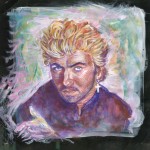
There is also a playful side to the release, symbolised by the wonderfully unexpected cover image featuring George Michael. It is a reminder that experimental music does not have to exist behind a wall of seriousness and academic gloom. Sometimes the most radical gesture is simply allowing beauty, humour and contradiction to coexist. The universe is strange enough already, so perhaps a drone record with a pop icon watching over it is actually the most logical artistic statement possible.
"Cold Shoulder" is therefore not a record about distance despite its title. It is about intimacy achieved through space, about two musicians comfortable enough with each other to leave room for uncertainty. It is music that does not chase the listener but quietly changes the atmosphere around them. A slow-burning conversation between electricity, skin, metal and memory.
After twenty years of collaboration, Ambarchi and Guthrie have produced something that feels neither like a retrospective nor a conclusion. It feels like a continuation, a reminder that experience does not necessarily make artists predictable. Sometimes it simply gives them the confidence to wander further.
And fortunately, they still know how to get wonderfully lost.
The two musicians have been travelling along parallel but wonderfully irregular paths for many years. Australian guitarist and composer Oren Ambarchi has built a singular career by transforming the guitar into something almost unrecognisable: not a traditional harmonic instrument, but a laboratory of vibrations, resonances, electrical ghosts and architectural spaces. His work has moved between experimental electronics, minimalism, improvisation and the physical weight of rock, collaborating with artists as diverse as Jim O’Rourke, Keith Rowe, Keiji Haino and members of Sunn O))).
Will Guthrie, meanwhile, has always approached percussion as a universe rather than a role. A drummer in the most expanded sense of the word, he has explored the relationship between rhythm, objects, electronics and physical resonance, moving from the radical electro-acoustic investigations of his earlier years to a renewed fascination with drums, gongs and gamelan-inspired structures. His Ensemble Nist-Nah project further demonstrates his interest in percussion as a meeting point between cultures, bodies and collective memory.
On "Cold Shoulder", recorded live in Berlin in late 2024, the history between the two artists becomes almost audible. This is not a meeting of strangers searching awkwardly for a common language. It is a conversation between old friends who already know when silence is more important than sound. The album consists of two lengthy pieces, each occupying one side of the vinyl, and this format feels almost inevitable: these are not compositions that demand attention through dramatic gestures, but slow-moving ecosystems where every small change becomes meaningful.
The opening moments reveal Ambarchi’s guitar transformed into a drifting, organ-like presence. His familiar use of Leslie effects creates a sensation of circular movement, as if the sound itself were slowly rotating in a vast empty room. Yet the apparent calm is deceptive. Beneath the surface, tiny shifts constantly reshape the landscape. A harmonic shadow appears, a tone stretches into infinity, a vibration begins to suggest melody before dissolving again. Ambarchi has always been fascinated by the border between recognisable music and pure physical sensation, and here he finds one of his most elegant balances between the two.
Guthrie’s contribution is equally fascinating because of what he chooses not to do. This is not percussion as punctuation, nor rhythm as an obvious driving force. His playing operates like weather: sometimes barely visible, sometimes suddenly revealing the enormous amount of movement hidden inside apparent stillness. Cymbals shimmer like distant metallic reflections, subtle pulses emerge and vanish, and the drums become less a rhythmic machine than a living surface responding to the vibrations around them.
The magic of "Cold Shoulder" lies precisely in this tension between stability and uncertainty. The music feels peaceful, but never passive. It floats, yet never loses direction. Like watching clouds slowly rearrange themselves, it creates the illusion of simplicity while hiding an extraordinary amount of control. Humans have spent centuries inventing increasingly complicated tools to make things easier, then created experimental music to remind themselves that complexity was there all along. A wonderfully inefficient species, really.
The album also represents something important in the wider story of improvisational music: maturity not as reduction, but as freedom. The younger versions of Ambarchi and Guthrie explored extremes, fragmentation, noise and abstraction. Those experiences remain present, but they no longer need to dominate the conversation. The violence has become texture; the chaos has learned patience.
There is also a playful side to the release, symbolised by the wonderfully unexpected cover image featuring George Michael. It is a reminder that experimental music does not have to exist behind a wall of seriousness and academic gloom. Sometimes the most radical gesture is simply allowing beauty, humour and contradiction to coexist. The universe is strange enough already, so perhaps a drone record with a pop icon watching over it is actually the most logical artistic statement possible.
"Cold Shoulder" is therefore not a record about distance despite its title. It is about intimacy achieved through space, about two musicians comfortable enough with each other to leave room for uncertainty. It is music that does not chase the listener but quietly changes the atmosphere around them. A slow-burning conversation between electricity, skin, metal and memory.
After twenty years of collaboration, Ambarchi and Guthrie have produced something that feels neither like a retrospective nor a conclusion. It feels like a continuation, a reminder that experience does not necessarily make artists predictable. Sometimes it simply gives them the confidence to wander further.
And fortunately, they still know how to get wonderfully lost.
Dionée: Mille-feuilles
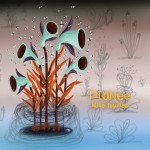
There are records that politely ask for your attention. Others kick the door open with volume. Dionée's "Mille-feuilles" does neither. It simply occupies the room until you begin hearing differently. That may sound suspiciously mystical, but the trio's music has little interest in transcendence for its own sake. Instead, it patiently constructs a landscape where unlikely materials coexist with startling naturalness: chamber music elegance brushing against the grain of drone, post-rock weight appearing without guitars, electroacoustic abstraction refusing to become mere academic exercise. It is, as the press release jokingly suggests, somewhere between Black Sabbath and Morton Feldman. Ridiculous on paper. Surprisingly convincing in practice.
Dionée is the latest project led by Québec composer and bassist Éric Normand, a prolific figure in Canada's experimental music community whose career has moved effortlessly between free improvisation, composition, and large ensemble work. His collaborations with improvisers such as Xavier Charles, Franz Hautzinger, and Anne-F Jacques have established him as an artist who thrives on instability, constantly seeking new relationships between sound sources rather than fixed stylistic identities. With Clarisse Bériault and Robin Servant, however, the objective feels different. Rather than celebrating improvisational friction, the trio pursues cohesion without sacrificing unpredictability.
The instrumentation alone deserves a raised eyebrow. Oboe, diatonic accordion, electric bass, oscillators, effects, beatboxing and electronics should, by all reasonable expectations, compete for attention. Instead they dissolve into what frequently resembles a chamber orchestra viewed through frosted glass. Individual instruments lose their sharp outlines, merging into slow-moving masses where acoustic resonance and electronic coloration become almost impossible to separate. One spends less time identifying who plays what than wondering how such familiar sounds became so strangely anonymous.
Normand's compositional approach favours gradual transformation over dramatic contrast. The two extended pieces unfold like evolving ecosystems rather than conventional compositions with clearly marked destinations. Themes emerge almost accidentally before being swallowed by sustained drones, harmonic shadows or subtle rhythmic currents. There is movement everywhere, yet very little appears hurried. The music trusts the listener's patience, a quality becoming increasingly rare in an era where albums often seem terrified of silence.
Bériault's oboe plays an especially fascinating role. Traditionally associated with pastoral lyricism or orchestral melancholy, it becomes something far less predictable here. Sometimes it cuts through the dense textures with almost vocal fragility; elsewhere it functions as another layer within the harmonic fog, its identity deliberately obscured by electronics and processing. Servant's accordion undergoes a similar transformation. Any expectation of folk nostalgia is quickly dismantled as its reeds become sources of sustained harmonic pressure rather than melodic comfort.
The album's title, "Mille-feuilles", inevitably evokes layers, and layering is indeed central to the listening experience. Yet these are not neatly stacked architectural strata. They resemble geological deposits compressed over centuries, where traces of different musical histories remain visible without ever separating cleanly. Minimalism rubs shoulders with doom-like harmonic gravity, contemporary classical restraint brushes against noise aesthetics, and occasional melodic fragments appear like half-remembered conversations overheard through thick walls.
One of the album's quiet achievements lies in how it handles density. Many experimental records equate complexity with saturation, filling every available frequency until subtlety suffocates. Dionée exercises remarkable restraint. Even at its heaviest, the music breathes. Empty spaces are not absences but active participants, allowing resonance to linger long enough for the ear to discover secondary events hidden beneath the obvious ones. It rewards repeated listening not because it is deliberately obscure, but because its internal relationships remain fluid.
There is also an understated cinematic quality throughout, though thankfully one that avoids becoming "soundtrack music" in the fashionable sense. Rather than illustrating imaginary scenes, these compositions generate psychological environments. They suggest abandoned industrial halls, dense northern forests, forgotten religious architecture, or perhaps none of these at all. The images remain personal, shaped as much by the listener's memory as by the musicians' intentions.
The two lengthy tracks refuse convenient climaxes. Instead they accumulate emotional weight through persistence, allowing microscopic shifts in timbre or harmony to feel monumental. This approach demands concentration, but it also offers something increasingly uncommon: the satisfaction of inhabiting a musical space instead of merely consuming it.
If there is humour here, it comes from the trio's quiet defiance of categorisation. Calling this chamber music feels incomplete. Calling it drone undersells its melodic intelligence. Labeling it post-rock ignores its compositional sophistication. Experimental music has always enjoyed inventing increasingly specialised boxes; "Mille-feuilles" politely stacks those boxes into a bonfire and continues playing.
Beautifully recorded and enhanced by Marnix Everaert's striking visual presentation, the album confirms that adventurous music need not choose between intellectual curiosity and emotional resonance. Dionée builds bridges where others erect boundaries, demonstrating that the distance between Feldman's stillness and Sabbath's physicality may not be as vast as genre maps would have us believe. Sometimes all it takes is three musicians willing to ignore the signposts and trust that listeners are capable of getting pleasantly lost.
Dionée is the latest project led by Québec composer and bassist Éric Normand, a prolific figure in Canada's experimental music community whose career has moved effortlessly between free improvisation, composition, and large ensemble work. His collaborations with improvisers such as Xavier Charles, Franz Hautzinger, and Anne-F Jacques have established him as an artist who thrives on instability, constantly seeking new relationships between sound sources rather than fixed stylistic identities. With Clarisse Bériault and Robin Servant, however, the objective feels different. Rather than celebrating improvisational friction, the trio pursues cohesion without sacrificing unpredictability.
The instrumentation alone deserves a raised eyebrow. Oboe, diatonic accordion, electric bass, oscillators, effects, beatboxing and electronics should, by all reasonable expectations, compete for attention. Instead they dissolve into what frequently resembles a chamber orchestra viewed through frosted glass. Individual instruments lose their sharp outlines, merging into slow-moving masses where acoustic resonance and electronic coloration become almost impossible to separate. One spends less time identifying who plays what than wondering how such familiar sounds became so strangely anonymous.
Normand's compositional approach favours gradual transformation over dramatic contrast. The two extended pieces unfold like evolving ecosystems rather than conventional compositions with clearly marked destinations. Themes emerge almost accidentally before being swallowed by sustained drones, harmonic shadows or subtle rhythmic currents. There is movement everywhere, yet very little appears hurried. The music trusts the listener's patience, a quality becoming increasingly rare in an era where albums often seem terrified of silence.
Bériault's oboe plays an especially fascinating role. Traditionally associated with pastoral lyricism or orchestral melancholy, it becomes something far less predictable here. Sometimes it cuts through the dense textures with almost vocal fragility; elsewhere it functions as another layer within the harmonic fog, its identity deliberately obscured by electronics and processing. Servant's accordion undergoes a similar transformation. Any expectation of folk nostalgia is quickly dismantled as its reeds become sources of sustained harmonic pressure rather than melodic comfort.
The album's title, "Mille-feuilles", inevitably evokes layers, and layering is indeed central to the listening experience. Yet these are not neatly stacked architectural strata. They resemble geological deposits compressed over centuries, where traces of different musical histories remain visible without ever separating cleanly. Minimalism rubs shoulders with doom-like harmonic gravity, contemporary classical restraint brushes against noise aesthetics, and occasional melodic fragments appear like half-remembered conversations overheard through thick walls.
One of the album's quiet achievements lies in how it handles density. Many experimental records equate complexity with saturation, filling every available frequency until subtlety suffocates. Dionée exercises remarkable restraint. Even at its heaviest, the music breathes. Empty spaces are not absences but active participants, allowing resonance to linger long enough for the ear to discover secondary events hidden beneath the obvious ones. It rewards repeated listening not because it is deliberately obscure, but because its internal relationships remain fluid.
There is also an understated cinematic quality throughout, though thankfully one that avoids becoming "soundtrack music" in the fashionable sense. Rather than illustrating imaginary scenes, these compositions generate psychological environments. They suggest abandoned industrial halls, dense northern forests, forgotten religious architecture, or perhaps none of these at all. The images remain personal, shaped as much by the listener's memory as by the musicians' intentions.
The two lengthy tracks refuse convenient climaxes. Instead they accumulate emotional weight through persistence, allowing microscopic shifts in timbre or harmony to feel monumental. This approach demands concentration, but it also offers something increasingly uncommon: the satisfaction of inhabiting a musical space instead of merely consuming it.
If there is humour here, it comes from the trio's quiet defiance of categorisation. Calling this chamber music feels incomplete. Calling it drone undersells its melodic intelligence. Labeling it post-rock ignores its compositional sophistication. Experimental music has always enjoyed inventing increasingly specialised boxes; "Mille-feuilles" politely stacks those boxes into a bonfire and continues playing.
Beautifully recorded and enhanced by Marnix Everaert's striking visual presentation, the album confirms that adventurous music need not choose between intellectual curiosity and emotional resonance. Dionée builds bridges where others erect boundaries, demonstrating that the distance between Feldman's stillness and Sabbath's physicality may not be as vast as genre maps would have us believe. Sometimes all it takes is three musicians willing to ignore the signposts and trust that listeners are capable of getting pleasantly lost.