
Wednesday, August 19, 2026
Rayan Ha?dar: Cities burn as we dream of a return
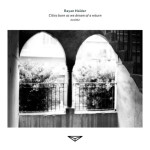
Artist: Rayan Ha?dar
Title: Cities burn as we dream of a return
Format: Download Only (MP3 + Lossless)
Label: Dragon's Eye Recordings (@)
Rated:


Title: Cities burn as we dream of a return
Format: Download Only (MP3 + Lossless)
Label: Dragon's Eye Recordings (@)
Rated:
Some records try to describe distance. Others sit inside it and let it do the talking, which is a far less comforting arrangement. "Cities burn as we dream of a return" by Rayan Haïdar belongs to that second, more difficult category, where memory isn’t revisited so much as endured.
Haïdar, born in Beirut and now based in Paris, works with a palette that looks deceptively familiar: ambient guitar, layers of effects, slow-building textures. The usual toolkit for introspection, in other words. But here, those tools are carrying something heavier than mood. These pieces began as home recordings, quiet fragments orbiting around a distant city, and then reality intervened in the most unwelcome way. The escalation of violence in Lebanon didn’t just inform the work. It contaminated it, turning each sound into a witness that didn’t ask for the job.
The opening tracks feel almost hesitant, as if unsure whether they’re allowed to exist. “Seeing light flicker from windows” and “At dawn, looking up” drift in with a fragile clarity, guitar tones stretching into soft halos that never quite settle. There’s beauty here, yes, but it’s the kind that keeps checking over its shoulder. You get the sense of someone reconstructing a place from memory while knowing that the original is being altered, damaged, or erased in real time. Not exactly a relaxing listening experience, unless your idea of relaxation involves existential unease.
What sets the album apart from the crowded field of ambient releases is its refusal to aestheticize that tension. Many artists in this space polish their melancholy until it gleams. Haïdar leaves it slightly raw, edges frayed, layers bleeding into each other in ways that feel less composed than accumulated. The title track, in particular, holds that contradiction in a tight, uncomfortable balance: warmth and rupture occupying the same sonic breath, like two incompatible truths forced to share a room.
There’s also an interesting sense of verticality in the album’s structure. The paired gestures of “At dawn, looking up” and “At dusk, looking down” frame the record not just temporally but spatially, as if mapping a city through perspective rather than geography. In between, tracks like “On people we once met and places we once saw” stretch time outward, letting memory expand until it becomes almost architectural. Not solid, exactly, but persistent enough to inhabit.
If names like Rafael Anton Irisarri or Sarah Davachi come to mind, it’s mostly in terms of atmosphere and patience. But Haïdar’s work feels less concerned with immersion for its own sake and more with the uneasy act of holding onto something that refuses to stay still. The music doesn’t resolve because the situation it emerges from doesn’t resolve. It just continues, carrying its own weight forward.
Releases on Dragon's Eye Recordings often dwell in introspection, but this one feels unusually exposed. Not louder, not more dramatic, just harder to ignore. There’s a quiet insistence running through it, a sense that creation here isn’t an aesthetic choice so much as a necessary response to distance, grief, and the basic human refusal to let a place disappear entirely.
It leaves you in an odd position as a listener. You’re not exactly invited in, but you’re not excluded either. You’re just there, suspended between presence and absence, listening to a city that exists simultaneously as memory, sound, and loss. Not the most comforting place to spend forty minutes. Probably the point.
Haïdar, born in Beirut and now based in Paris, works with a palette that looks deceptively familiar: ambient guitar, layers of effects, slow-building textures. The usual toolkit for introspection, in other words. But here, those tools are carrying something heavier than mood. These pieces began as home recordings, quiet fragments orbiting around a distant city, and then reality intervened in the most unwelcome way. The escalation of violence in Lebanon didn’t just inform the work. It contaminated it, turning each sound into a witness that didn’t ask for the job.
The opening tracks feel almost hesitant, as if unsure whether they’re allowed to exist. “Seeing light flicker from windows” and “At dawn, looking up” drift in with a fragile clarity, guitar tones stretching into soft halos that never quite settle. There’s beauty here, yes, but it’s the kind that keeps checking over its shoulder. You get the sense of someone reconstructing a place from memory while knowing that the original is being altered, damaged, or erased in real time. Not exactly a relaxing listening experience, unless your idea of relaxation involves existential unease.
What sets the album apart from the crowded field of ambient releases is its refusal to aestheticize that tension. Many artists in this space polish their melancholy until it gleams. Haïdar leaves it slightly raw, edges frayed, layers bleeding into each other in ways that feel less composed than accumulated. The title track, in particular, holds that contradiction in a tight, uncomfortable balance: warmth and rupture occupying the same sonic breath, like two incompatible truths forced to share a room.
There’s also an interesting sense of verticality in the album’s structure. The paired gestures of “At dawn, looking up” and “At dusk, looking down” frame the record not just temporally but spatially, as if mapping a city through perspective rather than geography. In between, tracks like “On people we once met and places we once saw” stretch time outward, letting memory expand until it becomes almost architectural. Not solid, exactly, but persistent enough to inhabit.
If names like Rafael Anton Irisarri or Sarah Davachi come to mind, it’s mostly in terms of atmosphere and patience. But Haïdar’s work feels less concerned with immersion for its own sake and more with the uneasy act of holding onto something that refuses to stay still. The music doesn’t resolve because the situation it emerges from doesn’t resolve. It just continues, carrying its own weight forward.
Releases on Dragon's Eye Recordings often dwell in introspection, but this one feels unusually exposed. Not louder, not more dramatic, just harder to ignore. There’s a quiet insistence running through it, a sense that creation here isn’t an aesthetic choice so much as a necessary response to distance, grief, and the basic human refusal to let a place disappear entirely.
It leaves you in an odd position as a listener. You’re not exactly invited in, but you’re not excluded either. You’re just there, suspended between presence and absence, listening to a city that exists simultaneously as memory, sound, and loss. Not the most comforting place to spend forty minutes. Probably the point.
Comments
Stream
Browse by Genre
Industrial Music / Industrial Metal / Aggro Industrial / Electro Metal
Industrial Noise / Power Noise / Harsh Noise
Synth Pop / Electro Pop / Synth-Electronica
Techno / Trance / Goa / Drum'n'Bass / Jungle / Tribal / Trip-Hop
Ambient / Electronica / Ethereal / Dub / Soundscapes / Abstract
Experimental / Avantgarde / Weird & Wired / Glitch / Noise / Field Recording
Dark / Gothic / Wave / New Wave / Dark Wave / Industrial Gothic
New Music / Downtown / Avantgarde Jazz / New Classical / World