
Sunday, September 20, 2026
Karoline Wallace: Eon
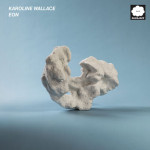


Karoline Wallace’s "Eon" doesn’t arrive politely. It sort of seeps in, like a memory you didn’t agree to revisit but now have to entertain anyway. Which is fitting, because this record spends a lot of time negotiating with time itself - how it stretches, loops, fractures, and occasionally just sits there staring at you.
Wallace has been circling this intersection of jazz, folk, and contemporary composition for a while now, but "Eon" feels less like a continuation and more like a widening of the frame. Her work with ensembles in the Norwegian scene already hinted at a taste for porous structures, but here she seems determined to let everything leak into everything else. Voice into electronics, melody into texture, intimacy into something slightly disorienting.
The lineup helps. Signe Emmeluth’s saxophone and flute don’t behave like polite jazz instruments; they flicker, intrude, dissolve. Karl Bjora’s guitar often feels like it’s remembering a groove rather than playing one. Joel Ring’s cello anchors things just enough to make the surrounding instability noticeable, while Martin Langlie - drums, electronics, banjo, because apparently categories are optional - keeps nudging the whole structure off balance. It’s an ensemble that understands restraint, but also enjoys quietly sabotaging it.
Wallace herself operates in that slippery space between singer and instigator. Her voice doesn’t dominate; it threads through the arrangements, sometimes clear and almost folk-like, sometimes fragmented, processed, or just hovering at the edge of intelligibility. The use of Norwegian lyrics adds another layer - not as exotic garnish, but as a rhythmic and phonetic material that shapes the music as much as it communicates meaning. Even if you don’t understand the words, you understand their weight.
What "Eon" does particularly well is avoid the trap of “fusion” as a tidy concept. This isn’t jazz plus electronics plus folk neatly arranged on a plate. It’s more like all those elements were thrown into the same room and left to negotiate their own relationships. Tape recordings drift in like ghosts of other contexts, Morse-like melodic fragments blink on and off, grooves emerge only to dissolve before they can settle into anything reassuring.
Take “Tycho”, which opens the album with a sense of suspended motion. It doesn’t build so much as accumulate, layers folding into each other until you realize the piece has quietly shifted its center of gravity. “Bittelille meg” pulls things inward, more intimate, almost fragile, before “Klokkestein” introduces a denser, more tactile interplay between voice and ensemble. Throughout, Wallace seems less interested in contrast for its own sake and more in how states bleed into one another.
There’s a peculiar elasticity to the album’s pacing. Some passages feel like they’re stretching toward something just out of reach, others like they’ve already arrived and are now slowly dissolving. “Karamellgneis” (which sounds like a geological formation invented during a sugar rush) manages to be both playful and slightly ominous, a trick the record pulls more than once. Even the closing “BULDER/Live for Today” resists the idea of resolution, ending not with a statement but with a kind of open-ended shrug.
What’s quietly impressive is how physical the music feels despite its abstract tendencies. Textures aren’t just decorative; they have weight, friction, temperature. You can almost map the album as a terrain - soft ground here, sharp edges there, occasional pockets where things sink unexpectedly.
There’s also a sense that Wallace is less interested in perfection than in presence. The performances retain a certain looseness, a willingness to let small imperfections remain visible. It gives the music a kind of lived-in quality, as if these pieces are still evolving even as you’re listening to them.
If "Eon" has a flaw, it’s that it doesn’t make itself easy to grasp in a single pass. It’s not built for quick consumption or immediate clarity. But that’s also its strength. It rewards the kind of listening that requires a bit of patience, a bit of surrender - two things people claim to value and then immediately avoid.
In the end, Wallace isn’t offering a grand statement about time, memory, or identity. She’s sketching their edges, letting them blur into sound. And somewhere in that blur, something quietly precise emerges. Not a conclusion, not a revelation. Just a space that feels, for a moment, convincingly real.
Wallace has been circling this intersection of jazz, folk, and contemporary composition for a while now, but "Eon" feels less like a continuation and more like a widening of the frame. Her work with ensembles in the Norwegian scene already hinted at a taste for porous structures, but here she seems determined to let everything leak into everything else. Voice into electronics, melody into texture, intimacy into something slightly disorienting.
The lineup helps. Signe Emmeluth’s saxophone and flute don’t behave like polite jazz instruments; they flicker, intrude, dissolve. Karl Bjora’s guitar often feels like it’s remembering a groove rather than playing one. Joel Ring’s cello anchors things just enough to make the surrounding instability noticeable, while Martin Langlie - drums, electronics, banjo, because apparently categories are optional - keeps nudging the whole structure off balance. It’s an ensemble that understands restraint, but also enjoys quietly sabotaging it.
Wallace herself operates in that slippery space between singer and instigator. Her voice doesn’t dominate; it threads through the arrangements, sometimes clear and almost folk-like, sometimes fragmented, processed, or just hovering at the edge of intelligibility. The use of Norwegian lyrics adds another layer - not as exotic garnish, but as a rhythmic and phonetic material that shapes the music as much as it communicates meaning. Even if you don’t understand the words, you understand their weight.
What "Eon" does particularly well is avoid the trap of “fusion” as a tidy concept. This isn’t jazz plus electronics plus folk neatly arranged on a plate. It’s more like all those elements were thrown into the same room and left to negotiate their own relationships. Tape recordings drift in like ghosts of other contexts, Morse-like melodic fragments blink on and off, grooves emerge only to dissolve before they can settle into anything reassuring.
Take “Tycho”, which opens the album with a sense of suspended motion. It doesn’t build so much as accumulate, layers folding into each other until you realize the piece has quietly shifted its center of gravity. “Bittelille meg” pulls things inward, more intimate, almost fragile, before “Klokkestein” introduces a denser, more tactile interplay between voice and ensemble. Throughout, Wallace seems less interested in contrast for its own sake and more in how states bleed into one another.
There’s a peculiar elasticity to the album’s pacing. Some passages feel like they’re stretching toward something just out of reach, others like they’ve already arrived and are now slowly dissolving. “Karamellgneis” (which sounds like a geological formation invented during a sugar rush) manages to be both playful and slightly ominous, a trick the record pulls more than once. Even the closing “BULDER/Live for Today” resists the idea of resolution, ending not with a statement but with a kind of open-ended shrug.
What’s quietly impressive is how physical the music feels despite its abstract tendencies. Textures aren’t just decorative; they have weight, friction, temperature. You can almost map the album as a terrain - soft ground here, sharp edges there, occasional pockets where things sink unexpectedly.
There’s also a sense that Wallace is less interested in perfection than in presence. The performances retain a certain looseness, a willingness to let small imperfections remain visible. It gives the music a kind of lived-in quality, as if these pieces are still evolving even as you’re listening to them.
If "Eon" has a flaw, it’s that it doesn’t make itself easy to grasp in a single pass. It’s not built for quick consumption or immediate clarity. But that’s also its strength. It rewards the kind of listening that requires a bit of patience, a bit of surrender - two things people claim to value and then immediately avoid.
In the end, Wallace isn’t offering a grand statement about time, memory, or identity. She’s sketching their edges, letting them blur into sound. And somewhere in that blur, something quietly precise emerges. Not a conclusion, not a revelation. Just a space that feels, for a moment, convincingly real.
Comments
Stream
Browse by Genre
Industrial Music / Industrial Metal / Aggro Industrial / Electro Metal
Industrial Noise / Power Noise / Harsh Noise
Synth Pop / Electro Pop / Synth-Electronica
Techno / Trance / Goa / Drum'n'Bass / Jungle / Tribal / Trip-Hop
Ambient / Electronica / Ethereal / Dub / Soundscapes / Abstract
Experimental / Avantgarde / Weird & Wired / Glitch / Noise / Field Recording
Dark / Gothic / Wave / New Wave / Dark Wave / Industrial Gothic
New Music / Downtown / Avantgarde Jazz / New Classical / World