
Sicker Man: Spökenkieker
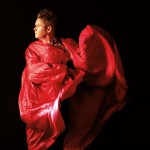
Artist: Sicker Man (http://www.sicker-man.com/) (@)
Title: Spökenkieker
Format: LP
Label: Blank Records (@)
Rated:

Title: Spökenkieker
Format: LP
Label: Blank Records (@)
Rated:
Some artists make albums. Others build elaborate time machines and then pretend it’s just a record. Sicker Man has been quietly doing the latter for years, and "Spökenkieker" feels less like a new chapter than a return to the scene of the original disturbance.
The title alone already refuses to sit still. A soothsayer cursed with foresight, condemned to see forward only by staring backward. It’s a neat metaphor, but also an uncomfortably accurate description of how this album behaves. Vethake doesn’t chase the future. He excavates it, like something buried prematurely under layers of cultural fatigue.
There’s a specific geography haunting this record. Eastern Westphalia, the Teutoburg Forest, that damp mythological undergrowth where folklore doesn’t quite die, it just waits. You can hear it in the way the music breathes: not in clean lines, but in fog, in half-remembered gestures. The past here isn’t referenced, it leaks.
Musically, "Spökenkieker" is a careful mess. Not chaotic, that would be too easy. It’s more like several centuries arguing quietly in the same room. The electric cello, Vethake’s long-time accomplice, remains the gravitational center. It hums, scratches, dissolves, reassembles. Around it orbit fragments of spiritual jazz, orchestral swing, dub-inflected low-end pressure, and ambient architectures that seem to forget their own blueprints halfway through construction.
Tracks like “Johatsu” and its reprise function as thresholds rather than statements. They don’t begin or end so much as seep in and out, like memory failing to commit to a fixed version of itself. “Stop The Gravy Train” carries a title that suggests sabotage, and to its credit, it delivers something close: rhythms that feel slightly misaligned, as if refusing to fully cooperate with the idea of forward motion. It’s music that distrusts momentum.
The spoken word samples, scattered but never intrusive, act like archival ghosts. Not nostalgic, not explanatory. Just there, insisting that time is layered and inconvenient. Meanwhile, pieces like “Glass” and “Mean Drift” operate in a more fragile register, where texture becomes narrative and the smallest sonic shift feels like a plot twist no one bothered to explain.
There’s an underlying tension running through the album: the suspicion that the future has already happened, and we somehow missed it. This is where the hauntological angle stops being theory and starts becoming mood. Vethake doesn’t illustrate lost futures, he stages their afterlife. And it’s not grand or cinematic. It’s intimate, almost domestic. A flicker in the corner of perception.
For all its conceptual weight, "Spökenkieker" avoids collapsing under its own ambition. Mostly because it never tries to resolve anything. The two parts of “Ad Finem” suggest closure, but deliver something closer to suspension. Ending, in this context, is just another form of delay.
There’s also a dry sense of defiance embedded in the whole thing. The line about either mourning the dead or picking a fight isn’t just a slogan. The album does both, often in the same breath. It mourns through texture, and it fights through structure, or the refusal of it.
After more than two decades of moving through film scores, installations, and collaborations, Vethake still sounds mildly dissatisfied with the idea of settling into a recognizable form. Which is, frankly, the only reason this works. "Spökenkieker" doesn’t offer clarity, comfort, or even a stable identity. It offers a kind of persistent unease that feels strangely honest.
And in a landscape where the future is often marketed like a recycled product with better lighting, that unease might be the closest thing to foresight we get.
The title alone already refuses to sit still. A soothsayer cursed with foresight, condemned to see forward only by staring backward. It’s a neat metaphor, but also an uncomfortably accurate description of how this album behaves. Vethake doesn’t chase the future. He excavates it, like something buried prematurely under layers of cultural fatigue.
There’s a specific geography haunting this record. Eastern Westphalia, the Teutoburg Forest, that damp mythological undergrowth where folklore doesn’t quite die, it just waits. You can hear it in the way the music breathes: not in clean lines, but in fog, in half-remembered gestures. The past here isn’t referenced, it leaks.
Musically, "Spökenkieker" is a careful mess. Not chaotic, that would be too easy. It’s more like several centuries arguing quietly in the same room. The electric cello, Vethake’s long-time accomplice, remains the gravitational center. It hums, scratches, dissolves, reassembles. Around it orbit fragments of spiritual jazz, orchestral swing, dub-inflected low-end pressure, and ambient architectures that seem to forget their own blueprints halfway through construction.
Tracks like “Johatsu” and its reprise function as thresholds rather than statements. They don’t begin or end so much as seep in and out, like memory failing to commit to a fixed version of itself. “Stop The Gravy Train” carries a title that suggests sabotage, and to its credit, it delivers something close: rhythms that feel slightly misaligned, as if refusing to fully cooperate with the idea of forward motion. It’s music that distrusts momentum.
The spoken word samples, scattered but never intrusive, act like archival ghosts. Not nostalgic, not explanatory. Just there, insisting that time is layered and inconvenient. Meanwhile, pieces like “Glass” and “Mean Drift” operate in a more fragile register, where texture becomes narrative and the smallest sonic shift feels like a plot twist no one bothered to explain.
There’s an underlying tension running through the album: the suspicion that the future has already happened, and we somehow missed it. This is where the hauntological angle stops being theory and starts becoming mood. Vethake doesn’t illustrate lost futures, he stages their afterlife. And it’s not grand or cinematic. It’s intimate, almost domestic. A flicker in the corner of perception.
For all its conceptual weight, "Spökenkieker" avoids collapsing under its own ambition. Mostly because it never tries to resolve anything. The two parts of “Ad Finem” suggest closure, but deliver something closer to suspension. Ending, in this context, is just another form of delay.
There’s also a dry sense of defiance embedded in the whole thing. The line about either mourning the dead or picking a fight isn’t just a slogan. The album does both, often in the same breath. It mourns through texture, and it fights through structure, or the refusal of it.
After more than two decades of moving through film scores, installations, and collaborations, Vethake still sounds mildly dissatisfied with the idea of settling into a recognizable form. Which is, frankly, the only reason this works. "Spökenkieker" doesn’t offer clarity, comfort, or even a stable identity. It offers a kind of persistent unease that feels strangely honest.
And in a landscape where the future is often marketed like a recycled product with better lighting, that unease might be the closest thing to foresight we get.
Comments
Stream
Browse by Genre
Industrial Music / Industrial Metal / Aggro Industrial / Electro Metal
Industrial Noise / Power Noise / Harsh Noise
Synth Pop / Electro Pop / Synth-Electronica
Techno / Trance / Goa / Drum'n'Bass / Jungle / Tribal / Trip-Hop
Ambient / Electronica / Ethereal / Dub / Soundscapes / Abstract
Experimental / Avantgarde / Weird & Wired / Glitch / Noise / Field Recording
Dark / Gothic / Wave / New Wave / Dark Wave / Industrial Gothic
New Music / Downtown / Avantgarde Jazz / New Classical / World