
Friday, October 23, 2026
theAdelaidean: Nine Breaths
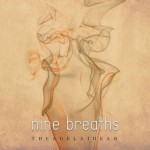
Artist: theAdelaidean (@)
Title: Nine Breaths
Format: Download Only (MP3 + Lossless)
Label: Projekt (@)
Rated:

Title: Nine Breaths
Format: Download Only (MP3 + Lossless)
Label: Projekt (@)
Rated:
Ambient music often promises transcendence and delivers wallpaper. "Nine Breaths" by theAdelaidean aims smaller and, paradoxically, reaches further. It does not attempt to soundtrack the cosmos. It studies dust in a beam of light and treats it like revelation.
Behind the moniker stands Sean Williams, known in another literary universe as a #1 "New York Times"-bestselling author and award-winning poet. Here, prose discipline and poetic economy migrate into sound. The concept borrows from the haiku’s brevity, the idea that a single breath can contain an entire emotional shift. Each track corresponds to a short poem, and rather than illustrating them in a literal way, the music expands their internal atmosphere.
The palette is restrained: sustained drones, gently evolving synth layers, thick but soft harmonic beds. There is no percussive insistence, no theatrical crescendo. The focus is on micro-variation. Frequencies drift, overlap, dissolve. The production avoids sharp edges, favoring a rounded resonance that feels less like composition and more like a slowly inhaled thought.
"The Unforeseen" opens with a fragile spaciousness. Tones hover as if uncertain of their own gravity. It mirrors the haiku about a shattered window framing what lies beyond. The music does not dramatize the break; it lingers in the opening. "Sunrise", stretching past ten minutes, unfolds with incremental harmonic brightening. It avoids sentimental uplift. Instead, it suggests the quiet mechanics of light expanding across a surface.
On "Resonant Woods", layered textures accumulate in subtle dialogue, evoking the poem’s “call and response”. There is a suggestion of depth, like standing within a forest where echoes blur direction. "Tremble in Worship" introduces faint tremors within the drone field, barely perceptible fluctuations that keep the stillness alive. The effect is meditative without becoming inert.
"Courting Dust" may be the album’s most delicate moment. High-frequency shimmer interacts with lower sustained tones, producing a sensation of particles suspended mid-air. It would be easy to dismiss this as pleasant ambience, but the detail work resists that reduction. Each layer enters with intention.
"Cathedral Under Construction" builds slowly, not in volume but in density. Harmonic overtones stack carefully, as if architecture were forming from vapor. "Loss" compresses its emotional weight into a shorter frame, a muted resonance that never spills into melodrama. "Spiraling Thought" circles gently around a central tonal axis, echoing the haiku’s interrupted motion.
Then there is "Horizon". At over an hour, it occupies the entire second disc alone. This is either bold minimalism or a test of patience, depending on your temperament. The track evolves at a glacial pace, expanding and thinning in long arcs. It asks for surrender. If you are inclined to check your phone every few minutes, the piece will outlast your attention span without apology. If you remain, it gradually reframes perception. Subtle modulations become events. Silence gains contour.
What distinguishes "Nine Breaths" is its refusal to equate stillness with emptiness. The album suggests that beneath routine moments lies a layered emotional topography. Williams’ literary background is audible not through grand gestures, but through restraint. He understands negative space. He allows implication to do the heavy lifting.
This is not background music for productivity playlists. It is closer to an invitation to slow down and notice the small internal shifts that occur between inhalation and exhalation. The record implies that every breath contains a composition, if one listens carefully enough.
In a culture addicted to acceleration, "Nine Breaths" proposes something almost subversive: depth without spectacle. It does not demand transformation. It simply demonstrates how quietly it can happen.
Comments
Stream
Browse by Genre
Industrial Music / Industrial Metal / Aggro Industrial / Electro Metal
Industrial Noise / Power Noise / Harsh Noise
Synth Pop / Electro Pop / Synth-Electronica
Techno / Trance / Goa / Drum'n'Bass / Jungle / Tribal / Trip-Hop
Ambient / Electronica / Ethereal / Dub / Soundscapes / Abstract
Experimental / Avantgarde / Weird & Wired / Glitch / Noise / Field Recording
Dark / Gothic / Wave / New Wave / Dark Wave / Industrial Gothic
New Music / Downtown / Avantgarde Jazz / New Classical / World