
Wednesday, June 17, 2026
Claudio F Baroni: Re-Genetic
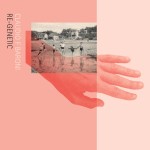


There is something almost suspiciously humble about "Re-Genetic". Two pieces, modest forces, a CD that does not scream for attention. And yet Claudio F. Baroni is doing something quietly radical here: he listens so intensely to speech that he turns listening itself into composition.
Baroni, an Argentine composer based in the Netherlands and a long-time collaborator of Unsounds, has made the spoken voice his laboratory. Trained in Rosario and later at the Royal Conservatory in The Hague with figures such as Louis Andriessen, he operates in a lineage where structure matters, but so does doubt. He is also deeply indebted to Robert Ashley, the patron saint of musical speech, and here that influence becomes both method and homage.
The premise sounds almost clinical: digitally analyse recorded speech, detect where Western scale pitches hide inside natural intonation, assign those pitches to instruments, align them precisely to syllables. Performers listen to the voice and “shadow” it in real time. It is as if language were placed under a microscope and the harmonic skeleton revealed. You could imagine this turning into a dry conceptual exercise. It does not.
In "J’ai connu", drawn from a pandemic-era text by Géraldine Schwarz, the whispered narration hovers between confession and analysis. The voice of Isabelle Vigier sits extremely close to the ear, almost ASMR in its intimacy. Around it, electric guitar, piano, bass and electronics do not decorate the words. They trace them. They lean into their pitch curves like careful archivists of breath. The effect is uncanny: meaning remains intact, but it is gently loosened from its throne. Words become events in time, small melodic arcs that bloom and vanish. When the instruments slip into brief interludes, replaying pitch constellations from the last phrase, the memory of speech lingers like a harmonic afterimage.
Then comes "Re-Genetic Mutation", built around the full original recording of Ashley’s 1991 solo voice piece. This is not a remix, not a reinterpretation in the fashionable sense. It is more like an act of devotion conducted with surgical tools. Ashley’s inner-monologue style, full of looping thoughts and refrains, already resists tidy comprehension. Baroni refuses to clarify it. He does not illustrate the text, does not underline it, does not tell us what it means. Instead, he extracts its tonal DNA and lets piano and electronics orbit it.
Reinier van Houdt’s piano playing is so precisely aligned with Ashley’s speech contours that, at times, the instrument seems to anticipate the voice. It creates a subtle perceptual glitch: who is leading whom? Is the voice casting the harmonic shadow, or is the piano quietly steering the narrative? That ambiguity becomes the real drama of the piece.
What makes "Re-Genetic" compelling is that it treats speech neither as message nor as raw sound, but as a fragile interface between the two. Baroni does not vandalise semantics. He simply shifts the spotlight. Meaning, sonority and music momentarily drift apart, then snap back into alignment. The listener is asked to give up the lazy habit of “understanding” and to enter a more exposed state of attention. Not mystical, not sentimental. Just alert.
There is a certain irony in using digital analysis to reveal something profoundly human: the micro-inflections that make a voice unique. In an era where voices are flattened into podcasts, voice notes and algorithmic clones, Baroni insists on the grain, the breath, the uneven curve of a syllable. He composes not from ideas about speech, but from speech itself.
This is not background music. It will not soundtrack your dinner. It asks for focus, and in return it offers a strange generosity: the chance to hear language as if it were happening for the first time. For a release that outwardly looks restrained, "Re-Genetic" carries a quietly subversive message. Listening, when taken seriously, is already a form of creation.
Baroni, an Argentine composer based in the Netherlands and a long-time collaborator of Unsounds, has made the spoken voice his laboratory. Trained in Rosario and later at the Royal Conservatory in The Hague with figures such as Louis Andriessen, he operates in a lineage where structure matters, but so does doubt. He is also deeply indebted to Robert Ashley, the patron saint of musical speech, and here that influence becomes both method and homage.
The premise sounds almost clinical: digitally analyse recorded speech, detect where Western scale pitches hide inside natural intonation, assign those pitches to instruments, align them precisely to syllables. Performers listen to the voice and “shadow” it in real time. It is as if language were placed under a microscope and the harmonic skeleton revealed. You could imagine this turning into a dry conceptual exercise. It does not.
In "J’ai connu", drawn from a pandemic-era text by Géraldine Schwarz, the whispered narration hovers between confession and analysis. The voice of Isabelle Vigier sits extremely close to the ear, almost ASMR in its intimacy. Around it, electric guitar, piano, bass and electronics do not decorate the words. They trace them. They lean into their pitch curves like careful archivists of breath. The effect is uncanny: meaning remains intact, but it is gently loosened from its throne. Words become events in time, small melodic arcs that bloom and vanish. When the instruments slip into brief interludes, replaying pitch constellations from the last phrase, the memory of speech lingers like a harmonic afterimage.
Then comes "Re-Genetic Mutation", built around the full original recording of Ashley’s 1991 solo voice piece. This is not a remix, not a reinterpretation in the fashionable sense. It is more like an act of devotion conducted with surgical tools. Ashley’s inner-monologue style, full of looping thoughts and refrains, already resists tidy comprehension. Baroni refuses to clarify it. He does not illustrate the text, does not underline it, does not tell us what it means. Instead, he extracts its tonal DNA and lets piano and electronics orbit it.
Reinier van Houdt’s piano playing is so precisely aligned with Ashley’s speech contours that, at times, the instrument seems to anticipate the voice. It creates a subtle perceptual glitch: who is leading whom? Is the voice casting the harmonic shadow, or is the piano quietly steering the narrative? That ambiguity becomes the real drama of the piece.
What makes "Re-Genetic" compelling is that it treats speech neither as message nor as raw sound, but as a fragile interface between the two. Baroni does not vandalise semantics. He simply shifts the spotlight. Meaning, sonority and music momentarily drift apart, then snap back into alignment. The listener is asked to give up the lazy habit of “understanding” and to enter a more exposed state of attention. Not mystical, not sentimental. Just alert.
There is a certain irony in using digital analysis to reveal something profoundly human: the micro-inflections that make a voice unique. In an era where voices are flattened into podcasts, voice notes and algorithmic clones, Baroni insists on the grain, the breath, the uneven curve of a syllable. He composes not from ideas about speech, but from speech itself.
This is not background music. It will not soundtrack your dinner. It asks for focus, and in return it offers a strange generosity: the chance to hear language as if it were happening for the first time. For a release that outwardly looks restrained, "Re-Genetic" carries a quietly subversive message. Listening, when taken seriously, is already a form of creation.
Comments
Stream
Browse by Genre
Industrial Music / Industrial Metal / Aggro Industrial / Electro Metal
Industrial Noise / Power Noise / Harsh Noise
Synth Pop / Electro Pop / Synth-Electronica
Techno / Trance / Goa / Drum'n'Bass / Jungle / Tribal / Trip-Hop
Ambient / Electronica / Ethereal / Dub / Soundscapes / Abstract
Experimental / Avantgarde / Weird & Wired / Glitch / Noise / Field Recording
Dark / Gothic / Wave / New Wave / Dark Wave / Industrial Gothic
New Music / Downtown / Avantgarde Jazz / New Classical / World