
Friday, September 18, 2026
Seth Thorn: a curious doubling of terms
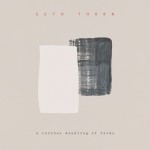
Artist: Seth Thorn (@)
Title: a curious doubling of terms
Format: Download Only (MP3 + Lossless)
Label: Audiobulb (@)
Rated:

Title: a curious doubling of terms
Format: Download Only (MP3 + Lossless)
Label: Audiobulb (@)
Rated:
Seth Thorn’s "a curious doubling of terms" feels like a diary written half in moss, half in binary. A violinist by training, an academic by trade, and a coder by obsession, Thorn builds music as if trying to braid memory with circuitry. This debut solo work, released via Audiobulb, leans into his dual identity: the human breath of bowed strings rubbing against the algorithmic churn of his self-built Haze system, a tool for conjuring lo-fi fog like a machine dreaming of Debussy in slow decay.
The album begins with "necarney creek", where water seems to seep through the strings, a merging of creek and ocean rendered not in field recordings but in timbral suggestion. It’s as if the violin, untethered from concert tradition, had wandered into the surf to test its resonance against salt air. From there, Thorn oscillates between intimacy ("the unspoken", barely two minutes of fragile tone that feels like a thought left unsent) and abstraction ("machinic heterogeneticist", whose title alone promises the kind of music that makes you wonder if your hard drive is about to weep).
Titles like "old degrowth forest" and "friends show" the way betray his environmental and humanistic leanings: these are not just code-and-bow exercises but philosophical sketches, touching on sustainability, community, and the uneasy romance between organic time and mechanical process. By the closing "morbid symptomatic logic", Thorn seems to suggest that even the most lyrical systems collapse under their own rules - entropy dressed as a coda.
There are no lyrics here, yet the music speaks with a sort of textual density: each piece feels like a sentence, or perhaps a fragment, in a longer argument about what it means to be human inside a machinic age. Funny enough, the album’s title could describe Thorn himself - both academic and improviser, violinist and coder, romantic and logician. "A curious doubling of terms" is less a debut than a paradox, and in embracing paradox it finds its own fragile coherence.
The album begins with "necarney creek", where water seems to seep through the strings, a merging of creek and ocean rendered not in field recordings but in timbral suggestion. It’s as if the violin, untethered from concert tradition, had wandered into the surf to test its resonance against salt air. From there, Thorn oscillates between intimacy ("the unspoken", barely two minutes of fragile tone that feels like a thought left unsent) and abstraction ("machinic heterogeneticist", whose title alone promises the kind of music that makes you wonder if your hard drive is about to weep).
Titles like "old degrowth forest" and "friends show" the way betray his environmental and humanistic leanings: these are not just code-and-bow exercises but philosophical sketches, touching on sustainability, community, and the uneasy romance between organic time and mechanical process. By the closing "morbid symptomatic logic", Thorn seems to suggest that even the most lyrical systems collapse under their own rules - entropy dressed as a coda.
There are no lyrics here, yet the music speaks with a sort of textual density: each piece feels like a sentence, or perhaps a fragment, in a longer argument about what it means to be human inside a machinic age. Funny enough, the album’s title could describe Thorn himself - both academic and improviser, violinist and coder, romantic and logician. "A curious doubling of terms" is less a debut than a paradox, and in embracing paradox it finds its own fragile coherence.
Comments
Stream
Browse by Genre
Industrial Music / Industrial Metal / Aggro Industrial / Electro Metal
Industrial Noise / Power Noise / Harsh Noise
Synth Pop / Electro Pop / Synth-Electronica
Techno / Trance / Goa / Drum'n'Bass / Jungle / Tribal / Trip-Hop
Ambient / Electronica / Ethereal / Dub / Soundscapes / Abstract
Experimental / Avantgarde / Weird & Wired / Glitch / Noise / Field Recording
Dark / Gothic / Wave / New Wave / Dark Wave / Industrial Gothic
New Music / Downtown / Avantgarde Jazz / New Classical / World