
Tuesday, October 27, 2026
Anouck Genthon / Lionel Marchetti: Suite blanche / Angelica
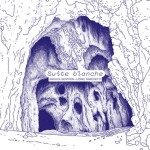
Artist: Anouck Genthon / Lionel Marchetti
Title: Suite blanche / Angelica
Format: CD x 2 + Download
Label: Unrec (http://le-un.org/) (@)
Rated:

Title: Suite blanche / Angelica
Format: CD x 2 + Download
Label: Unrec (http://le-un.org/) (@)
Rated:
There are records you play. And there are worlds you enter. "Suite blanche / Angelica" is one of the latter - two discs that aren’t just music, but listening architectures. In the first, "Suite blanche", Genthon’s violin and Marchetti’s electronics don’t so much play together as fuse, crafting soundscapes where spatial projection matters as much as pitch and rhythm. In the second, "Angelica", a live recording from Bologna, that same fusion hints at ritual rather than performance - echoes in the room as pointed as those in the ear.
This duo - and high priests of sound - build music from space itself. Marchetti rigs up arrays of loudspeakers; Genthon’s violin melts into the synthetic, becoming less instrument and more material. The compositional logic is akin to sound as geological process: "Le sol prend feu" grows with volcanic insistence over seventeen minutes, while "Verticale de l’Est" ascends like a spiral of light through cavernous heights. By the time you reach "Nuit (le temps se défait)", time has dissolved like mist.
Yet this is far from forbidding. Instead, the textures feel like soft watches belonging to ancient clocks - electronics that breathe, strings that fracture, and a delicate honoring of ambient silence. Genthon’s Tuareg-rooted sense of time gives the sound a gentle dilation; Marchetti’s concrete music knowledge ensures every speaker becomes a voice. Their shared background - research in sonic propagation, poetics, and materiality - makes the work feel earnest, not cerebral.
"Angelica", by contrast, is less scientific and more spiritual: one long stream-of-consciousness concert where the listener is invited to drift through quasi-architectural rhythms, glitchy resonance, and violin lines that feel like prayers uttered into reverberant stone. There’s no beat. There’s no melody. Only presence. The violin crosses the sound field; the speakers return its call. A duet not bound by phrasing, but by field.
The language of silence takes center stage. The gaps in "Suite blanche" are as important as the tones; in "Angelica", the space between notes becomes a shrine. One senses these tracks are drawn from walks through caves, reflections in water, or filtered dreams. Yet the album avoids anything New Age. Its restraint is rigorous, its emotion contained, its beauty slow-moving.
If you listen expecting structure, you’ll find form; if you listen for lyrics, you’ll hear landscapes. If you listen for calm, you’ll find stillness - but not sedation. This music demands presence, and rewards it with vertigo, wonder, or something near silence’s own echo.
This duo - and high priests of sound - build music from space itself. Marchetti rigs up arrays of loudspeakers; Genthon’s violin melts into the synthetic, becoming less instrument and more material. The compositional logic is akin to sound as geological process: "Le sol prend feu" grows with volcanic insistence over seventeen minutes, while "Verticale de l’Est" ascends like a spiral of light through cavernous heights. By the time you reach "Nuit (le temps se défait)", time has dissolved like mist.
Yet this is far from forbidding. Instead, the textures feel like soft watches belonging to ancient clocks - electronics that breathe, strings that fracture, and a delicate honoring of ambient silence. Genthon’s Tuareg-rooted sense of time gives the sound a gentle dilation; Marchetti’s concrete music knowledge ensures every speaker becomes a voice. Their shared background - research in sonic propagation, poetics, and materiality - makes the work feel earnest, not cerebral.
"Angelica", by contrast, is less scientific and more spiritual: one long stream-of-consciousness concert where the listener is invited to drift through quasi-architectural rhythms, glitchy resonance, and violin lines that feel like prayers uttered into reverberant stone. There’s no beat. There’s no melody. Only presence. The violin crosses the sound field; the speakers return its call. A duet not bound by phrasing, but by field.
The language of silence takes center stage. The gaps in "Suite blanche" are as important as the tones; in "Angelica", the space between notes becomes a shrine. One senses these tracks are drawn from walks through caves, reflections in water, or filtered dreams. Yet the album avoids anything New Age. Its restraint is rigorous, its emotion contained, its beauty slow-moving.
If you listen expecting structure, you’ll find form; if you listen for lyrics, you’ll hear landscapes. If you listen for calm, you’ll find stillness - but not sedation. This music demands presence, and rewards it with vertigo, wonder, or something near silence’s own echo.
Comments
Stream
Browse by Genre
Industrial Music / Industrial Metal / Aggro Industrial / Electro Metal
Industrial Noise / Power Noise / Harsh Noise
Synth Pop / Electro Pop / Synth-Electronica
Techno / Trance / Goa / Drum'n'Bass / Jungle / Tribal / Trip-Hop
Ambient / Electronica / Ethereal / Dub / Soundscapes / Abstract
Experimental / Avantgarde / Weird & Wired / Glitch / Noise / Field Recording
Dark / Gothic / Wave / New Wave / Dark Wave / Industrial Gothic
New Music / Downtown / Avantgarde Jazz / New Classical / World