
Friday, October 23, 2026
Gagi Petrovic: Music for Dance and Theatre 2011-2024
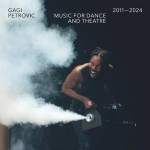
Artist: Gagi Petrovic
Title: Music for Dance and Theatre 2011-2024
Format: CD x 2 (double CD)
Label: Moving Furniture Records (@)
Rated:

Title: Music for Dance and Theatre 2011-2024
Format: CD x 2 (double CD)
Label: Moving Furniture Records (@)
Rated:
Music for dance and theatre often exists in a paradox: it is designed to be felt rather than heard, to enhance rather than demand attention, to shape movement while remaining fluid itself. Yet, when untethered from the stage, it can reveal new dimensions - textures and narratives that were once merely a shadow behind choreography. Gagi Petrovic, a composer equally at home in the worlds of progressive composition, digital electronics, and alternative pop, understands this paradox well. His works - commissioned over the past 13 years for contemporary dance and theatre - are now gathered in "Music for Dance and Theatre 2011-2024", a two-disc anthology that stands as both a retrospective and an act of transformation.
What happens when music composed for bodies in motion is finally still? The answer: it doesn’t stop moving at all.
Petrovic's sonic universe is defined by contrasts: acoustic meets electronic, intimacy meets intensity, the familiar meets the utterly alien. He crafts compositions that feel like they’re shifting beneath your feet - solid one moment, dissolving the next. This collection, spanning hallucinatory atmospheres, industrial pulses, fractured melodies, and haunting textures, showcases his ability to sculpt sound for both psychological depth and visceral impact.
Take "Cantus Umbrus", the 2011 opener, which immediately establishes his language: a spectral hum, a slow-building tension, something ancient yet mechanized, a chant for ghosts of the future. Then, with "Op-en-amelijk" and "Hallucinaties", composed for Jolien van Haaster’s 2012 production "Gekkenhuis", Petrovic leans into sonic fragmentation - whispers of melody disintegrate into static, rhythms stumble, digital glitches claw at the edges.
The journey continues through waves of dread and catharsis - the anxious churn of "Drowning" (from "Golfbrekers"), the sharpened metallic edges of "Patriarch Oppression" (from "AYAH"), the mournful yet defiant resonance of "Toen het uiteenviel" (from "Bloei"). By the time we arrive at "Uncanny Landscape", taken from Cherish Menzo’s acclaimed "DARKMATTER", the sound has stretched into something vast and cosmic - oscillating bass tones, distant echoes of shattered rhythms, a sensation of standing at the edge of a collapsing reality.
Unlike many soundtrack albums, "Music for Dance and Theatre" never feels like it is missing something. Instead, these pieces thrive in isolation, proving that Petrovic’s work is as much about psychological space as physical movement. His compositions feel like stage directions for an unseen performance - "Final Anthem (Berlin)" pulses like an exhausted heartbeat, "Anxious Steps into Soil" traces footprints in wet earth, "MONSTER" emerges as a tangle of distorted voices and oppressive mechanical dread.
And yet, despite the darkness that often lurks in his work (themes of oppression, isolation, and the search for freedom are recurring motifs), there is also a quiet tenderness. "Self Care onto Embrace" is delicate, a moment of breath amid suffocation. "Universe" shimmers with a cautious optimism, a reminder that sound can still reach out, even in its most fractured states.
There is something poetic about gathering 13 years of music for ephemeral performances and fixing them into a permanent form. "Music for Dance and Theatre" is both a museum and a living organism - a collection of pieces that were once tied to movement, now free to drift through new spaces, creating new meanings.
Listening to this album feels like standing in a theatre after the audience has left, watching the dust settle, sensing the echoes of gestures that still linger. But make no mistake - this is not a requiem for past performances. It is an invitation to imagine new ones.
Score: 9/10 - listen with your body, not just your ears.
Comments
Stream
Browse by Genre
Industrial Music / Industrial Metal / Aggro Industrial / Electro Metal
Industrial Noise / Power Noise / Harsh Noise
Synth Pop / Electro Pop / Synth-Electronica
Techno / Trance / Goa / Drum'n'Bass / Jungle / Tribal / Trip-Hop
Ambient / Electronica / Ethereal / Dub / Soundscapes / Abstract
Experimental / Avantgarde / Weird & Wired / Glitch / Noise / Field Recording
Dark / Gothic / Wave / New Wave / Dark Wave / Industrial Gothic
New Music / Downtown / Avantgarde Jazz / New Classical / World