
Dark Star: Artefacts
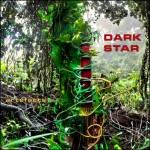


Some albums arrive fully formed, polished, and eager for release. Others lurk in the shadows, abandoned by time, waiting for the right moment to resurface. "Artefacts" belongs to the latter category - an album recorded in 1995 as the intended follow-up to "Travelogue", only to be left in the vaults, half-forgotten, half-mythologized. Nearly 30 years later, with a fresh mastering treatment and a brand-new vocal track from Edward Ka-Spel (Legendary Pink Dots), "Artefacts" finally steps into the light. The result? A transmission from another era - one that still sounds eerily at home in the present.
Dark Star has always been an enigmatic presence, dwelling in the liminal space between post-industrial, ambient, and electronic psychedelia. "Artefacts" plays like a séance with its own past, a collection of lost futures imagined in the 90s and reanimated in the 2020s. It’s not just an album - it’s a time capsule, an echo of a scene where synths hummed like incantations, samplers glitched into oblivion, and reverb-drenched guitars whispered secrets into the void.
Right from "Faculty X", the opening track, we’re plunged into a deep, meditative drift. Glacial synths shimmer, distant voices murmur, and the track builds with an almost ritualistic patience. It’s music that feels like it was designed to accompany the slow-motion unfolding of forgotten dreams.
Then there’s "Eleven", featuring Yaxi Highrizer on guitar, where plucked strings float over dense electronic textures, evoking the kind of cosmic psychedelia that might have been transmitted from a parallel world where The Orb and Coil collaborated over an old radio frequency. "A 481" is a shorter, sharper detour - mechanical pulses and filtered drones giving way to flickering, spectral melodies.
But the album’s real centerpiece is "Walking in Patterns", a sprawling, nearly 10-minute odyssey featuring Technogod. It’s a piece that refuses to sit still, shifting between hypnotic loops, whispered vocals, and percussive glitches. The beat lurches forward, only to dissolve into ether before reassembling itself again - like memory itself, unreliable yet persistent.
The most striking addition to this unearthed collection is "Polyphemus", featuring Edward Ka-Spel, whose spectral presence elevates the album into another dimension. Ka-Spel doesn’t just sing - he narrates, whispers, conjures. His voice is a fever dream, guiding us through a landscape of fragmented myths and decaying radio signals. Coupled with field recordings by Kurt Maninouk, the track unfolds like a transmission intercepted from a parallel reality. It’s unsettling, poetic, and hypnotic in the way only Ka-Spel can be.
Listening to "Artefacts", it’s tempting to wonder: what if this had been released in 1995? Would it have slipped into cult status, whispered about in underground circles, its influence felt in unexpected corners of experimental music? Or was it always meant to remain in the vaults, waiting for a world that had caught up with its spectral beauty?
Whatever the case, we have it now. And it still feels vital, still feels like it’s speaking to us from a liminal space - somewhere between the past that never was and the present that never quite makes sense.
Play while you may. And definitely play it on headphones.
Score: 24-bit hallucination / 10
Dark Star has always been an enigmatic presence, dwelling in the liminal space between post-industrial, ambient, and electronic psychedelia. "Artefacts" plays like a séance with its own past, a collection of lost futures imagined in the 90s and reanimated in the 2020s. It’s not just an album - it’s a time capsule, an echo of a scene where synths hummed like incantations, samplers glitched into oblivion, and reverb-drenched guitars whispered secrets into the void.
Right from "Faculty X", the opening track, we’re plunged into a deep, meditative drift. Glacial synths shimmer, distant voices murmur, and the track builds with an almost ritualistic patience. It’s music that feels like it was designed to accompany the slow-motion unfolding of forgotten dreams.
Then there’s "Eleven", featuring Yaxi Highrizer on guitar, where plucked strings float over dense electronic textures, evoking the kind of cosmic psychedelia that might have been transmitted from a parallel world where The Orb and Coil collaborated over an old radio frequency. "A 481" is a shorter, sharper detour - mechanical pulses and filtered drones giving way to flickering, spectral melodies.
But the album’s real centerpiece is "Walking in Patterns", a sprawling, nearly 10-minute odyssey featuring Technogod. It’s a piece that refuses to sit still, shifting between hypnotic loops, whispered vocals, and percussive glitches. The beat lurches forward, only to dissolve into ether before reassembling itself again - like memory itself, unreliable yet persistent.
The most striking addition to this unearthed collection is "Polyphemus", featuring Edward Ka-Spel, whose spectral presence elevates the album into another dimension. Ka-Spel doesn’t just sing - he narrates, whispers, conjures. His voice is a fever dream, guiding us through a landscape of fragmented myths and decaying radio signals. Coupled with field recordings by Kurt Maninouk, the track unfolds like a transmission intercepted from a parallel reality. It’s unsettling, poetic, and hypnotic in the way only Ka-Spel can be.
Listening to "Artefacts", it’s tempting to wonder: what if this had been released in 1995? Would it have slipped into cult status, whispered about in underground circles, its influence felt in unexpected corners of experimental music? Or was it always meant to remain in the vaults, waiting for a world that had caught up with its spectral beauty?
Whatever the case, we have it now. And it still feels vital, still feels like it’s speaking to us from a liminal space - somewhere between the past that never was and the present that never quite makes sense.
Play while you may. And definitely play it on headphones.
Score: 24-bit hallucination / 10
Comments
Stream
Browse by Genre
Industrial Music / Industrial Metal / Aggro Industrial / Electro Metal
Industrial Noise / Power Noise / Harsh Noise
Synth Pop / Electro Pop / Synth-Electronica
Techno / Trance / Goa / Drum'n'Bass / Jungle / Tribal / Trip-Hop
Ambient / Electronica / Ethereal / Dub / Soundscapes / Abstract
Experimental / Avantgarde / Weird & Wired / Glitch / Noise / Field Recording
Dark / Gothic / Wave / New Wave / Dark Wave / Industrial Gothic
New Music / Downtown / Avantgarde Jazz / New Classical / World