
Wednesday, October 7, 2026
?mlaut: Un ?tre Humain Ordinaire
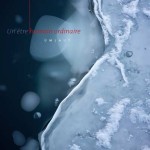


From the tranquil landscapes of northern Connecticut comes "Un Etre Humain Ordinaire", the latest opus from Jeff Düngfelder’s Ümlaut project. As a composer devoted to the art of minimalism and the poetics of silence, Düngfelder crafts sonic environments that feel like forgotten fragments of a dream. With this release, he invites listeners into a meticulously constructed yet ethereal world - an intimate labyrinth where silence and sound are equally weighted.
The album’s foundation is built on field recordings, electro-acoustic textures, and an approach that merges the ambient, the experimental, and the cinematic. Düngfelder manipulates sound like a painter working with muted hues: "Un Etre Humain Ordinaire" isn’t a vivid oil painting, but a delicate watercolour on the verge of fading. It recalls the fragile beauty of works by artists like William Basinski or Taylor Deupree, where the space between notes becomes a canvas for imagination.
Tracks like "Forgetting to Remember" and "Until We Became Nothing" exemplify Düngfelder’s ability to balance minimalism with emotional weight. Gentle drones and fragmented synth lines seem to drift in and out of focus, leaving behind faint traces of melancholy. It’s not music that demands attention - it patiently waits for the listener to lean in, like a whisper in a crowded room.
Though Düngfelder flirts with the aesthetics of randomness, every moment of the album feels intentional. Field recordings in "What Comes Floating to the Surface" and "Artifacts As Media" are manipulated into unrecognizable textures, transforming the mundane into something extraordinary. The rustle of leaves, the hum of distant machinery, and the creak of wood take on a hypnotic quality, blurring the line between organic and synthetic.
This careful manipulation evokes the spirit of musique concrète pioneers like Pierre Schaeffer, but with a modern twist. The influence of microsound artists like Alva Noto or Stephan Mathieu is also present, as Düngfelder stretches time and space to reveal the hidden layers within each sound.
Each track title reads like a line from an existential poem: "Ordinary Light, Under Things", "Damage Control", "Everything Is Appearing on Its Own". These phrases offer glimpses into the album’s conceptual depth, reinforcing its themes of memory, absence, and the fleeting nature of existence. The album’s title, "Un Etre Humain Ordinaire" ("An Ordinary Human Being"), suggests a meditation on the universal yet deeply personal experience of being - and the paradox of finding extraordinariness within ordinariness.
Recorded and mastered at Hopmeadow Studio, the album exudes a strong sense of place. Yet it’s not tied to a single location. Instead, it evokes liminal spaces - the edges of forests, the twilight between waking and dreaming, the moments just before a memory fades. Tracks like "La Mer Gelée" (The Frozen Sea) and "Pour Un Moment" (For a Moment) feel as if they are suspended in time, inviting the listener to inhabit their fragile beauty.
Düngfelder’s work fits comfortably within the lineage of ambient pioneers such as Brian Eno, Harold Budd, or even Jóhann Jóhannsson. But where Eno may lean toward serenity, Düngfelder embraces a subtle dissonance, letting moments of tension ripple through the fabric of his soundscapes. The result is music that feels both expansive and intimate - like staring at a vast horizon while holding a cherished keepsake in your hand.
For those willing to surrender to its subtle charms, "Un Etre Humain Ordinaire" is a profoundly moving journey - like finding yourself on the edge of something vast and unknowable, only to realize the edge was always within you.
The album’s foundation is built on field recordings, electro-acoustic textures, and an approach that merges the ambient, the experimental, and the cinematic. Düngfelder manipulates sound like a painter working with muted hues: "Un Etre Humain Ordinaire" isn’t a vivid oil painting, but a delicate watercolour on the verge of fading. It recalls the fragile beauty of works by artists like William Basinski or Taylor Deupree, where the space between notes becomes a canvas for imagination.
Tracks like "Forgetting to Remember" and "Until We Became Nothing" exemplify Düngfelder’s ability to balance minimalism with emotional weight. Gentle drones and fragmented synth lines seem to drift in and out of focus, leaving behind faint traces of melancholy. It’s not music that demands attention - it patiently waits for the listener to lean in, like a whisper in a crowded room.
Though Düngfelder flirts with the aesthetics of randomness, every moment of the album feels intentional. Field recordings in "What Comes Floating to the Surface" and "Artifacts As Media" are manipulated into unrecognizable textures, transforming the mundane into something extraordinary. The rustle of leaves, the hum of distant machinery, and the creak of wood take on a hypnotic quality, blurring the line between organic and synthetic.
This careful manipulation evokes the spirit of musique concrète pioneers like Pierre Schaeffer, but with a modern twist. The influence of microsound artists like Alva Noto or Stephan Mathieu is also present, as Düngfelder stretches time and space to reveal the hidden layers within each sound.
Each track title reads like a line from an existential poem: "Ordinary Light, Under Things", "Damage Control", "Everything Is Appearing on Its Own". These phrases offer glimpses into the album’s conceptual depth, reinforcing its themes of memory, absence, and the fleeting nature of existence. The album’s title, "Un Etre Humain Ordinaire" ("An Ordinary Human Being"), suggests a meditation on the universal yet deeply personal experience of being - and the paradox of finding extraordinariness within ordinariness.
Recorded and mastered at Hopmeadow Studio, the album exudes a strong sense of place. Yet it’s not tied to a single location. Instead, it evokes liminal spaces - the edges of forests, the twilight between waking and dreaming, the moments just before a memory fades. Tracks like "La Mer Gelée" (The Frozen Sea) and "Pour Un Moment" (For a Moment) feel as if they are suspended in time, inviting the listener to inhabit their fragile beauty.
Düngfelder’s work fits comfortably within the lineage of ambient pioneers such as Brian Eno, Harold Budd, or even Jóhann Jóhannsson. But where Eno may lean toward serenity, Düngfelder embraces a subtle dissonance, letting moments of tension ripple through the fabric of his soundscapes. The result is music that feels both expansive and intimate - like staring at a vast horizon while holding a cherished keepsake in your hand.
For those willing to surrender to its subtle charms, "Un Etre Humain Ordinaire" is a profoundly moving journey - like finding yourself on the edge of something vast and unknowable, only to realize the edge was always within you.
Comments
Stream
Browse by Genre
Industrial Music / Industrial Metal / Aggro Industrial / Electro Metal
Industrial Noise / Power Noise / Harsh Noise
Synth Pop / Electro Pop / Synth-Electronica
Techno / Trance / Goa / Drum'n'Bass / Jungle / Tribal / Trip-Hop
Ambient / Electronica / Ethereal / Dub / Soundscapes / Abstract
Experimental / Avantgarde / Weird & Wired / Glitch / Noise / Field Recording
Dark / Gothic / Wave / New Wave / Dark Wave / Industrial Gothic
New Music / Downtown / Avantgarde Jazz / New Classical / World