
Tuesday, September 15, 2026
Dal:um: Coexistence
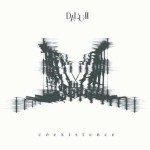

There’s an intriguing irony in the name Dal:um, which means “to keep pursuing something”, as it suggests an open-ended quest, yet here we have "Coexistence" - an album that feels remarkably complete. Dal:um, a duo composed of Ha Suyean and Hwang Hyeyoung, transcends mere pursuit to offer something that feels closer to a discovery, a moment of harmony between tradition and innovation, two zithers speaking as one. This album, a follow-up to their acclaimed "Similar and Different", is more than a sequel - it’s a cohesive exploration of what it means to coexist, both in music and in life.
Recorded at Seoul’s A&Tive Studio, "Coexistence" reveals Dal:um’s profound restraint, an unusual quality in experimental music today. Here, Suyean’s 25-string gayageum and Hyeyoung’s six-string geomungo, both traditional Korean zithers, engage in a dialogue that is both delicate and powerful, weaving together melodies that hover on the edge of silence before spilling into deeply resonant tones. Their choice to forego unnecessary production flourishes keeps the focus solely on the interplay between these two ancient instruments, an approach that somehow makes their sound both intimate and monumental.
The opening track, “Dot”, is a crisp and measured start, as if tapping out a message in Morse code, announcing the duo’s meticulous intent. The motif, they say, symbolizes progress - each note a tiny step forward, like water wearing down stone. This minimalist precision continues into “Cracking”, where the geomungo’s darker tones pulse beneath the gayageum, creating a tension that feels almost geological.
One of the most striking pieces, “Poison and Antidote”, takes inspiration from artist Cornelia Parker’s exploration of duality, representing the writhing of a snake and its remedy in intertwined melodies. Here, Dal:um’s mastery is on full display as they push the instruments’ tonal capabilities to the brink, evoking a visceral struggle before resolving into an uneasy truce. It’s a sonic journey that mirrors their own exploration of balance and coexistence.
“Dodry” brings in a touch of nostalgia, invoking the Joseon-era piece “Suyeonjangjigok”. This track is a meditation on continuity, its repeating patterns reminiscent of traditional Korean dodry form, a cyclical journey through the familiar that feels timeless, like tracing the path of an ancient river.
The album closes with “In the Deep”, inspired by the hauntingly beautiful documentary "My Octopus Teacher". This track’s underwater ambience invites us to consider our fragile relationship with the natural world. The sound of the zithers, at once ancient and profoundly modern, reminds us of life’s interconnectedness - a theme Dal:um explores not only in the composition but also in their dedication to a stripped-back, organic sound.
"Coexistence" is a rare achievement: an album that engages with tradition without ever sounding reverent or restrained. It takes us from the surface, where shimmering textures ripple across the soundscape, to the depths, where richer, darker tones hint at the tension beneath. Dal:um’s musical symbiosis creates an ecosystem as intricate as any found in nature. Here is music that reminds us that true coexistence requires balance, patience, and an ear finely tuned to the subtle resonances of others. It’s the sound of the 21st century Seoul, yes, but it’s also something older - a call to pause, to listen, and to remember our place in the grander, ancient story of life.
Recorded at Seoul’s A&Tive Studio, "Coexistence" reveals Dal:um’s profound restraint, an unusual quality in experimental music today. Here, Suyean’s 25-string gayageum and Hyeyoung’s six-string geomungo, both traditional Korean zithers, engage in a dialogue that is both delicate and powerful, weaving together melodies that hover on the edge of silence before spilling into deeply resonant tones. Their choice to forego unnecessary production flourishes keeps the focus solely on the interplay between these two ancient instruments, an approach that somehow makes their sound both intimate and monumental.
The opening track, “Dot”, is a crisp and measured start, as if tapping out a message in Morse code, announcing the duo’s meticulous intent. The motif, they say, symbolizes progress - each note a tiny step forward, like water wearing down stone. This minimalist precision continues into “Cracking”, where the geomungo’s darker tones pulse beneath the gayageum, creating a tension that feels almost geological.
One of the most striking pieces, “Poison and Antidote”, takes inspiration from artist Cornelia Parker’s exploration of duality, representing the writhing of a snake and its remedy in intertwined melodies. Here, Dal:um’s mastery is on full display as they push the instruments’ tonal capabilities to the brink, evoking a visceral struggle before resolving into an uneasy truce. It’s a sonic journey that mirrors their own exploration of balance and coexistence.
“Dodry” brings in a touch of nostalgia, invoking the Joseon-era piece “Suyeonjangjigok”. This track is a meditation on continuity, its repeating patterns reminiscent of traditional Korean dodry form, a cyclical journey through the familiar that feels timeless, like tracing the path of an ancient river.
The album closes with “In the Deep”, inspired by the hauntingly beautiful documentary "My Octopus Teacher". This track’s underwater ambience invites us to consider our fragile relationship with the natural world. The sound of the zithers, at once ancient and profoundly modern, reminds us of life’s interconnectedness - a theme Dal:um explores not only in the composition but also in their dedication to a stripped-back, organic sound.
"Coexistence" is a rare achievement: an album that engages with tradition without ever sounding reverent or restrained. It takes us from the surface, where shimmering textures ripple across the soundscape, to the depths, where richer, darker tones hint at the tension beneath. Dal:um’s musical symbiosis creates an ecosystem as intricate as any found in nature. Here is music that reminds us that true coexistence requires balance, patience, and an ear finely tuned to the subtle resonances of others. It’s the sound of the 21st century Seoul, yes, but it’s also something older - a call to pause, to listen, and to remember our place in the grander, ancient story of life.
Comments
Stream
Browse by Genre
Industrial Music / Industrial Metal / Aggro Industrial / Electro Metal
Industrial Noise / Power Noise / Harsh Noise
Synth Pop / Electro Pop / Synth-Electronica
Techno / Trance / Goa / Drum'n'Bass / Jungle / Tribal / Trip-Hop
Ambient / Electronica / Ethereal / Dub / Soundscapes / Abstract
Experimental / Avantgarde / Weird & Wired / Glitch / Noise / Field Recording
Dark / Gothic / Wave / New Wave / Dark Wave / Industrial Gothic
New Music / Downtown / Avantgarde Jazz / New Classical / World