
Saturday, October 24, 2026
mHz: Material Prosody
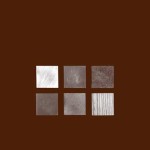


In "Material Prosody", Mo H. Zareei - operating as mHz - has crafted a project that literally and sonically strikes at the heart of materiality. This album, released through the experimental label Room40, is a testament to the beauty (or, as mHz might put it, the “anti-beauty”) of raw, exposed sound. Using his “Material Sequencer,” an 8-step, electromechanical sculpture with solenoid-driven percussion, Zareei invites some of experimental music’s most daring voices - Nicolas Bernier, Loscil, Matmos, Zimoun, and Alba Triana - to explore the sonic landscapes of industrial elements in their most unadorned forms.
"Material Prosody" isn’t music to lull you into a pleasant reverie. It’s an exercise in auditory confrontation, a nod to brutalism where sound is stripped down, no gloss or harmony, just pure, unrefined matter hitting matter. Each artist in this collection takes on a different material: Nicolas Bernier’s “Aluminium” is a steely meditation on metallic timbres, where sharp clangs and reverberations bloom in the cold space. Loscil’s “Brass” brings a darker depth, a solemn rumble that resonates with the echo of machinery. It’s industrial music in the purest sense - honest, mechanical, and strangely alive.
Zareei’s own contribution, “Concrete”, anchors the album with an austere weight that echoes his fascination with Brutalist architecture. Growing up in Tehran’s monumental Ekbatan complex, Zareei developed a lifelong admiration for the raw honesty of concrete, a fascination that spills over into his music. His “Concrete” piece sounds like an anthem for abandoned buildings, the haunting echoes of solenoids striking solid matter conjuring vast, cavernous spaces - both awe-inspiring and intimidating. Zareei’s approach embraces Brutalism’s rejection of superficial beauty in favor of raw, unapologetic structure.
Perhaps the most playful entry is “Copper” by Matmos, whose style brings a tactile richness to the album. Here, the solenoids become tiny percussionists, each strike reverberating like footsteps through an empty factory. Zimoun’s “Steel” is a masterclass in minimalism, a looping, rhythmic piece that feels both hypnotic and unyielding, as if we’re listening to the inner pulse of a vast machine. And then there’s Alba Triana’s “Wood”, which strips things down even further. In a work of near-ascetic restraint, Triana gives us silence punctuated by the softest percussive strikes, like a living room clock whose ticking reveals the vastness of a quiet space.
The irony of "Material Prosody" is that, for all its focus on matter and sonority, the album ends up feeling almost philosophical. By reducing music to its physical essence, mHz offers a commentary on our culture’s digital obsession, which sometimes forgets the visceral experience of sound in favor of software and virtual effects. "Material Prosody" reminds us that sound is, at its core, a physical interaction, a meeting of objects and vibrations. The result is music that’s as intellectual as it is physical, as much a study in rhythm and texture as it is a philosophical treatise on sound itself.
When I posted the following review, the six edition including a USB drive and a block of the material for each track (as well as a download code) got sold out in less than one month. Many listeners will patiently wait for a reissue and a list of new resounding materials! Besides this cool editions, I can say that in "Material Prosody", Zareei and his collaborators invite us to listen with new ears, to hear the music of raw materials without our usual associations. It’s not beautiful in the traditional sense, but it’s arresting, stirring, and, in its own way, even comforting. After all, in an era where much of our sound comes from invisible sources, there’s a strange satisfaction in knowing exactly where each of these sounds begins: in steel, in concrete, in the unpretentious materials that surround us every day.
"Material Prosody" isn’t music to lull you into a pleasant reverie. It’s an exercise in auditory confrontation, a nod to brutalism where sound is stripped down, no gloss or harmony, just pure, unrefined matter hitting matter. Each artist in this collection takes on a different material: Nicolas Bernier’s “Aluminium” is a steely meditation on metallic timbres, where sharp clangs and reverberations bloom in the cold space. Loscil’s “Brass” brings a darker depth, a solemn rumble that resonates with the echo of machinery. It’s industrial music in the purest sense - honest, mechanical, and strangely alive.
Zareei’s own contribution, “Concrete”, anchors the album with an austere weight that echoes his fascination with Brutalist architecture. Growing up in Tehran’s monumental Ekbatan complex, Zareei developed a lifelong admiration for the raw honesty of concrete, a fascination that spills over into his music. His “Concrete” piece sounds like an anthem for abandoned buildings, the haunting echoes of solenoids striking solid matter conjuring vast, cavernous spaces - both awe-inspiring and intimidating. Zareei’s approach embraces Brutalism’s rejection of superficial beauty in favor of raw, unapologetic structure.
Perhaps the most playful entry is “Copper” by Matmos, whose style brings a tactile richness to the album. Here, the solenoids become tiny percussionists, each strike reverberating like footsteps through an empty factory. Zimoun’s “Steel” is a masterclass in minimalism, a looping, rhythmic piece that feels both hypnotic and unyielding, as if we’re listening to the inner pulse of a vast machine. And then there’s Alba Triana’s “Wood”, which strips things down even further. In a work of near-ascetic restraint, Triana gives us silence punctuated by the softest percussive strikes, like a living room clock whose ticking reveals the vastness of a quiet space.
The irony of "Material Prosody" is that, for all its focus on matter and sonority, the album ends up feeling almost philosophical. By reducing music to its physical essence, mHz offers a commentary on our culture’s digital obsession, which sometimes forgets the visceral experience of sound in favor of software and virtual effects. "Material Prosody" reminds us that sound is, at its core, a physical interaction, a meeting of objects and vibrations. The result is music that’s as intellectual as it is physical, as much a study in rhythm and texture as it is a philosophical treatise on sound itself.
When I posted the following review, the six edition including a USB drive and a block of the material for each track (as well as a download code) got sold out in less than one month. Many listeners will patiently wait for a reissue and a list of new resounding materials! Besides this cool editions, I can say that in "Material Prosody", Zareei and his collaborators invite us to listen with new ears, to hear the music of raw materials without our usual associations. It’s not beautiful in the traditional sense, but it’s arresting, stirring, and, in its own way, even comforting. After all, in an era where much of our sound comes from invisible sources, there’s a strange satisfaction in knowing exactly where each of these sounds begins: in steel, in concrete, in the unpretentious materials that surround us every day.
Comments
Stream
Browse by Genre
Industrial Music / Industrial Metal / Aggro Industrial / Electro Metal
Industrial Noise / Power Noise / Harsh Noise
Synth Pop / Electro Pop / Synth-Electronica
Techno / Trance / Goa / Drum'n'Bass / Jungle / Tribal / Trip-Hop
Ambient / Electronica / Ethereal / Dub / Soundscapes / Abstract
Experimental / Avantgarde / Weird & Wired / Glitch / Noise / Field Recording
Dark / Gothic / Wave / New Wave / Dark Wave / Industrial Gothic
New Music / Downtown / Avantgarde Jazz / New Classical / World