
Tuesday, September 8, 2026
Mirco Magnani: Zarathustra - Der gro?e Mittag
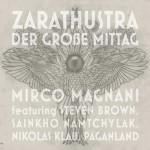
Artist: Mirco Magnani
Title: Zarathustra - Der gro?e Mittag
Format: CD + Download
Label: Klanggalerie (@)
Rated:

Title: Zarathustra - Der gro?e Mittag
Format: CD + Download
Label: Klanggalerie (@)
Rated:
Mirco Magnani's "Zarathustra: Der Große Mittag" is a work of striking ambition - a multi-lingual, multi-instrumental interpretation of Nietzsche’s "Thus Spoke Zarathustra" that intertwines philosophy, cultural depth, and experimental music into a complex and deeply evocative experience. Magnani, alongside collaborators like Steven Brown and Sainkho Namtchylak, crafts a sonic universe that seeks to unravel Nietzsche’s ideas on non-dualism, human transcendence, and the eternal return.
The album doesn’t just interpret Nietzsche’s words, it "embodies" them - through atmospheric tension, spiritual resonance, and a sense of the grand eternal conflict between the human and the cosmic. Opening with "Zarathustras Untergang", the album sets a dark, meditative tone, leading into an auditory journey that mirrors the book’s themes of overcoming oneself and the cyclical nature of existence. Tracks like "Von Der Selbst-Überwindung" highlight this with mournful strings, haunting vocals, and spacious synths that feel like they’re teetering between earthly suffering and divine ecstasy.
Mirco Magnani’s orchestration is filled with dramatic textures: from the baroque elegance of harpsichord and viola to the harsher, industrial synths and bass that resonate like the dissonance of modernity itself. The collaborative voices, especially Sainkho Namtchylak's, carry an elemental power - her guttural vocalizations almost feel like primordial utterances, as if Zarathustra himself is reborn through sound. Steven Brown’s alto sax and melancholic organ lines add a noir-ish, almost existential atmosphere, particularly in "Vom Höheren Menschen", where melody and chaos intertwine in a delicate dance.
The tension between stillness and movement in this album is where its philosophical underpinnings shine brightest. Just as Nietzsche’s Zarathustra speaks of humanity’s need to transcend the old and embrace the new, this work challenges the listener to transcend conventional music structures. It vacillates between serene, almost sacred moments and surges of violent energy, a reflection of the endless struggle Nietzsche speaks of.
At times, the ambition of "Zarathustra: Der Große Mittag" can feel overwhelming, as if the weight of Nietzsche’s ideas compress the music into something dense and unfathomable. But isn’t that the point? Magnani’s album isn’t meant to be easily digestible; it's a philosophical experience that demands your active participation, much like Nietzsche’s writings.
In the end, the album leaves you with more questions than answers, much like the eternal figure of Zarathustra himself. It’s an experiment in sound and thought, a rich, sometimes disorienting, yet utterly compelling journey into the heart of Nietzsche’s vision for humanity. Whether you find clarity in its layers or are left suspended in its complexity, "Zarathustra: Der Große Mittag" makes one thing clear: the struggle for meaning, for transcendence, is endless, and perhaps that’s the real beauty of it.
The album doesn’t just interpret Nietzsche’s words, it "embodies" them - through atmospheric tension, spiritual resonance, and a sense of the grand eternal conflict between the human and the cosmic. Opening with "Zarathustras Untergang", the album sets a dark, meditative tone, leading into an auditory journey that mirrors the book’s themes of overcoming oneself and the cyclical nature of existence. Tracks like "Von Der Selbst-Überwindung" highlight this with mournful strings, haunting vocals, and spacious synths that feel like they’re teetering between earthly suffering and divine ecstasy.
Mirco Magnani’s orchestration is filled with dramatic textures: from the baroque elegance of harpsichord and viola to the harsher, industrial synths and bass that resonate like the dissonance of modernity itself. The collaborative voices, especially Sainkho Namtchylak's, carry an elemental power - her guttural vocalizations almost feel like primordial utterances, as if Zarathustra himself is reborn through sound. Steven Brown’s alto sax and melancholic organ lines add a noir-ish, almost existential atmosphere, particularly in "Vom Höheren Menschen", where melody and chaos intertwine in a delicate dance.
The tension between stillness and movement in this album is where its philosophical underpinnings shine brightest. Just as Nietzsche’s Zarathustra speaks of humanity’s need to transcend the old and embrace the new, this work challenges the listener to transcend conventional music structures. It vacillates between serene, almost sacred moments and surges of violent energy, a reflection of the endless struggle Nietzsche speaks of.
At times, the ambition of "Zarathustra: Der Große Mittag" can feel overwhelming, as if the weight of Nietzsche’s ideas compress the music into something dense and unfathomable. But isn’t that the point? Magnani’s album isn’t meant to be easily digestible; it's a philosophical experience that demands your active participation, much like Nietzsche’s writings.
In the end, the album leaves you with more questions than answers, much like the eternal figure of Zarathustra himself. It’s an experiment in sound and thought, a rich, sometimes disorienting, yet utterly compelling journey into the heart of Nietzsche’s vision for humanity. Whether you find clarity in its layers or are left suspended in its complexity, "Zarathustra: Der Große Mittag" makes one thing clear: the struggle for meaning, for transcendence, is endless, and perhaps that’s the real beauty of it.
Comments
Stream
Browse by Genre
Industrial Music / Industrial Metal / Aggro Industrial / Electro Metal
Industrial Noise / Power Noise / Harsh Noise
Synth Pop / Electro Pop / Synth-Electronica
Techno / Trance / Goa / Drum'n'Bass / Jungle / Tribal / Trip-Hop
Ambient / Electronica / Ethereal / Dub / Soundscapes / Abstract
Experimental / Avantgarde / Weird & Wired / Glitch / Noise / Field Recording
Dark / Gothic / Wave / New Wave / Dark Wave / Industrial Gothic
New Music / Downtown / Avantgarde Jazz / New Classical / World