
Friday, October 23, 2026
Pablo Diserens & the Ocean Comm/uni/ty: Upstream Ensemble
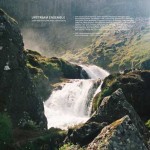
Artist: Pablo Diserens & the Ocean Comm/uni/ty (@)
Title: Upstream Ensemble
Format: Tape
Label: Forms of Minutiae
Rated:


Title: Upstream Ensemble
Format: Tape
Label: Forms of Minutiae
Rated:
"Upstream Ensemble" - or as I like to call it, the wet dream of the eco-acoustic community. Pablo Diserens has crafted an aqueous opus here, something that feels less like an album and more like the sound of the planet exhaling after a long day of dealing with humanity. If you’ve ever wanted to feel simultaneously connected to every drop of water on Earth while also questioning whether you should have just stayed dry at home, this might be your record.
Let’s start with the premise: a collaborative field recording project where "35" contributors from the ocean comm/uni/ty (what a name) sent in their wettest sounds - from humpback whale croons to the hum of submarines, from glacial melting to the gentle (and oh-so-unsettling) drip of pipes. It’s a Noah’s Ark of aquatic audio that Diserens has woven into a continuous 30-minute piece, flowing like the world’s most eco-conscious, slow-burn mixtape. But instead of bangers, we get algae photosynthesis. The audacity!
To be clear, this isn’t your typical nature sounds album - the kind you put on to feel like you’re lounging by a babbling brook, sipping herbal tea. No, this is a much more intense affair. "Upstream Ensemble" plunges you deep into the sonic ecosystems of our planet’s waterways, and spoiler: it’s not always soothing. Water, as Diserens demonstrates, is as terrifying as it is tranquil. You’ll be lulled into a false sense of serenity by a whale song only to be jolted by the industrial thrum of boat engines. Think of it as the aural version of walking barefoot in a picturesque forest, only to step on a rusty nail.
And yet, beneath the seemingly disjointed layers, there’s a profound emotional current. Diserens, with her acute sense of space and time, blends these sounds into a flowing narrative that feels as expansive as it is intimate. There are moments where you can almost feel the cold wind of glacial waters on your skin, and others where the distant mechanical hums remind you that, yes, humans are always ruining something. It’s an auditory reckoning - Diserens forces you to reckon with your own presence in this vast, liquid world. It’s like Pauline Oliveros' deep listening practice with a side of eco-anxiety.
But here’s the thing: "Upstream Ensemble" isn’t content with just "sounding" like water. No, it’s here to remind you of the politics and violence embedded in every droplet. This isn’t just an album for passive listening; it’s a political act. The juxtaposition of nature’s serene beauty with human interference is no accident. Diserens is practically yelling, in her quiet, reflective way, that we’re part of this watery web, whether we like it or not. The use of recordings from the naval industry, for instance, feels like a not-so-subtle critique of how human technology is always barging in on nature’s symphony. The oceans and rivers are alive, yes, but they’re also under siege.
The reference to Rachel Carson’s "The Edge of the Sea" and Pauline Oliveros is more than just name-dropping; it’s a nod to the lineage of artists who have used sound to explore our relationship with the environment. In this case, Diserens takes it a step further, using water as both a literal and metaphorical conduit. There’s a sense of interconnectedness here, a feeling that, just like the water cycle, we are all part of something much larger - something that flows endlessly, from the depths of the ocean to the glaciers of the Arctic. But don’t get too comfortable: this isn’t about unity and peace. The invasive hums, the sonar beeps, the industrial noise - Diserens won’t let you forget the violence we’ve done to these ecosystems.
As for the listening experience itself? It’s... an exercise in patience, let’s be real. This isn’t something you casually throw on during a dinner party (unless your guests are the kind who enjoy contemplating the collapse of ecosystems over wine). The piece demands attention and a willingness to let go of conventional musical expectations. There are no beats to hang onto, no melodies to hum along with. Instead, it’s a sprawling, organic thing that ebbs and flows like, well, water. The track is 30 minutes long, but if you’re doing it right, it should feel timeless - or like it’s lasted a small eternity.
But that’s precisely the point. "Upstream Ensemble" asks you to listen - "really" listen - to the world around you. And in that listening, there’s a kind of unsettling beauty. You hear the cries of whales and the gurgles of melting ice, and you realize: these sounds won’t be around forever. In that sense, the album isn’t just a composition - it’s a eulogy, a love letter to the planet’s waterways, tinged with the grief of knowing they’re slowly being drowned out.
In summary, "Upstream Ensemble" is not just an album. It’s a fluid, shapeshifting meditation on our relationship with water and, by extension, the Earth itself. Diserens has created something that is as beautiful as it is unsettling, a piece that resonates with ecological urgency while inviting deep contemplation. It’s a bold statement in the world of field recording and sound art, where the line between music and environment becomes as blurred as the boundary between land and sea.
So, grab a pair of good headphones, find a quiet spot, and prepare to be swept away. Just don’t expect to come back feeling dry.
Let’s start with the premise: a collaborative field recording project where "35" contributors from the ocean comm/uni/ty (what a name) sent in their wettest sounds - from humpback whale croons to the hum of submarines, from glacial melting to the gentle (and oh-so-unsettling) drip of pipes. It’s a Noah’s Ark of aquatic audio that Diserens has woven into a continuous 30-minute piece, flowing like the world’s most eco-conscious, slow-burn mixtape. But instead of bangers, we get algae photosynthesis. The audacity!
To be clear, this isn’t your typical nature sounds album - the kind you put on to feel like you’re lounging by a babbling brook, sipping herbal tea. No, this is a much more intense affair. "Upstream Ensemble" plunges you deep into the sonic ecosystems of our planet’s waterways, and spoiler: it’s not always soothing. Water, as Diserens demonstrates, is as terrifying as it is tranquil. You’ll be lulled into a false sense of serenity by a whale song only to be jolted by the industrial thrum of boat engines. Think of it as the aural version of walking barefoot in a picturesque forest, only to step on a rusty nail.
And yet, beneath the seemingly disjointed layers, there’s a profound emotional current. Diserens, with her acute sense of space and time, blends these sounds into a flowing narrative that feels as expansive as it is intimate. There are moments where you can almost feel the cold wind of glacial waters on your skin, and others where the distant mechanical hums remind you that, yes, humans are always ruining something. It’s an auditory reckoning - Diserens forces you to reckon with your own presence in this vast, liquid world. It’s like Pauline Oliveros' deep listening practice with a side of eco-anxiety.
But here’s the thing: "Upstream Ensemble" isn’t content with just "sounding" like water. No, it’s here to remind you of the politics and violence embedded in every droplet. This isn’t just an album for passive listening; it’s a political act. The juxtaposition of nature’s serene beauty with human interference is no accident. Diserens is practically yelling, in her quiet, reflective way, that we’re part of this watery web, whether we like it or not. The use of recordings from the naval industry, for instance, feels like a not-so-subtle critique of how human technology is always barging in on nature’s symphony. The oceans and rivers are alive, yes, but they’re also under siege.
The reference to Rachel Carson’s "The Edge of the Sea" and Pauline Oliveros is more than just name-dropping; it’s a nod to the lineage of artists who have used sound to explore our relationship with the environment. In this case, Diserens takes it a step further, using water as both a literal and metaphorical conduit. There’s a sense of interconnectedness here, a feeling that, just like the water cycle, we are all part of something much larger - something that flows endlessly, from the depths of the ocean to the glaciers of the Arctic. But don’t get too comfortable: this isn’t about unity and peace. The invasive hums, the sonar beeps, the industrial noise - Diserens won’t let you forget the violence we’ve done to these ecosystems.
As for the listening experience itself? It’s... an exercise in patience, let’s be real. This isn’t something you casually throw on during a dinner party (unless your guests are the kind who enjoy contemplating the collapse of ecosystems over wine). The piece demands attention and a willingness to let go of conventional musical expectations. There are no beats to hang onto, no melodies to hum along with. Instead, it’s a sprawling, organic thing that ebbs and flows like, well, water. The track is 30 minutes long, but if you’re doing it right, it should feel timeless - or like it’s lasted a small eternity.
But that’s precisely the point. "Upstream Ensemble" asks you to listen - "really" listen - to the world around you. And in that listening, there’s a kind of unsettling beauty. You hear the cries of whales and the gurgles of melting ice, and you realize: these sounds won’t be around forever. In that sense, the album isn’t just a composition - it’s a eulogy, a love letter to the planet’s waterways, tinged with the grief of knowing they’re slowly being drowned out.
In summary, "Upstream Ensemble" is not just an album. It’s a fluid, shapeshifting meditation on our relationship with water and, by extension, the Earth itself. Diserens has created something that is as beautiful as it is unsettling, a piece that resonates with ecological urgency while inviting deep contemplation. It’s a bold statement in the world of field recording and sound art, where the line between music and environment becomes as blurred as the boundary between land and sea.
So, grab a pair of good headphones, find a quiet spot, and prepare to be swept away. Just don’t expect to come back feeling dry.
Comments
Stream
Browse by Genre
Industrial Music / Industrial Metal / Aggro Industrial / Electro Metal
Industrial Noise / Power Noise / Harsh Noise
Synth Pop / Electro Pop / Synth-Electronica
Techno / Trance / Goa / Drum'n'Bass / Jungle / Tribal / Trip-Hop
Ambient / Electronica / Ethereal / Dub / Soundscapes / Abstract
Experimental / Avantgarde / Weird & Wired / Glitch / Noise / Field Recording
Dark / Gothic / Wave / New Wave / Dark Wave / Industrial Gothic
New Music / Downtown / Avantgarde Jazz / New Classical / World