
squncr: ···drowned out···
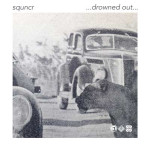


If you’ve ever wondered what it might sound like to haunt a colonial cathedral in post-war West Africa, sqncr’s "…drowned out…" may be the closest sonic answer you’ll ever receive. This is no easy listen. It’s not background music for your next dinner party. It’s a study in sonic dislocation, a 21st-century exorcism of musical colonization that drags you through layers of historical unease and postcolonial reflection, daring you to question everything about the history embedded in sound. But sure, throw it on your “chill vibes” playlist - if your idea of chill is to feel existentially uncomfortable.
With the title "…drowned out…", one might expect a tidal wave of noise, a relentless barrage of sound meant to bury you alive. Instead, what sqncr has created is something far more insidious - a series of four unsettling, sometimes eerie, sound pieces that whisper, hum, and float just beneath the surface. The sound isn’t so much drowned out as submerged, giving the sense that what you’re hearing is the barely audible scream of history trapped underwater, struggling to be remembered.
The project’s conceptual backbone is fascinating, if not deeply fraught. By reworking recordings from the 1956 "Messe des Savanes" - a mass recorded in Ouagadougou’s cathedral and performed in what was then deemed “pure traditional African style” - sqncr is playing with fire. This isn’t just resampling for the sake of creating atmospheric electronica; it’s a deliberate excavation of the sonic violence behind colonial appropriations of African culture. The mid-20th-century Catholic masses, dressed up in local “authenticity,” were just as much about symbolic control as they were about religious ceremony. Sqncr, with a methodical touch, dismantles and reconstructs these sounds, forcing the listener to confront their origins.
The first track, "…drowned out… I", opens with a low, almost imperceptible hum, like a memory you can’t quite place. It feels like standing inside the echo of something long lost. The samples of choir-like voices weave in and out, but they’re fractured, fragmented. What might have been a celebration of faith is now distorted, as if played back through a broken speaker submerged in murky water. You might think of William Basinski’s "Disintegration Loops" or Leyland Kirby’s "The Caretaker" project, but this is far more unsettling - less a meditation on decay and more a deliberate act of dismantling. There is beauty here, but it’s haunted.
"…drowned out… II" follows in much the same vein, but with a more agitated energy. The resampling techniques become more noticeable, with bits of choral sound rising out of the mix before being abruptly cut off, as if sqncr is actively silencing them mid-note. It's almost a commentary on the colonial erasure of indigenous voices, forcing you to ask: Who gets to sing? Who gets to be heard? The soundscapes are subtle, yet they carry the weight of heavy questions, even if the answers remain submerged.
By the time we arrive at "…drowned out… III", the project begins to take on a more overtly experimental shape. The interplay between sound archive and abstraction becomes even more pronounced here, with elements of drone, field recordings, and glitch weaving into something more chaotic. There’s a feeling of resistance embedded within the track - like the sonic material itself is fighting against its own reinterpretation. You get the sense that sqncr is testing how far they can stretch these sounds before they snap, and the result is a piece that feels on the verge of unraveling entirely. This is sound art in the truest sense, where the boundaries between history and music are blurred, and the listener is left to wander through the ruins.
The final piece, "…drowned out… IV", is perhaps the most jarring. Here, the sound is hollowed out, reduced to sparse, echoing tones that feel like they’ve been scraped from the bottom of a long-forgotten well. The choral samples, once again, are ghostly - remnants of a past that has been recontextualized so many times that their original meaning is impossible to decipher. But maybe that’s the point. Sqncr isn’t interested in preserving the sanctity of these sounds; they’re interested in deconstructing them, in pulling apart the layers of meaning until all that’s left is the raw material of colonial appropriation.
In a way, "…drowned out…" feels like a direct conversation with the kind of sound art that artists like Lawrence English or Ben Frost have been creating, but with a much sharper political edge. There’s a tension here that refuses to let you sit back and enjoy the ambient atmosphere. You’re constantly being reminded of the cultural and historical baggage that these sounds carry. If Brian Eno’s ambient works are meant to fade into the background, sqncr’s work demands to be heard - even when it’s barely audible.
Is it too much? Possibly. At times, you could argue that the conceptual weight of the project overshadows the actual listening experience. But then again, maybe that’s precisely the point. This isn’t an album you listen to while doing the dishes. It’s an album you sit with, wrestle with, and ultimately, come out of with more questions than answers.
"…drowned out…" is a deeply thoughtful, at times emotionally raw, and always challenging work. It’s sound art that demands attention, not only to the music, but to the histories and power dynamics that it engages with. So, while it might not be the most approachable album of 2023, it’s undoubtedly one of the most important - at least for those willing to dive deep into the murky waters of postcolonial soundscapes. Just don’t expect to come up for air anytime soon.
With the title "…drowned out…", one might expect a tidal wave of noise, a relentless barrage of sound meant to bury you alive. Instead, what sqncr has created is something far more insidious - a series of four unsettling, sometimes eerie, sound pieces that whisper, hum, and float just beneath the surface. The sound isn’t so much drowned out as submerged, giving the sense that what you’re hearing is the barely audible scream of history trapped underwater, struggling to be remembered.
The project’s conceptual backbone is fascinating, if not deeply fraught. By reworking recordings from the 1956 "Messe des Savanes" - a mass recorded in Ouagadougou’s cathedral and performed in what was then deemed “pure traditional African style” - sqncr is playing with fire. This isn’t just resampling for the sake of creating atmospheric electronica; it’s a deliberate excavation of the sonic violence behind colonial appropriations of African culture. The mid-20th-century Catholic masses, dressed up in local “authenticity,” were just as much about symbolic control as they were about religious ceremony. Sqncr, with a methodical touch, dismantles and reconstructs these sounds, forcing the listener to confront their origins.
The first track, "…drowned out… I", opens with a low, almost imperceptible hum, like a memory you can’t quite place. It feels like standing inside the echo of something long lost. The samples of choir-like voices weave in and out, but they’re fractured, fragmented. What might have been a celebration of faith is now distorted, as if played back through a broken speaker submerged in murky water. You might think of William Basinski’s "Disintegration Loops" or Leyland Kirby’s "The Caretaker" project, but this is far more unsettling - less a meditation on decay and more a deliberate act of dismantling. There is beauty here, but it’s haunted.
"…drowned out… II" follows in much the same vein, but with a more agitated energy. The resampling techniques become more noticeable, with bits of choral sound rising out of the mix before being abruptly cut off, as if sqncr is actively silencing them mid-note. It's almost a commentary on the colonial erasure of indigenous voices, forcing you to ask: Who gets to sing? Who gets to be heard? The soundscapes are subtle, yet they carry the weight of heavy questions, even if the answers remain submerged.
By the time we arrive at "…drowned out… III", the project begins to take on a more overtly experimental shape. The interplay between sound archive and abstraction becomes even more pronounced here, with elements of drone, field recordings, and glitch weaving into something more chaotic. There’s a feeling of resistance embedded within the track - like the sonic material itself is fighting against its own reinterpretation. You get the sense that sqncr is testing how far they can stretch these sounds before they snap, and the result is a piece that feels on the verge of unraveling entirely. This is sound art in the truest sense, where the boundaries between history and music are blurred, and the listener is left to wander through the ruins.
The final piece, "…drowned out… IV", is perhaps the most jarring. Here, the sound is hollowed out, reduced to sparse, echoing tones that feel like they’ve been scraped from the bottom of a long-forgotten well. The choral samples, once again, are ghostly - remnants of a past that has been recontextualized so many times that their original meaning is impossible to decipher. But maybe that’s the point. Sqncr isn’t interested in preserving the sanctity of these sounds; they’re interested in deconstructing them, in pulling apart the layers of meaning until all that’s left is the raw material of colonial appropriation.
In a way, "…drowned out…" feels like a direct conversation with the kind of sound art that artists like Lawrence English or Ben Frost have been creating, but with a much sharper political edge. There’s a tension here that refuses to let you sit back and enjoy the ambient atmosphere. You’re constantly being reminded of the cultural and historical baggage that these sounds carry. If Brian Eno’s ambient works are meant to fade into the background, sqncr’s work demands to be heard - even when it’s barely audible.
Is it too much? Possibly. At times, you could argue that the conceptual weight of the project overshadows the actual listening experience. But then again, maybe that’s precisely the point. This isn’t an album you listen to while doing the dishes. It’s an album you sit with, wrestle with, and ultimately, come out of with more questions than answers.
"…drowned out…" is a deeply thoughtful, at times emotionally raw, and always challenging work. It’s sound art that demands attention, not only to the music, but to the histories and power dynamics that it engages with. So, while it might not be the most approachable album of 2023, it’s undoubtedly one of the most important - at least for those willing to dive deep into the murky waters of postcolonial soundscapes. Just don’t expect to come up for air anytime soon.
Comments
Stream
Browse by Genre
Industrial Music / Industrial Metal / Aggro Industrial / Electro Metal
Industrial Noise / Power Noise / Harsh Noise
Synth Pop / Electro Pop / Synth-Electronica
Techno / Trance / Goa / Drum'n'Bass / Jungle / Tribal / Trip-Hop
Ambient / Electronica / Ethereal / Dub / Soundscapes / Abstract
Experimental / Avantgarde / Weird & Wired / Glitch / Noise / Field Recording
Dark / Gothic / Wave / New Wave / Dark Wave / Industrial Gothic
New Music / Downtown / Avantgarde Jazz / New Classical / World