
Monday, October 26, 2026
Gintas K & Michelle O'Rourke: Sorry Gold
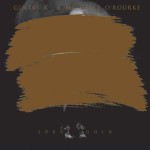
Artist: Gintas K & Michelle O'Rourke (@)
Title: Sorry Gold
Format: CD + Download
Label: Zoharum (http://zoharum.com/) (@)
Rated:

Title: Sorry Gold
Format: CD + Download
Label: Zoharum (http://zoharum.com/) (@)
Rated:
"Sorry Gold" is an album that gleefully defies easy categorization, much like a postmodern scientist gleefully defying the norms of empirical research. Gintas K., in collaboration with Michelle O'Rourke, has created a soundscape that feels like the auditory equivalent of speculative fiction—a series of “what ifs” rendered in sonic form. Recorded live during the creation of a performance piece at the Project Arts Center in Dublin, the album is both a soundtrack and a standalone work, challenging listeners to ponder the dance of biotechnology in a world increasingly defined by its technological entanglements.
The album begins with "Sorry Gold #1", an introduction that serves as a microcosm of the album's overarching theme. The track is a delicate interplay of ambient textures and O'Rourke's ethereal voice, weaving together in a way that feels both organic and synthetic. It's as if we are listening to the first tentative steps of a new form of life, emerging from the primordial ooze of industrial sounds and human emotion. There is a sense of cautious optimism here, a belief that the future, though uncertain, holds beauty and possibility.
As we progress to "Sorry Gold #2" and its subsequent iterations, the album delves deeper into this speculative exploration. The tracks, much like chapters in a scientific treatise, build upon each other, each one a hypothesis tested through the medium of sound. "Sorry Gold #4" (where Gintas flays the sound by a catchy distorted loop) and "Sorry Gold #3" (where the dissonant peaks seems to get challenged by haunting vocals by Michelle) in particular stand out for their intricate layering and dynamic shifts, suggesting a world where biological and technological boundaries blur and merge.
Gintas K.’s mastery of arrangement and sound design is evident throughout the album. His ability to craft immersive auditory environments is complemented by the precious O'Rourke’s vocal contributions, which range from haunting whispers to powerful crescendos. There is a psychological depth to their collaboration, a sense that they are probing the very nature of human experience in an age of rapid technological change. The improvisational nature of the recording process adds a layer of spontaneity, making each track feel like a live experiment unfolding in real time.
In comparison to other experimental works, "Sorry Gold" can be seen as a cousin to the avant-garde compositions of Laurie Anderson or even some ambient explorations of Brian Eno. However, Gintas K. and O'Rourke bring a distinct European sensibility to their work, one that is rooted in a rich tradition of interdisciplinary art. The album’s production, supported by a slew of Irish cultural institutions, underscores its significance as a piece of contemporary art rather than merely a collection of songs.
The scientific inquiry embedded in the album’s DNA is perhaps most evident in tracks like "Sorry Gold #4 #2" (the first of a series of Frankenstein-like hybridization between previous single-numbered tracks!) and "Sorry Gold #5". Here, the music takes on a more experimental edge, incorporating elements of drone, noise, and glitch. These tracks challenge the listener to engage with the music on a deeper level, to consider not just what they are hearing, but why it affects them. It’s an intellectual exercise as much as an auditory one, an invitation to think critically about the relationship between sound, technology, and emotion.
"Sorry Gold" concludes with the surprisingly quiet "Sorry Gold #6", a track that feels like a quiet reflection on all that has come before. It is both a culmination and a coda, a reminder that the journey of exploration is never truly over. The future, as the album suggests, is an ongoing experiment, a dance that we are all a part of, whether we realize it or not. This album is really a thoughtful and provocative exploration of the intersections between technology, biology, and art. Gintas K. and Michelle O'Rourke have created a work that is as much about the questions it raises as the answers it provides. For those willing to engage with its complexities, "Sorry Gold" offers a rich and rewarding listening experience, a journey into the heart of speculative sound.
The album begins with "Sorry Gold #1", an introduction that serves as a microcosm of the album's overarching theme. The track is a delicate interplay of ambient textures and O'Rourke's ethereal voice, weaving together in a way that feels both organic and synthetic. It's as if we are listening to the first tentative steps of a new form of life, emerging from the primordial ooze of industrial sounds and human emotion. There is a sense of cautious optimism here, a belief that the future, though uncertain, holds beauty and possibility.
As we progress to "Sorry Gold #2" and its subsequent iterations, the album delves deeper into this speculative exploration. The tracks, much like chapters in a scientific treatise, build upon each other, each one a hypothesis tested through the medium of sound. "Sorry Gold #4" (where Gintas flays the sound by a catchy distorted loop) and "Sorry Gold #3" (where the dissonant peaks seems to get challenged by haunting vocals by Michelle) in particular stand out for their intricate layering and dynamic shifts, suggesting a world where biological and technological boundaries blur and merge.
Gintas K.’s mastery of arrangement and sound design is evident throughout the album. His ability to craft immersive auditory environments is complemented by the precious O'Rourke’s vocal contributions, which range from haunting whispers to powerful crescendos. There is a psychological depth to their collaboration, a sense that they are probing the very nature of human experience in an age of rapid technological change. The improvisational nature of the recording process adds a layer of spontaneity, making each track feel like a live experiment unfolding in real time.
In comparison to other experimental works, "Sorry Gold" can be seen as a cousin to the avant-garde compositions of Laurie Anderson or even some ambient explorations of Brian Eno. However, Gintas K. and O'Rourke bring a distinct European sensibility to their work, one that is rooted in a rich tradition of interdisciplinary art. The album’s production, supported by a slew of Irish cultural institutions, underscores its significance as a piece of contemporary art rather than merely a collection of songs.
The scientific inquiry embedded in the album’s DNA is perhaps most evident in tracks like "Sorry Gold #4 #2" (the first of a series of Frankenstein-like hybridization between previous single-numbered tracks!) and "Sorry Gold #5". Here, the music takes on a more experimental edge, incorporating elements of drone, noise, and glitch. These tracks challenge the listener to engage with the music on a deeper level, to consider not just what they are hearing, but why it affects them. It’s an intellectual exercise as much as an auditory one, an invitation to think critically about the relationship between sound, technology, and emotion.
"Sorry Gold" concludes with the surprisingly quiet "Sorry Gold #6", a track that feels like a quiet reflection on all that has come before. It is both a culmination and a coda, a reminder that the journey of exploration is never truly over. The future, as the album suggests, is an ongoing experiment, a dance that we are all a part of, whether we realize it or not. This album is really a thoughtful and provocative exploration of the intersections between technology, biology, and art. Gintas K. and Michelle O'Rourke have created a work that is as much about the questions it raises as the answers it provides. For those willing to engage with its complexities, "Sorry Gold" offers a rich and rewarding listening experience, a journey into the heart of speculative sound.
Comments
Stream
Browse by Genre
Industrial Music / Industrial Metal / Aggro Industrial / Electro Metal
Industrial Noise / Power Noise / Harsh Noise
Synth Pop / Electro Pop / Synth-Electronica
Techno / Trance / Goa / Drum'n'Bass / Jungle / Tribal / Trip-Hop
Ambient / Electronica / Ethereal / Dub / Soundscapes / Abstract
Experimental / Avantgarde / Weird & Wired / Glitch / Noise / Field Recording
Dark / Gothic / Wave / New Wave / Dark Wave / Industrial Gothic
New Music / Downtown / Avantgarde Jazz / New Classical / World