
Saturday, October 3, 2026
Browse by Genre
Industrial Music / Industrial Metal / Aggro Industrial / Electro Metal
Industrial Noise / Power Noise / Harsh Noise
Synth Pop / Electro Pop / Synth-Electronica
Techno / Trance / Goa / Drum'n'Bass / Jungle / Tribal / Trip-Hop
Ambient / Electronica / Ethereal / Dub / Soundscapes / Abstract
Experimental / Avantgarde / Weird & Wired / Glitch / Noise / Field Recording
Dark / Gothic / Wave / New Wave / Dark Wave / Industrial Gothic
New Music / Downtown / Avantgarde Jazz / New Classical / World
Search Reviews
Music Reviews
IRM: Anthology


There are bands for whom the word “anthology” suggests a dignified procession through the past, perhaps with a tasteful booklet and several paragraphs about artistic development. IRM have never been particularly interested in dignity. Their history is populated by crucifixions, blind men being killed, nooses, young men, nigredo, inner phobias and various other cheerful invitations to spend an afternoon reconsidering the human condition. So "Anthology", originally assembled in 2012 and now reissued by Zoharum, is less a retrospective album than a reasonably well-organised tour through one of Sweden’s more uncompromising industrial nightmares.
Formed in Norrköping in the late 1990s by Erik Jarl and Martin Bladh, IRM emerged from the power-electronics and death-industrial underground around the time when Cold Meat Industry was providing a particularly hospitable environment for people who believed that music could still be used to make the listener physically uncomfortable. Mikael Oretoft joined as a permanent third member in 2007, expanding the project beyond its original configuration. Over the years, IRM gradually moved away from the relatively direct violence of their early work towards more elaborate structures and a broader range of sound sources, eventually arriving at the conceptual trilogy that began with "Indications of Nigredo", continued through "ORDER4" and concluded with "Closure…" in 2014.
That trajectory is already audible on "Anthology", which is why the collection remains considerably more interesting than its title might suggest. The first disc gathers studio recordings originally scattered across smaller releases and compilations, while the second collects live material from performances between 2002 and 2011. The result is not chronological autobiography but a deliberately shaped argument. The live disc in particular was rearranged and remixed rather than simply dumped into chronological order, turning several years of performances into a continuous sequence. The old "Noise Receptor" review of the original edition rightly identified this as an important distinction: "Anthology" is not merely a box in which IRM put whatever they found underneath the bed.
The opening “Order” immediately establishes the peculiar IRM balance between repetition and instability. The rhythm is insistent without becoming conventionally danceable, the electronics have a physical density that seems almost architectural, and Bladh’s voice arrives not as a conventional vocal presence but as another abrasive material inside the construction. This is one of the characteristics that made IRM stand apart from much of the more primitive power-electronics vocabulary of their era. Their work could be extremely harsh, but the harshness was rarely the whole point. There was always a concern with structure, atmosphere and psychological suggestion beneath the surface brutality.
“Like Hearts” and the twelve-minute “Purple Screen” extend that tension. Particularly in the longer piece, IRM demonstrate that repetition need not mean stasis. Sounds accumulate, mutate and acquire different weights, while the sensation of pressure is maintained without requiring the obvious escalation that so much noise-based music treats as compulsory. It is a useful reminder that volume and intensity are not synonyms. Sometimes the more unpleasant thing is to keep a sound in exactly the wrong place for exactly the right amount of time.
Then come the four “Study For A Crucifixion” pieces, and the title is already doing some of the work that IRM’s music prefers to leave unfinished. These tracks belong to the project's more abrasive vocabulary, where mechanical pulses, harsh electronic matter and Bladh's confrontational delivery create something closer to ritualised psychological theatre than to a collection of songs. The material was recorded years before some of its eventual publication, and that temporal distance adds an odd quality to the sequence. It sounds both historically rooted in early industrial music and strangely resistant to becoming a historical artefact.
That resistance is important because IRM's influences were never limited to musical predecessors. Martin Bladh's artistic practice has always crossed between music, visual art, film, writing and performance, and his work has drawn on figures including Francis Bacon, Rudolf Schwarzkogler and Yukio Mishima. The relationship between image, bodily vulnerability and psychological extremity therefore isn't an accessory attached to the music after the fact. It is part of the project's basic vocabulary.
The middle stretch, with “The Cult Of The Young Man”, “Kill The Blind”, “Strictly Platonic”, “Noose Of Silver”, “Euphoria (Rebirth)” and “Human Substance”, provides perhaps the clearest demonstration of IRM's ability to make repetition feel disturbingly purposeful. “The Cult Of The Young Man” is especially effective because its heavy pulse does not produce the reassuring catharsis that industrial music occasionally promises. Instead, the track keeps circling its central gesture, as though the mechanism itself were more important than the destination. The material from the "Nihil" compilation represented much of IRM's severe early period, and contemporary commentary on "Anthology" identified these tracks as among the clearest evidence of the project's ability to combine clinical repetition with genuinely oppressive weight.
Yet "Anthology" becomes more compelling when it starts showing cracks in that earlier formula. “Inner Phobia” and “Janus Introduction” feel less concerned with simply delivering impact, while “Here Are The Young Men” and the second appearance of “The Cult Of The Young Man” begin to suggest a vocabulary in transition. This is where the later IRM becomes visible: less interested in the blunt mechanics of power electronics, more willing to let spaces between sounds become active components of the composition.
That development would eventually become much more pronounced on "ORDER" and "Closure…", where IRM introduced increasingly unconventional structures and a wider variety of instruments and sound sources. "Anthology" consequently works almost like a geological section. Different layers of the project remain visible instead of being polished into a single, supposedly definitive identity.
The second disc changes the perspective considerably. Studio IRM can feel meticulously arranged and heavily controlled; live IRM sounds as though the machinery has been given permission to develop its own opinions. The performances retain the band's recognisable vocabulary but introduce more urgency, instability and variation. Bladh's voice becomes particularly important here. In the studio it can function as a severe compositional element, whereas live it seems to acquire a more unpredictable physical presence, as if the person producing the sound has become increasingly irritated by the fact that microphones exist.
“Aktion Anathem”, “Medley For A Hanging” and “Stage Of Crucifixion” preserve that sense of confrontation, but the real revelation comes towards the end. “Nigredo Indicator:2” and the various “Order Variation” pieces strip the material back and expose another side of IRM, one less dependent on the expected vocabulary of industrial aggression. The repetition becomes more abstract, the textures more spacious, and the distinction between composition and live manipulation increasingly uncertain.
And then there is “Sebastian”, the final track, which remains one of the most peculiar and effective pieces in the collection. Rather than closing with a grand final assault, it reduces the means considerably. Repetitive dissonant piano tones and agonised vocals create an atmosphere that is almost skeletal. The old review of "Anthology" singled it out for precisely this reason, describing it as an exceptional example of IRM's live minimalism. The assessment still makes sense because the track demonstrates something that can easily disappear beneath the genre's more spectacular surfaces: IRM were often more frightening when they stopped trying to sound frightening.
This is also why the reissue matters beyond simple archival housekeeping. IRM ceased performing live several years ago, and although the project continued to leave behind substantial studio work, the period documented here captures an important stage in the transformation from a relatively orthodox power-electronics unit into something considerably stranger. The later material would ultimately push that development so far that, after "Closure…", the band decided to retire the IRM name rather than continue without a convincing way forward.
Zoharum's presentation is suitably excessive without being entirely pointless. The regular edition comes as a double CD with booklet, while the collector's version expands into an engraved wooden box containing postcards, stickers, poster, badges and a bag reproducing the cover imagery. It is exactly the kind of packaging that makes the practical question “where am I supposed to put all this?” temporarily inseparable from the artistic question “why does an album need all this?”. In IRM's case, the answer is that Bladh's visual work has always been inseparable from the project's identity. The images are not merely merchandise surrounding the music. They belong to the same larger aesthetic system.
The remastering by Peter Andersson also serves a useful purpose. It does not magically turn thirty-year-old industrial recordings into pristine audiophile objects, because doing that would rather defeat the point. Instead, the restored presentation allows the different textures, frequencies and layers to register more clearly, which becomes particularly valuable when moving between the studio and live material.
Ultimately, "Anthology" is valuable because it refuses to turn IRM's history into a clean narrative. There is no convenient progression from primitive noise to enlightened experimentation. The earlier violence remains compelling; the later abstraction does not invalidate it; the live recordings complicate both. What emerges is a portrait of three musicians repeatedly testing how much structure can be extracted from extremity before the whole thing collapses into pure sensation.
The album's greatest achievement, then, is not that it sounds old-fashioned or timeless. It sounds specific. It belongs to a particular Swedish industrial culture, to a particular generation of power electronics, to a particular artistic relationship between sound, body and image. But it also contains enough compositional intelligence to resist being sealed inside that context. The machinery still runs, even if the factory closed years ago.
And perhaps that is the most appropriate way to approach IRM now. Not as a museum specimen from the heroic age of power electronics, nor as a relic to be praised simply because it survived, but as a body of work that understood something rather uncomfortable about extreme music: brutality becomes much more interesting when it has an architecture. "Anthology" lets us walk through that architecture without pretending it was ever designed for tourists.
Formed in Norrköping in the late 1990s by Erik Jarl and Martin Bladh, IRM emerged from the power-electronics and death-industrial underground around the time when Cold Meat Industry was providing a particularly hospitable environment for people who believed that music could still be used to make the listener physically uncomfortable. Mikael Oretoft joined as a permanent third member in 2007, expanding the project beyond its original configuration. Over the years, IRM gradually moved away from the relatively direct violence of their early work towards more elaborate structures and a broader range of sound sources, eventually arriving at the conceptual trilogy that began with "Indications of Nigredo", continued through "ORDER4" and concluded with "Closure…" in 2014.
That trajectory is already audible on "Anthology", which is why the collection remains considerably more interesting than its title might suggest. The first disc gathers studio recordings originally scattered across smaller releases and compilations, while the second collects live material from performances between 2002 and 2011. The result is not chronological autobiography but a deliberately shaped argument. The live disc in particular was rearranged and remixed rather than simply dumped into chronological order, turning several years of performances into a continuous sequence. The old "Noise Receptor" review of the original edition rightly identified this as an important distinction: "Anthology" is not merely a box in which IRM put whatever they found underneath the bed.
The opening “Order” immediately establishes the peculiar IRM balance between repetition and instability. The rhythm is insistent without becoming conventionally danceable, the electronics have a physical density that seems almost architectural, and Bladh’s voice arrives not as a conventional vocal presence but as another abrasive material inside the construction. This is one of the characteristics that made IRM stand apart from much of the more primitive power-electronics vocabulary of their era. Their work could be extremely harsh, but the harshness was rarely the whole point. There was always a concern with structure, atmosphere and psychological suggestion beneath the surface brutality.
“Like Hearts” and the twelve-minute “Purple Screen” extend that tension. Particularly in the longer piece, IRM demonstrate that repetition need not mean stasis. Sounds accumulate, mutate and acquire different weights, while the sensation of pressure is maintained without requiring the obvious escalation that so much noise-based music treats as compulsory. It is a useful reminder that volume and intensity are not synonyms. Sometimes the more unpleasant thing is to keep a sound in exactly the wrong place for exactly the right amount of time.
Then come the four “Study For A Crucifixion” pieces, and the title is already doing some of the work that IRM’s music prefers to leave unfinished. These tracks belong to the project's more abrasive vocabulary, where mechanical pulses, harsh electronic matter and Bladh's confrontational delivery create something closer to ritualised psychological theatre than to a collection of songs. The material was recorded years before some of its eventual publication, and that temporal distance adds an odd quality to the sequence. It sounds both historically rooted in early industrial music and strangely resistant to becoming a historical artefact.
That resistance is important because IRM's influences were never limited to musical predecessors. Martin Bladh's artistic practice has always crossed between music, visual art, film, writing and performance, and his work has drawn on figures including Francis Bacon, Rudolf Schwarzkogler and Yukio Mishima. The relationship between image, bodily vulnerability and psychological extremity therefore isn't an accessory attached to the music after the fact. It is part of the project's basic vocabulary.
The middle stretch, with “The Cult Of The Young Man”, “Kill The Blind”, “Strictly Platonic”, “Noose Of Silver”, “Euphoria (Rebirth)” and “Human Substance”, provides perhaps the clearest demonstration of IRM's ability to make repetition feel disturbingly purposeful. “The Cult Of The Young Man” is especially effective because its heavy pulse does not produce the reassuring catharsis that industrial music occasionally promises. Instead, the track keeps circling its central gesture, as though the mechanism itself were more important than the destination. The material from the "Nihil" compilation represented much of IRM's severe early period, and contemporary commentary on "Anthology" identified these tracks as among the clearest evidence of the project's ability to combine clinical repetition with genuinely oppressive weight.
Yet "Anthology" becomes more compelling when it starts showing cracks in that earlier formula. “Inner Phobia” and “Janus Introduction” feel less concerned with simply delivering impact, while “Here Are The Young Men” and the second appearance of “The Cult Of The Young Man” begin to suggest a vocabulary in transition. This is where the later IRM becomes visible: less interested in the blunt mechanics of power electronics, more willing to let spaces between sounds become active components of the composition.
That development would eventually become much more pronounced on "ORDER" and "Closure…", where IRM introduced increasingly unconventional structures and a wider variety of instruments and sound sources. "Anthology" consequently works almost like a geological section. Different layers of the project remain visible instead of being polished into a single, supposedly definitive identity.
The second disc changes the perspective considerably. Studio IRM can feel meticulously arranged and heavily controlled; live IRM sounds as though the machinery has been given permission to develop its own opinions. The performances retain the band's recognisable vocabulary but introduce more urgency, instability and variation. Bladh's voice becomes particularly important here. In the studio it can function as a severe compositional element, whereas live it seems to acquire a more unpredictable physical presence, as if the person producing the sound has become increasingly irritated by the fact that microphones exist.
“Aktion Anathem”, “Medley For A Hanging” and “Stage Of Crucifixion” preserve that sense of confrontation, but the real revelation comes towards the end. “Nigredo Indicator:2” and the various “Order Variation” pieces strip the material back and expose another side of IRM, one less dependent on the expected vocabulary of industrial aggression. The repetition becomes more abstract, the textures more spacious, and the distinction between composition and live manipulation increasingly uncertain.
And then there is “Sebastian”, the final track, which remains one of the most peculiar and effective pieces in the collection. Rather than closing with a grand final assault, it reduces the means considerably. Repetitive dissonant piano tones and agonised vocals create an atmosphere that is almost skeletal. The old review of "Anthology" singled it out for precisely this reason, describing it as an exceptional example of IRM's live minimalism. The assessment still makes sense because the track demonstrates something that can easily disappear beneath the genre's more spectacular surfaces: IRM were often more frightening when they stopped trying to sound frightening.
This is also why the reissue matters beyond simple archival housekeeping. IRM ceased performing live several years ago, and although the project continued to leave behind substantial studio work, the period documented here captures an important stage in the transformation from a relatively orthodox power-electronics unit into something considerably stranger. The later material would ultimately push that development so far that, after "Closure…", the band decided to retire the IRM name rather than continue without a convincing way forward.
Zoharum's presentation is suitably excessive without being entirely pointless. The regular edition comes as a double CD with booklet, while the collector's version expands into an engraved wooden box containing postcards, stickers, poster, badges and a bag reproducing the cover imagery. It is exactly the kind of packaging that makes the practical question “where am I supposed to put all this?” temporarily inseparable from the artistic question “why does an album need all this?”. In IRM's case, the answer is that Bladh's visual work has always been inseparable from the project's identity. The images are not merely merchandise surrounding the music. They belong to the same larger aesthetic system.
The remastering by Peter Andersson also serves a useful purpose. It does not magically turn thirty-year-old industrial recordings into pristine audiophile objects, because doing that would rather defeat the point. Instead, the restored presentation allows the different textures, frequencies and layers to register more clearly, which becomes particularly valuable when moving between the studio and live material.
Ultimately, "Anthology" is valuable because it refuses to turn IRM's history into a clean narrative. There is no convenient progression from primitive noise to enlightened experimentation. The earlier violence remains compelling; the later abstraction does not invalidate it; the live recordings complicate both. What emerges is a portrait of three musicians repeatedly testing how much structure can be extracted from extremity before the whole thing collapses into pure sensation.
The album's greatest achievement, then, is not that it sounds old-fashioned or timeless. It sounds specific. It belongs to a particular Swedish industrial culture, to a particular generation of power electronics, to a particular artistic relationship between sound, body and image. But it also contains enough compositional intelligence to resist being sealed inside that context. The machinery still runs, even if the factory closed years ago.
And perhaps that is the most appropriate way to approach IRM now. Not as a museum specimen from the heroic age of power electronics, nor as a relic to be praised simply because it survived, but as a body of work that understood something rather uncomfortable about extreme music: brutality becomes much more interesting when it has an architecture. "Anthology" lets us walk through that architecture without pretending it was ever designed for tourists.
NEA Ensemble: Orizzontale
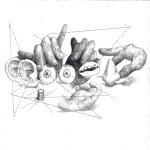
Artist: NEA Ensemble
Title: Orizzontale
Format: Download Only (MP3 + Lossless)
Label: NEA Editions (@)
Rated:

Title: Orizzontale
Format: Download Only (MP3 + Lossless)
Label: NEA Editions (@)
Rated:
There is something pleasingly suspicious about calling a record "Orizzontale". The word suggests calm surfaces, extended perspectives, perhaps a tasteful line disappearing towards the horizon. NEA Ensemble have other ideas. Their first release is less a line than a tangle of wires, reeds, skins, strings, circuitry, breath and electricity, produced by twelve musicians who seem to have agreed that hierarchy is best abolished by making sure nobody is entirely sure what is going to happen next.
Based in the Murgia Materana Park, NEA is a multidisciplinary collective bringing experimental, electronic and electroacoustic music into contact with visual art, Mediterranean traditions, technology and the physical character of its territory. The collective was formally established in 2025, around a core including Daniele Antezza, Federico Nitti, Pietro De Ruggieri and Andrea Taeggi, with the aim of developing artistic practices outside the usual metropolitan circuits. "Orizzontale", recorded live at the NEA headquarters in Matera, is the first release on the collective's own NEA Editions label and documents an improvisational encounter involving twelve artists.
The interesting part is that the music does not sound particularly interested in proving the manifesto right. It simply behaves as though the manifesto were already a practical necessity. There is no obvious attempt to construct a reassuring fusion of styles, no polite multicultural buffet where jazz is placed beside noise and a small portion of Mediterranean folklore so everybody can go home feeling enlightened. The ingredients collide, interrupt one another, occasionally cooperate and sometimes appear to have forgotten why they entered the same room. This is precisely where "Orizzontale" becomes convincing.
“Ferula” opens the album with a low-slung mixture of percussion, electronics and unstable timbral material, establishing a vocabulary in which acoustic sounds are rarely allowed to remain innocent for long. “Ruta” and “Lentisco” deepen the relationship between rhythm and electronics, but without settling into anything as conveniently identifiable as a genre. The percussion has physical weight, while the synthesizers and processing repeatedly undermine that weight, turning gestures into something more ambiguous. It is music that seems to be constantly negotiating its own centre of gravity.
That tension is particularly effective because the ensemble contains musicians with very different backgrounds. There are frame drums, percussion, double bass, esraj, electric bass and tenor saxophone alongside several analogue synthesizers, digital synthesis, samplers, tape decks and electronics. The result is not merely a large instrumental palette. It is a collision between different ideas of what a sound is supposed to do. A drum can become a rhythmic object, a ritual suggestion or simply a particularly persuasive piece of noise. A brass instrument can announce itself melodically and then dissolve into texture. Electronics can provide structure, contamination or sabotage. Nobody appears obliged to remain faithful to the traditional job description of their instrument.
“Camedrio” and “Clematide” are among the places where the album's unruliness becomes especially rewarding. The former moves with an almost mischievous physicality, while the latter brings together rhythmic drive, abrasive electronics and something distinctly theatrical. An Italian listener may occasionally experience the peculiar sensation of recognising a cultural accent without being able to reduce it to a quotation or reconstruction of tradition. This matters. NEA are not treating Mediterranean culture as an antique object to be polished before being displayed inside an electronic composition. They are allowing it to misbehave.
This is also where the title starts making more sense. Horizontality here is not simply about everyone having an equal turn. It is about refusing to establish a single musical language as the superior one. The tracks can move from improvisation to noise, dub, jazz, electronic abstraction and traces of traditional practice without having to justify the transitions. The ensemble's strength lies precisely in the fact that these elements are not completely reconciled. Their friction remains audible.
There is a certain risk in such an approach, naturally. Collective improvisation can become the musical equivalent of a meeting in which everyone has been encouraged to contribute and nobody has been authorised to edit the minutes. "Orizzontale" occasionally approaches that territory, but its better moments are held together by an unexpectedly strong sense of proportion. The players know when to intensify, when to leave space and, crucially, when not to demonstrate how clever they are. Utility Fog similarly noted the emphasis on live expression and the restraint of the musicians in combination with the live processing.
The presence of Giusi Zaccagnini is particularly useful in this respect. Her voice introduces an unmistakably human and theatrical dimension into a record otherwise populated by sounds that frequently seem to have escaped from the laboratory, the workshop and the percussion cupboard simultaneously. On “Issopo”, the longest piece, that presence helps prevent the music from becoming an abstract exercise in collective texture. It gives the turbulence a body. “Asfodelo”, meanwhile, pushes the acoustic side into a more mysterious territory, with saxophone and percussion contributing to a sound that feels ancient without pretending to reconstruct some imaginary prehistoric ceremony. These tracks have also emerged as particular points of attention in the early critical response.
There is some impressive experience hidden inside this apparently unruly gathering. Daniele Antezza, known internationally through Dadub and his work as a mastering engineer and sound producer, has long operated at the intersection of electronic experimentation and meticulous sound treatment. Andrea Taeggi brings an equally substantial history of investigation into the physical behaviour of sound, analogue synthesis, unconventional instrumental techniques and the ambiguous border between acoustic and electronic sources, both under his own name and through projects such as Gondwana and Lumisokea. Their presence helps explain why the electronics on "Orizzontale" rarely feel like decorative seasoning added to an acoustic ensemble. They are structural participants in the argument.
Yet the record's most interesting quality may be that it does not sound like the work of two established electronic musicians surrounded by supporting players. The opposite seems closer to the truth. The individual identities are constantly being absorbed and re-emitted by the group. The album's ten pieces, named after Mediterranean plants, acquire a curious botanical logic: each has its own shape and character, but the larger organism is impossible to divide neatly into roots, stems and leaves. One can hear individual gestures, but the real subject is what happens to those gestures once they enter collective circulation.
The unusual physical edition reinforces this idea rather beautifully. Instead of manufacturing another piece of plastic whose principal function is to occupy a shelf until humanity finally invents a better system for storing obsolete objects, NEA accompany the digital release with an olive-wood stamp containing a QR code and access to the lossless files and additional material. It is an object that makes the relationship between territory, craft and technology tangible rather than merely describing it.
By the time “Polipodio” closes the sequence, "Orizzontale" has not arrived at a neat synthesis, and that is probably its most honest achievement. The album does not demonstrate that twelve people can become one. It demonstrates something more useful: that twelve people can remain recognisably different while producing something that none of them could have produced alone.
That distinction is important. Too much collective art either dissolves individuality into a vague idea of community or turns collaboration into a polite division of labour. NEA Ensemble takes the more difficult route. Here, difference is not an obstacle to overcome but the material from which the music is made. The result can be messy, abrasive, funny, beautiful and occasionally baffling, sometimes within the same few minutes. In other words, it behaves rather convincingly like an actual community.
"Orizzontale" therefore works best not as a manifesto set to music, but as an experiment in whether the principles behind that manifesto can survive contact with sound. They do, although not quietly. The album's ten plant names may suggest a catalogue of Mediterranean flora, but what grows here is considerably less domesticated: an unruly sonic ecology in which analogue circuitry, ancient percussion, human breath, electronic interference and collective instinct are allowed to occupy the same patch of earth. It does not always bloom politely. Thankfully, neither does it need to.
Based in the Murgia Materana Park, NEA is a multidisciplinary collective bringing experimental, electronic and electroacoustic music into contact with visual art, Mediterranean traditions, technology and the physical character of its territory. The collective was formally established in 2025, around a core including Daniele Antezza, Federico Nitti, Pietro De Ruggieri and Andrea Taeggi, with the aim of developing artistic practices outside the usual metropolitan circuits. "Orizzontale", recorded live at the NEA headquarters in Matera, is the first release on the collective's own NEA Editions label and documents an improvisational encounter involving twelve artists.
The interesting part is that the music does not sound particularly interested in proving the manifesto right. It simply behaves as though the manifesto were already a practical necessity. There is no obvious attempt to construct a reassuring fusion of styles, no polite multicultural buffet where jazz is placed beside noise and a small portion of Mediterranean folklore so everybody can go home feeling enlightened. The ingredients collide, interrupt one another, occasionally cooperate and sometimes appear to have forgotten why they entered the same room. This is precisely where "Orizzontale" becomes convincing.
“Ferula” opens the album with a low-slung mixture of percussion, electronics and unstable timbral material, establishing a vocabulary in which acoustic sounds are rarely allowed to remain innocent for long. “Ruta” and “Lentisco” deepen the relationship between rhythm and electronics, but without settling into anything as conveniently identifiable as a genre. The percussion has physical weight, while the synthesizers and processing repeatedly undermine that weight, turning gestures into something more ambiguous. It is music that seems to be constantly negotiating its own centre of gravity.
That tension is particularly effective because the ensemble contains musicians with very different backgrounds. There are frame drums, percussion, double bass, esraj, electric bass and tenor saxophone alongside several analogue synthesizers, digital synthesis, samplers, tape decks and electronics. The result is not merely a large instrumental palette. It is a collision between different ideas of what a sound is supposed to do. A drum can become a rhythmic object, a ritual suggestion or simply a particularly persuasive piece of noise. A brass instrument can announce itself melodically and then dissolve into texture. Electronics can provide structure, contamination or sabotage. Nobody appears obliged to remain faithful to the traditional job description of their instrument.
“Camedrio” and “Clematide” are among the places where the album's unruliness becomes especially rewarding. The former moves with an almost mischievous physicality, while the latter brings together rhythmic drive, abrasive electronics and something distinctly theatrical. An Italian listener may occasionally experience the peculiar sensation of recognising a cultural accent without being able to reduce it to a quotation or reconstruction of tradition. This matters. NEA are not treating Mediterranean culture as an antique object to be polished before being displayed inside an electronic composition. They are allowing it to misbehave.
This is also where the title starts making more sense. Horizontality here is not simply about everyone having an equal turn. It is about refusing to establish a single musical language as the superior one. The tracks can move from improvisation to noise, dub, jazz, electronic abstraction and traces of traditional practice without having to justify the transitions. The ensemble's strength lies precisely in the fact that these elements are not completely reconciled. Their friction remains audible.
There is a certain risk in such an approach, naturally. Collective improvisation can become the musical equivalent of a meeting in which everyone has been encouraged to contribute and nobody has been authorised to edit the minutes. "Orizzontale" occasionally approaches that territory, but its better moments are held together by an unexpectedly strong sense of proportion. The players know when to intensify, when to leave space and, crucially, when not to demonstrate how clever they are. Utility Fog similarly noted the emphasis on live expression and the restraint of the musicians in combination with the live processing.
The presence of Giusi Zaccagnini is particularly useful in this respect. Her voice introduces an unmistakably human and theatrical dimension into a record otherwise populated by sounds that frequently seem to have escaped from the laboratory, the workshop and the percussion cupboard simultaneously. On “Issopo”, the longest piece, that presence helps prevent the music from becoming an abstract exercise in collective texture. It gives the turbulence a body. “Asfodelo”, meanwhile, pushes the acoustic side into a more mysterious territory, with saxophone and percussion contributing to a sound that feels ancient without pretending to reconstruct some imaginary prehistoric ceremony. These tracks have also emerged as particular points of attention in the early critical response.
There is some impressive experience hidden inside this apparently unruly gathering. Daniele Antezza, known internationally through Dadub and his work as a mastering engineer and sound producer, has long operated at the intersection of electronic experimentation and meticulous sound treatment. Andrea Taeggi brings an equally substantial history of investigation into the physical behaviour of sound, analogue synthesis, unconventional instrumental techniques and the ambiguous border between acoustic and electronic sources, both under his own name and through projects such as Gondwana and Lumisokea. Their presence helps explain why the electronics on "Orizzontale" rarely feel like decorative seasoning added to an acoustic ensemble. They are structural participants in the argument.
Yet the record's most interesting quality may be that it does not sound like the work of two established electronic musicians surrounded by supporting players. The opposite seems closer to the truth. The individual identities are constantly being absorbed and re-emitted by the group. The album's ten pieces, named after Mediterranean plants, acquire a curious botanical logic: each has its own shape and character, but the larger organism is impossible to divide neatly into roots, stems and leaves. One can hear individual gestures, but the real subject is what happens to those gestures once they enter collective circulation.
The unusual physical edition reinforces this idea rather beautifully. Instead of manufacturing another piece of plastic whose principal function is to occupy a shelf until humanity finally invents a better system for storing obsolete objects, NEA accompany the digital release with an olive-wood stamp containing a QR code and access to the lossless files and additional material. It is an object that makes the relationship between territory, craft and technology tangible rather than merely describing it.
By the time “Polipodio” closes the sequence, "Orizzontale" has not arrived at a neat synthesis, and that is probably its most honest achievement. The album does not demonstrate that twelve people can become one. It demonstrates something more useful: that twelve people can remain recognisably different while producing something that none of them could have produced alone.
That distinction is important. Too much collective art either dissolves individuality into a vague idea of community or turns collaboration into a polite division of labour. NEA Ensemble takes the more difficult route. Here, difference is not an obstacle to overcome but the material from which the music is made. The result can be messy, abrasive, funny, beautiful and occasionally baffling, sometimes within the same few minutes. In other words, it behaves rather convincingly like an actual community.
"Orizzontale" therefore works best not as a manifesto set to music, but as an experiment in whether the principles behind that manifesto can survive contact with sound. They do, although not quietly. The album's ten plant names may suggest a catalogue of Mediterranean flora, but what grows here is considerably less domesticated: an unruly sonic ecology in which analogue circuitry, ancient percussion, human breath, electronic interference and collective instinct are allowed to occupy the same patch of earth. It does not always bloom politely. Thankfully, neither does it need to.
a place both wonderful and strange: Matter And Desire
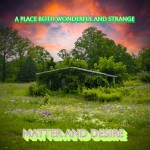
Artist: a place both wonderful and strange (@)
Title: Matter And Desire
Format: CD + Download
Label: Re:Mission Entertainment (@)
Rated:
Title: Matter And Desire
Format: CD + Download
Label: Re:Mission Entertainment (@)
Rated:
Some albums arrive on schedule. Some arrive late. "Matter And Desire" belongs to the more complicated category of records that spend years refusing to arrive at all, presumably because they have other things to do.
For a place both wonderful and strange, the New York duo of Russ Marshalek and Laura Hajek, this album began roughly eight years before it finally emerged. Songs accumulated, disappeared, returned, changed shape and waited around while life did what life generally does best: complicate everybody's plans. A performance in 2023 eventually reanimated the material, and in 2025 the pair finally entered the studio and completed what had become less a delayed album than an unresolved relationship with one. That history is unusually audible.
"Matter And Desire" doesn't sound like a carefully preserved artefact dragged from a drawer and dusted off for contemporary consumption. It sounds as though the intervening years have been allowed to leave fingerprints all over it. There is something slightly weather-beaten about the record, but also something newly alert, as if these songs had spent years watching the world deteriorate through a window and had finally decided that observation was no longer enough.
The title comes from Andreas Weber's ecological writing, but the album isn't interested in turning ecology into a collection of tasteful field recordings and concerned-looking photographs. Nature here is inseparable from politics, technology, intimacy and personal exhaustion. Apocalypse is not some cinematic event occurring somewhere conveniently far away. It is sitting in a car, looking through glass, trying to decide what the hell you are supposed to do next. That sense of suspended decision becomes the record's real subject.
"Intro444", featuring vocals from Devery, introduces the album with a short, uneasy invocation rather than a conventional opening song. The atmosphere is already damaged. Electronics seem to emerge from a place where machinery and emotion have been left in the same room overnight. There is darkness, certainly, but it isn't the theatrical darkness of someone turning off the lights because they have discovered eyeliner. It is more intimate than that, a darkness produced by uncertainty.
Then "Shedding Velvet" makes the machinery move. The duo's music has long occupied an area where darkwave, industrial electronics, witch house, experimental dance music and noise can rub against one another without quite merging. Their earlier releases already demonstrated an interest in abrasive textures and distorted club rhythms, while their Twin Peaks-inspired projects gave them a taste for psychological unease and cinematic suggestion.
Here those ingredients are considerably less interested in announcing their identities.
"Shedding Velvet" has a physical pulse, but the beat doesn't feel like an invitation to dance so much as evidence that something is still alive. Synth textures smear around the rhythm; voices appear as another layer of unstable matter. The title itself suggests transformation through loss, the skin coming away from whatever lies underneath. It is a useful metaphor for the whole album: things are being stripped down, but nobody has promised that what emerges will be prettier.
"Crying In An Uber" is perhaps where the album's peculiar sense of humour becomes most apparent. The title sounds almost comically mundane, until you realise how perfectly it fits the band's larger worldview. There is something profoundly contemporary about having a minor existential collapse in the back seat of a car while traffic continues outside as if the universe has not received the memo.
The song turns that absurdity into a dark electronic vignette. Personal crisis and urban routine occupy the same frame. The apocalypse doesn't stop the ride-share economy. It merely changes the soundtrack. This is one of the album's most effective tricks: it repeatedly brings enormous subjects down to human scale.
Climate catastrophe, political exhaustion, alienation, mortality and ecological collapse are all lurking here, but they are filtered through bodies, rooms, cars, voices and relationships. The result avoids the grandiose language that often accompanies explicitly ecological music. There are no sermons from the mountaintop. There is a person sitting somewhere thinking about what comes next.
"A Map For Birds (Behind The Glass)" expands this idea considerably. The song has been part of the band's live repertoire for years, apparently existing in various forms before they managed to capture it satisfactorily in the studio.
That long gestation seems appropriate. The title suggests orientation and confinement simultaneously. A map is supposed to help you find your way; glass lets you see without allowing you to touch. The song therefore occupies an uncomfortable position between knowledge and agency. You can see the world. You can understand that something is wrong. You may even possess an excellent map. None of this guarantees that you can get out.
Musically, the duo exploits that tension through layers of distorted electronics, pulsing rhythms and spectral vocal material. The track doesn't simply progress toward catharsis. It keeps looking through the glass.
"It's Not That Bad, Muffin" is the album's most disarmingly strange title and perhaps its most immediate song. The accompanying visual treatment has been associated with the band's Lynchian sensibility and with a deliberately warped sense of repetition and déjà vu. Contemporary coverage has also heard traces of trip-hop and acts such as Ladytron, Massive Attack, Portishead and Björk in the song's combination of fuzz, beat and melancholy. But the interesting thing is that it doesn't sound like a checklist of influences.
Instead, the song occupies a kind of emotional traffic jam. The groove keeps moving while the psychological situation remains stuck. Something unpleasant is happening, but the music keeps insisting on forward motion. The title offers reassurance that nobody quite believes.
There is a small masterpiece of human behaviour contained in that contradiction. “It's not that bad” is one of our favourite lies because sometimes it is the only sentence that allows us to get through the afternoon.
Then comes "I Am Stretched On Your Grave", based on the traditional Irish song "Táim sínte ar do thuama". The inclusion of this material shifts the album into a more explicitly archaic register. The old song carries grief, devotion and physical proximity to death, while the duo places it inside an electronic environment that makes the traditional lament feel less like an inherited object and more like a message arriving from somewhere the present hasn't completely managed to erase. The band's own release information confirms the traditional source.
The juxtaposition is particularly effective because "Matter And Desire" is constantly concerned with what survives.
What survives a person? A landscape? A culture? A relationship? A song?
"Vegetation" approaches the ecological dimension more directly, but its brevity prevents it from becoming an explanatory footnote. At just over two minutes, it feels more like a disturbance passing through the album. The title is almost deliberately neutral, which makes the music behind it more unsettling. “Vegetation” sounds like something catalogued by an indifferent database, while the actual sound suggests a living environment that is considerably harder to categorise.
And then "Dissociation (A Map For Birds)" returns to the earlier material in altered form.
This is a smart structural choice. Rather than ending with resolution, the album folds back upon itself. The map returns, but now it has become dissociation. Orientation has turned into fragmentation. What was previously seen through glass is now psychologically separated from the observer.
The nearly thirty-minute album therefore behaves less like a linear narrative than a sequence of pressure points. Each track catches someone immediately before a decision, a breakdown, a departure, a recognition or a transformation. The band has described the record precisely in those terms: each song occupies the instant before something changes permanently, with the possible direction of that change remaining uncertain.
That uncertainty is what prevents the ecological theme from becoming merely worthy.
There is nothing especially comforting about "Matter And Desire". It doesn't pretend that awareness automatically produces action, or that every crisis contains a noble lesson waiting to be extracted. People change reluctantly. Sometimes they change too late. Sometimes they change in the wrong direction. Sometimes they sit in an Uber and cry, which is probably not covered by most sustainability frameworks.
The music understands this.
Its electronics are dark but not monolithic, danceable but rarely celebratory, experimental without becoming an academic exercise. There is a persistent sense of tension between propulsion and paralysis. The rhythms suggest movement while the textures suggest entanglement.
That tension also connects "Matter And Desire" to the duo's longer trajectory. a place both wonderful and strange emerged in 2016 and have spent the intervening years developing a distinctive world of dark electronic music, performance, remixing and audiovisual work. Their long-running relationship with "Twin Peaks", including projects centred on Laura Palmer, explains some of the dream logic and cinematic unease that surface here, but the new album feels less like an extension of that mythology than a maturation of its underlying sensibility.
The name itself, borrowed from the strange description of the Black Lodge in "Twin Peaks", has always implied a place that cannot decide whether it is beautiful or horrifying. "Matter And Desire" finally gives that ambiguity a distinctly material dimension.
The world is beautiful.
The world is damaged.
We are both observers and participants.
And wanting something better does not automatically make us better people.
That may be the album's most thoughtful achievement. It doesn't separate the personal from the political or the ecological from the emotional. The same nervous system that worries about a relationship also has to live through a changing climate, an unstable political landscape and the increasingly bizarre experience of watching history unfold through glowing rectangles.
The production reflects that compression. Synths feel dense without becoming overdecorated. Distortion is used as atmosphere rather than mere aggression. Vocals are often placed inside the electronics rather than perched above them, which makes the songs feel less like conventional compositions and more like environments with human beings trapped somewhere inside.
And despite the album's bleakness, there is a peculiar vitality running through it.
Perhaps that is because the record is not actually about apocalypse.
It is about "choice under pressure".
The distinction matters. An apocalypse is an ending. A decision is what happens when an ending hasn't happened yet. That tiny interval is where "Matter And Desire" lives.
The eight-year delay becomes almost accidentally appropriate. The album itself spent years suspended between existence and non-existence, between intention and completion. The musicians had to become different people before the songs could finally become what they were supposed to be.
So the record arrives carrying its own argument inside it: sometimes nothing changes because the conditions for change aren't there yet. Then, suddenly, they are.
The strange thing about "Matter And Desire" is that its darkness never entirely closes the door.
There is always another beat.
Another fragment of melody.
Another route on the map.
Another possibility, however inconvenient.
And perhaps that is enough.
Not optimism. Nothing so suspiciously well behaved.
Just the stubborn fact that the future has not happened yet.
For a place both wonderful and strange, the New York duo of Russ Marshalek and Laura Hajek, this album began roughly eight years before it finally emerged. Songs accumulated, disappeared, returned, changed shape and waited around while life did what life generally does best: complicate everybody's plans. A performance in 2023 eventually reanimated the material, and in 2025 the pair finally entered the studio and completed what had become less a delayed album than an unresolved relationship with one. That history is unusually audible.
"Matter And Desire" doesn't sound like a carefully preserved artefact dragged from a drawer and dusted off for contemporary consumption. It sounds as though the intervening years have been allowed to leave fingerprints all over it. There is something slightly weather-beaten about the record, but also something newly alert, as if these songs had spent years watching the world deteriorate through a window and had finally decided that observation was no longer enough.
The title comes from Andreas Weber's ecological writing, but the album isn't interested in turning ecology into a collection of tasteful field recordings and concerned-looking photographs. Nature here is inseparable from politics, technology, intimacy and personal exhaustion. Apocalypse is not some cinematic event occurring somewhere conveniently far away. It is sitting in a car, looking through glass, trying to decide what the hell you are supposed to do next. That sense of suspended decision becomes the record's real subject.
"Intro444", featuring vocals from Devery, introduces the album with a short, uneasy invocation rather than a conventional opening song. The atmosphere is already damaged. Electronics seem to emerge from a place where machinery and emotion have been left in the same room overnight. There is darkness, certainly, but it isn't the theatrical darkness of someone turning off the lights because they have discovered eyeliner. It is more intimate than that, a darkness produced by uncertainty.
Then "Shedding Velvet" makes the machinery move. The duo's music has long occupied an area where darkwave, industrial electronics, witch house, experimental dance music and noise can rub against one another without quite merging. Their earlier releases already demonstrated an interest in abrasive textures and distorted club rhythms, while their Twin Peaks-inspired projects gave them a taste for psychological unease and cinematic suggestion.
Here those ingredients are considerably less interested in announcing their identities.
"Shedding Velvet" has a physical pulse, but the beat doesn't feel like an invitation to dance so much as evidence that something is still alive. Synth textures smear around the rhythm; voices appear as another layer of unstable matter. The title itself suggests transformation through loss, the skin coming away from whatever lies underneath. It is a useful metaphor for the whole album: things are being stripped down, but nobody has promised that what emerges will be prettier.
"Crying In An Uber" is perhaps where the album's peculiar sense of humour becomes most apparent. The title sounds almost comically mundane, until you realise how perfectly it fits the band's larger worldview. There is something profoundly contemporary about having a minor existential collapse in the back seat of a car while traffic continues outside as if the universe has not received the memo.
The song turns that absurdity into a dark electronic vignette. Personal crisis and urban routine occupy the same frame. The apocalypse doesn't stop the ride-share economy. It merely changes the soundtrack. This is one of the album's most effective tricks: it repeatedly brings enormous subjects down to human scale.
Climate catastrophe, political exhaustion, alienation, mortality and ecological collapse are all lurking here, but they are filtered through bodies, rooms, cars, voices and relationships. The result avoids the grandiose language that often accompanies explicitly ecological music. There are no sermons from the mountaintop. There is a person sitting somewhere thinking about what comes next.
"A Map For Birds (Behind The Glass)" expands this idea considerably. The song has been part of the band's live repertoire for years, apparently existing in various forms before they managed to capture it satisfactorily in the studio.
That long gestation seems appropriate. The title suggests orientation and confinement simultaneously. A map is supposed to help you find your way; glass lets you see without allowing you to touch. The song therefore occupies an uncomfortable position between knowledge and agency. You can see the world. You can understand that something is wrong. You may even possess an excellent map. None of this guarantees that you can get out.
Musically, the duo exploits that tension through layers of distorted electronics, pulsing rhythms and spectral vocal material. The track doesn't simply progress toward catharsis. It keeps looking through the glass.
"It's Not That Bad, Muffin" is the album's most disarmingly strange title and perhaps its most immediate song. The accompanying visual treatment has been associated with the band's Lynchian sensibility and with a deliberately warped sense of repetition and déjà vu. Contemporary coverage has also heard traces of trip-hop and acts such as Ladytron, Massive Attack, Portishead and Björk in the song's combination of fuzz, beat and melancholy. But the interesting thing is that it doesn't sound like a checklist of influences.
Instead, the song occupies a kind of emotional traffic jam. The groove keeps moving while the psychological situation remains stuck. Something unpleasant is happening, but the music keeps insisting on forward motion. The title offers reassurance that nobody quite believes.
There is a small masterpiece of human behaviour contained in that contradiction. “It's not that bad” is one of our favourite lies because sometimes it is the only sentence that allows us to get through the afternoon.
Then comes "I Am Stretched On Your Grave", based on the traditional Irish song "Táim sínte ar do thuama". The inclusion of this material shifts the album into a more explicitly archaic register. The old song carries grief, devotion and physical proximity to death, while the duo places it inside an electronic environment that makes the traditional lament feel less like an inherited object and more like a message arriving from somewhere the present hasn't completely managed to erase. The band's own release information confirms the traditional source.
The juxtaposition is particularly effective because "Matter And Desire" is constantly concerned with what survives.
What survives a person? A landscape? A culture? A relationship? A song?
"Vegetation" approaches the ecological dimension more directly, but its brevity prevents it from becoming an explanatory footnote. At just over two minutes, it feels more like a disturbance passing through the album. The title is almost deliberately neutral, which makes the music behind it more unsettling. “Vegetation” sounds like something catalogued by an indifferent database, while the actual sound suggests a living environment that is considerably harder to categorise.
And then "Dissociation (A Map For Birds)" returns to the earlier material in altered form.
This is a smart structural choice. Rather than ending with resolution, the album folds back upon itself. The map returns, but now it has become dissociation. Orientation has turned into fragmentation. What was previously seen through glass is now psychologically separated from the observer.
The nearly thirty-minute album therefore behaves less like a linear narrative than a sequence of pressure points. Each track catches someone immediately before a decision, a breakdown, a departure, a recognition or a transformation. The band has described the record precisely in those terms: each song occupies the instant before something changes permanently, with the possible direction of that change remaining uncertain.
That uncertainty is what prevents the ecological theme from becoming merely worthy.
There is nothing especially comforting about "Matter And Desire". It doesn't pretend that awareness automatically produces action, or that every crisis contains a noble lesson waiting to be extracted. People change reluctantly. Sometimes they change too late. Sometimes they change in the wrong direction. Sometimes they sit in an Uber and cry, which is probably not covered by most sustainability frameworks.
The music understands this.
Its electronics are dark but not monolithic, danceable but rarely celebratory, experimental without becoming an academic exercise. There is a persistent sense of tension between propulsion and paralysis. The rhythms suggest movement while the textures suggest entanglement.
That tension also connects "Matter And Desire" to the duo's longer trajectory. a place both wonderful and strange emerged in 2016 and have spent the intervening years developing a distinctive world of dark electronic music, performance, remixing and audiovisual work. Their long-running relationship with "Twin Peaks", including projects centred on Laura Palmer, explains some of the dream logic and cinematic unease that surface here, but the new album feels less like an extension of that mythology than a maturation of its underlying sensibility.
The name itself, borrowed from the strange description of the Black Lodge in "Twin Peaks", has always implied a place that cannot decide whether it is beautiful or horrifying. "Matter And Desire" finally gives that ambiguity a distinctly material dimension.
The world is beautiful.
The world is damaged.
We are both observers and participants.
And wanting something better does not automatically make us better people.
That may be the album's most thoughtful achievement. It doesn't separate the personal from the political or the ecological from the emotional. The same nervous system that worries about a relationship also has to live through a changing climate, an unstable political landscape and the increasingly bizarre experience of watching history unfold through glowing rectangles.
The production reflects that compression. Synths feel dense without becoming overdecorated. Distortion is used as atmosphere rather than mere aggression. Vocals are often placed inside the electronics rather than perched above them, which makes the songs feel less like conventional compositions and more like environments with human beings trapped somewhere inside.
And despite the album's bleakness, there is a peculiar vitality running through it.
Perhaps that is because the record is not actually about apocalypse.
It is about "choice under pressure".
The distinction matters. An apocalypse is an ending. A decision is what happens when an ending hasn't happened yet. That tiny interval is where "Matter And Desire" lives.
The eight-year delay becomes almost accidentally appropriate. The album itself spent years suspended between existence and non-existence, between intention and completion. The musicians had to become different people before the songs could finally become what they were supposed to be.
So the record arrives carrying its own argument inside it: sometimes nothing changes because the conditions for change aren't there yet. Then, suddenly, they are.
The strange thing about "Matter And Desire" is that its darkness never entirely closes the door.
There is always another beat.
Another fragment of melody.
Another route on the map.
Another possibility, however inconvenient.
And perhaps that is enough.
Not optimism. Nothing so suspiciously well behaved.
Just the stubborn fact that the future has not happened yet.
Alev Lenz: 4 in a Cycle of Thirds (Jas Shaw versions)

There is a particular kind of musical transformation that doesn't involve adding anything particularly spectacular. Instead, it consists of taking things away until the remaining material starts behaving differently. It is a dangerous procedure. Remove too much and you get an empty room. Remove exactly the right amount and suddenly you notice the shape of the room. "4 in a Cycle of Thirds (Jas Shaw versions)" lives in that second, considerably more interesting, space.
Alev Lenz's original album, released at the beginning of 2026, was already built around an almost perversely elegant idea: twelve pieces, twelve notes of the chromatic scale, each composition anchored to a particular pitch. The concept sounds like something that could have resulted in a conservatory examination lasting several hours and ending with somebody mentioning Schenkerian analysis. Instead, Lenz turned it into music that moves between songwriting, chamber composition, folk traditions, cinematic atmosphere and occasional traces of metal, while retaining the intimacy of a singer-songwriter record. The crucial detail, however, is that Jas Shaw was present before these new versions existed.
Lenz initially asked Shaw to provide a drone for each of the twelve chromatic notes. Those drones became part of the creative environment in which she wrote much of the original album, even though many of them eventually disappeared from the finished recordings. Their absence was therefore not quite an absence at all. They had already left an imprint on the compositions. When Lenz subsequently handed the completed album back to Shaw and effectively gave him permission to make his own versions, the process became less a conventional remix project than a conversation conducted through musical afterimages. That distinction is important.
Shaw, best known as co-founder of Simian Mobile Disco and for his work as a producer, composer and collaborator, doesn't seem particularly interested in putting a recognisable electronic fingerprint over Lenz's songs. Instead, he reduces them until their internal resonances become more visible, or rather more audible. The twelve pieces become slower, more spacious, less concerned with the conventional obligations of a song. Their melodies and voices can still be detected, but they appear to have wandered into a room where the furniture has been removed.
"Mother Tongue (Drone version)" establishes the principle beautifully. Rather than announcing itself with the sort of giant atmospheric gesture that ambient music occasionally mistakes for profundity, it develops through minute alterations in density. The voice, where it remains perceptible, becomes part of a larger acoustic ecology. Harmonic information is stretched until a chord begins to feel less like a chord and more like a place.
This is where Shaw's particular working method becomes relevant. His feedback system, built around a modified piano stripped of its conventional key bed and surrounded by resonators, microphones and mixing equipment, produces harmonics through physical interaction rather than simply synthesising a generic drone. It is a wonderfully tactile idea: instead of asking a machine to imitate resonance, make an instrument resonate beyond the conditions for which it was designed. Humanity has spent centuries improving pianos and then apparently decided the next logical step was to take the piano apart and crawl around underneath it with microphones. Fortunately, in this case, the result justifies the eccentricity.
On "Mountain", the reduction becomes almost geological. The original song's identity is not erased so much as buried beneath slowly shifting harmonic sediment. The music seems to breathe from below the surface. There is no conventional “build” because the piece doesn't need to go anywhere. Its movement is measured in changes of light rather than changes of location. That becomes one of the record's defining characteristics: "scale without spectacle".
A sound can occupy a great deal of space without becoming loud. A tiny alteration in timbre can feel enormous when the surrounding arrangement has been stripped back. Shaw understands this instinctively, and the album repeatedly exploits the psychological disproportion between what we hear and what we expect to hear.
"Domestisizer" is particularly revealing in this respect. The original composition carried a more overtly physical and confrontational energy, combining bowed strings, bass and Anatolian saz with Lenz's uncompromising vocal writing. The drone version doesn't simply calm that anger down. It changes the temperature at which the anger exists. What was previously embodied becomes spectral. The political and emotional charge hasn't vanished; it has moved deeper into the walls. That makes the title "Domestisizer" sound even stranger here. The music has been domesticated only in the most superficial sense. Beneath the quieter surface, something remains distinctly unwilling to behave.
"Ivory Tower" continues the process of subtraction, while "Happy Song" performs perhaps the most deliciously suspicious trick of the album. Happiness is notoriously difficult to represent without sounding like an advertisement for yoghurt, and Lenz's original material already avoided that trap by allowing sweetness to coexist with ambiguity. Shaw pushes the ambiguity further. The resulting atmosphere is tender but slightly unstable, as though happiness were being remembered rather than experienced. This is a record obsessed with memory, even when it isn't explicitly discussing it.
"Dawn" is an especially natural candidate for Shaw's treatment. The piece already carries the temporal implication of its title, and the drone version stretches that transition until the listener becomes uncertain whether dawn is arriving or whether the darkness has simply changed its mind. "Home" works similarly, turning the idea of a destination into something much less concrete. Home here isn't necessarily a building, a country or even another person. It becomes a harmonic condition, somewhere the music can temporarily settle.
And then there is "Ocean of Life", whose title could easily have led to some truly catastrophic ambient-music decisions. Fortunately, Shaw appears to know that oceans do not need to be represented by giant cinematic swells. The piece instead suggests depth through resonance and duration. Its space seems to expand sideways rather than upward, with sounds accumulating like layers of water rather than climbing toward some artificially imposed climax.
The same principle carries into "Adulthood" and "Brittle", where the relationship between fragility and endurance becomes increasingly pronounced. Lenz's songs have always contained a certain vulnerability, but vulnerability here is no longer located primarily in the vocal performance. It is embedded in the textures themselves. A sound can feel delicate because it is quiet, but it can also feel delicate because we can hear how easily it might disappear.
"Borrowed Time" consequently becomes one of the album's more affecting titles. The drone treatment turns duration itself into musical material. Notes seem to linger beyond their presumed expiration date. Harmonic residues remain after the event that produced them has gone. The effect is subtle but psychologically potent: the listener becomes aware of time not because anything dramatic happens, but because something refuses to disappear as quickly as expected.
The closing "Ein kleines SchlÄflein" is almost mischievously appropriate. After nearly forty-five minutes of progressively altered perception, the album doesn't require a grand conclusion. It can simply fold itself inward. The title suggests a little nap, and the music behaves accordingly, although this is probably the sort of nap during which you wake up three hours later convinced that you have discovered something important about the universe.
The collaboration works partly because Lenz and Shaw don't seem to be competing for authorship. The original album isn't treated as raw material to be conquered, and the new versions aren't presented as corrections. They are parallel states of the same work.
That makes the project more interesting than the increasingly common practice of issuing an album and then immediately attaching a “reimagined” edition to it, as if every record now needs a director's cut, an extended universe and its own cinematic franchise. Here, the second version has a genuine conceptual reason to exist. The drones were present at the birth of the original compositions; Shaw's later versions return to those foundations and allow them to become audible again.
The result therefore feels strangely circular. Lenz began with twelve single-note drones, wrote songs around them, removed many of the original drones, and then handed the completed songs back to Shaw so that he could build new versions from the same underlying idea. The music travels away from its starting point only to discover that the starting point has been quietly following it.
That circularity is also reflected in Lenz's own artistic background. Her work has consistently resisted the neat separation of popular song and composed music. Her previous records, collaborations and vocal contributions to film music demonstrate an interest in the point where voice, composition and atmosphere stop functioning as separate departments. Her collaboration with Shaw dates back several years, including their 2024 "Bring Your Friends" EP and Shaw's mixing work on earlier Lenz albums.
Shaw brings a different history to the exchange. His work with Simian Mobile Disco established him within electronic music, but his later projects have increasingly emphasised physical sound, experimentation and unusual forms of collaboration. That makes him particularly suited to this material. He understands electronics not merely as a vocabulary but as a way of altering the perceived behaviour of acoustic objects.
The result sits somewhere between ambient music, electroacoustic composition and the strange territory occupied by a song after someone has removed most of its furniture. It is certainly quiet, but “quiet” is not the same thing as passive. These versions demand attention precisely because they don't constantly beg for it.
There is also something deeply satisfying about hearing an album built around twelve notes become less interested in the notes themselves. The chromatic scale is an abstract system, twelve equally tempered stepping stones upon which Western music has built an absurd amount of civilisation. Lenz uses that system as a compositional skeleton; Shaw turns the skeleton into an echo chamber.
What survives is not simply melody. It is atmosphere, harmonic memory, vocal presence, physical resonance and the emotional residue left behind when familiar structures are partially dismantled.
"4 in a Cycle of Thirds (Jas Shaw versions)" therefore isn't a remix album in the conventional sense. It is closer to an alternative memory of the same album.
The songs haven't been replaced. They have been allowed to haunt themselves. And perhaps that is why the record feels so unusually intimate despite its expansiveness. Shaw does not enlarge Lenz's compositions by making them bigger. He enlarges them by giving their smallest details somewhere to live.
Sometimes the most radical thing a producer can do is stop interfering. Sometimes, apparently, he can interfere extremely carefully.
Both approaches require knowing when to leave the room.
Alev Lenz's original album, released at the beginning of 2026, was already built around an almost perversely elegant idea: twelve pieces, twelve notes of the chromatic scale, each composition anchored to a particular pitch. The concept sounds like something that could have resulted in a conservatory examination lasting several hours and ending with somebody mentioning Schenkerian analysis. Instead, Lenz turned it into music that moves between songwriting, chamber composition, folk traditions, cinematic atmosphere and occasional traces of metal, while retaining the intimacy of a singer-songwriter record. The crucial detail, however, is that Jas Shaw was present before these new versions existed.
Lenz initially asked Shaw to provide a drone for each of the twelve chromatic notes. Those drones became part of the creative environment in which she wrote much of the original album, even though many of them eventually disappeared from the finished recordings. Their absence was therefore not quite an absence at all. They had already left an imprint on the compositions. When Lenz subsequently handed the completed album back to Shaw and effectively gave him permission to make his own versions, the process became less a conventional remix project than a conversation conducted through musical afterimages. That distinction is important.
Shaw, best known as co-founder of Simian Mobile Disco and for his work as a producer, composer and collaborator, doesn't seem particularly interested in putting a recognisable electronic fingerprint over Lenz's songs. Instead, he reduces them until their internal resonances become more visible, or rather more audible. The twelve pieces become slower, more spacious, less concerned with the conventional obligations of a song. Their melodies and voices can still be detected, but they appear to have wandered into a room where the furniture has been removed.
"Mother Tongue (Drone version)" establishes the principle beautifully. Rather than announcing itself with the sort of giant atmospheric gesture that ambient music occasionally mistakes for profundity, it develops through minute alterations in density. The voice, where it remains perceptible, becomes part of a larger acoustic ecology. Harmonic information is stretched until a chord begins to feel less like a chord and more like a place.
This is where Shaw's particular working method becomes relevant. His feedback system, built around a modified piano stripped of its conventional key bed and surrounded by resonators, microphones and mixing equipment, produces harmonics through physical interaction rather than simply synthesising a generic drone. It is a wonderfully tactile idea: instead of asking a machine to imitate resonance, make an instrument resonate beyond the conditions for which it was designed. Humanity has spent centuries improving pianos and then apparently decided the next logical step was to take the piano apart and crawl around underneath it with microphones. Fortunately, in this case, the result justifies the eccentricity.
On "Mountain", the reduction becomes almost geological. The original song's identity is not erased so much as buried beneath slowly shifting harmonic sediment. The music seems to breathe from below the surface. There is no conventional “build” because the piece doesn't need to go anywhere. Its movement is measured in changes of light rather than changes of location. That becomes one of the record's defining characteristics: "scale without spectacle".
A sound can occupy a great deal of space without becoming loud. A tiny alteration in timbre can feel enormous when the surrounding arrangement has been stripped back. Shaw understands this instinctively, and the album repeatedly exploits the psychological disproportion between what we hear and what we expect to hear.
"Domestisizer" is particularly revealing in this respect. The original composition carried a more overtly physical and confrontational energy, combining bowed strings, bass and Anatolian saz with Lenz's uncompromising vocal writing. The drone version doesn't simply calm that anger down. It changes the temperature at which the anger exists. What was previously embodied becomes spectral. The political and emotional charge hasn't vanished; it has moved deeper into the walls. That makes the title "Domestisizer" sound even stranger here. The music has been domesticated only in the most superficial sense. Beneath the quieter surface, something remains distinctly unwilling to behave.
"Ivory Tower" continues the process of subtraction, while "Happy Song" performs perhaps the most deliciously suspicious trick of the album. Happiness is notoriously difficult to represent without sounding like an advertisement for yoghurt, and Lenz's original material already avoided that trap by allowing sweetness to coexist with ambiguity. Shaw pushes the ambiguity further. The resulting atmosphere is tender but slightly unstable, as though happiness were being remembered rather than experienced. This is a record obsessed with memory, even when it isn't explicitly discussing it.
"Dawn" is an especially natural candidate for Shaw's treatment. The piece already carries the temporal implication of its title, and the drone version stretches that transition until the listener becomes uncertain whether dawn is arriving or whether the darkness has simply changed its mind. "Home" works similarly, turning the idea of a destination into something much less concrete. Home here isn't necessarily a building, a country or even another person. It becomes a harmonic condition, somewhere the music can temporarily settle.
And then there is "Ocean of Life", whose title could easily have led to some truly catastrophic ambient-music decisions. Fortunately, Shaw appears to know that oceans do not need to be represented by giant cinematic swells. The piece instead suggests depth through resonance and duration. Its space seems to expand sideways rather than upward, with sounds accumulating like layers of water rather than climbing toward some artificially imposed climax.
The same principle carries into "Adulthood" and "Brittle", where the relationship between fragility and endurance becomes increasingly pronounced. Lenz's songs have always contained a certain vulnerability, but vulnerability here is no longer located primarily in the vocal performance. It is embedded in the textures themselves. A sound can feel delicate because it is quiet, but it can also feel delicate because we can hear how easily it might disappear.
"Borrowed Time" consequently becomes one of the album's more affecting titles. The drone treatment turns duration itself into musical material. Notes seem to linger beyond their presumed expiration date. Harmonic residues remain after the event that produced them has gone. The effect is subtle but psychologically potent: the listener becomes aware of time not because anything dramatic happens, but because something refuses to disappear as quickly as expected.
The closing "Ein kleines SchlÄflein" is almost mischievously appropriate. After nearly forty-five minutes of progressively altered perception, the album doesn't require a grand conclusion. It can simply fold itself inward. The title suggests a little nap, and the music behaves accordingly, although this is probably the sort of nap during which you wake up three hours later convinced that you have discovered something important about the universe.
The collaboration works partly because Lenz and Shaw don't seem to be competing for authorship. The original album isn't treated as raw material to be conquered, and the new versions aren't presented as corrections. They are parallel states of the same work.
That makes the project more interesting than the increasingly common practice of issuing an album and then immediately attaching a “reimagined” edition to it, as if every record now needs a director's cut, an extended universe and its own cinematic franchise. Here, the second version has a genuine conceptual reason to exist. The drones were present at the birth of the original compositions; Shaw's later versions return to those foundations and allow them to become audible again.
The result therefore feels strangely circular. Lenz began with twelve single-note drones, wrote songs around them, removed many of the original drones, and then handed the completed songs back to Shaw so that he could build new versions from the same underlying idea. The music travels away from its starting point only to discover that the starting point has been quietly following it.
That circularity is also reflected in Lenz's own artistic background. Her work has consistently resisted the neat separation of popular song and composed music. Her previous records, collaborations and vocal contributions to film music demonstrate an interest in the point where voice, composition and atmosphere stop functioning as separate departments. Her collaboration with Shaw dates back several years, including their 2024 "Bring Your Friends" EP and Shaw's mixing work on earlier Lenz albums.
Shaw brings a different history to the exchange. His work with Simian Mobile Disco established him within electronic music, but his later projects have increasingly emphasised physical sound, experimentation and unusual forms of collaboration. That makes him particularly suited to this material. He understands electronics not merely as a vocabulary but as a way of altering the perceived behaviour of acoustic objects.
The result sits somewhere between ambient music, electroacoustic composition and the strange territory occupied by a song after someone has removed most of its furniture. It is certainly quiet, but “quiet” is not the same thing as passive. These versions demand attention precisely because they don't constantly beg for it.
There is also something deeply satisfying about hearing an album built around twelve notes become less interested in the notes themselves. The chromatic scale is an abstract system, twelve equally tempered stepping stones upon which Western music has built an absurd amount of civilisation. Lenz uses that system as a compositional skeleton; Shaw turns the skeleton into an echo chamber.
What survives is not simply melody. It is atmosphere, harmonic memory, vocal presence, physical resonance and the emotional residue left behind when familiar structures are partially dismantled.
"4 in a Cycle of Thirds (Jas Shaw versions)" therefore isn't a remix album in the conventional sense. It is closer to an alternative memory of the same album.
The songs haven't been replaced. They have been allowed to haunt themselves. And perhaps that is why the record feels so unusually intimate despite its expansiveness. Shaw does not enlarge Lenz's compositions by making them bigger. He enlarges them by giving their smallest details somewhere to live.
Sometimes the most radical thing a producer can do is stop interfering. Sometimes, apparently, he can interfere extremely carefully.
Both approaches require knowing when to leave the room.
Ingebrigt Håker Flaten (Exit) Knarr: fly

Artist: Ingebrigt Håker Flaten (Exit) Knarr (@)
Title: fly
Format: CD & 12" + Download
Label: Sauajazz (@)
Rated:
Title: fly
Format: CD & 12" + Download
Label: Sauajazz (@)
Rated:
There are bands that play loud, bands that play fast, and bands that apparently regard the distinction between composition and controlled demolition as an unnecessary bureaucratic obstacle. (Exit) Knarr belongs to the third category. On "fly", recorded at Oslo's Victoria Nasjonal Jazzscene at the end of the European tour that followed "Drops", Ingebrigt Håker Flaten's sextet takes material associated with both "Drops" and "Breezy" and subjects it to the peculiar logic of a band that has spent enough time together to stop behaving like a band and start behaving like a single, mildly unstable creature.
This matters because "fly" is not simply the obligatory live album with a little extra perspiration left on the microphones. The pieces have changed. Fragments from earlier compositions have been absorbed into new structures, familiar ideas have acquired different proportions, and the musicians seem increasingly interested in what happens after a composition has stopped being something to reproduce. The result is a record that occupies an awkward and fertile territory between repertoire and improvisation.
Flaten is hardly a newcomer to awkward territories. The Norwegian bassist has spent decades moving between free jazz, improvised music and more formally organised projects, with credits that include The Thing, Atomic, School Days, Free Fall and collaborations with figures such as Joe McPhee, Evan Parker and Håkon Kornstad. His reputation as an extraordinarily active sideman might actually obscure one of his more interesting qualities: he is a composer who understands that a score doesn't necessarily have to tell musicians what to do. Sometimes it has to give them something sufficiently sturdy to attack.
(Exit) Knarr, originally assembled for Vossa Jazz in 2021, has become the ideal vehicle for that philosophy. Previous records already established a peculiar equilibrium between written material, collective freedom, rock propulsion, electronics and the abrasive possibilities of free improvisation. "Breezy" demonstrated how sharply the group could move between melody and eruption, while "Drops" pushed further into graphic-score territory and gave electronics a more prominent role without allowing them to sterilise the human component of the music.
"fly" sounds like the next logical consequence: stop treating those compositions as fixed objects and see what they become when repeatedly thrown into the air.
The opening title piece lasts nearly thirteen minutes, and it earns its duration by refusing the usual dramaturgy of “quiet bit, loud bit, enormous solo, everyone goes home”. The six musicians constantly redistribute the weight. Amalie Dahl's alto and baritone saxophones and Karl Hjalmar Nyberg's tenor occupy different parts of the horn spectrum, sometimes forming a muscular front line, sometimes behaving more like competing weather systems. Marta Warelis can make the piano sound sharply architectural before allowing it to dissolve into the ensemble. Jonathan F. Horne brings a guitar vocabulary that has never seemed particularly interested in respecting the traditional border between jazz and noise. Olaf Olsen supplies the crucial physical momentum, while Flaten's double bass is frequently less a foreground voice than the load-bearing structure on which everyone else can perform acts of vandalism.
That last distinction is important. Flaten's bass playing here is not constantly demanding attention, because he doesn't need it. He creates movement by controlling density, repetition and gravity. When the band accelerates, the acceleration feels collective rather than decorative. When it suddenly withdraws, the silence seems to have been negotiated rather than merely left behind.
Then "breezy" arrives, carrying the ghost of the earlier album but refusing to behave like a reprise. The title has an unavoidable personal resonance, since the original composition was connected to Flaten's late friend and collaborator Jaimie Branch, whose music and attitude clearly remain part of the emotional background of the project. Yet the tribute is not treated as a solemn monument. Earlier versions of "Breezy" already balanced exuberance and elegy, moving through blues-inflected passages, spiritual-jazz colours and more unruly free-jazz terrain.
On "fly", the piece feels less like remembrance carved into stone and more like memory being handled by living musicians. That difference is considerable. The music doesn't freeze Branch into a historical figure. It keeps moving, which is probably the more appropriate form of tribute for an artist whose work was so invested in motion, collision and refusal.
The thirteen-minute "austin birds" is perhaps the clearest indication that this isn't merely a concert souvenir. The title recalls Flaten's Austin environment, but the music doesn't settle into postcard territory. Instead, the ensemble builds a strange geography out of short gestures, horn exchanges, rhythmic disruptions and increasingly unstable interactions. There is melody here, but it behaves like something overheard through several walls.
The group's greatest strength is its ability to make abrupt changes feel earned. A horn figure can become a rhythmic device; a guitar attack can function almost like percussion; Warelis' piano can suddenly turn a dense passage transparent. Electronics are used not as futuristic wallpaper but as another means of damaging the edges of the acoustic instruments. This is particularly revealing given the direction "Drops" had already taken, where electronic processing and graphic notation expanded the band's possibilities without replacing its acoustic core.
And then there is "chaos pad", which has the sort of title that could either be an accurate description or something written on a sticky note five minutes before rehearsal. Here it is both.
The six musicians sound as though they have discovered that chaos is actually quite difficult to achieve properly. Randomness is easy. Genuine instability requires architecture. The piece continually approaches collapse without quite falling into it, maintaining enough rhythmic and compositional information for the listener to sense an underlying design even when the surface becomes gloriously unruly.
This is one of the reasons "fly" feels different from a generic free-jazz blowout. There is plenty of force, certainly, but force isn't the point. Flaten's compositions provide frameworks that can survive being stretched. The band can rip into them, loosen them, fragment them and apparently set fire to the furniture while still retaining a sense of where the walls are.
That balance has been recognised in reactions to both "Breezy" and "Drops": critics have repeatedly pointed to the group's capacity to combine free-jazz intensity with grooves, formal structures and moments of surprising lyricism. The electronics may roughen the picture, but they don't flatten the acoustic musicians into a homogeneous electronic mass.
The live setting makes this quality more obvious because there is nowhere for the music to hide. Studio production can create the illusion of coherence after the fact; a stage has considerably less patience. Here, the coherence is generated in real time.
There is also something almost old-fashioned about the physicality of it. You can hear musicians listening, reacting, leaving space, occupying it again and occasionally behaving as though somebody has removed the emergency brake. The sophistication comes not from restraint but from knowing exactly how much pressure the structure can take before it becomes something else.
That is perhaps the central idea of "fly": transformation without erasure. The compositions from "Breezy" and "Drops" remain somewhere inside these performances, but in much the same way that a tree remains inside a wooden table. The original material has been cut, rearranged and given another function. It is still recognisable if you know where to look, but it has acquired a different life.
Flaten's achievement as a bandleader is therefore not simply that he has assembled six exceptionally capable improvisers. Plenty of people have done that, sometimes with results resembling a meeting where everyone has been given a microphone. His achievement is giving these musicians enough structure to generate collective identity without suffocating their individual instincts.
Amalie Dahl can be fierce without merely becoming “the saxophone soloist”. Nyberg can introduce electronics without turning the group into an electronic project. Warelis can disrupt the harmonic field without abandoning it. Horne can scrape and slash at the music without making noise itself the destination. Olsen can propel the entire mechanism while knowing when not to. Flaten holds all of this together with a bassist's particular understanding of weight: what must remain solid, what can move, and what can be allowed to fall.
The title "fly" consequently feels less like an instruction than a description of what happens when the music has accumulated enough momentum to leave the ground.
It doesn't float. It doesn't glide. It takes off. And when it does, (Exit) Knarr demonstrates that sophisticated ensemble playing need not look sophisticated from a distance. Sometimes it looks like six people making an extraordinarily convincing argument for why the furniture should be moved out of the way.
"fly" is a live album, technically speaking. In practice, it is something more interesting: a snapshot of compositions in transit, caught between their previous identities and whatever they may become next. The music remembers where it came from, but it has no particular interest in going back.
That is probably why the record feels so alive. It isn't documenting a finished thing. It is documenting a band discovering, in public, that its own music is still capable of changing shape.
This matters because "fly" is not simply the obligatory live album with a little extra perspiration left on the microphones. The pieces have changed. Fragments from earlier compositions have been absorbed into new structures, familiar ideas have acquired different proportions, and the musicians seem increasingly interested in what happens after a composition has stopped being something to reproduce. The result is a record that occupies an awkward and fertile territory between repertoire and improvisation.
Flaten is hardly a newcomer to awkward territories. The Norwegian bassist has spent decades moving between free jazz, improvised music and more formally organised projects, with credits that include The Thing, Atomic, School Days, Free Fall and collaborations with figures such as Joe McPhee, Evan Parker and Håkon Kornstad. His reputation as an extraordinarily active sideman might actually obscure one of his more interesting qualities: he is a composer who understands that a score doesn't necessarily have to tell musicians what to do. Sometimes it has to give them something sufficiently sturdy to attack.
(Exit) Knarr, originally assembled for Vossa Jazz in 2021, has become the ideal vehicle for that philosophy. Previous records already established a peculiar equilibrium between written material, collective freedom, rock propulsion, electronics and the abrasive possibilities of free improvisation. "Breezy" demonstrated how sharply the group could move between melody and eruption, while "Drops" pushed further into graphic-score territory and gave electronics a more prominent role without allowing them to sterilise the human component of the music.
"fly" sounds like the next logical consequence: stop treating those compositions as fixed objects and see what they become when repeatedly thrown into the air.
The opening title piece lasts nearly thirteen minutes, and it earns its duration by refusing the usual dramaturgy of “quiet bit, loud bit, enormous solo, everyone goes home”. The six musicians constantly redistribute the weight. Amalie Dahl's alto and baritone saxophones and Karl Hjalmar Nyberg's tenor occupy different parts of the horn spectrum, sometimes forming a muscular front line, sometimes behaving more like competing weather systems. Marta Warelis can make the piano sound sharply architectural before allowing it to dissolve into the ensemble. Jonathan F. Horne brings a guitar vocabulary that has never seemed particularly interested in respecting the traditional border between jazz and noise. Olaf Olsen supplies the crucial physical momentum, while Flaten's double bass is frequently less a foreground voice than the load-bearing structure on which everyone else can perform acts of vandalism.
That last distinction is important. Flaten's bass playing here is not constantly demanding attention, because he doesn't need it. He creates movement by controlling density, repetition and gravity. When the band accelerates, the acceleration feels collective rather than decorative. When it suddenly withdraws, the silence seems to have been negotiated rather than merely left behind.
Then "breezy" arrives, carrying the ghost of the earlier album but refusing to behave like a reprise. The title has an unavoidable personal resonance, since the original composition was connected to Flaten's late friend and collaborator Jaimie Branch, whose music and attitude clearly remain part of the emotional background of the project. Yet the tribute is not treated as a solemn monument. Earlier versions of "Breezy" already balanced exuberance and elegy, moving through blues-inflected passages, spiritual-jazz colours and more unruly free-jazz terrain.
On "fly", the piece feels less like remembrance carved into stone and more like memory being handled by living musicians. That difference is considerable. The music doesn't freeze Branch into a historical figure. It keeps moving, which is probably the more appropriate form of tribute for an artist whose work was so invested in motion, collision and refusal.
The thirteen-minute "austin birds" is perhaps the clearest indication that this isn't merely a concert souvenir. The title recalls Flaten's Austin environment, but the music doesn't settle into postcard territory. Instead, the ensemble builds a strange geography out of short gestures, horn exchanges, rhythmic disruptions and increasingly unstable interactions. There is melody here, but it behaves like something overheard through several walls.
The group's greatest strength is its ability to make abrupt changes feel earned. A horn figure can become a rhythmic device; a guitar attack can function almost like percussion; Warelis' piano can suddenly turn a dense passage transparent. Electronics are used not as futuristic wallpaper but as another means of damaging the edges of the acoustic instruments. This is particularly revealing given the direction "Drops" had already taken, where electronic processing and graphic notation expanded the band's possibilities without replacing its acoustic core.
And then there is "chaos pad", which has the sort of title that could either be an accurate description or something written on a sticky note five minutes before rehearsal. Here it is both.
The six musicians sound as though they have discovered that chaos is actually quite difficult to achieve properly. Randomness is easy. Genuine instability requires architecture. The piece continually approaches collapse without quite falling into it, maintaining enough rhythmic and compositional information for the listener to sense an underlying design even when the surface becomes gloriously unruly.
This is one of the reasons "fly" feels different from a generic free-jazz blowout. There is plenty of force, certainly, but force isn't the point. Flaten's compositions provide frameworks that can survive being stretched. The band can rip into them, loosen them, fragment them and apparently set fire to the furniture while still retaining a sense of where the walls are.
That balance has been recognised in reactions to both "Breezy" and "Drops": critics have repeatedly pointed to the group's capacity to combine free-jazz intensity with grooves, formal structures and moments of surprising lyricism. The electronics may roughen the picture, but they don't flatten the acoustic musicians into a homogeneous electronic mass.
The live setting makes this quality more obvious because there is nowhere for the music to hide. Studio production can create the illusion of coherence after the fact; a stage has considerably less patience. Here, the coherence is generated in real time.
There is also something almost old-fashioned about the physicality of it. You can hear musicians listening, reacting, leaving space, occupying it again and occasionally behaving as though somebody has removed the emergency brake. The sophistication comes not from restraint but from knowing exactly how much pressure the structure can take before it becomes something else.
That is perhaps the central idea of "fly": transformation without erasure. The compositions from "Breezy" and "Drops" remain somewhere inside these performances, but in much the same way that a tree remains inside a wooden table. The original material has been cut, rearranged and given another function. It is still recognisable if you know where to look, but it has acquired a different life.
Flaten's achievement as a bandleader is therefore not simply that he has assembled six exceptionally capable improvisers. Plenty of people have done that, sometimes with results resembling a meeting where everyone has been given a microphone. His achievement is giving these musicians enough structure to generate collective identity without suffocating their individual instincts.
Amalie Dahl can be fierce without merely becoming “the saxophone soloist”. Nyberg can introduce electronics without turning the group into an electronic project. Warelis can disrupt the harmonic field without abandoning it. Horne can scrape and slash at the music without making noise itself the destination. Olsen can propel the entire mechanism while knowing when not to. Flaten holds all of this together with a bassist's particular understanding of weight: what must remain solid, what can move, and what can be allowed to fall.
The title "fly" consequently feels less like an instruction than a description of what happens when the music has accumulated enough momentum to leave the ground.
It doesn't float. It doesn't glide. It takes off. And when it does, (Exit) Knarr demonstrates that sophisticated ensemble playing need not look sophisticated from a distance. Sometimes it looks like six people making an extraordinarily convincing argument for why the furniture should be moved out of the way.
"fly" is a live album, technically speaking. In practice, it is something more interesting: a snapshot of compositions in transit, caught between their previous identities and whatever they may become next. The music remembers where it came from, but it has no particular interest in going back.
That is probably why the record feels so alive. It isn't documenting a finished thing. It is documenting a band discovering, in public, that its own music is still capable of changing shape.