
Browse by Genre
Industrial Music / Industrial Metal / Aggro Industrial / Electro Metal
Industrial Noise / Power Noise / Harsh Noise
Synth Pop / Electro Pop / Synth-Electronica
Techno / Trance / Goa / Drum'n'Bass / Jungle / Tribal / Trip-Hop
Ambient / Electronica / Ethereal / Dub / Soundscapes / Abstract
Experimental / Avantgarde / Weird & Wired / Glitch / Noise / Field Recording
Dark / Gothic / Wave / New Wave / Dark Wave / Industrial Gothic
New Music / Downtown / Avantgarde Jazz / New Classical / World
Search Reviews
Music Reviews
David Åhlén: Impartation
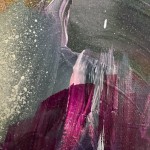
There are albums that ask for your attention, albums that demand your interpretation, and albums that simply sit beside you like a quiet companion while the world continues its frantic audition for relevance. Impartation, David Åhlén’s first release in four years, belongs firmly to the third category.
Åhlén has always occupied a distinctive place in the Swedish experimental landscape. The son of a preacher and a classically trained violinist, he has spent his career moving between devotional songwriting, ambient composition, electroacoustic experimentation, and visual art without treating any of those disciplines as separate rooms. His music often feels less composed than carefully uncovered, as if he were brushing dust from something that had been resonating long before he arrived.
That sensibility becomes especially poignant here. Written in the aftermath of burnout and a period of deep introspection, Impartation is framed as a “spiritual transference”, and the description is surprisingly accurate. These nine pieces do not behave like conventional songs; they function more like gestures, invocations, or fragments of a private liturgy. Some originated in church services, others in solitary reflection, and the album preserves that mixture of communal ritual and personal reckoning.
“Shin” opens the record with a sense of suspended breath. Tones emerge slowly, hover, and dissolve, creating an atmosphere that feels simultaneously ancient and fragile. “Untitled” extends that feeling, allowing silence to become an active participant rather than an empty space. In lesser hands, such restraint can drift into mere ambience; Åhlén avoids that trap through careful attention to texture and emotional weight.
Shorter pieces such as “Intercession” and “Largo” act almost like illuminated margins in a manuscript, brief pauses that deepen the surrounding material rather than interrupt it. “Yinnon” introduces a subtle sense of movement, while the title track gathers the album’s themes into a concentrated meditation on grief, renewal, and the difficult art of remaining open after exhaustion.
One of the record’s quiet strengths is its use of voice. Åhlén’s own vocal abstractions, along with contributions from Rebecka Karlsson, appear less as carriers of language than as human traces within the soundscape. They flicker in and out like memories that refuse to settle into clear narratives. The effect is intimate without becoming confessional, sacred without becoming doctrinaire.
Comparisons to artists such as Maria W Horn, Sofia Jernberg, or the broader Scandinavian minimalist tradition are understandable, especially given Åhlén’s collaborations within that circle. Yet Impartation possesses a warmth that sets it apart from colder strands of contemporary ambient music. Even at its most austere, the album feels inhabited by a human presence rather than a conceptual exercise.
The closing “Postlude” leaves the listener not with resolution but with a sense of gentle continuation, as though the music has merely stepped into another room. That lingering quality may be the album’s greatest achievement. Rather than presenting spirituality as certainty, Åhlén treats it as an ongoing practice of attention: to silence, to grief, to beauty, and to the possibility of renewal.
In the end, Impartation feels less like a comeback album than a carefully crafted space for contemplation. It does not seek to impress with grand gestures or technical spectacle. Instead, it offers something rarer: a quiet, luminous invitation to slow down and listen to what remains when the noise finally recedes.
Åhlén has always occupied a distinctive place in the Swedish experimental landscape. The son of a preacher and a classically trained violinist, he has spent his career moving between devotional songwriting, ambient composition, electroacoustic experimentation, and visual art without treating any of those disciplines as separate rooms. His music often feels less composed than carefully uncovered, as if he were brushing dust from something that had been resonating long before he arrived.
That sensibility becomes especially poignant here. Written in the aftermath of burnout and a period of deep introspection, Impartation is framed as a “spiritual transference”, and the description is surprisingly accurate. These nine pieces do not behave like conventional songs; they function more like gestures, invocations, or fragments of a private liturgy. Some originated in church services, others in solitary reflection, and the album preserves that mixture of communal ritual and personal reckoning.
“Shin” opens the record with a sense of suspended breath. Tones emerge slowly, hover, and dissolve, creating an atmosphere that feels simultaneously ancient and fragile. “Untitled” extends that feeling, allowing silence to become an active participant rather than an empty space. In lesser hands, such restraint can drift into mere ambience; Åhlén avoids that trap through careful attention to texture and emotional weight.
Shorter pieces such as “Intercession” and “Largo” act almost like illuminated margins in a manuscript, brief pauses that deepen the surrounding material rather than interrupt it. “Yinnon” introduces a subtle sense of movement, while the title track gathers the album’s themes into a concentrated meditation on grief, renewal, and the difficult art of remaining open after exhaustion.
One of the record’s quiet strengths is its use of voice. Åhlén’s own vocal abstractions, along with contributions from Rebecka Karlsson, appear less as carriers of language than as human traces within the soundscape. They flicker in and out like memories that refuse to settle into clear narratives. The effect is intimate without becoming confessional, sacred without becoming doctrinaire.
Comparisons to artists such as Maria W Horn, Sofia Jernberg, or the broader Scandinavian minimalist tradition are understandable, especially given Åhlén’s collaborations within that circle. Yet Impartation possesses a warmth that sets it apart from colder strands of contemporary ambient music. Even at its most austere, the album feels inhabited by a human presence rather than a conceptual exercise.
The closing “Postlude” leaves the listener not with resolution but with a sense of gentle continuation, as though the music has merely stepped into another room. That lingering quality may be the album’s greatest achievement. Rather than presenting spirituality as certainty, Åhlén treats it as an ongoing practice of attention: to silence, to grief, to beauty, and to the possibility of renewal.
In the end, Impartation feels less like a comeback album than a carefully crafted space for contemplation. It does not seek to impress with grand gestures or technical spectacle. Instead, it offers something rarer: a quiet, luminous invitation to slow down and listen to what remains when the noise finally recedes.
Petrolio: Club Atletico Voces y Gritos

Artist: Petrolio (@)
Title: Club Atletico Voces y Gritos
Format: CD & 12" + Download
Label: Subsound Records (@)
Rated:

Title: Club Atletico Voces y Gritos
Format: CD & 12" + Download
Label: Subsound Records (@)
Rated:
Petrolio’s "Club Atletico Voces y Gritos" doesn’t really behave like an album in the comforting, consumer-friendly sense of the word. It behaves more like a sealed room you’re asked to enter voluntarily, with the lights already off and history sitting in the corner, breathing slowly.
Enrico Cerrato, operating under the Petrolio moniker, has long occupied that uneasy Italian intersection where experimental music, noise aesthetics, and theatrical composition overlap without ever fully agreeing on terms. His background in soundtracks and stage work shows here not as ornament but as structure: this is music that thinks in scenes, bodies, and offstage voices rather than tracks.
The conceptual spine is explicit and heavy: Argentina’s dictatorship-era clandestine detention centers, memory as wound rather than archive, and the refusal of history to stay politely in the past. The album doesn’t dramatize this material so much as it lets it leak into everything, like ink in water. There is no safe distance engineered between listener and subject, which is precisely the point - and also where the discomfort begins doing its work.
Opening piece “2403” (with Pallas Athene) sets the tone in a restrained, almost deceptive way. Pallas Athene’s background in alt-pop and electronic reconfiguration of acoustic fragility introduces a voice that feels suspended, as if trying to remember how melody used to feel before it became evidence. It doesn’t “build” so much as it surfaces, briefly, before being pulled under again.
The shift into “Y Nadie Queria Saber” with Alòs tightens the atmosphere. Alòs - Stefania Pedretti, long active in Italian noise and industrial circles - brings a vocal presence that refuses decoration. Her contribution doesn’t sit on top of the music; it is already inside it, like something carved rather than added. The piece carries the sense of testimony that is always slightly too late, and therefore unbearable in a very specific, human way.
“La Picana”, featuring Pierpaolo Capovilla, is the album’s most direct confrontation. Capovilla’s history in Italian independent rock (from One Dimensional Man to Il Teatro degli Orrori) gives him a voice already shaped by political tension and theatrical gravitas, but here it is stripped of performance comfort. The subject matter - torture and coercion - removes any possibility of aesthetic distance. Petrolio’s sound design doesn’t illustrate violence; it refuses to translate it into something digestible. The result is not catharsis, but residue.
“El Silencio” with Julinko shifts the register again. Julinko’s slow, symbolic and ritual-adjacent approach introduces a kind of suspended myth-making, where silence is not absence but pressure. The track feels like it is circling something it cannot ethically touch directly, which makes it paradoxically more revealing. Dark folk tendencies appear not as style but as method: repetition as invocation, not comfort.
Closing piece “Strangled Cry” with Bestial Mouths pushes the album into its most physically intense territory. Lynette Cerezo’s project has always leaned toward emotional extremity and industrial-goth abrasion, and here that energy becomes almost confrontational in its refusal to soften edges. The track doesn’t conclude the narrative; it fractures it. Which, again, feels more honest than resolution.
What ties all of this together is Petrolio’s compositional discipline. Despite the multiplicity of vocal identities, the album never collapses into anthology. Cerrato’s production acts like a forensic space: controlled, detailed, and unwilling to romanticize the material it handles. The “voices and screams” of the title are not metaphorically amplified - they are structurally embedded, each guest functioning less as feature and more as temporary inhabitant of a shared collapse.
There is also an uncomfortable clarity in the project’s intention. It does not pretend that listening is neutral. It positions the listener as someone walking through reconstructed fragments of violence and memory, fully aware that reconstruction is already a form of interpretation, and therefore a risk.
"Club Atletico Voces y Gritos" ultimately behaves like an archive that refuses to be archived properly. It leaks, it resists categorization, and it insists that certain histories are not past tense material but ongoing acoustic pressure. If there is anything resembling beauty here, it is not decorative. It is the kind that appears when something refuses to disappear quietly.
Enrico Cerrato, operating under the Petrolio moniker, has long occupied that uneasy Italian intersection where experimental music, noise aesthetics, and theatrical composition overlap without ever fully agreeing on terms. His background in soundtracks and stage work shows here not as ornament but as structure: this is music that thinks in scenes, bodies, and offstage voices rather than tracks.
The conceptual spine is explicit and heavy: Argentina’s dictatorship-era clandestine detention centers, memory as wound rather than archive, and the refusal of history to stay politely in the past. The album doesn’t dramatize this material so much as it lets it leak into everything, like ink in water. There is no safe distance engineered between listener and subject, which is precisely the point - and also where the discomfort begins doing its work.
Opening piece “2403” (with Pallas Athene) sets the tone in a restrained, almost deceptive way. Pallas Athene’s background in alt-pop and electronic reconfiguration of acoustic fragility introduces a voice that feels suspended, as if trying to remember how melody used to feel before it became evidence. It doesn’t “build” so much as it surfaces, briefly, before being pulled under again.
The shift into “Y Nadie Queria Saber” with Alòs tightens the atmosphere. Alòs - Stefania Pedretti, long active in Italian noise and industrial circles - brings a vocal presence that refuses decoration. Her contribution doesn’t sit on top of the music; it is already inside it, like something carved rather than added. The piece carries the sense of testimony that is always slightly too late, and therefore unbearable in a very specific, human way.
“La Picana”, featuring Pierpaolo Capovilla, is the album’s most direct confrontation. Capovilla’s history in Italian independent rock (from One Dimensional Man to Il Teatro degli Orrori) gives him a voice already shaped by political tension and theatrical gravitas, but here it is stripped of performance comfort. The subject matter - torture and coercion - removes any possibility of aesthetic distance. Petrolio’s sound design doesn’t illustrate violence; it refuses to translate it into something digestible. The result is not catharsis, but residue.
“El Silencio” with Julinko shifts the register again. Julinko’s slow, symbolic and ritual-adjacent approach introduces a kind of suspended myth-making, where silence is not absence but pressure. The track feels like it is circling something it cannot ethically touch directly, which makes it paradoxically more revealing. Dark folk tendencies appear not as style but as method: repetition as invocation, not comfort.
Closing piece “Strangled Cry” with Bestial Mouths pushes the album into its most physically intense territory. Lynette Cerezo’s project has always leaned toward emotional extremity and industrial-goth abrasion, and here that energy becomes almost confrontational in its refusal to soften edges. The track doesn’t conclude the narrative; it fractures it. Which, again, feels more honest than resolution.
What ties all of this together is Petrolio’s compositional discipline. Despite the multiplicity of vocal identities, the album never collapses into anthology. Cerrato’s production acts like a forensic space: controlled, detailed, and unwilling to romanticize the material it handles. The “voices and screams” of the title are not metaphorically amplified - they are structurally embedded, each guest functioning less as feature and more as temporary inhabitant of a shared collapse.
There is also an uncomfortable clarity in the project’s intention. It does not pretend that listening is neutral. It positions the listener as someone walking through reconstructed fragments of violence and memory, fully aware that reconstruction is already a form of interpretation, and therefore a risk.
"Club Atletico Voces y Gritos" ultimately behaves like an archive that refuses to be archived properly. It leaks, it resists categorization, and it insists that certain histories are not past tense material but ongoing acoustic pressure. If there is anything resembling beauty here, it is not decorative. It is the kind that appears when something refuses to disappear quietly.
JOIX: Fiction EP
Artist: JOIX (@)
Title: Fiction EP
Format: Download Only (MP3 + Lossless)
Label: Jericho Sounds
Rated:

Title: Fiction EP
Format: Download Only (MP3 + Lossless)
Label: Jericho Sounds
Rated:
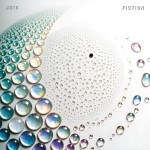
“Fiction” arrives like the second half of a sentence someone started whispering in a warehouse and then forgot to finish aloud. JOIX continues the conceptual split begun with "Science": where that earlier chapter felt like matter under pressure - dense, almost unwilling - this one loosens its collar. Same DNA, different weather system.
Deep techno is often treated like a monastic discipline: repetition, restraint, and the quiet belief that emotion is something you filter out with EQ. Here, JOIX ignores that memo. Not by becoming sentimental, but by letting light leak through the seams. The result is not “happy techno” (thankfully, no one survives that concept intact), but something more unstable: brightness that still remembers the dark it came from.
“Lion’s Gate Portal” opens the EP like a door that probably shouldn’t have been opened without checking the manual first. The percussion is minimal but insistent, a kind of architectural scaffolding for those fanfare-like synth gestures that feel almost ceremonial, as if the track is welcoming you into a space that already knows more about you than you do. It’s spacious, but not empty - space here behaves like a listening entity.
“Furtur 2” plays with the idea of motion and mythology, a wordplay that nods toward countercultural road myths while dragging them through a modern acid bath. The synth lines feel performed rather than programmed, jittering with that slightly human instability that refuses to sit still in quantization grids. It swerves between propulsion and suspension, like a vehicle that briefly forgets which century it belongs to.
“Birth Machine” tightens the emotional focus. A warm bassline does most of the heavy lifting, while percussion accumulates like sediment. There’s a sense of inevitability here, but not in a mechanical sense - more like watching something organic decide to become structured. The lead voice that eventually emerges doesn’t dominate; it declares presence without asking permission. Subtle authority, no shouting required.
Closing track “Bitter Sweet Dream” refuses the polite habit of ending things neatly. It folds motifs back into themselves, stitching earlier ideas into a continuous flow that avoids obvious breakdowns. It doesn’t resolve so much as persist, which is usually more honest anyway. Dreams rarely conclude; they just get interrupted by daylight.
Across the EP, the stated absence of presets or AI reads less like a manifesto and more like a constraint the music quietly absorbs. Whether or not anyone notices the absence is almost irrelevant - the sound carries a tactile imperfection that suggests hands, not templates. In an era obsessed with outsourcing friction, JOIX keeps friction as part of the instrument.
What emerges is not a binary of "Science vs Fiction" but a continuum: compression and release, density and air, instruction and imagination. If "Science" was the system trying to explain itself, "Fiction" is the system starting to hallucinate - carefully, deliberately, and with surprisingly good rhythm.
Deep techno is often treated like a monastic discipline: repetition, restraint, and the quiet belief that emotion is something you filter out with EQ. Here, JOIX ignores that memo. Not by becoming sentimental, but by letting light leak through the seams. The result is not “happy techno” (thankfully, no one survives that concept intact), but something more unstable: brightness that still remembers the dark it came from.
“Lion’s Gate Portal” opens the EP like a door that probably shouldn’t have been opened without checking the manual first. The percussion is minimal but insistent, a kind of architectural scaffolding for those fanfare-like synth gestures that feel almost ceremonial, as if the track is welcoming you into a space that already knows more about you than you do. It’s spacious, but not empty - space here behaves like a listening entity.
“Furtur 2” plays with the idea of motion and mythology, a wordplay that nods toward countercultural road myths while dragging them through a modern acid bath. The synth lines feel performed rather than programmed, jittering with that slightly human instability that refuses to sit still in quantization grids. It swerves between propulsion and suspension, like a vehicle that briefly forgets which century it belongs to.
“Birth Machine” tightens the emotional focus. A warm bassline does most of the heavy lifting, while percussion accumulates like sediment. There’s a sense of inevitability here, but not in a mechanical sense - more like watching something organic decide to become structured. The lead voice that eventually emerges doesn’t dominate; it declares presence without asking permission. Subtle authority, no shouting required.
Closing track “Bitter Sweet Dream” refuses the polite habit of ending things neatly. It folds motifs back into themselves, stitching earlier ideas into a continuous flow that avoids obvious breakdowns. It doesn’t resolve so much as persist, which is usually more honest anyway. Dreams rarely conclude; they just get interrupted by daylight.
Across the EP, the stated absence of presets or AI reads less like a manifesto and more like a constraint the music quietly absorbs. Whether or not anyone notices the absence is almost irrelevant - the sound carries a tactile imperfection that suggests hands, not templates. In an era obsessed with outsourcing friction, JOIX keeps friction as part of the instrument.
What emerges is not a binary of "Science vs Fiction" but a continuum: compression and release, density and air, instruction and imagination. If "Science" was the system trying to explain itself, "Fiction" is the system starting to hallucinate - carefully, deliberately, and with surprisingly good rhythm.
Barcoder: Begging For Coins
Artist: Barcoder
Title: Begging For Coins
Format: Download Only (MP3 + Lossless)
Label: CRL Studios
Rated:
Title: Begging For Coins
Format: Download Only (MP3 + Lossless)
Label: CRL Studios
Rated:
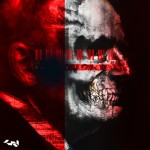
There are albums that politely invite listeners into their world. "Begging For Coins" kicks the door open, tracks mud across the carpet, points at the cracks in the walls, and demands to know why everyone is pretending not to notice them.
This is the latest dispatch from Barcoder, the politically charged side project of James Church, a figure well known within industrial and dark electronic circles through projects such as Lucidstatic and Pandora's Black Box. Across two decades, Church has established himself as an artist capable of balancing aggression with meticulous production, crafting music that hits with the force of a hammer while retaining the precision of a scalpel. Under the Barcoder banner, however, subtlety is often less important than urgency.
"Begging For Coins" gathers material that did not make it onto previous releases, but describing it as a collection of leftovers would be profoundly misleading. If anything, the album reveals another side of the project's identity. Rather than feeling like discarded fragments, these fifteen tracks form a coherent portrait of frustration, disillusionment, and resistance in an era where outrage has become both a commodity and a form of entertainment.
Musically, the album occupies a fertile intersection between industrial music, rhythmic noise, cybernetic body music, and electronic aggression. Church constructs tracks from distorted percussion, corrosive synth lines, fractured samples, and machine-like grooves that seem engineered for both movement and confrontation. The production is dense but purposeful. Every metallic impact, every distorted pulse, every layer of electronic abrasion contributes to an atmosphere of perpetual pressure.
What separates Barcoder from countless industrial projects content to recycle genre conventions is the project's engagement with contemporary anxieties. These songs are deeply concerned with communication, power, alienation, and the increasingly strange relationship between human beings and the systems that mediate their lives. Social media platforms, political tribalism, corporate influence, public outrage, and economic precarity haunt the record like invisible architecture.
The opening sequence establishes this immediately. Tracks such as "Buried Alive", "Dental Plan" and "152S" present a world in which information circulates endlessly while understanding becomes increasingly scarce. Church's perspective is often confrontational, occasionally provocative, and sometimes deliberately uncomfortable. Whether listeners agree with every sentiment is almost beside the point. The album's strength lies less in providing answers than in capturing a pervasive sense of societal exhaustion.
The guest collaborators add valuable dimensions without diluting the project's identity. Angel Of Violence brings a raw vocal presence that amplifies the album's themes of labor, frustration, and personal erosion. Illuminator contributes additional textures that deepen the sonic density, while Krate's appearances introduce subtle variations in pacing and atmosphere. Throughout, Church remains the gravitational center, holding together material that could otherwise fragment under its own intensity.
One of the album's recurring themes is the tension between agency and helplessness. Again and again, the songs depict individuals confronting systems that appear indifferent, opaque, or actively hostile. Yet "Begging For Coins" never collapses into pure nihilism. Anger, after all, is often evidence that someone still believes change remains possible. Cynicism tends to be quieter. This record is many things, but quiet is not one of them.
There is also a curious humanity beneath the machinery. Tracks such as "You Could Have" and "Muddy Boots And Leather Hands" reveal moments of vulnerability hiding beneath the layers of distortion. The album understands that political frustration and personal disappointment often emerge from the same source: the painful gap between what exists and what might have been.
The sequencing contributes significantly to the listening experience. Rather than building toward a single climax, the record unfolds like a series of confrontations with different aspects of contemporary life. Economic anxiety, social fragmentation, cultural spectacle, technological mediation, and institutional distrust all appear as recurring motifs. By the time "No Access" closes the album, one feels less as though a story has ended than as though another chapter of an ongoing struggle has been documented.
The album often seems to recognize the absurdity of the systems it critiques. There is something almost surreal about a civilization capable of extraordinary technological achievements while simultaneously arguing with strangers online at three in the morning about things nobody will remember next week. Church appears acutely aware of this contradiction.
Ultimately, "Begging For Coins" succeeds because it transforms frustration into momentum. Rather than merely documenting dissatisfaction, it channels it into a barrage of rhythm, texture, and confrontation. The result is not always comfortable, nor is it intended to be. Comfort rarely changes minds. It mostly sells mattresses.
What Barcoder offers instead is a reminder that industrial music remains uniquely suited to documenting the psychological landscape of modern life. The machines have become more sophisticated, the networks more pervasive, and the distractions more efficient, but the fundamental questions remain stubbornly unresolved. "Begging For Coins" stares directly at that reality and responds with fifteen tracks of controlled electronic defiance.
This is the latest dispatch from Barcoder, the politically charged side project of James Church, a figure well known within industrial and dark electronic circles through projects such as Lucidstatic and Pandora's Black Box. Across two decades, Church has established himself as an artist capable of balancing aggression with meticulous production, crafting music that hits with the force of a hammer while retaining the precision of a scalpel. Under the Barcoder banner, however, subtlety is often less important than urgency.
"Begging For Coins" gathers material that did not make it onto previous releases, but describing it as a collection of leftovers would be profoundly misleading. If anything, the album reveals another side of the project's identity. Rather than feeling like discarded fragments, these fifteen tracks form a coherent portrait of frustration, disillusionment, and resistance in an era where outrage has become both a commodity and a form of entertainment.
Musically, the album occupies a fertile intersection between industrial music, rhythmic noise, cybernetic body music, and electronic aggression. Church constructs tracks from distorted percussion, corrosive synth lines, fractured samples, and machine-like grooves that seem engineered for both movement and confrontation. The production is dense but purposeful. Every metallic impact, every distorted pulse, every layer of electronic abrasion contributes to an atmosphere of perpetual pressure.
What separates Barcoder from countless industrial projects content to recycle genre conventions is the project's engagement with contemporary anxieties. These songs are deeply concerned with communication, power, alienation, and the increasingly strange relationship between human beings and the systems that mediate their lives. Social media platforms, political tribalism, corporate influence, public outrage, and economic precarity haunt the record like invisible architecture.
The opening sequence establishes this immediately. Tracks such as "Buried Alive", "Dental Plan" and "152S" present a world in which information circulates endlessly while understanding becomes increasingly scarce. Church's perspective is often confrontational, occasionally provocative, and sometimes deliberately uncomfortable. Whether listeners agree with every sentiment is almost beside the point. The album's strength lies less in providing answers than in capturing a pervasive sense of societal exhaustion.
The guest collaborators add valuable dimensions without diluting the project's identity. Angel Of Violence brings a raw vocal presence that amplifies the album's themes of labor, frustration, and personal erosion. Illuminator contributes additional textures that deepen the sonic density, while Krate's appearances introduce subtle variations in pacing and atmosphere. Throughout, Church remains the gravitational center, holding together material that could otherwise fragment under its own intensity.
One of the album's recurring themes is the tension between agency and helplessness. Again and again, the songs depict individuals confronting systems that appear indifferent, opaque, or actively hostile. Yet "Begging For Coins" never collapses into pure nihilism. Anger, after all, is often evidence that someone still believes change remains possible. Cynicism tends to be quieter. This record is many things, but quiet is not one of them.
There is also a curious humanity beneath the machinery. Tracks such as "You Could Have" and "Muddy Boots And Leather Hands" reveal moments of vulnerability hiding beneath the layers of distortion. The album understands that political frustration and personal disappointment often emerge from the same source: the painful gap between what exists and what might have been.
The sequencing contributes significantly to the listening experience. Rather than building toward a single climax, the record unfolds like a series of confrontations with different aspects of contemporary life. Economic anxiety, social fragmentation, cultural spectacle, technological mediation, and institutional distrust all appear as recurring motifs. By the time "No Access" closes the album, one feels less as though a story has ended than as though another chapter of an ongoing struggle has been documented.
The album often seems to recognize the absurdity of the systems it critiques. There is something almost surreal about a civilization capable of extraordinary technological achievements while simultaneously arguing with strangers online at three in the morning about things nobody will remember next week. Church appears acutely aware of this contradiction.
Ultimately, "Begging For Coins" succeeds because it transforms frustration into momentum. Rather than merely documenting dissatisfaction, it channels it into a barrage of rhythm, texture, and confrontation. The result is not always comfortable, nor is it intended to be. Comfort rarely changes minds. It mostly sells mattresses.
What Barcoder offers instead is a reminder that industrial music remains uniquely suited to documenting the psychological landscape of modern life. The machines have become more sophisticated, the networks more pervasive, and the distractions more efficient, but the fundamental questions remain stubbornly unresolved. "Begging For Coins" stares directly at that reality and responds with fifteen tracks of controlled electronic defiance.
Re-Ghoster Extended: Dreaming With The Lights On
Artist: Re-Ghoster Extended (@)
Title: Dreaming With The Lights On
Format: LP
Label: Konnekt (@)
Rated:
Title: Dreaming With The Lights On
Format: LP
Label: Konnekt (@)
Rated:
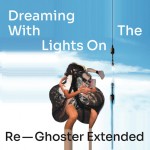
Most improvised music asks listeners to abandon expectations. Re-Ghoster Extended's "Dreaming With The Lights On" goes one step further: it asks listeners to abandon orientation. Up, down, foreground, background, cause, effect, instrument, noise, intention, accident. Everything remains visible, yet nothing stays obedient. It is less like entering a composition than stepping into a room where the furniture has quietly negotiated new laws of physics while nobody was looking.
The ensemble behind this remarkable recording is hardly lacking in adventurous credentials. Swiss percussionist and composer Nicolas Field, long active at the intersection of improvisation, contemporary composition, and electronic experimentation, joins forces with pianist Thomas Florin, tape manipulator Jérôme Noetinger, vocal provocateur Fritz Welch, and trumpet explorer Nate Wooley. Each musician has spent years challenging the conventional behaviour of their chosen instrument. Together, they create a collective intelligence that often feels less like a band than a temporary ecosystem.
Recorded live at Geneva's Archipel Festival, the album captures a performance that thrives on instability. Yet instability should not be mistaken for chaos. There is a crucial difference. Chaos merely collapses; this music continuously reorganizes itself. Sounds emerge, collide, mutate, vanish, and reappear in altered forms, as though the performance were engaged in a constant process of self-editing.
The title piece occupies almost an entire side of the record and serves as an ideal entry point into the group's peculiar logic. Percussion appears not as rhythmic foundation but as a source of kinetic suggestion. Piano gestures arrive as fragments of architecture, briefly erecting structures that electronics immediately begin to erode. Noetinger's tape manipulations introduce a strange temporal elasticity, allowing sounds to feel simultaneously present and remembered. Meanwhile, Wooley's trumpet and Welch's voice drift through the texture like visitors from neighbouring realities who forgot to bring identification.
One of the album's greatest strengths lies in its treatment of improvisation. Many free-improvised recordings celebrate spontaneity as an end in itself. Re-Ghoster Extended appears more interested in what spontaneity can reveal. The musicians listen with extraordinary attentiveness, responding not only to what is being played but to what is implied, suggested, or momentarily imagined. The result is a form of collective dreaming conducted in broad daylight.
"Soon Blind" deepens this sensation. The title suggests loss of perception, yet the music seems to generate additional senses. Tiny sonic events acquire disproportionate significance. A scrape, a breath, a metallic resonance, a distorted vocal fragment: each becomes a clue in a mystery that refuses to provide a solution. Listening feels oddly similar to watching clouds. Patterns emerge. Narratives suggest themselves. Then everything changes shape before certainty can arrive.
The shorter closing piece, "Extended Impressions", functions almost like a series of afterimages. Rather than offering resolution, it leaves traces. Fragments linger in memory long after they have disappeared from the speakers. One begins to realize that the album's real subject may not be sound itself, but perception: how we organize experience, and how fragile those organizing systems actually are.
Humour also plays an important role, albeit a subtle one. Experimental music is often accused of taking itself too seriously, as though every squeak carried the burden of explaining the universe. Re-Ghoster Extended avoids this trap. Beneath the complexity lies a playful spirit. The musicians seem genuinely curious about what might happen if sounds are allowed to misbehave. The performance occasionally feels like a laboratory run by highly intelligent pranksters who have replaced the instruction manual with a collection of riddles.
The group's history helps explain this chemistry. Since its formation, Re-Ghoster has steadily expanded its language, moving from trio configurations into larger electroacoustic networks while maintaining an unusual balance between compositional frameworks and improvisational freedom. The addition of figures such as Wooley and Welch has not simply enlarged the ensemble; it has multiplied the possible trajectories available within each performance.
What ultimately makes "Dreaming With The Lights On" so compelling is its refusal to separate imagination from materiality. The album never retreats into abstraction for its own sake. Every strange texture, every unstable gesture, every unexpected collision remains tactile. One can almost feel the surfaces of the sounds: rough, elastic, metallic, porous, occasionally absurd.
The title proves unexpectedly accurate. This is indeed dream music, but not the soft-focus variety. These dreams occur under full illumination. Everything is exposed, every mechanism visible, every mutation happening in plain sight. Yet the mystery remains intact. The lights are on, the room is familiar, and somehow the walls have started breathing.
The ensemble behind this remarkable recording is hardly lacking in adventurous credentials. Swiss percussionist and composer Nicolas Field, long active at the intersection of improvisation, contemporary composition, and electronic experimentation, joins forces with pianist Thomas Florin, tape manipulator Jérôme Noetinger, vocal provocateur Fritz Welch, and trumpet explorer Nate Wooley. Each musician has spent years challenging the conventional behaviour of their chosen instrument. Together, they create a collective intelligence that often feels less like a band than a temporary ecosystem.
Recorded live at Geneva's Archipel Festival, the album captures a performance that thrives on instability. Yet instability should not be mistaken for chaos. There is a crucial difference. Chaos merely collapses; this music continuously reorganizes itself. Sounds emerge, collide, mutate, vanish, and reappear in altered forms, as though the performance were engaged in a constant process of self-editing.
The title piece occupies almost an entire side of the record and serves as an ideal entry point into the group's peculiar logic. Percussion appears not as rhythmic foundation but as a source of kinetic suggestion. Piano gestures arrive as fragments of architecture, briefly erecting structures that electronics immediately begin to erode. Noetinger's tape manipulations introduce a strange temporal elasticity, allowing sounds to feel simultaneously present and remembered. Meanwhile, Wooley's trumpet and Welch's voice drift through the texture like visitors from neighbouring realities who forgot to bring identification.
One of the album's greatest strengths lies in its treatment of improvisation. Many free-improvised recordings celebrate spontaneity as an end in itself. Re-Ghoster Extended appears more interested in what spontaneity can reveal. The musicians listen with extraordinary attentiveness, responding not only to what is being played but to what is implied, suggested, or momentarily imagined. The result is a form of collective dreaming conducted in broad daylight.
"Soon Blind" deepens this sensation. The title suggests loss of perception, yet the music seems to generate additional senses. Tiny sonic events acquire disproportionate significance. A scrape, a breath, a metallic resonance, a distorted vocal fragment: each becomes a clue in a mystery that refuses to provide a solution. Listening feels oddly similar to watching clouds. Patterns emerge. Narratives suggest themselves. Then everything changes shape before certainty can arrive.
The shorter closing piece, "Extended Impressions", functions almost like a series of afterimages. Rather than offering resolution, it leaves traces. Fragments linger in memory long after they have disappeared from the speakers. One begins to realize that the album's real subject may not be sound itself, but perception: how we organize experience, and how fragile those organizing systems actually are.
Humour also plays an important role, albeit a subtle one. Experimental music is often accused of taking itself too seriously, as though every squeak carried the burden of explaining the universe. Re-Ghoster Extended avoids this trap. Beneath the complexity lies a playful spirit. The musicians seem genuinely curious about what might happen if sounds are allowed to misbehave. The performance occasionally feels like a laboratory run by highly intelligent pranksters who have replaced the instruction manual with a collection of riddles.
The group's history helps explain this chemistry. Since its formation, Re-Ghoster has steadily expanded its language, moving from trio configurations into larger electroacoustic networks while maintaining an unusual balance between compositional frameworks and improvisational freedom. The addition of figures such as Wooley and Welch has not simply enlarged the ensemble; it has multiplied the possible trajectories available within each performance.
What ultimately makes "Dreaming With The Lights On" so compelling is its refusal to separate imagination from materiality. The album never retreats into abstraction for its own sake. Every strange texture, every unstable gesture, every unexpected collision remains tactile. One can almost feel the surfaces of the sounds: rough, elastic, metallic, porous, occasionally absurd.
The title proves unexpectedly accurate. This is indeed dream music, but not the soft-focus variety. These dreams occur under full illumination. Everything is exposed, every mechanism visible, every mutation happening in plain sight. Yet the mystery remains intact. The lights are on, the room is familiar, and somehow the walls have started breathing.