
Browse by Genre
Industrial Music / Industrial Metal / Aggro Industrial / Electro Metal
Industrial Noise / Power Noise / Harsh Noise
Synth Pop / Electro Pop / Synth-Electronica
Techno / Trance / Goa / Drum'n'Bass / Jungle / Tribal / Trip-Hop
Ambient / Electronica / Ethereal / Dub / Soundscapes / Abstract
Experimental / Avantgarde / Weird & Wired / Glitch / Noise / Field Recording
Dark / Gothic / Wave / New Wave / Dark Wave / Industrial Gothic
New Music / Downtown / Avantgarde Jazz / New Classical / World
Search Reviews
Music Reviews
أحمد [Ahmed]: Play Monk
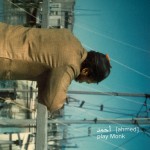
There is something almost impudent about choosing Thelonious Monk as the next subject of a project that has spent years excavating the music of Ahmed Abdul-Malik. Monk's compositions have already been played, dissected, modernised, deconstructed, reconstructed, academicised, sanctified and probably discussed at length by people wearing particularly serious-looking glasses. The repertoire is so thoroughly canonised that approaching it without either reverence or irony would seem almost impossible. Ahmed wisely chooses neither.
The connection is nevertheless far from arbitrary. Ahmed Abdul-Malik was a member of Monk's late-1950s quartets, and the two musicians shared an interest in treating musical time as something considerably less obedient than the straight line Western notation tends to suggest. For Ahmed, this becomes more than a historical footnote. It is a passageway. After six albums devoted to Abdul-Malik's compositions, the quartet of Pat Thomas, Joel Grip, Antonin Gerbal and Seymour Wright turns toward Monk not to preserve his music, but to see how much further its peculiar logic can travel. The answer, over roughly two hours, is: quite a long way.
The opening "Bye-Ya / Epistrophy" initially gives the listener something resembling a handrail. There is rhythm, there is melody, there is the unmistakable crooked architecture of Monk. Then the quartet begins pulling individual elements apart. Thomas's piano becomes increasingly physical, Grip's bass both anchors and destabilises the proceedings, Gerbal turns rhythm into an almost muscular continuum, while Wright's alto saxophone repeatedly approaches the melodic material only to fracture it, stretch it or abandon it altogether. The tune is not forgotten. It is subjected to pressure.
That distinction is crucial. "Play Monk" is not really an album of covers. It is closer to an archaeological experiment in which the quartet takes Monk's compositions apart to discover what kind of machinery is hidden inside them. A melody becomes a fragment; a fragment becomes a rhythm; the rhythm becomes an obsession; the obsession becomes texture. Then, occasionally, some recognisable feature reappears like an old acquaintance who has spent the intervening years behaving strangely.
"Friday Thirteenth" is a particularly revealing example. Its characteristic melodic contour remains somewhere underneath the surface, but repetition gradually changes its psychological function. What begins as a theme becomes a kind of gravitational field. Thomas keeps returning to the material while Wright approaches it from increasingly oblique angles, and Grip and Gerbal generate a restless physicality underneath. The effect is hypnotic without becoming comfortable. This is music that can repeat without remaining still, which is rather more difficult than it sounds.
Then comes "Round Midnight", and here the quartet performs perhaps its most audacious act of transformation. One of the most familiar compositions in the jazz repertoire is stretched across more than twenty-five minutes, but duration is only part of the story. The famous nocturnal atmosphere is not simply amplified. It is dissolved. What remains is a darker investigation of space, touch and collective timing, with the quartet gradually reducing the composition to unstable particles. Monk's shadow remains visible, but the portrait has been left out in the rain.
The second disc pushes the process even further. "Epistrophy" acts almost like a compressed laboratory experiment before "Evidence" expands the same principle into nearly half an hour. Here the quartet's collective method becomes especially apparent. There is remarkably little sense of four musicians waiting for their turn. Instead, the music behaves as a single organism with four nervous systems, constantly adjusting its balance.
That collective quality is one of Ahmed's most interesting characteristics. These musicians are not simply impressive improvisers placed in the same room. Their playing often seems to operate according to a shared physical intuition. Repetition, density and minute alterations become structural tools. A gesture may be repeated enough times to lose its original identity, only to acquire another one through persistence. The music consequently feels less like a sequence of solos than like an argument conducted by four people who have forgotten that arguments are supposed to end.
And yet there is humour here, too. Monk's music has always possessed an impish relationship with seriousness, and Ahmed retain something of that crooked grin. The quartet can become ferocious, but never entirely solemn. Even at its densest, the music contains an awareness that absurdity is one of the most useful weapons available to experimental art. You can dismantle a canon without pretending that you have transcended it.
This is particularly evident in the relationship between Pat Thomas and Seymour Wright. Thomas has a wonderfully percussive approach to the piano, turning individual notes and clusters into physical objects rather than merely harmonic information. Wright, meanwhile, seems perfectly happy to treat the alto saxophone as both melodic instrument and malfunctioning machine. Their exchanges are not conventional conversations. They resemble two people repeatedly interrupting one another until, somehow, a third language emerges.
Joel Grip and Antonin Gerbal provide the necessary instability beneath them. Grip's bass is rarely content simply to mark harmonic territory, while Gerbal's drumming supplies propulsion without behaving like conventional accompaniment. Their rhythm can tighten, accelerate, fragment or become almost ritualistic. The result is music that often seems to be moving extremely quickly while remaining trapped inside a very small temporal space.
"Evidence", appropriately, becomes one of the album's most extreme propositions. The original composition is treated not as something that needs to be faithfully represented but as material capable of surviving radical surgery. The quartet finds a small number of gestures and keeps worrying them until they become something else. There is aggression here, but also discipline. Chaos is permitted to enter the room, provided it fills in the paperwork first.
The closing "Oska T" continues this temporal distortion, leaving the album suspended between recognition and abstraction. By this stage, the listener has learned the peculiar grammar of "Play Monk": don't expect development in the conventional sense; expect mutation. Don't wait for the theme to return unchanged; notice what has happened to it while you weren't looking.
There is a larger idea behind all this. Ahmed have spent years looking backward in order to move forward. Their project with Abdul-Malik was already an attempt to recover a neglected modernist possibility from the past and activate it in the present. Turning toward Monk might initially seem like a move in the opposite direction, toward a composer whose place in jazz history is already beyond dispute. But the quartet's real interest is not historical correction. It is historical friction.
Monk becomes a set of tools rather than a monument. That is why "Play Monk" works. The album doesn't ask whether Monk's compositions can still sound radical in 2026. It asks a more interesting question: what happens when musicians who have spent years developing a language of repetition, rupture and collective improvisation put that language inside Monk's already unstable structures?
The answer is neither tribute nor desecration. It is continuation. The past is taken apart, shaken vigorously, and returned with several important pieces apparently missing. Human civilisation has survived worse.
The connection is nevertheless far from arbitrary. Ahmed Abdul-Malik was a member of Monk's late-1950s quartets, and the two musicians shared an interest in treating musical time as something considerably less obedient than the straight line Western notation tends to suggest. For Ahmed, this becomes more than a historical footnote. It is a passageway. After six albums devoted to Abdul-Malik's compositions, the quartet of Pat Thomas, Joel Grip, Antonin Gerbal and Seymour Wright turns toward Monk not to preserve his music, but to see how much further its peculiar logic can travel. The answer, over roughly two hours, is: quite a long way.
The opening "Bye-Ya / Epistrophy" initially gives the listener something resembling a handrail. There is rhythm, there is melody, there is the unmistakable crooked architecture of Monk. Then the quartet begins pulling individual elements apart. Thomas's piano becomes increasingly physical, Grip's bass both anchors and destabilises the proceedings, Gerbal turns rhythm into an almost muscular continuum, while Wright's alto saxophone repeatedly approaches the melodic material only to fracture it, stretch it or abandon it altogether. The tune is not forgotten. It is subjected to pressure.
That distinction is crucial. "Play Monk" is not really an album of covers. It is closer to an archaeological experiment in which the quartet takes Monk's compositions apart to discover what kind of machinery is hidden inside them. A melody becomes a fragment; a fragment becomes a rhythm; the rhythm becomes an obsession; the obsession becomes texture. Then, occasionally, some recognisable feature reappears like an old acquaintance who has spent the intervening years behaving strangely.
"Friday Thirteenth" is a particularly revealing example. Its characteristic melodic contour remains somewhere underneath the surface, but repetition gradually changes its psychological function. What begins as a theme becomes a kind of gravitational field. Thomas keeps returning to the material while Wright approaches it from increasingly oblique angles, and Grip and Gerbal generate a restless physicality underneath. The effect is hypnotic without becoming comfortable. This is music that can repeat without remaining still, which is rather more difficult than it sounds.
Then comes "Round Midnight", and here the quartet performs perhaps its most audacious act of transformation. One of the most familiar compositions in the jazz repertoire is stretched across more than twenty-five minutes, but duration is only part of the story. The famous nocturnal atmosphere is not simply amplified. It is dissolved. What remains is a darker investigation of space, touch and collective timing, with the quartet gradually reducing the composition to unstable particles. Monk's shadow remains visible, but the portrait has been left out in the rain.
The second disc pushes the process even further. "Epistrophy" acts almost like a compressed laboratory experiment before "Evidence" expands the same principle into nearly half an hour. Here the quartet's collective method becomes especially apparent. There is remarkably little sense of four musicians waiting for their turn. Instead, the music behaves as a single organism with four nervous systems, constantly adjusting its balance.
That collective quality is one of Ahmed's most interesting characteristics. These musicians are not simply impressive improvisers placed in the same room. Their playing often seems to operate according to a shared physical intuition. Repetition, density and minute alterations become structural tools. A gesture may be repeated enough times to lose its original identity, only to acquire another one through persistence. The music consequently feels less like a sequence of solos than like an argument conducted by four people who have forgotten that arguments are supposed to end.
And yet there is humour here, too. Monk's music has always possessed an impish relationship with seriousness, and Ahmed retain something of that crooked grin. The quartet can become ferocious, but never entirely solemn. Even at its densest, the music contains an awareness that absurdity is one of the most useful weapons available to experimental art. You can dismantle a canon without pretending that you have transcended it.
This is particularly evident in the relationship between Pat Thomas and Seymour Wright. Thomas has a wonderfully percussive approach to the piano, turning individual notes and clusters into physical objects rather than merely harmonic information. Wright, meanwhile, seems perfectly happy to treat the alto saxophone as both melodic instrument and malfunctioning machine. Their exchanges are not conventional conversations. They resemble two people repeatedly interrupting one another until, somehow, a third language emerges.
Joel Grip and Antonin Gerbal provide the necessary instability beneath them. Grip's bass is rarely content simply to mark harmonic territory, while Gerbal's drumming supplies propulsion without behaving like conventional accompaniment. Their rhythm can tighten, accelerate, fragment or become almost ritualistic. The result is music that often seems to be moving extremely quickly while remaining trapped inside a very small temporal space.
"Evidence", appropriately, becomes one of the album's most extreme propositions. The original composition is treated not as something that needs to be faithfully represented but as material capable of surviving radical surgery. The quartet finds a small number of gestures and keeps worrying them until they become something else. There is aggression here, but also discipline. Chaos is permitted to enter the room, provided it fills in the paperwork first.
The closing "Oska T" continues this temporal distortion, leaving the album suspended between recognition and abstraction. By this stage, the listener has learned the peculiar grammar of "Play Monk": don't expect development in the conventional sense; expect mutation. Don't wait for the theme to return unchanged; notice what has happened to it while you weren't looking.
There is a larger idea behind all this. Ahmed have spent years looking backward in order to move forward. Their project with Abdul-Malik was already an attempt to recover a neglected modernist possibility from the past and activate it in the present. Turning toward Monk might initially seem like a move in the opposite direction, toward a composer whose place in jazz history is already beyond dispute. But the quartet's real interest is not historical correction. It is historical friction.
Monk becomes a set of tools rather than a monument. That is why "Play Monk" works. The album doesn't ask whether Monk's compositions can still sound radical in 2026. It asks a more interesting question: what happens when musicians who have spent years developing a language of repetition, rupture and collective improvisation put that language inside Monk's already unstable structures?
The answer is neither tribute nor desecration. It is continuation. The past is taken apart, shaken vigorously, and returned with several important pieces apparently missing. Human civilisation has survived worse.
Russell Haswell: LET IT GO


There is something almost indecently appropriate about calling a Russell Haswell album "LET IT GO". After twenty-five years of making computers, machinery, synthesisers and recording technology behave badly in public, one suspects the title is less an instruction than a diagnosis. Let the signal go. Let the feedback go. Let the carefully organised civilisation go. Let the software have its little nervous breakdown in peace.
Haswell has been one of the more persistent troublemakers in British experimental electronics since the late 1990s, emerging from Coventry with an approach to sound that has always treated technology less as a neutral tool than as an unruly collaborator. His early work on the Mego label established an interest in computer-generated sound, electroacoustic abrasion and the productive possibilities of things refusing to behave. A quarter of a century later, "LET IT GO" arrives in a world that has become considerably better at malfunctioning without any assistance from him.
The album's premise is consequently darker than its title suggests. Haswell's long fascination with the dystopian imagination of 1970s and 1980s cinema has become awkwardly literal: surveillance, algorithmic control, political violence, media distortion and technological acceleration no longer require a science-fiction soundtrack because reality has apparently decided to provide one. Yet "LET IT GO" does not become a miserable exercise in sonic doom. That would be far too easy. Instead, Haswell responds with something more mischievous: a record that keeps changing its mind about what kind of monster it wants to be.
"Exit Downwards" establishes the basic conditions. Rhythmic impulses appear through layers of electronic grime, metallic resonance and unstable processing, suggesting techno after several consecutive nights without sleep. There is movement, but it is never entirely trustworthy. The groove seems to have been assembled by someone who understands dance music perfectly and then deliberately removed the instruction manual.
The two "Fall" pieces move deeper into abstraction. Their rapidly fluctuating pitches have a distinctly physical quality, as though sound were being stretched until its molecular structure became audible. Haswell's use of contemporary GRM processing during his residency at Bergen's Centre for Electronic Arts connects these pieces to the more volatile end of electronic composition, particularly the unstable pitch worlds associated with late Xenakis. But the result isn't academic reverence. These are sounds with their shoelaces deliberately tied together. And this is where "LET IT GO" becomes more interesting than a straightforward noise record.
Haswell understands that violence in sound is most effective when it is placed against something comparatively delicate. "The anxieties of our time" is built around jagged rhythmic movement, but melodic suggestions keep surfacing inside it, almost indecently pretty. The contradiction matters. Anxiety is rarely a continuous scream. More often it is the strange ability to notice that the coffee tastes good while civilisation is visibly on fire.
"Curated narrative" then seems to question the very mechanisms through which we are encouraged to understand what is happening around us. The title carries a quiet suspicion of the stories we are fed, while the music refuses to provide a reassuring alternative explanation. Haswell doesn't replace one narrative with another. He leaves the machinery exposed.
That refusal is central to the album. It is tempting to describe "LET IT GO" as a dystopian soundtrack, but that would make it sound more orderly than it actually is. Haswell is interested in systems that generate unexpected consequences. His music behaves like a machine whose internal logic can be understood only after it has already produced the result.
"Stress Testing" is perhaps the clearest example. The rhythmic energy becomes more insistent, recalling the physical drive of rave music without ever settling comfortably into it. There are traces of Detroit techno's repetition and the harder, more metallic electronic traditions associated with Birmingham, but they are treated as raw material rather than genre signposts. The pulse is there to be dismantled.
Then comes "Thu 25 Dec 2025", one of the album's strangest pieces. The title is wonderfully mundane: Christmas Day, after lunch, walking home alone through Glasgow. There is something almost comically British about producing a six-minute electronic drone out of the emotional residue of that particular afternoon. Yet the method behind it is anything but trivial. The piece follows a random-walk process, allowing each sonic movement to wander unpredictably from the previous one.
It sounds, appropriately enough, like being trapped inside a thought that has forgotten where it was going.
The track's importance lies in its patience. After the rhythmic abrasions surrounding it, the drone creates an ambiguous zone in which nothing seems to happen while everything continues to shift. Haswell has always understood that repetition need not mean stasis. Here, repetition becomes uncertainty.
"To be so for real" brings back the physical pressure, while "Always check their instagram [2026 wavecycle rmx]" takes the album's hostility toward contemporary media culture to an almost beautifully petty extreme. The title is already enough to make anyone who has spent five minutes scrolling through social media feel spiritually exhausted. Musically, the track turns that exhaustion into an extended assault of electronic density. The joke is that the supposedly frictionless world of infinite scrolling has produced a piece of music that makes you want to throw the phone into the sea.
Possibly the most useful social-media detox available in under nine minutes.
But Haswell's sense of humour prevents the record from becoming sanctimonious. There is anger here, certainly, but also absurdity. He understands that technological dystopia is not merely frightening. It is often ridiculous. Machines have become increasingly sophisticated, humans increasingly dependent upon them, and somewhere along the way we decided that asking an algorithm to generate a picture of a medieval knight eating spaghetti was a sensible use of civilisation's accumulated knowledge.
"LET IT GO" is not nostalgic for a cleaner technological past, either. The equipment list alone reads like a small electronic-musical ecosystem, combining modular systems, software, processing tools and various pieces of analogue and obsolete technology. Haswell's practice has always involved negotiating between these worlds rather than choosing one. The computer isn't the enemy. Neither is the synthesizer. The problem is what happens when systems become so pervasive that we forget they are systems at all. And then, after all this machinery, Haswell gives us "There's always a bit of light somewhere".
At thirteen minutes, the closing track is almost an act of mercy. High tones hover and circulate in a slowly changing field, creating a curious sensation of suspension. It is not exactly peaceful. Haswell has not suddenly discovered wellness podcasts. The tension remains, but it has been stripped of its immediate aggression. The sound seems to exist in a space where catastrophe has temporarily stopped shouting. The title could easily have become sentimental. It doesn't. The light isn't presented as salvation. It is simply there. That distinction makes the ending surprisingly affecting.
"LET IT GO" therefore works because its political dimension never overwhelms its musical intelligence. The album certainly reflects an era of instability, but Haswell does not need to attach a slogan to every oscillator. The politics are embedded in the behaviour of the sound itself: instability, overload, repetition, disruption, surveillance-like persistence, sudden rupture, moments of escape.
There is also something admirable in the fact that, after decades of experimental electronic music, Haswell still seems genuinely interested in what technology can do when pushed beyond polite functionality. He isn't using machinery to imitate conventional instruments. He is asking machinery to reveal its own peculiar personality, including the bits manufacturers would probably prefer nobody noticed.
The result is an album that refuses to be comfortably categorised. It can be rhythmic without being dance music, noisy without becoming a mere wall of aggression, abstract without losing physical presence, and ambient without turning into wallpaper for expensive Scandinavian furniture.
Most importantly, "LET IT GO" doesn't pretend that resistance has to sound heroic.
Sometimes resistance sounds like a broken machine.
Sometimes it sounds like a rave remembered incorrectly.
Sometimes it is a random walk through Glasgow on Christmas Day.
Sometimes it is nine minutes of electronic abuse directed at Instagram. And sometimes, after all the circuitry has overheated, it is simply a high tone hanging in the dark, quietly refusing to disappear.
Haswell has spent twenty-five years listening to the future arrive. It turns out the future was considerably less futuristic than advertised, and much messier. "LET IT GO" doesn't offer a way out. It does something more useful: it turns the mess into material, shakes it until unexpected shapes emerge, and reminds us that even inside a malfunctioning system, there are still sounds nobody has programmed yet.
Haswell has been one of the more persistent troublemakers in British experimental electronics since the late 1990s, emerging from Coventry with an approach to sound that has always treated technology less as a neutral tool than as an unruly collaborator. His early work on the Mego label established an interest in computer-generated sound, electroacoustic abrasion and the productive possibilities of things refusing to behave. A quarter of a century later, "LET IT GO" arrives in a world that has become considerably better at malfunctioning without any assistance from him.
The album's premise is consequently darker than its title suggests. Haswell's long fascination with the dystopian imagination of 1970s and 1980s cinema has become awkwardly literal: surveillance, algorithmic control, political violence, media distortion and technological acceleration no longer require a science-fiction soundtrack because reality has apparently decided to provide one. Yet "LET IT GO" does not become a miserable exercise in sonic doom. That would be far too easy. Instead, Haswell responds with something more mischievous: a record that keeps changing its mind about what kind of monster it wants to be.
"Exit Downwards" establishes the basic conditions. Rhythmic impulses appear through layers of electronic grime, metallic resonance and unstable processing, suggesting techno after several consecutive nights without sleep. There is movement, but it is never entirely trustworthy. The groove seems to have been assembled by someone who understands dance music perfectly and then deliberately removed the instruction manual.
The two "Fall" pieces move deeper into abstraction. Their rapidly fluctuating pitches have a distinctly physical quality, as though sound were being stretched until its molecular structure became audible. Haswell's use of contemporary GRM processing during his residency at Bergen's Centre for Electronic Arts connects these pieces to the more volatile end of electronic composition, particularly the unstable pitch worlds associated with late Xenakis. But the result isn't academic reverence. These are sounds with their shoelaces deliberately tied together. And this is where "LET IT GO" becomes more interesting than a straightforward noise record.
Haswell understands that violence in sound is most effective when it is placed against something comparatively delicate. "The anxieties of our time" is built around jagged rhythmic movement, but melodic suggestions keep surfacing inside it, almost indecently pretty. The contradiction matters. Anxiety is rarely a continuous scream. More often it is the strange ability to notice that the coffee tastes good while civilisation is visibly on fire.
"Curated narrative" then seems to question the very mechanisms through which we are encouraged to understand what is happening around us. The title carries a quiet suspicion of the stories we are fed, while the music refuses to provide a reassuring alternative explanation. Haswell doesn't replace one narrative with another. He leaves the machinery exposed.
That refusal is central to the album. It is tempting to describe "LET IT GO" as a dystopian soundtrack, but that would make it sound more orderly than it actually is. Haswell is interested in systems that generate unexpected consequences. His music behaves like a machine whose internal logic can be understood only after it has already produced the result.
"Stress Testing" is perhaps the clearest example. The rhythmic energy becomes more insistent, recalling the physical drive of rave music without ever settling comfortably into it. There are traces of Detroit techno's repetition and the harder, more metallic electronic traditions associated with Birmingham, but they are treated as raw material rather than genre signposts. The pulse is there to be dismantled.
Then comes "Thu 25 Dec 2025", one of the album's strangest pieces. The title is wonderfully mundane: Christmas Day, after lunch, walking home alone through Glasgow. There is something almost comically British about producing a six-minute electronic drone out of the emotional residue of that particular afternoon. Yet the method behind it is anything but trivial. The piece follows a random-walk process, allowing each sonic movement to wander unpredictably from the previous one.
It sounds, appropriately enough, like being trapped inside a thought that has forgotten where it was going.
The track's importance lies in its patience. After the rhythmic abrasions surrounding it, the drone creates an ambiguous zone in which nothing seems to happen while everything continues to shift. Haswell has always understood that repetition need not mean stasis. Here, repetition becomes uncertainty.
"To be so for real" brings back the physical pressure, while "Always check their instagram [2026 wavecycle rmx]" takes the album's hostility toward contemporary media culture to an almost beautifully petty extreme. The title is already enough to make anyone who has spent five minutes scrolling through social media feel spiritually exhausted. Musically, the track turns that exhaustion into an extended assault of electronic density. The joke is that the supposedly frictionless world of infinite scrolling has produced a piece of music that makes you want to throw the phone into the sea.
Possibly the most useful social-media detox available in under nine minutes.
But Haswell's sense of humour prevents the record from becoming sanctimonious. There is anger here, certainly, but also absurdity. He understands that technological dystopia is not merely frightening. It is often ridiculous. Machines have become increasingly sophisticated, humans increasingly dependent upon them, and somewhere along the way we decided that asking an algorithm to generate a picture of a medieval knight eating spaghetti was a sensible use of civilisation's accumulated knowledge.
"LET IT GO" is not nostalgic for a cleaner technological past, either. The equipment list alone reads like a small electronic-musical ecosystem, combining modular systems, software, processing tools and various pieces of analogue and obsolete technology. Haswell's practice has always involved negotiating between these worlds rather than choosing one. The computer isn't the enemy. Neither is the synthesizer. The problem is what happens when systems become so pervasive that we forget they are systems at all. And then, after all this machinery, Haswell gives us "There's always a bit of light somewhere".
At thirteen minutes, the closing track is almost an act of mercy. High tones hover and circulate in a slowly changing field, creating a curious sensation of suspension. It is not exactly peaceful. Haswell has not suddenly discovered wellness podcasts. The tension remains, but it has been stripped of its immediate aggression. The sound seems to exist in a space where catastrophe has temporarily stopped shouting. The title could easily have become sentimental. It doesn't. The light isn't presented as salvation. It is simply there. That distinction makes the ending surprisingly affecting.
"LET IT GO" therefore works because its political dimension never overwhelms its musical intelligence. The album certainly reflects an era of instability, but Haswell does not need to attach a slogan to every oscillator. The politics are embedded in the behaviour of the sound itself: instability, overload, repetition, disruption, surveillance-like persistence, sudden rupture, moments of escape.
There is also something admirable in the fact that, after decades of experimental electronic music, Haswell still seems genuinely interested in what technology can do when pushed beyond polite functionality. He isn't using machinery to imitate conventional instruments. He is asking machinery to reveal its own peculiar personality, including the bits manufacturers would probably prefer nobody noticed.
The result is an album that refuses to be comfortably categorised. It can be rhythmic without being dance music, noisy without becoming a mere wall of aggression, abstract without losing physical presence, and ambient without turning into wallpaper for expensive Scandinavian furniture.
Most importantly, "LET IT GO" doesn't pretend that resistance has to sound heroic.
Sometimes resistance sounds like a broken machine.
Sometimes it sounds like a rave remembered incorrectly.
Sometimes it is a random walk through Glasgow on Christmas Day.
Sometimes it is nine minutes of electronic abuse directed at Instagram. And sometimes, after all the circuitry has overheated, it is simply a high tone hanging in the dark, quietly refusing to disappear.
Haswell has spent twenty-five years listening to the future arrive. It turns out the future was considerably less futuristic than advertised, and much messier. "LET IT GO" doesn't offer a way out. It does something more useful: it turns the mess into material, shakes it until unexpected shapes emerge, and reminds us that even inside a malfunctioning system, there are still sounds nobody has programmed yet.
punktò: 2237 Sad Bols

There are many ways to pursue perfection. One can meditate, read philosophy, drink green juice, delete social media, develop an alarming relationship with cold showers. Or one can make a sixteen-part electronic epic about a boy attempting to destroy every future vice and sin before they have the opportunity to happen. punktò, fortunately, has chosen the last option, which is considerably more interesting and considerably less likely to result in a wellness newsletter.
"2237 Sad Bols" is presented as a utopian story, but utopia here has none of the clean geometry usually associated with the word. It is absurd, theatrical, provocative and deliberately unstable. Its central character wants to become a perfect human being by eliminating the possibility of imperfection itself. The problem, of course, is that perfection is a rather dangerous hobby. Once you begin eliminating every flaw, desire, contradiction and transgression, you eventually discover that the thing being eliminated is the human being.
That paradox is the real engine of the record.
The music arrives in sixteen compact episodes, many barely long enough to establish a thought before kicking it down the stairs. "sholo", "pis of", "sins", "zwei euro", "happy bols": even the titles seem to have been fed through a linguistic blender and told to come back when they had acquired a nervous disorder. English, German, Spanish and deliberately mangled language coexist without asking permission from anyone's grammar teacher and that linguistic disobedience matters. "2237 Sad Bols" is concerned with the mechanisms through which identity is constructed, disciplined and presented as normal. Its language consequently behaves like an identity under pressure. It slips, mutates, becomes childish, obscene, commercial, intimate and ridiculous.
The sixteen tracks function less like conventional songs than like fragments of an internet-native theatre. The project was conceived alongside a daily online series, and that origin is important because the music seems to understand the peculiar psychology of contemporary digital attention: everything has to happen quickly, everything has to signify something, and preferably everything should be slightly alarming.
Yet the brevity is not merely an aesthetic gimmick. The pieces accumulate into a narrative rhythm. "happy bols" barely lasts a minute and a half, while "pack me in da kake" stretches beyond three and a half minutes, creating one of the record's more substantial episodes. "vol of life" is reduced to just over a minute, while "my name iz game" allows itself more than two. These durations feel like comic timing as much as musical structure. The album constantly starts building a world and then refuses to give us enough time to become comfortable inside it.
This is particularly effective because "2237 Sad Bols" is dealing with uncomfortable subjects: control, guilt, social roles, the pursuit of perfection and the relationship between the individual and the system. Rather than approaching these ideas through solemn conceptual art language, punktò wraps them in absurdity. That absurdity is not decorative. It is defensive.
Humour can be a way of exposing systems that become almost invisible when presented as "normal". The record's imagined family structure provides precisely such a target. The normal family is not treated as a stable sanctuary but as a machine for producing expectations: behave correctly, desire correctly, speak correctly, become useful, become respectable, become perfect. The boy at the centre of the story accepts the premise and attempts to take it to its logical extreme.
Naturally, things go badly.
The wonderfully malformed "zwei euro" and "por qué" feel like fragments from a civilisation whose instruction manual has been translated too many times. "sweeet" and "ablet on" continue the linguistic derailment, while "my name iz game" seems to reduce identity itself to a playable mechanism. By the time we reach "spider and man", the distinction between the innocent, the grotesque and the ridiculous has become increasingly difficult to maintain.
There is something almost punk about this approach, even though the project's electronic character places it elsewhere sonically. The important punk gesture is not necessarily speed or distortion but the refusal to respect the categories that are supposed to organise cultural behaviour. punktò appears interested in what happens when pop, performance, conceptual narrative, internet culture and electronic composition are allowed to contaminate one another.
The involvement of Erica Synths and the Lithuanian experimental scene also places the project within a culture of electronic music that has never been particularly interested in keeping technology polite. But "2237 Sad Bols" does not fetishise its machinery. The electronics serve the narrative's unstable psychology rather than becoming a catalogue of equipment.
This distinction saves the record from becoming another exercise in "look what my synthesizer can do", a genre humanity has somehow managed to keep producing despite having invented several thousand other ways of annoying itself.
What makes "2237 Sad Bols" weirdy funny is its refusal to separate seriousness from stupidity.
The album can be grotesque and genuinely thoughtful at the same time. It can make a joke about identity while asking what identity actually means. It can turn guilt into absurd theatre without reducing guilt to a joke. It can present the desire for perfection as ridiculous while recognising the frightening social pressure behind that desire.
The central boy is therefore less a character than a mechanism. He embodies the fantasy that if enough undesirable things can be removed, happiness will eventually emerge. No contradiction, no sin, no bad habit, no inappropriate desire, no embarrassing impulse. Just purity.
Except that a human being without contradiction is basically a spreadsheet with skin.
The closing title track, "2237 sad bols", finally gives the project its fullest expression. After fifteen preceding fragments, the phrase has accumulated enough semantic debris to become almost meaningless, and therefore strangely meaningful. The utopia has reached its endpoint, but the title sounds mournful rather than triumphant. The perfect future has not arrived. Something has been lost along the way.
That sadness is what prevents the whole project from becoming merely clever.
There is a real melancholy underneath the silliness. The pursuit of perfection is funny because it is impossible, but it is also tragic because people and societies repeatedly try to impose it upon themselves and others. The record understands the comic violence of that contradiction.
"2237 Sad Bols" consequently feels less like a collection of sixteen tracks than a miniature theatre of social conditioning, compressed into an object that behaves like an internet feed having a fever. Its rough edges, warped language and abrupt episodes are not obstacles to the concept. They are the concept.
The most interesting utopias, after all, are usually the ones that begin to crack.
punktò doesn't offer a better model of the perfect human being. Instead, "2237 Sad Bols" watches the desire to create one become increasingly absurd, increasingly fragmented and, eventually, faintly heartbreaking.
Perhaps the real utopia is not becoming perfect.
Perhaps it is being allowed to remain gloriously, inconveniently unfinished.
"2237 Sad Bols" is presented as a utopian story, but utopia here has none of the clean geometry usually associated with the word. It is absurd, theatrical, provocative and deliberately unstable. Its central character wants to become a perfect human being by eliminating the possibility of imperfection itself. The problem, of course, is that perfection is a rather dangerous hobby. Once you begin eliminating every flaw, desire, contradiction and transgression, you eventually discover that the thing being eliminated is the human being.
That paradox is the real engine of the record.
The music arrives in sixteen compact episodes, many barely long enough to establish a thought before kicking it down the stairs. "sholo", "pis of", "sins", "zwei euro", "happy bols": even the titles seem to have been fed through a linguistic blender and told to come back when they had acquired a nervous disorder. English, German, Spanish and deliberately mangled language coexist without asking permission from anyone's grammar teacher and that linguistic disobedience matters. "2237 Sad Bols" is concerned with the mechanisms through which identity is constructed, disciplined and presented as normal. Its language consequently behaves like an identity under pressure. It slips, mutates, becomes childish, obscene, commercial, intimate and ridiculous.
The sixteen tracks function less like conventional songs than like fragments of an internet-native theatre. The project was conceived alongside a daily online series, and that origin is important because the music seems to understand the peculiar psychology of contemporary digital attention: everything has to happen quickly, everything has to signify something, and preferably everything should be slightly alarming.
Yet the brevity is not merely an aesthetic gimmick. The pieces accumulate into a narrative rhythm. "happy bols" barely lasts a minute and a half, while "pack me in da kake" stretches beyond three and a half minutes, creating one of the record's more substantial episodes. "vol of life" is reduced to just over a minute, while "my name iz game" allows itself more than two. These durations feel like comic timing as much as musical structure. The album constantly starts building a world and then refuses to give us enough time to become comfortable inside it.
This is particularly effective because "2237 Sad Bols" is dealing with uncomfortable subjects: control, guilt, social roles, the pursuit of perfection and the relationship between the individual and the system. Rather than approaching these ideas through solemn conceptual art language, punktò wraps them in absurdity. That absurdity is not decorative. It is defensive.
Humour can be a way of exposing systems that become almost invisible when presented as "normal". The record's imagined family structure provides precisely such a target. The normal family is not treated as a stable sanctuary but as a machine for producing expectations: behave correctly, desire correctly, speak correctly, become useful, become respectable, become perfect. The boy at the centre of the story accepts the premise and attempts to take it to its logical extreme.
Naturally, things go badly.
The wonderfully malformed "zwei euro" and "por qué" feel like fragments from a civilisation whose instruction manual has been translated too many times. "sweeet" and "ablet on" continue the linguistic derailment, while "my name iz game" seems to reduce identity itself to a playable mechanism. By the time we reach "spider and man", the distinction between the innocent, the grotesque and the ridiculous has become increasingly difficult to maintain.
There is something almost punk about this approach, even though the project's electronic character places it elsewhere sonically. The important punk gesture is not necessarily speed or distortion but the refusal to respect the categories that are supposed to organise cultural behaviour. punktò appears interested in what happens when pop, performance, conceptual narrative, internet culture and electronic composition are allowed to contaminate one another.
The involvement of Erica Synths and the Lithuanian experimental scene also places the project within a culture of electronic music that has never been particularly interested in keeping technology polite. But "2237 Sad Bols" does not fetishise its machinery. The electronics serve the narrative's unstable psychology rather than becoming a catalogue of equipment.
This distinction saves the record from becoming another exercise in "look what my synthesizer can do", a genre humanity has somehow managed to keep producing despite having invented several thousand other ways of annoying itself.
What makes "2237 Sad Bols" weirdy funny is its refusal to separate seriousness from stupidity.
The album can be grotesque and genuinely thoughtful at the same time. It can make a joke about identity while asking what identity actually means. It can turn guilt into absurd theatre without reducing guilt to a joke. It can present the desire for perfection as ridiculous while recognising the frightening social pressure behind that desire.
The central boy is therefore less a character than a mechanism. He embodies the fantasy that if enough undesirable things can be removed, happiness will eventually emerge. No contradiction, no sin, no bad habit, no inappropriate desire, no embarrassing impulse. Just purity.
Except that a human being without contradiction is basically a spreadsheet with skin.
The closing title track, "2237 sad bols", finally gives the project its fullest expression. After fifteen preceding fragments, the phrase has accumulated enough semantic debris to become almost meaningless, and therefore strangely meaningful. The utopia has reached its endpoint, but the title sounds mournful rather than triumphant. The perfect future has not arrived. Something has been lost along the way.
That sadness is what prevents the whole project from becoming merely clever.
There is a real melancholy underneath the silliness. The pursuit of perfection is funny because it is impossible, but it is also tragic because people and societies repeatedly try to impose it upon themselves and others. The record understands the comic violence of that contradiction.
"2237 Sad Bols" consequently feels less like a collection of sixteen tracks than a miniature theatre of social conditioning, compressed into an object that behaves like an internet feed having a fever. Its rough edges, warped language and abrupt episodes are not obstacles to the concept. They are the concept.
The most interesting utopias, after all, are usually the ones that begin to crack.
punktò doesn't offer a better model of the perfect human being. Instead, "2237 Sad Bols" watches the desire to create one become increasingly absurd, increasingly fragmented and, eventually, faintly heartbreaking.
Perhaps the real utopia is not becoming perfect.
Perhaps it is being allowed to remain gloriously, inconveniently unfinished.
Christian Wallumrød Ensemble: Non Sonett

Artist: Christian Wallumrød Ensemble (@)
Title: Non Sonett
Format: CD & 12" + Download
Label: Aspen Edities (@)
Rated:

Title: Non Sonett
Format: CD & 12" + Download
Label: Aspen Edities (@)
Rated:
There are albums that announce themselves with a trumpet blast, and then there are albums that seem almost embarrassed to be making any sound at all. "Non Sonett", the latest chapter in the long-running work of the Christian Wallumrød Ensemble, belongs firmly to the latter category. It does not enter the room so much as rearrange the furniture while nobody is looking.
Wallumrød’s music has always possessed an unusual relationship with restraint, but here restraint is not synonymous with minimalism. It is closer to a form of heightened attention. The piano, harmonium and synthesizer, saxophone and recorder, trumpet, baroque trumpet, cello, drums, vibraphone and electronics do not behave like sections in an orchestra competing for territory. They resemble people having an extremely complicated conversation while politely refusing to speak over one another. Humanity may yet be salvageable.
The album’s eight pieces are built from material that has travelled through different contexts before arriving here. Some originated in Wallumrød’s solo work, others in music for dance, while "Newnison" revisits a composition originally written for Trondheim Voices. Three pieces, meanwhile, derive from "Sonett Idiot", the dance production premiered at the Norwegian National Opera and Ballet in 2024. Yet "Non Sonett" never feels like an anthology of leftovers. The ensemble absorbs these fragments and subjects them to its particular chemistry, turning them into something less fixed and considerably more alive. That chemistry is the real protagonist.
Take the opening "New hum old hum". The title already hints at Wallumrød's fondness for contradiction, recurrence and slightly crooked linguistic associations. Musically, the piece seems to hover between an object and its shadow. Notes emerge with enough definition to suggest a melody, only to be displaced by timbre, resonance or silence. The piano can sound almost skeletal, while the surrounding instruments introduce tiny grains of colour. Nothing is quite foreground and nothing is quite background. The hierarchy has been quietly abolished.
This is particularly striking because "Non Sonett" is not afraid of beauty. It simply refuses to make beauty comfortable.
"Tune queen" and "Not new to" demonstrate how effectively the ensemble can turn apparently modest material into something psychologically unstable. A trumpet tone may arrive like a fragment of ceremonial music; a cello resonance can seem to belong to another century; a percussion gesture briefly establishes a pulse before the pulse evaporates. Wallumrød's compositional language has an almost architectural quality, but the building is constantly being altered by the people inhabiting it. One can hear the structure, but one can also hear the musicians thinking inside it.
The presence of electronics is crucial. They do not arrive as some obligatory contemporary-music badge announcing that the year is no longer 1987. Instead, they frequently operate at the margins, extending acoustic sounds, roughening their edges or creating barely perceptible shifts in perspective. At other moments the music opens into denser, more exploratory passages where the distinction between instrument and processing becomes pleasantly unreliable.
This makes "Non Sonett" particularly interesting in relation to Wallumrød's concept of composition. Many of these pieces function less like finished objects than like sets of circumstances. The written material establishes conditions, but the musicians determine what those conditions become. The result is music that can be rigorously composed without sounding over-determined, and spontaneous without ever collapsing into random activity. That balance is exceptionally difficult to achieve.
"Due dove" is a good example of the ensemble's ability to make small intervals and sparse gestures carry disproportionate weight. There is a curious sense of suspended movement, as if the music were perpetually preparing to become something more conventional and then deciding against it. "Newnison" shifts the emphasis toward collective interaction, while "Nonen" seems to inhabit an even stranger territory, where the ensemble's sounds become less like melodic statements and more like physical phenomena: pressure, vibration, breath, friction.
And then there is "Sonett souvenir", which brings the album's relationship with dance into focus. The title suggests memory, but this is not nostalgic music. Memory here behaves more like a distorted reflection: recognisable enough to trigger something, unstable enough to prevent certainty. The ensemble seems to ask what remains of a gesture after the body that originally produced it has disappeared.
The closing "Au bar de la gare" is almost comically brief at just over three minutes, and its very presence feels like a small joke against the solemnity one might otherwise project onto this kind of music. A railway station bar is hardly the sort of grand metaphysical location usually invoked in descriptions of contemporary chamber music. Yet the title brings the album back to ordinary human geography: somewhere people wait, drink, depart, arrive, miss trains and pretend not to be watching the clock.
That may be one of "Non Sonett"'s quiet strengths. Its abstraction never entirely loses contact with lived experience.
The Christian Wallumrød Ensemble has been developing its distinctive language across seven previous albums, with roots in jazz, contemporary composition and folk-derived sensibilities, and the present line-up gives Wallumrød's ideas an extraordinarily responsive physical dimension. The musicians are not merely executing a score. They are interpreting its gaps. And those gaps matter.
There is a temptation, when writing about quiet experimental music, to throw around words like "silence", "space", "stillness" until the prose itself falls asleep. "Non Sonett" deserves better. Its quietness is active. It makes the listener notice the interval between two trumpet notes, the decay of a piano tone, the moment when a percussion sound stops being a rhythm and becomes texture. It turns microscopic changes into events.
The album's title is similarly mischievous. A sonnet traditionally imposes an architecture upon thought: fourteen lines, a defined structure, a limited space in which emotion must somehow behave itself. "Non Sonett" seems to take that idea and gently remove the fence. These pieces have form, but their forms remain permeable. They imply destinations without necessarily travelling there.
There is something distinctly Norwegian about the resulting atmosphere, although not in the postcard sense. No fjords need to be summoned. The northern quality comes instead from the clarity of the sound, the coolness of the spaces between events, and the refusal to decorate what is already sufficiently expressive. Folk traces, early polyphonic associations, contemporary chamber music, improvisation and electronic experimentation coexist without being forced into a family tree.
Ultimately, "Non Sonett" is an album about "how much can happen when very little is imposed". It asks the musicians to listen harder than they play, and asks the listener to do something equally unfashionable: remain present.
No grand crescendo arrives to rescue us. No virtuoso throws furniture through the window. There is simply an accumulation of delicate decisions, each one changing the meaning of what came before. By the end, the music has created a world whose borders are difficult to locate but whose internal logic feels remarkably secure.
In an era in which everything is apparently required to be louder, faster, clearer and immediately legible, "Non Sonett" makes a persuasive case for the opposite. It does not demand attention. It makes attention worthwhile. And perhaps that is the closest thing to a sonnet this album needs: not fourteen lines, but a handful of sounds carefully placed in time, leaving enough room for the listener to finish the sentence.
Wallumrød’s music has always possessed an unusual relationship with restraint, but here restraint is not synonymous with minimalism. It is closer to a form of heightened attention. The piano, harmonium and synthesizer, saxophone and recorder, trumpet, baroque trumpet, cello, drums, vibraphone and electronics do not behave like sections in an orchestra competing for territory. They resemble people having an extremely complicated conversation while politely refusing to speak over one another. Humanity may yet be salvageable.
The album’s eight pieces are built from material that has travelled through different contexts before arriving here. Some originated in Wallumrød’s solo work, others in music for dance, while "Newnison" revisits a composition originally written for Trondheim Voices. Three pieces, meanwhile, derive from "Sonett Idiot", the dance production premiered at the Norwegian National Opera and Ballet in 2024. Yet "Non Sonett" never feels like an anthology of leftovers. The ensemble absorbs these fragments and subjects them to its particular chemistry, turning them into something less fixed and considerably more alive. That chemistry is the real protagonist.
Take the opening "New hum old hum". The title already hints at Wallumrød's fondness for contradiction, recurrence and slightly crooked linguistic associations. Musically, the piece seems to hover between an object and its shadow. Notes emerge with enough definition to suggest a melody, only to be displaced by timbre, resonance or silence. The piano can sound almost skeletal, while the surrounding instruments introduce tiny grains of colour. Nothing is quite foreground and nothing is quite background. The hierarchy has been quietly abolished.
This is particularly striking because "Non Sonett" is not afraid of beauty. It simply refuses to make beauty comfortable.
"Tune queen" and "Not new to" demonstrate how effectively the ensemble can turn apparently modest material into something psychologically unstable. A trumpet tone may arrive like a fragment of ceremonial music; a cello resonance can seem to belong to another century; a percussion gesture briefly establishes a pulse before the pulse evaporates. Wallumrød's compositional language has an almost architectural quality, but the building is constantly being altered by the people inhabiting it. One can hear the structure, but one can also hear the musicians thinking inside it.
The presence of electronics is crucial. They do not arrive as some obligatory contemporary-music badge announcing that the year is no longer 1987. Instead, they frequently operate at the margins, extending acoustic sounds, roughening their edges or creating barely perceptible shifts in perspective. At other moments the music opens into denser, more exploratory passages where the distinction between instrument and processing becomes pleasantly unreliable.
This makes "Non Sonett" particularly interesting in relation to Wallumrød's concept of composition. Many of these pieces function less like finished objects than like sets of circumstances. The written material establishes conditions, but the musicians determine what those conditions become. The result is music that can be rigorously composed without sounding over-determined, and spontaneous without ever collapsing into random activity. That balance is exceptionally difficult to achieve.
"Due dove" is a good example of the ensemble's ability to make small intervals and sparse gestures carry disproportionate weight. There is a curious sense of suspended movement, as if the music were perpetually preparing to become something more conventional and then deciding against it. "Newnison" shifts the emphasis toward collective interaction, while "Nonen" seems to inhabit an even stranger territory, where the ensemble's sounds become less like melodic statements and more like physical phenomena: pressure, vibration, breath, friction.
And then there is "Sonett souvenir", which brings the album's relationship with dance into focus. The title suggests memory, but this is not nostalgic music. Memory here behaves more like a distorted reflection: recognisable enough to trigger something, unstable enough to prevent certainty. The ensemble seems to ask what remains of a gesture after the body that originally produced it has disappeared.
The closing "Au bar de la gare" is almost comically brief at just over three minutes, and its very presence feels like a small joke against the solemnity one might otherwise project onto this kind of music. A railway station bar is hardly the sort of grand metaphysical location usually invoked in descriptions of contemporary chamber music. Yet the title brings the album back to ordinary human geography: somewhere people wait, drink, depart, arrive, miss trains and pretend not to be watching the clock.
That may be one of "Non Sonett"'s quiet strengths. Its abstraction never entirely loses contact with lived experience.
The Christian Wallumrød Ensemble has been developing its distinctive language across seven previous albums, with roots in jazz, contemporary composition and folk-derived sensibilities, and the present line-up gives Wallumrød's ideas an extraordinarily responsive physical dimension. The musicians are not merely executing a score. They are interpreting its gaps. And those gaps matter.
There is a temptation, when writing about quiet experimental music, to throw around words like "silence", "space", "stillness" until the prose itself falls asleep. "Non Sonett" deserves better. Its quietness is active. It makes the listener notice the interval between two trumpet notes, the decay of a piano tone, the moment when a percussion sound stops being a rhythm and becomes texture. It turns microscopic changes into events.
The album's title is similarly mischievous. A sonnet traditionally imposes an architecture upon thought: fourteen lines, a defined structure, a limited space in which emotion must somehow behave itself. "Non Sonett" seems to take that idea and gently remove the fence. These pieces have form, but their forms remain permeable. They imply destinations without necessarily travelling there.
There is something distinctly Norwegian about the resulting atmosphere, although not in the postcard sense. No fjords need to be summoned. The northern quality comes instead from the clarity of the sound, the coolness of the spaces between events, and the refusal to decorate what is already sufficiently expressive. Folk traces, early polyphonic associations, contemporary chamber music, improvisation and electronic experimentation coexist without being forced into a family tree.
Ultimately, "Non Sonett" is an album about "how much can happen when very little is imposed". It asks the musicians to listen harder than they play, and asks the listener to do something equally unfashionable: remain present.
No grand crescendo arrives to rescue us. No virtuoso throws furniture through the window. There is simply an accumulation of delicate decisions, each one changing the meaning of what came before. By the end, the music has created a world whose borders are difficult to locate but whose internal logic feels remarkably secure.
In an era in which everything is apparently required to be louder, faster, clearer and immediately legible, "Non Sonett" makes a persuasive case for the opposite. It does not demand attention. It makes attention worthwhile. And perhaps that is the closest thing to a sonnet this album needs: not fourteen lines, but a handful of sounds carefully placed in time, leaving enough room for the listener to finish the sentence.
Amp: Isotropic Beacons

There is something beautifully old-fashioned about the idea of sending a message into the darkness and hoping somebody, somewhere, receives it. Humanity spent centuries putting words into bottles, scratching prayers into stone and pointing radio telescopes at the sky. Now we have the internet, which means we can broadcast ourselves continuously to everyone and nobody simultaneously. Amp's "Isotropic Beacons" begins from a rather more generous proposition: perhaps the message is already being transmitted. Perhaps the planet itself is the bottle, and everything living on it is leaking signals.
For a band that first appeared in 1991, Amp has accumulated an unusually persistent relationship with this kind of sonic ambiguity. Richard F. Walker, the project's constant presence, has spent more than three decades moving between space rock, dream pop, ambient, electronic music and drone, often treating field recordings and environmental sound not as decoration but as another compositional material. "Isotropic Beacons" consequently feels less like a sudden conceptual departure than another rotation of a very old telescope. The stars have changed. The apparatus has not entirely stopped humming.
The album gathers two previously issued drone pieces, three newer compositions and a series of short field-recording interludes, producing something closer to a transmission log than a conventional album. The Bandcamp edition confirms that "Afterallisdust" had already appeared digitally in 2023, while "Drone In A (Yellow On Blue No.1)" and "Hypnagogic Semaphore" form part of the older material being reconsidered here.
And reconsideration is the important word. "Isotropic Beacons" does not simply assemble old material to make the discographical machinery happy. Its sequencing creates a slow movement between environmental fragments and expansive drones, as if the surrounding world periodically interrupts the transmission to remind us that there is, inconveniently, an actual world outside the speakers.
"Waterdrips In Street Scene 1" is barely more than a minute, but its presence is structurally important. It establishes an acoustic reality before "Afterallisdust" stretches time into something much less measurable. The latter is one of the album's most persuasive pieces: sixteen minutes of patient, luminous drift in which texture gradually replaces event. Nothing particularly dramatic happens, which is precisely why it works. The music does not demand attention; it alters the conditions under which attention occurs.
"Drone In A (Yellow On Blue No.1)" takes a darker route. Its long-form guitar haze has something almost extraterrestrial about it, but not in the cartoonish sense of spaceship noises and heroic synthesizer arpeggios. It feels more like an unidentified signal whose source has become impossible to locate. The guitar is there, yet it seems buried beneath several layers of atmosphere, memory and electrical weather.
Amp has always understood that ambience becomes interesting when it has somewhere slightly uncomfortable to go. "Nightwalk" introduces a muffled, heavier presence beneath the otherwise spacious architecture, and "Hypnagogic Semaphore" occupies the peculiar territory between consciousness and sleep suggested by its title. The track does not depict that state so much as recreate its unstable logic: sounds seem to arrive already half-remembered.
Then there is "I'm So…", which lasts just over half a minute. It is almost comic in its refusal to behave like a proper song, particularly because the truncated title seems to suspend a thought that will never be completed. The field recording embedded there gives the impression of a human presence emerging from the wider sonic environment, briefly transmitting before disappearing again. The same principle returns with the two "Waterdrips In Street Scene" pieces, which function almost like punctuation marks.
The album's other great expanse is "Nightones", a fourteen-minute piece whose relationship with birdsong and running water gives the drone a strangely terrestrial quality. Its gaze may be directed outward, but its materials are stubbornly local: water, voices, streets, birds, guitars, bass frequencies, environmental noise.
This is where the title becomes more than science-fiction ornament. An isotropic beacon would theoretically radiate equally in every direction. Amp's version is less technologically precise and considerably more poetic: sound is sent outward without knowing who might receive it. Birds do it. Insects do it. Human voices do it. Machines do it. Even the apparently insignificant noises of a street become part of the broadcast.
There is something quietly moving about that idea, particularly because Walker's music has never depended upon obvious declarations. His compositions tend to work through accumulation, resonance and atmosphere rather than conventional narrative. The project has been associated with everything from space rock and dream pop to trip-hop and experimental electronics, and its long history includes collaborations with musicians such as David Pearce, Robert Hampson and Matt Elliott. The present album feels like a continuation of that porous identity rather than a retrospective exercise.
Karine Charff's contribution on "Drone In A" is particularly significant in this context. Her voice does not turn the piece into a conventional song; it appears almost as another atmospheric phenomenon, a human signal partially swallowed by the surrounding drone. The digital-only radio edit makes that vocal presence more accessible, but tellingly, the CD version omits the edit. The album therefore retains the longer, more patient form, resisting the contemporary instinct to shave everything down until it becomes convenient enough for a playlist.
Which is probably wise. "Isotropic Beacons" is music for people willing to let a sound remain unresolved. Its best passages don't "build" in the conventional sense. They accumulate, recede, shimmer, darken and occasionally reveal some tiny environmental detail that had been hiding in plain sight. The field recordings are especially effective because they prevent the drones from becoming abstract wallpaper. They tether the album to sidewalks, weather, water and breathing bodies.
There is also a faintly elegiac quality to the whole enterprise. The title proposes transmission, but the album repeatedly reminds us that transmission is never guaranteed. A signal can travel indefinitely without finding an ear. A voice can vanish into static. A message can survive its sender. "Afterallisdust" is almost brutally direct in that respect, its title reducing the grand cosmic fantasy to the oldest material fact imaginable.
Yet the record does not sound pessimistic. Its spaciousness contains a peculiar kind of faith. Not religious faith, necessarily, but faith in persistence: keep broadcasting, keep listening, keep making the noise. The planet is already emitting its signal. We are merely beginning to notice.
"Isotropic Beacons" is therefore less a soundtrack for communicating with extraterrestrials than an argument for paying attention to the extraterrestrial strangeness of ordinary life. The stars are out there, certainly. But so are the water drops, the birds, the passing voices and the mysterious electrical murmurs in the walls. Perhaps the universe has been answering all along. We were simply too busy checking our notifications.
For a band that first appeared in 1991, Amp has accumulated an unusually persistent relationship with this kind of sonic ambiguity. Richard F. Walker, the project's constant presence, has spent more than three decades moving between space rock, dream pop, ambient, electronic music and drone, often treating field recordings and environmental sound not as decoration but as another compositional material. "Isotropic Beacons" consequently feels less like a sudden conceptual departure than another rotation of a very old telescope. The stars have changed. The apparatus has not entirely stopped humming.
The album gathers two previously issued drone pieces, three newer compositions and a series of short field-recording interludes, producing something closer to a transmission log than a conventional album. The Bandcamp edition confirms that "Afterallisdust" had already appeared digitally in 2023, while "Drone In A (Yellow On Blue No.1)" and "Hypnagogic Semaphore" form part of the older material being reconsidered here.
And reconsideration is the important word. "Isotropic Beacons" does not simply assemble old material to make the discographical machinery happy. Its sequencing creates a slow movement between environmental fragments and expansive drones, as if the surrounding world periodically interrupts the transmission to remind us that there is, inconveniently, an actual world outside the speakers.
"Waterdrips In Street Scene 1" is barely more than a minute, but its presence is structurally important. It establishes an acoustic reality before "Afterallisdust" stretches time into something much less measurable. The latter is one of the album's most persuasive pieces: sixteen minutes of patient, luminous drift in which texture gradually replaces event. Nothing particularly dramatic happens, which is precisely why it works. The music does not demand attention; it alters the conditions under which attention occurs.
"Drone In A (Yellow On Blue No.1)" takes a darker route. Its long-form guitar haze has something almost extraterrestrial about it, but not in the cartoonish sense of spaceship noises and heroic synthesizer arpeggios. It feels more like an unidentified signal whose source has become impossible to locate. The guitar is there, yet it seems buried beneath several layers of atmosphere, memory and electrical weather.
Amp has always understood that ambience becomes interesting when it has somewhere slightly uncomfortable to go. "Nightwalk" introduces a muffled, heavier presence beneath the otherwise spacious architecture, and "Hypnagogic Semaphore" occupies the peculiar territory between consciousness and sleep suggested by its title. The track does not depict that state so much as recreate its unstable logic: sounds seem to arrive already half-remembered.
Then there is "I'm So…", which lasts just over half a minute. It is almost comic in its refusal to behave like a proper song, particularly because the truncated title seems to suspend a thought that will never be completed. The field recording embedded there gives the impression of a human presence emerging from the wider sonic environment, briefly transmitting before disappearing again. The same principle returns with the two "Waterdrips In Street Scene" pieces, which function almost like punctuation marks.
The album's other great expanse is "Nightones", a fourteen-minute piece whose relationship with birdsong and running water gives the drone a strangely terrestrial quality. Its gaze may be directed outward, but its materials are stubbornly local: water, voices, streets, birds, guitars, bass frequencies, environmental noise.
This is where the title becomes more than science-fiction ornament. An isotropic beacon would theoretically radiate equally in every direction. Amp's version is less technologically precise and considerably more poetic: sound is sent outward without knowing who might receive it. Birds do it. Insects do it. Human voices do it. Machines do it. Even the apparently insignificant noises of a street become part of the broadcast.
There is something quietly moving about that idea, particularly because Walker's music has never depended upon obvious declarations. His compositions tend to work through accumulation, resonance and atmosphere rather than conventional narrative. The project has been associated with everything from space rock and dream pop to trip-hop and experimental electronics, and its long history includes collaborations with musicians such as David Pearce, Robert Hampson and Matt Elliott. The present album feels like a continuation of that porous identity rather than a retrospective exercise.
Karine Charff's contribution on "Drone In A" is particularly significant in this context. Her voice does not turn the piece into a conventional song; it appears almost as another atmospheric phenomenon, a human signal partially swallowed by the surrounding drone. The digital-only radio edit makes that vocal presence more accessible, but tellingly, the CD version omits the edit. The album therefore retains the longer, more patient form, resisting the contemporary instinct to shave everything down until it becomes convenient enough for a playlist.
Which is probably wise. "Isotropic Beacons" is music for people willing to let a sound remain unresolved. Its best passages don't "build" in the conventional sense. They accumulate, recede, shimmer, darken and occasionally reveal some tiny environmental detail that had been hiding in plain sight. The field recordings are especially effective because they prevent the drones from becoming abstract wallpaper. They tether the album to sidewalks, weather, water and breathing bodies.
There is also a faintly elegiac quality to the whole enterprise. The title proposes transmission, but the album repeatedly reminds us that transmission is never guaranteed. A signal can travel indefinitely without finding an ear. A voice can vanish into static. A message can survive its sender. "Afterallisdust" is almost brutally direct in that respect, its title reducing the grand cosmic fantasy to the oldest material fact imaginable.
Yet the record does not sound pessimistic. Its spaciousness contains a peculiar kind of faith. Not religious faith, necessarily, but faith in persistence: keep broadcasting, keep listening, keep making the noise. The planet is already emitting its signal. We are merely beginning to notice.
"Isotropic Beacons" is therefore less a soundtrack for communicating with extraterrestrials than an argument for paying attention to the extraterrestrial strangeness of ordinary life. The stars are out there, certainly. But so are the water drops, the birds, the passing voices and the mysterious electrical murmurs in the walls. Perhaps the universe has been answering all along. We were simply too busy checking our notifications.