
Browse by Genre
Industrial Music / Industrial Metal / Aggro Industrial / Electro Metal
Industrial Noise / Power Noise / Harsh Noise
Synth Pop / Electro Pop / Synth-Electronica
Techno / Trance / Goa / Drum'n'Bass / Jungle / Tribal / Trip-Hop
Ambient / Electronica / Ethereal / Dub / Soundscapes / Abstract
Experimental / Avantgarde / Weird & Wired / Glitch / Noise / Field Recording
Dark / Gothic / Wave / New Wave / Dark Wave / Industrial Gothic
New Music / Downtown / Avantgarde Jazz / New Classical / World
Search Reviews
Music Reviews
Pilocka Krach: Faust III

Artist: Pilocka Krach (@)
Title: Faust III
Format: 7" x 3 + Download
Label: Greatest Hits International
Rated:

Title: Faust III
Format: 7" x 3 + Download
Label: Greatest Hits International
Rated:
There are artists who borrow literary titles because they sound impressive, and there are artists who steal them the way tricksters steal crowns: not to imitate kings, but to throw a dance party inside the palace. "Faust III" belongs firmly to the second category. Pilocka Krach invokes Goethe's most famous antihero only to dissolve him into a gleefully unstable theatrical performance where Faust, Gretchen and Mephisto cease to be separate characters and become different masks worn by the same restless spirit.
It is a fitting move for the Berlin-based multidisciplinary artist, whose work has always existed somewhere between club culture, performance art, pop deconstruction and joyful provocation. Music, video, visual art, choreography and theatrical gesture have never functioned as isolated disciplines in her practice. Instead, they constantly leak into one another, making every release feel like a fragment of a larger stage production whose curtain never quite falls.
"Faust III", presented as three acts across nine songs and released as a trilogy of 7-inch records, embraces this dramaturgical logic from beginning to end. Yet despite the conceptual framework, it never becomes weighed down by its own ambitions. If anything, Pilocka Krach seems suspicious of seriousness whenever it starts dressing too elegantly. She slips humour into existential reflection with remarkable ease, reminding us that absurdity and sincerity have always been close relatives.
Musically, the album continues refining the distinctive vocabulary she has developed over the years. Club music, pop songwriting and post-punk angularity coexist inside skeletal arrangements dominated by dark synthesizers, muscular basslines and rhythms that deliberately avoid the obvious punctuation of constant hi-hats. The grooves feel strangely spacious, leaving enough air between beats for irony, melancholy and unexpected emotional turns to sneak inside. It is dance music that seems less interested in commanding bodies than in quietly reprogramming them.
The opening "Hey Party People", featuring noun, immediately establishes this playful ambiguity. Even its title behaves like an unresolved grammatical puzzle. Is it an invitation? A greeting? A sarcastic observation? Pilocka Krach understands that language itself is choreography, each word capable of changing direction depending on where emphasis falls. The track captures that instability beautifully, balancing infectious momentum against a subtle sense of theatrical distance.
"Burning Down The House In The Middle Of The Street" follows with characteristic wit. Despite its apocalyptic title, destruction here feels oddly celebratory, less an endorsement of chaos than an acknowledgment that many established structures have already caught fire on their own. The music responds not with panic but with movement. Humans, after all, possess a remarkable ability to keep dancing while pretending the smoke is part of the lighting design.
The first act concludes with "Der Leichte Wind", featuring the legendary Gudrun Gut. Long recognised as one of Berlin's defining experimental voices through projects such as Malaria! and her pioneering label work, Gut brings quiet gravity to a piece written as a tribute to her late artistic companion Bettina Köster. The result is one of the album's emotional anchors, where memory moves like wind itself: impossible to grasp directly, yet constantly reshaping everything it touches.
The central act shifts toward introspection without sacrificing momentum. "Follow The Feel" proposes emotion not as sentimental refuge but as practical navigation, while "Inferno Paradiso (und dann mal kucken)", featuring Mendrix, delights in collapsing opposites that philosophy has spent centuries trying to keep apart. Paradise and inferno become neighbouring districts separated only by a badly maintained bicycle lane. "Temps Perdu" deepens this reflection, treating lost time not as failure but as material capable of generating unexpected futures.
By the time the final act arrives, the record has accumulated enough emotional tension to justify its release into movement. "All Begin Again" refuses the illusion of definitive endings, suggesting that every conclusion secretly rehearses another beginning. "Spark In The Dark" compresses hope into a remarkably economical gesture before "World On Fire" closes the performance with exhilarating ambiguity. Is everything burning? Freezing? Starting over? Pilocka Krach wisely declines to provide definitive answers. Theatre, unlike politics, occasionally benefits from unresolved endings.
One of the album's greatest strengths lies in its resistance to nostalgia. Although echoes of early industrial pop, Neue Deutsche Welle and post-punk are audible throughout, "Faust III" never behaves like a museum exhibition dedicated to Berlin's underground mythology. Instead, it absorbs those histories into something unmistakably contemporary. Even its handcrafted production, proudly assembled without technological shortcuts, feels less like a rejection of modern tools than an affirmation that personality remains impossible to automate.
The theatrical concept could easily have overshadowed the songs themselves. Instead, it enhances them, providing a loose framework without restricting their spontaneity. Every collaboration contributes meaningfully, every act develops its own emotional climate, and every recurring motif acquires fresh significance as the record progresses.
In the end, "Faust III" offers neither redemption nor damnation. It proposes something considerably more human: that contradiction may be our most reliable companion. We search for certainty, stumble into spectacle, laugh at ourselves, dance anyway, and somehow emerge carrying a small spark through the darkness. Pilocka Krach understands that this is not merely theatre. It is rehearsal for everyday life, only with a considerably better soundtrack.
It is a fitting move for the Berlin-based multidisciplinary artist, whose work has always existed somewhere between club culture, performance art, pop deconstruction and joyful provocation. Music, video, visual art, choreography and theatrical gesture have never functioned as isolated disciplines in her practice. Instead, they constantly leak into one another, making every release feel like a fragment of a larger stage production whose curtain never quite falls.
"Faust III", presented as three acts across nine songs and released as a trilogy of 7-inch records, embraces this dramaturgical logic from beginning to end. Yet despite the conceptual framework, it never becomes weighed down by its own ambitions. If anything, Pilocka Krach seems suspicious of seriousness whenever it starts dressing too elegantly. She slips humour into existential reflection with remarkable ease, reminding us that absurdity and sincerity have always been close relatives.
Musically, the album continues refining the distinctive vocabulary she has developed over the years. Club music, pop songwriting and post-punk angularity coexist inside skeletal arrangements dominated by dark synthesizers, muscular basslines and rhythms that deliberately avoid the obvious punctuation of constant hi-hats. The grooves feel strangely spacious, leaving enough air between beats for irony, melancholy and unexpected emotional turns to sneak inside. It is dance music that seems less interested in commanding bodies than in quietly reprogramming them.
The opening "Hey Party People", featuring noun, immediately establishes this playful ambiguity. Even its title behaves like an unresolved grammatical puzzle. Is it an invitation? A greeting? A sarcastic observation? Pilocka Krach understands that language itself is choreography, each word capable of changing direction depending on where emphasis falls. The track captures that instability beautifully, balancing infectious momentum against a subtle sense of theatrical distance.
"Burning Down The House In The Middle Of The Street" follows with characteristic wit. Despite its apocalyptic title, destruction here feels oddly celebratory, less an endorsement of chaos than an acknowledgment that many established structures have already caught fire on their own. The music responds not with panic but with movement. Humans, after all, possess a remarkable ability to keep dancing while pretending the smoke is part of the lighting design.
The first act concludes with "Der Leichte Wind", featuring the legendary Gudrun Gut. Long recognised as one of Berlin's defining experimental voices through projects such as Malaria! and her pioneering label work, Gut brings quiet gravity to a piece written as a tribute to her late artistic companion Bettina Köster. The result is one of the album's emotional anchors, where memory moves like wind itself: impossible to grasp directly, yet constantly reshaping everything it touches.
The central act shifts toward introspection without sacrificing momentum. "Follow The Feel" proposes emotion not as sentimental refuge but as practical navigation, while "Inferno Paradiso (und dann mal kucken)", featuring Mendrix, delights in collapsing opposites that philosophy has spent centuries trying to keep apart. Paradise and inferno become neighbouring districts separated only by a badly maintained bicycle lane. "Temps Perdu" deepens this reflection, treating lost time not as failure but as material capable of generating unexpected futures.
By the time the final act arrives, the record has accumulated enough emotional tension to justify its release into movement. "All Begin Again" refuses the illusion of definitive endings, suggesting that every conclusion secretly rehearses another beginning. "Spark In The Dark" compresses hope into a remarkably economical gesture before "World On Fire" closes the performance with exhilarating ambiguity. Is everything burning? Freezing? Starting over? Pilocka Krach wisely declines to provide definitive answers. Theatre, unlike politics, occasionally benefits from unresolved endings.
One of the album's greatest strengths lies in its resistance to nostalgia. Although echoes of early industrial pop, Neue Deutsche Welle and post-punk are audible throughout, "Faust III" never behaves like a museum exhibition dedicated to Berlin's underground mythology. Instead, it absorbs those histories into something unmistakably contemporary. Even its handcrafted production, proudly assembled without technological shortcuts, feels less like a rejection of modern tools than an affirmation that personality remains impossible to automate.
The theatrical concept could easily have overshadowed the songs themselves. Instead, it enhances them, providing a loose framework without restricting their spontaneity. Every collaboration contributes meaningfully, every act develops its own emotional climate, and every recurring motif acquires fresh significance as the record progresses.
In the end, "Faust III" offers neither redemption nor damnation. It proposes something considerably more human: that contradiction may be our most reliable companion. We search for certainty, stumble into spectacle, laugh at ourselves, dance anyway, and somehow emerge carrying a small spark through the darkness. Pilocka Krach understands that this is not merely theatre. It is rehearsal for everyday life, only with a considerably better soundtrack.
VV.AA.: XKatedral Anthology III
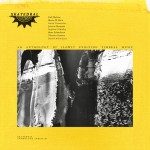
A label's tenth anniversary often arrives wrapped in nostalgia, complete with retrospective declarations and carefully polished myths. XKatedral chooses a more fitting celebration. "Anthology Series III" does not look backwards in search of monuments; it listens across a decade of work to reveal a network of ideas still in motion. Rather than asking what has been achieved, it quietly asks what sound can continue becoming when composers remain patient enough to follow its smallest transformations.
Across eight pieces written between 2014 and 2025, the anthology gathers artists who have helped define XKatedral's identity without ever reducing them to a shared aesthetic formula. Synthetic sound, acoustic instruments, algorithmic processes and spectral thinking form the common vocabulary, but each composer speaks with unmistakably individual inflection. The result feels less like a compilation than a carefully curated exhibition where every room changes the way the previous one is remembered.
The opening miniature, "My Falling Sinks", immediately demonstrates Kali Malone's remarkable gift for making restraint feel emotionally expansive. Built around a descending melody performed on a justly tuned organ with contributions from cellist Lucy Railton and guitarist Stephen O'Malley, the piece lasts barely four minutes, yet it seems to suspend ordinary notions of duration. The unusual tuning system lends each interval an almost tactile quality, as though harmony had briefly escaped the compromises of equal temperament and rediscovered its natural proportions.
From this quiet beginning, Maria W Horn unfolds "Empyrean Flare", one of the anthology's defining statements. Inspired in part by the Tintinnabuli principles developed by Arvo PÄrt, Horn animates supersaw oscillators through slowly circling harmonic motion while subtle glissandi gradually destabilise the apparent serenity. Analog tape saturation adds warmth without softening the composition's underlying tension. It resembles light filtered through thick clouds, beautiful precisely because it never settles into certainty.
David Granström's "Tessellation" shifts the emphasis toward generative synthesis, yet avoids the detached elegance often associated with algorithmic composition. Repeating tape loops establish patterns that continuously reorganise themselves, creating the sensation that structure is emerging spontaneously rather than being imposed from above. Mathematics becomes strangely lyrical here, suggesting that equations occasionally possess better emotional intelligence than the people writing them. A mildly unsettling thought, but the music makes a convincing case.
One of the anthology's quiet revelations is Jessica Ekomane's "To Whoever Shall Inherit The Earth". Recorded almost accidentally during a late-night session, the work carries an intimacy that no amount of meticulous planning could manufacture. Ekomane has consistently explored perception through complex electronic systems, yet here the emphasis falls on fragility rather than architecture. The title hints at legacy, but the music feels deeply rooted in the fleeting present, preserving an unrepeatable moment before it disappears.
Stephen O'Malley's "Smoking Mother" offers perhaps the anthology's most surprising contribution. Best known for overwhelming amplifier-driven soundscapes, O'Malley instead reveals a composer fascinated by resonance, ritual and gradual accumulation. Drawing distant inspiration from figures as diverse as Krzysztof Penderecki, Popol Vuh and the great Dhrupad master Zia Mohiuddin Dagar, the piece unfolds with meditative authority rather than sheer force. It is a reminder that intensity does not always require high volume. Sometimes it simply requires unwavering attention.
That same attentiveness permeates Mats Erlandsson's "Att Böja SjÄlarna", where violin and voice gently inhabit a spacious electronic environment. The title translates roughly as "To Bend Souls", and the music embraces that ambiguity without theatricality. Gaianeh Pilossian's violin and Sara Fors' voice never dominate the electronic textures; instead, they appear like fragile human traces inside an immense acoustic landscape.
The closing pair provides an elegant conclusion. Theodor Kentros' intriguingly titled "This Will Be My Last Piece For Organ" is less a farewell than an investigation into the organ's unstable acoustic behaviour, recreating its shifting frequencies through oscillators and resonant feedback. Whether it truly marks the composer's final encounter with the instrument is almost beside the point. Composers have a habit of making dramatic promises to themselves, only to return a few years later after hearing one particularly persuasive overtone.
Daniel M. Karlsson's "Fault Lines" ends the anthology with quiet grandeur. Built through deterministic generative methods and enriched by vocal performances from Sara Fors, Ansis Btiš and Artrs ukurs, the work explores fracture without collapse. Harmonic planes drift against one another like tectonic plates moving too slowly for ordinary perception, yet carrying immense emotional weight beneath the surface. It is an apt conclusion for a collection devoted to subtle transformation.
As with the previous volumes, the remastering preserves extraordinary clarity while allowing each work's physical presence to emerge naturally. Stephen O'Malley's understated design, Kali Malone's visual direction and Jordana Loeb's screen print reinforce XKatedral's long-standing commitment to presenting sound as a complete aesthetic experience rather than an isolated object.
Taken together, the three "Anthology" volumes document more than a decade of remarkable music, but "Series III" perhaps best captures XKatedral's deeper philosophy. These composers are not interested in novelty for its own sake, nor in preserving tradition as though it belonged behind museum glass. Instead, they treat sound as an endlessly evolving material whose smallest movements can reshape entire emotional landscapes. In doing so, they remind us that some of the most profound musical journeys occur not through dramatic departures, but through the almost imperceptible act of listening more carefully than before.
Across eight pieces written between 2014 and 2025, the anthology gathers artists who have helped define XKatedral's identity without ever reducing them to a shared aesthetic formula. Synthetic sound, acoustic instruments, algorithmic processes and spectral thinking form the common vocabulary, but each composer speaks with unmistakably individual inflection. The result feels less like a compilation than a carefully curated exhibition where every room changes the way the previous one is remembered.
The opening miniature, "My Falling Sinks", immediately demonstrates Kali Malone's remarkable gift for making restraint feel emotionally expansive. Built around a descending melody performed on a justly tuned organ with contributions from cellist Lucy Railton and guitarist Stephen O'Malley, the piece lasts barely four minutes, yet it seems to suspend ordinary notions of duration. The unusual tuning system lends each interval an almost tactile quality, as though harmony had briefly escaped the compromises of equal temperament and rediscovered its natural proportions.
From this quiet beginning, Maria W Horn unfolds "Empyrean Flare", one of the anthology's defining statements. Inspired in part by the Tintinnabuli principles developed by Arvo PÄrt, Horn animates supersaw oscillators through slowly circling harmonic motion while subtle glissandi gradually destabilise the apparent serenity. Analog tape saturation adds warmth without softening the composition's underlying tension. It resembles light filtered through thick clouds, beautiful precisely because it never settles into certainty.
David Granström's "Tessellation" shifts the emphasis toward generative synthesis, yet avoids the detached elegance often associated with algorithmic composition. Repeating tape loops establish patterns that continuously reorganise themselves, creating the sensation that structure is emerging spontaneously rather than being imposed from above. Mathematics becomes strangely lyrical here, suggesting that equations occasionally possess better emotional intelligence than the people writing them. A mildly unsettling thought, but the music makes a convincing case.
One of the anthology's quiet revelations is Jessica Ekomane's "To Whoever Shall Inherit The Earth". Recorded almost accidentally during a late-night session, the work carries an intimacy that no amount of meticulous planning could manufacture. Ekomane has consistently explored perception through complex electronic systems, yet here the emphasis falls on fragility rather than architecture. The title hints at legacy, but the music feels deeply rooted in the fleeting present, preserving an unrepeatable moment before it disappears.
Stephen O'Malley's "Smoking Mother" offers perhaps the anthology's most surprising contribution. Best known for overwhelming amplifier-driven soundscapes, O'Malley instead reveals a composer fascinated by resonance, ritual and gradual accumulation. Drawing distant inspiration from figures as diverse as Krzysztof Penderecki, Popol Vuh and the great Dhrupad master Zia Mohiuddin Dagar, the piece unfolds with meditative authority rather than sheer force. It is a reminder that intensity does not always require high volume. Sometimes it simply requires unwavering attention.
That same attentiveness permeates Mats Erlandsson's "Att Böja SjÄlarna", where violin and voice gently inhabit a spacious electronic environment. The title translates roughly as "To Bend Souls", and the music embraces that ambiguity without theatricality. Gaianeh Pilossian's violin and Sara Fors' voice never dominate the electronic textures; instead, they appear like fragile human traces inside an immense acoustic landscape.
The closing pair provides an elegant conclusion. Theodor Kentros' intriguingly titled "This Will Be My Last Piece For Organ" is less a farewell than an investigation into the organ's unstable acoustic behaviour, recreating its shifting frequencies through oscillators and resonant feedback. Whether it truly marks the composer's final encounter with the instrument is almost beside the point. Composers have a habit of making dramatic promises to themselves, only to return a few years later after hearing one particularly persuasive overtone.
Daniel M. Karlsson's "Fault Lines" ends the anthology with quiet grandeur. Built through deterministic generative methods and enriched by vocal performances from Sara Fors, Ansis Btiš and Artrs ukurs, the work explores fracture without collapse. Harmonic planes drift against one another like tectonic plates moving too slowly for ordinary perception, yet carrying immense emotional weight beneath the surface. It is an apt conclusion for a collection devoted to subtle transformation.
As with the previous volumes, the remastering preserves extraordinary clarity while allowing each work's physical presence to emerge naturally. Stephen O'Malley's understated design, Kali Malone's visual direction and Jordana Loeb's screen print reinforce XKatedral's long-standing commitment to presenting sound as a complete aesthetic experience rather than an isolated object.
Taken together, the three "Anthology" volumes document more than a decade of remarkable music, but "Series III" perhaps best captures XKatedral's deeper philosophy. These composers are not interested in novelty for its own sake, nor in preserving tradition as though it belonged behind museum glass. Instead, they treat sound as an endlessly evolving material whose smallest movements can reshape entire emotional landscapes. In doing so, they remind us that some of the most profound musical journeys occur not through dramatic departures, but through the almost imperceptible act of listening more carefully than before.
VV.AA.: XKatedral Anthology II
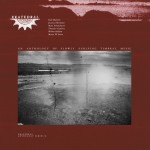
If the first volume of XKatedral's anthology series explored the slow metamorphosis of acoustic resonance, "Anthology Series II" turns its attention toward another kind of alchemy. Here, algorithms, synthesis and digital processes are not presented as futuristic novelties or sterile technologies. Instead, they become instruments for uncovering harmonic phenomena that have always existed, patiently waiting for someone curious enough to listen. This is electronic music that gazes less toward tomorrow than toward eternity.
The Swedish imprint XKatedral has quietly cultivated a remarkable artistic community over the past decade, bringing together composers whose interests intersect around duration, spectral harmony and the physical behaviour of sound itself. Rather than promoting a recognisable "label sound", XKatedral has encouraged individual voices connected by shared methods of listening. This second anthology, originally released in 2023 and now remastered alongside its companion volumes, captures that philosophy beautifully. Every piece speaks a distinct dialect, yet they all belong to the same sonic family.
The opening work, "Music for Low Quartet", finds Kali Malone revisiting material from "The Sacrificial Code" through a new instrumental perspective. Two double basses, performed by Vilhelm Bromander and Zach Rowden, intertwine with Malone's sine-wave electronics in music that seems perpetually suspended between gravity and levitation. The low frequencies possess undeniable physical weight, yet they never feel oppressive. Instead, they create spaciousness, demonstrating once again Malone's extraordinary ability to transform minimal material into profound emotional architecture. Every sustained tone seems to contain invisible corridors extending far beyond the audible spectrum.
From there, Jessica Ekomane shifts the focus entirely toward synthetic sound. "First Light" abandons acoustic references without sacrificing warmth or expressive subtlety. Built exclusively from digitally generated material, the composition unfolds as an intricate web of microscopic interactions where timbre itself becomes narrative. Ekomane has long explored perception through algorithmic processes, and this piece illustrates her gift for creating complexity that remains remarkably lucid. The electronics do not imitate natural phenomena; rather, they propose entirely new ecosystems governed by their own internal logic.
Mats Erlandsson's "Hands Melt In The Sun" occupies the anthology's emotional centre. Constructed from electronically transformed zithers and carefully organised synthetic tones, the work functions simultaneously as a personal reflection and a tribute to Stockholm's drone tradition. The title itself suggests impossible physical states, and the music embraces that ambiguity. Chords slowly rotate around a persistent fundamental, producing subtle shifts in colour that recall sunlight moving across industrial ruins. One rarely thinks of zithers as existential instruments, yet Erlandsson somehow persuades them to contemplate memory with remarkable eloquence.
The shorter works on the second half provide fascinating contrasts. Theodor Kentros' "Rough Draft v.7" compresses an immersive multichannel conception into stereo without losing its remarkable spatial awareness. Buchla synthesizers merge with recorded wind instruments until the distinction between electronic and acoustic sources dissolves into a fluid sonic mass. Meanwhile, Wilma Hultén's "Inertia", her first released recording, explores digital feedback not as malfunction but as creative principle. Tiny gestural events punctuate broad harmonic fields that seem to breathe independently of human intervention, as though the software itself had developed an interest in meditation.
The anthology concludes with perhaps its most striking statement. Maria W Horn's live rendition of "Dies Irae" draws together female vocal quartet, pitched glass and electronics into a work that hovers uneasily between sacred tradition and speculative fiction. The familiar liturgical title immediately evokes centuries of Western musical history, yet Horn avoids quotation or nostalgic reverence. Instead, she examines how ancient harmonic language might continue evolving when filtered through contemporary electronic sensibilities. The vocal writing retains an almost ritualistic solemnity, while the glass and synthesis introduce shimmering instabilities that prevent the music from ever settling into comfortable reverence. The result feels simultaneously ancient and uncannily contemporary, like discovering a medieval cathedral quietly communicating with a data centre.
What distinguishes "Anthology Series II" - released on June 2023, and recently re-pressed - from many collections of contemporary electronic composition is its remarkable patience. None of these artists seek immediate impact. Their music asks listeners to inhabit sound rather than consume it, to observe transformation at a pace that modern life rarely permits. There is a quiet confidence in this refusal to compete for attention. After all, geological processes have never worried much about marketing deadlines.
The remastering further enhances the anthology's extraordinary sense of depth. Harmonic relationships remain transparent even during the densest passages, while the careful sequencing allows each work to illuminate different aspects of spectral thinking without feeling repetitive. Stephen O'Malley's understated sleeve design and Kali Malone's art direction reinforce the label's commitment to coherence without uniformity.
Ultimately, "XKatedral Anthology Series II" is not simply a survey of composers working with electronics. It is a study of listening itself. These pieces remind us that technology, at its most thoughtful, does not replace human sensitivity. It extends it, offering new ways to perceive relationships between sound, space and time that were always present but seldom so patiently revealed. In a culture fascinated by faster processors and louder declarations, XKatedral proposes something considerably more radical: that the future may depend less on inventing new sounds than on learning to hear the existing ones more deeply.
The Swedish imprint XKatedral has quietly cultivated a remarkable artistic community over the past decade, bringing together composers whose interests intersect around duration, spectral harmony and the physical behaviour of sound itself. Rather than promoting a recognisable "label sound", XKatedral has encouraged individual voices connected by shared methods of listening. This second anthology, originally released in 2023 and now remastered alongside its companion volumes, captures that philosophy beautifully. Every piece speaks a distinct dialect, yet they all belong to the same sonic family.
The opening work, "Music for Low Quartet", finds Kali Malone revisiting material from "The Sacrificial Code" through a new instrumental perspective. Two double basses, performed by Vilhelm Bromander and Zach Rowden, intertwine with Malone's sine-wave electronics in music that seems perpetually suspended between gravity and levitation. The low frequencies possess undeniable physical weight, yet they never feel oppressive. Instead, they create spaciousness, demonstrating once again Malone's extraordinary ability to transform minimal material into profound emotional architecture. Every sustained tone seems to contain invisible corridors extending far beyond the audible spectrum.
From there, Jessica Ekomane shifts the focus entirely toward synthetic sound. "First Light" abandons acoustic references without sacrificing warmth or expressive subtlety. Built exclusively from digitally generated material, the composition unfolds as an intricate web of microscopic interactions where timbre itself becomes narrative. Ekomane has long explored perception through algorithmic processes, and this piece illustrates her gift for creating complexity that remains remarkably lucid. The electronics do not imitate natural phenomena; rather, they propose entirely new ecosystems governed by their own internal logic.
Mats Erlandsson's "Hands Melt In The Sun" occupies the anthology's emotional centre. Constructed from electronically transformed zithers and carefully organised synthetic tones, the work functions simultaneously as a personal reflection and a tribute to Stockholm's drone tradition. The title itself suggests impossible physical states, and the music embraces that ambiguity. Chords slowly rotate around a persistent fundamental, producing subtle shifts in colour that recall sunlight moving across industrial ruins. One rarely thinks of zithers as existential instruments, yet Erlandsson somehow persuades them to contemplate memory with remarkable eloquence.
The shorter works on the second half provide fascinating contrasts. Theodor Kentros' "Rough Draft v.7" compresses an immersive multichannel conception into stereo without losing its remarkable spatial awareness. Buchla synthesizers merge with recorded wind instruments until the distinction between electronic and acoustic sources dissolves into a fluid sonic mass. Meanwhile, Wilma Hultén's "Inertia", her first released recording, explores digital feedback not as malfunction but as creative principle. Tiny gestural events punctuate broad harmonic fields that seem to breathe independently of human intervention, as though the software itself had developed an interest in meditation.
The anthology concludes with perhaps its most striking statement. Maria W Horn's live rendition of "Dies Irae" draws together female vocal quartet, pitched glass and electronics into a work that hovers uneasily between sacred tradition and speculative fiction. The familiar liturgical title immediately evokes centuries of Western musical history, yet Horn avoids quotation or nostalgic reverence. Instead, she examines how ancient harmonic language might continue evolving when filtered through contemporary electronic sensibilities. The vocal writing retains an almost ritualistic solemnity, while the glass and synthesis introduce shimmering instabilities that prevent the music from ever settling into comfortable reverence. The result feels simultaneously ancient and uncannily contemporary, like discovering a medieval cathedral quietly communicating with a data centre.
What distinguishes "Anthology Series II" - released on June 2023, and recently re-pressed - from many collections of contemporary electronic composition is its remarkable patience. None of these artists seek immediate impact. Their music asks listeners to inhabit sound rather than consume it, to observe transformation at a pace that modern life rarely permits. There is a quiet confidence in this refusal to compete for attention. After all, geological processes have never worried much about marketing deadlines.
The remastering further enhances the anthology's extraordinary sense of depth. Harmonic relationships remain transparent even during the densest passages, while the careful sequencing allows each work to illuminate different aspects of spectral thinking without feeling repetitive. Stephen O'Malley's understated sleeve design and Kali Malone's art direction reinforce the label's commitment to coherence without uniformity.
Ultimately, "XKatedral Anthology Series II" is not simply a survey of composers working with electronics. It is a study of listening itself. These pieces remind us that technology, at its most thoughtful, does not replace human sensitivity. It extends it, offering new ways to perceive relationships between sound, space and time that were always present but seldom so patiently revealed. In a culture fascinated by faster processors and louder declarations, XKatedral proposes something considerably more radical: that the future may depend less on inventing new sounds than on learning to hear the existing ones more deeply.
VV.AA.: XKatedral Anthology I
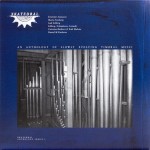

Compilation albums often resemble family reunions: familiar faces, uneven conversations, and at least one relative whose stories seem determined to outlast geological epochs. Released in 2022 and repressed in 2026 in a fancy double LP format, "XKatedral Anthology I" is a rather different gathering. Instead of introducing a label through stylistic variety, it reveals an aesthetic community bound by a shared fascination with duration, resonance and microscopic transformation. These six works, composed between 2010 and 2020 and originally scattered across cassette releases or left unpublished until this anthology, feel less like historical documents than different rooms within the same carefully constructed building.
Founded in Sweden, XKatedral has quietly established itself as one of the most distinctive homes for composers exploring slowly evolving harmonic music, spectral thinking and timbral investigation. Its catalogue sits somewhere between contemporary composition, electroacoustic practice, minimalist process and sound installation, while never settling comfortably inside any of those categories. This first anthology, reissued alongside the second and third volumes, serves as both an introduction and a reminder that some musical ideas become clearer only after time has allowed them to resonate.
Kristoffer Svensson's "Ir Himinn, Groœnn" opens the collection with deceptive modesty. Gamelan percussion and prepared piano interact so intimately that identifying which instrument produces which sound quickly becomes irrelevant. Rather than displaying unusual techniques as novelties, Svensson lets their identities dissolve into a shared metallic shimmer. Listening becomes an act of perceptual adjustment, as though the music keeps quietly rearranging the furniture while you're still trying to memorise the room.
The following pair of organ works forms the anthology's contemplative heart. Marta Forsberg's "Disquiet (Heart)" and Isak Edberg's "Lamé", both created around the magnificent Düben Baroque organ in Stockholm's historic German Church, approach the same instrument from strikingly different philosophical angles. Forsberg builds vast sonic masses that alternately reveal and conceal their internal architecture. Sound accumulates like weather fronts, sometimes translucent, sometimes almost impenetrable, generating tension through density rather than melody.
Edberg, by contrast, embraces continuity. "Lamé" unfolds with remarkable patience, transforming organ registers through gradual spectral shifts that seem almost immune to conventional notions of musical time. Nothing dramatic appears to happen, until one suddenly realises that everything has changed. Human attention is a peculiar mechanism: leave it alone with a slowly evolving chord long enough, and it begins noticing entire universes hidden inside frequencies it normally ignores.
"Dissolving Ceremony", the collaboration between Edberg, Mats Erlandsson and Anders Lisinski, briefly alters the collection's gravitational pull. Built from gamelan percussion and live electronics tuned to the harmonic properties of the instruments themselves, the piece recalls ritual without imitating any specific tradition. Electronics never dominate the acoustic material but instead extend its natural resonance, creating the sensation that every strike continues reverberating inside unseen architectural spaces.
One of the anthology's undeniable highlights is "Glory", the collaboration between Caterina Barbieri and Kali Malone. Long before both composers achieved wider international recognition, this recording already demonstrated their remarkable sensitivity to repetition as a living process rather than mechanical recurrence. Two electric guitars trace additive and subtractive canons that continuously reshape one another, generating hypnotic patterns whose emotional effect emerges not through climax but through sustained concentration. The piece breathes with extraordinary calm while remaining subtly restless beneath its surface.
Daniel M. Karlsson's "Shipwrecks" concludes the anthology with its most expansive statement. A veteran of Sweden's experimental music scene and an important influence on many composers represented here, Karlsson assembles an intricate landscape from acoustic instruments, recordings and electronic transformation. The title proves wonderfully apt. This is music that drifts through submerged harmonic terrain, where familiar timbres appear only to dissolve into liquid abstractions before the ear can fully grasp them. Yet despite its complexity, "Shipwrecks" never feels academic. There is genuine emotional gravity beneath its meticulous construction, suggesting memory itself behaving like an unstable acoustic phenomenon.
One of the anthology's greatest achievements is how naturally it dissolves distinctions between composition and sound sculpture. These works rarely rely on traditional thematic development. Instead, they invite listeners to inhabit sonic environments whose meaning emerges through prolonged attention. This approach inevitably demands patience, but not the dutiful patience sometimes associated with contemporary composition. Rather, it resembles watching light slowly migrate across the walls of an old building. The movement is subtle, yet impossible to mistake once perceived.
The remastering further enhances this sense of physical presence. Every resonance, overtone and microscopic fluctuation occupies space with remarkable clarity, while Stephen O'Malley's sleeve design and Kali Malone's visual direction reinforce the anthology's understated elegance. Even the presentation reflects XKatedral's philosophy: nothing shouts for attention, because nothing needs to.
"XKatedral Anthology I" is ultimately less concerned with preserving a decade of music than with documenting a particular way of listening. These composers remind us that transformation does not always arrive as rupture. Sometimes it unfolds so gradually that the ear notices it only after the journey is complete. In an age devoted to acceleration, that quiet insistence on duration feels almost radical. Not nostalgic, not resistant, simply convinced that some of the most profound discoveries still happen at the speed of resonance.
Founded in Sweden, XKatedral has quietly established itself as one of the most distinctive homes for composers exploring slowly evolving harmonic music, spectral thinking and timbral investigation. Its catalogue sits somewhere between contemporary composition, electroacoustic practice, minimalist process and sound installation, while never settling comfortably inside any of those categories. This first anthology, reissued alongside the second and third volumes, serves as both an introduction and a reminder that some musical ideas become clearer only after time has allowed them to resonate.
Kristoffer Svensson's "Ir Himinn, Groœnn" opens the collection with deceptive modesty. Gamelan percussion and prepared piano interact so intimately that identifying which instrument produces which sound quickly becomes irrelevant. Rather than displaying unusual techniques as novelties, Svensson lets their identities dissolve into a shared metallic shimmer. Listening becomes an act of perceptual adjustment, as though the music keeps quietly rearranging the furniture while you're still trying to memorise the room.
The following pair of organ works forms the anthology's contemplative heart. Marta Forsberg's "Disquiet (Heart)" and Isak Edberg's "Lamé", both created around the magnificent Düben Baroque organ in Stockholm's historic German Church, approach the same instrument from strikingly different philosophical angles. Forsberg builds vast sonic masses that alternately reveal and conceal their internal architecture. Sound accumulates like weather fronts, sometimes translucent, sometimes almost impenetrable, generating tension through density rather than melody.
Edberg, by contrast, embraces continuity. "Lamé" unfolds with remarkable patience, transforming organ registers through gradual spectral shifts that seem almost immune to conventional notions of musical time. Nothing dramatic appears to happen, until one suddenly realises that everything has changed. Human attention is a peculiar mechanism: leave it alone with a slowly evolving chord long enough, and it begins noticing entire universes hidden inside frequencies it normally ignores.
"Dissolving Ceremony", the collaboration between Edberg, Mats Erlandsson and Anders Lisinski, briefly alters the collection's gravitational pull. Built from gamelan percussion and live electronics tuned to the harmonic properties of the instruments themselves, the piece recalls ritual without imitating any specific tradition. Electronics never dominate the acoustic material but instead extend its natural resonance, creating the sensation that every strike continues reverberating inside unseen architectural spaces.
One of the anthology's undeniable highlights is "Glory", the collaboration between Caterina Barbieri and Kali Malone. Long before both composers achieved wider international recognition, this recording already demonstrated their remarkable sensitivity to repetition as a living process rather than mechanical recurrence. Two electric guitars trace additive and subtractive canons that continuously reshape one another, generating hypnotic patterns whose emotional effect emerges not through climax but through sustained concentration. The piece breathes with extraordinary calm while remaining subtly restless beneath its surface.
Daniel M. Karlsson's "Shipwrecks" concludes the anthology with its most expansive statement. A veteran of Sweden's experimental music scene and an important influence on many composers represented here, Karlsson assembles an intricate landscape from acoustic instruments, recordings and electronic transformation. The title proves wonderfully apt. This is music that drifts through submerged harmonic terrain, where familiar timbres appear only to dissolve into liquid abstractions before the ear can fully grasp them. Yet despite its complexity, "Shipwrecks" never feels academic. There is genuine emotional gravity beneath its meticulous construction, suggesting memory itself behaving like an unstable acoustic phenomenon.
One of the anthology's greatest achievements is how naturally it dissolves distinctions between composition and sound sculpture. These works rarely rely on traditional thematic development. Instead, they invite listeners to inhabit sonic environments whose meaning emerges through prolonged attention. This approach inevitably demands patience, but not the dutiful patience sometimes associated with contemporary composition. Rather, it resembles watching light slowly migrate across the walls of an old building. The movement is subtle, yet impossible to mistake once perceived.
The remastering further enhances this sense of physical presence. Every resonance, overtone and microscopic fluctuation occupies space with remarkable clarity, while Stephen O'Malley's sleeve design and Kali Malone's visual direction reinforce the anthology's understated elegance. Even the presentation reflects XKatedral's philosophy: nothing shouts for attention, because nothing needs to.
"XKatedral Anthology I" is ultimately less concerned with preserving a decade of music than with documenting a particular way of listening. These composers remind us that transformation does not always arrive as rupture. Sometimes it unfolds so gradually that the ear notices it only after the journey is complete. In an age devoted to acceleration, that quiet insistence on duration feels almost radical. Not nostalgic, not resistant, simply convinced that some of the most profound discoveries still happen at the speed of resonance.
Scatterwound: SC01

Some albums arrive exactly when they are recorded. Others spend years waiting for the right moment, like geological formations slowly emerging from beneath sediment. "SC01" belongs to the latter category. Captured in the studio in 2017 yet only now seeing the light of day, Scatterwound's debut studio statement doesn't feel delayed. If anything, the passing years have made its existence easier to appreciate. It documents not an unfinished idea, but the moment when two distinct musical personalities discovered a common language powerful enough to outlive the circumstances of its creation.
Scatterwound unites Belgian guitarist and ambient pioneer Dirk Serries with the enigmatic experimental musician known simply as N. By the time these sessions took place at Toppershouse Studio in Duisburg, their artistic relationship had already evolved naturally from a shared tour in 2010 into something far more organic than a one-off collaboration. Their chemistry had subsequently been tested on stages ranging from intimate venues to festivals such as Roadburn, where the duo's uncompromising blend of drone, noise and free improvisation found an audience willing to surrender conventional expectations.
Listening to "SC01", one quickly understands why the record resisted becoming merely another entry in either musician's extensive catalogue. Although Serries has spent decades refining a uniquely introspective approach to guitar, whether under his own name or through projects like Fear Falls Burning, Scatterwound occupies different emotional territory. His characteristic melancholy remains present, but here it collides with N's abrasive, volatile sound language, producing a dialogue that is simultaneously confrontational and strangely compassionate.
The six untitled pieces reinforce this philosophy. By refusing descriptive titles, the duo declines to guide the listener toward predetermined interpretations. Instead, each extended composition unfolds like an unpredictable landscape whose geography reveals itself only through immersion. The absence of verbal signposts feels entirely appropriate. After all, trying to summarise seventy-odd minutes of slowly mutating feedback and resonance with a poetic title would probably be like naming a thunderstorm "Steve".
The opening movements immediately establish Scatterwound's refusal to separate beauty from abrasion. Walls of amplified guitar emerge with overwhelming physicality, yet they rarely function as brute-force exercises. Beneath the distortion lies constant movement: frequencies rub against one another, overtones bloom unexpectedly, fragments of melody briefly surface before dissolving back into dense harmonic fog. The music breathes, despite often sounding as though it has forgotten the conventional mechanics of respiration.
What proves most rewarding is the duo's command of pacing. Many noise records equate intensity with permanence, trapping themselves inside a single emotional register. Scatterwound understand that volume gains meaning only through contrast. Moments of near-silence arrive not as interruptions but as necessary recalibrations, allowing the listener to perceive subtle shifts in texture that might otherwise disappear beneath sheer sonic mass. The ambient passages are never sentimental respites. They carry the same underlying tension as the louder sections, merely expressed through different means.
Improvisation lies at the heart of the album, yet the interaction never feels arbitrary. Both musicians display an instinctive awareness of when to lead, when to withdraw and when to simply inhabit the resonance created by the other. This conversational quality prevents the lengthy performances from drifting into self-indulgence. Even during the most chaotic eruptions, one senses attentive listening rather than parallel monologues.
There is also something quietly moving about hearing this music outside the chronology of its making. Recorded before Scatterwound had fully established its identity through live performance, "SC01" now functions almost as an origin story discovered after the ending has already been written. The record captures possibility in its rawest state, while listeners approach it knowing that those possibilities were ultimately realised. It is rare for hindsight to add dramatic tension instead of diminishing it.
The production deserves particular mention. Andreas Brinke's recording preserves the physical impact of towering amplifier-driven sound without sacrificing detail, while Serries' mastering allows even the densest passages to retain surprising depth and dimensionality. This is music that rewards attentive listening on headphones but perhaps reaches its fullest expression when allowed to occupy an actual room, turning walls, furniture and patient neighbours into unwilling collaborators.
The deluxe presentation, complete with a substantial photographic book documenting Scatterwound's evolution, reinforces the sense that "SC01" is more than an archival curiosity. It is a historical document of a creative partnership whose significance has only become clearer with time.
In many ways, "SC01" explores the peculiar space where improvisation becomes memory. Every gesture is spontaneous in the moment of performance, yet every resonance now carries the weight of years. What remains is neither nostalgia nor preservation for its own sake, but evidence that certain encounters between musicians create something impossible to manufacture through planning alone. Noise, in Scatterwound's hands, ceases to be an act of destruction. Instead, it becomes a patient form of excavation, revealing unexpected tenderness buried beneath layers of distortion.
Scatterwound unites Belgian guitarist and ambient pioneer Dirk Serries with the enigmatic experimental musician known simply as N. By the time these sessions took place at Toppershouse Studio in Duisburg, their artistic relationship had already evolved naturally from a shared tour in 2010 into something far more organic than a one-off collaboration. Their chemistry had subsequently been tested on stages ranging from intimate venues to festivals such as Roadburn, where the duo's uncompromising blend of drone, noise and free improvisation found an audience willing to surrender conventional expectations.
Listening to "SC01", one quickly understands why the record resisted becoming merely another entry in either musician's extensive catalogue. Although Serries has spent decades refining a uniquely introspective approach to guitar, whether under his own name or through projects like Fear Falls Burning, Scatterwound occupies different emotional territory. His characteristic melancholy remains present, but here it collides with N's abrasive, volatile sound language, producing a dialogue that is simultaneously confrontational and strangely compassionate.
The six untitled pieces reinforce this philosophy. By refusing descriptive titles, the duo declines to guide the listener toward predetermined interpretations. Instead, each extended composition unfolds like an unpredictable landscape whose geography reveals itself only through immersion. The absence of verbal signposts feels entirely appropriate. After all, trying to summarise seventy-odd minutes of slowly mutating feedback and resonance with a poetic title would probably be like naming a thunderstorm "Steve".
The opening movements immediately establish Scatterwound's refusal to separate beauty from abrasion. Walls of amplified guitar emerge with overwhelming physicality, yet they rarely function as brute-force exercises. Beneath the distortion lies constant movement: frequencies rub against one another, overtones bloom unexpectedly, fragments of melody briefly surface before dissolving back into dense harmonic fog. The music breathes, despite often sounding as though it has forgotten the conventional mechanics of respiration.
What proves most rewarding is the duo's command of pacing. Many noise records equate intensity with permanence, trapping themselves inside a single emotional register. Scatterwound understand that volume gains meaning only through contrast. Moments of near-silence arrive not as interruptions but as necessary recalibrations, allowing the listener to perceive subtle shifts in texture that might otherwise disappear beneath sheer sonic mass. The ambient passages are never sentimental respites. They carry the same underlying tension as the louder sections, merely expressed through different means.
Improvisation lies at the heart of the album, yet the interaction never feels arbitrary. Both musicians display an instinctive awareness of when to lead, when to withdraw and when to simply inhabit the resonance created by the other. This conversational quality prevents the lengthy performances from drifting into self-indulgence. Even during the most chaotic eruptions, one senses attentive listening rather than parallel monologues.
There is also something quietly moving about hearing this music outside the chronology of its making. Recorded before Scatterwound had fully established its identity through live performance, "SC01" now functions almost as an origin story discovered after the ending has already been written. The record captures possibility in its rawest state, while listeners approach it knowing that those possibilities were ultimately realised. It is rare for hindsight to add dramatic tension instead of diminishing it.
The production deserves particular mention. Andreas Brinke's recording preserves the physical impact of towering amplifier-driven sound without sacrificing detail, while Serries' mastering allows even the densest passages to retain surprising depth and dimensionality. This is music that rewards attentive listening on headphones but perhaps reaches its fullest expression when allowed to occupy an actual room, turning walls, furniture and patient neighbours into unwilling collaborators.
The deluxe presentation, complete with a substantial photographic book documenting Scatterwound's evolution, reinforces the sense that "SC01" is more than an archival curiosity. It is a historical document of a creative partnership whose significance has only become clearer with time.
In many ways, "SC01" explores the peculiar space where improvisation becomes memory. Every gesture is spontaneous in the moment of performance, yet every resonance now carries the weight of years. What remains is neither nostalgia nor preservation for its own sake, but evidence that certain encounters between musicians create something impossible to manufacture through planning alone. Noise, in Scatterwound's hands, ceases to be an act of destruction. Instead, it becomes a patient form of excavation, revealing unexpected tenderness buried beneath layers of distortion.