
Browse by Genre
Industrial Music / Industrial Metal / Aggro Industrial / Electro Metal
Industrial Noise / Power Noise / Harsh Noise
Synth Pop / Electro Pop / Synth-Electronica
Techno / Trance / Goa / Drum'n'Bass / Jungle / Tribal / Trip-Hop
Ambient / Electronica / Ethereal / Dub / Soundscapes / Abstract
Experimental / Avantgarde / Weird & Wired / Glitch / Noise / Field Recording
Dark / Gothic / Wave / New Wave / Dark Wave / Industrial Gothic
New Music / Downtown / Avantgarde Jazz / New Classical / World
Search Reviews
Music Reviews
Web Web: Kover Kover

Artist: Web Web (@)
Title: Kover Kover
Format: CD & 12" + Download
Label: Compost Records (@)
Rated:

Title: Kover Kover
Format: CD & 12" + Download
Label: Compost Records (@)
Rated:
Cover albums often arrive with the uneasy smell of obligation. A contractual pause between original releases. A respectful exercise in admiration. Or worse, a parade of faithful reproductions that answer a question nobody was asking. Thankfully, "Kover Kover" belongs to none of those categories. WEB WEB's first all-covers record isn't interested in paying tribute so much as testing a hypothesis: what happens when songs from radically different musical universes are stripped to their essential DNA and invited to inhabit somebody else's imagination?
The answer, unsurprisingly, is that great songs are remarkably adaptable, provided the musicians approaching them possess enough confidence to stop treating them as sacred relics.
During the last decade, WEB WEB have quietly become one of Germany's most adventurous contemporary jazz collectives. Led by the endlessly versatile Roberto Di Gioia, alongside saxophonist and flautist Tony Lakatos, bassist Christian von Kaphengst, and drummer Peter Gall, the quartet has cultivated a rare chemistry built less on virtuoso display than on mutual curiosity. Their music has always resisted tidy categorisation, drawing equally from spiritual jazz, krautrock, fusion, ambient electronics, psychedelic improvisation and cinematic sound design without ever sounding like a patchwork of influences.
Perhaps that explains why a cover album feels less like a detour than an inevitable next step.
Rather than asking, "How do we play Nirvana?" WEB WEB ask a much stranger question: "What if Nirvana had unknowingly written music for WEB WEB all along?" It is a subtle but crucial distinction. The originals become starting points rather than destinations.
This philosophy immediately reveals itself with Klaus Doldinger's "Song Of Dying". The choice is fitting, given Roberto Di Gioia's long association with Passport, but there is no attempt to recreate the original atmosphere. Instead, the melody is gently absorbed into WEB WEB's own fluid ecosystem, where harmonic openness replaces stylistic fidelity.
The selection itself deserves admiration. Jazz musicians covering jazz standards rarely surprise anyone anymore. Here, however, Grace Jones, Jimi Hendrix, Nirvana, Black Sabbath, Talking Heads, Empire Of The Sun, Kruder & Dorfmeister, Joe Jackson, Grandbrothers, Eurythmics, The Dave Pike Set, and Passport somehow coexist without the album ever resembling a novelty playlist assembled by an algorithm suffering an existential crisis.
That coherence stems largely from the quartet's democratic working method. According to the accompanying notes, instruments frequently change hands during recording sessions. Roberto Di Gioia abandons the piano for bass, Christian von Kaphengst moves toward keyboards, Peter Gall occasionally leaves the drum stool, roles dissolve, habits disappear. One imagines rehearsals less as carefully managed sessions than as four exceptionally gifted musicians wandering into one another's creative territory with cheerful disregard for convention.
It shows.
"Slave To The Rhythm" loses none of Grace Jones' hypnotic authority, yet exchanges polished art-pop grandeur for something warmer and more organic. Hendrix's "Burning Of The Midnight Lamp" becomes less psychedelic spectacle than intimate meditation, while the minimalist architecture of Grandbrothers' "Bloodflow" quietly expands into something almost weightless.
Perhaps the boldest decision is "Come As You Are". Covering Nirvana remains hazardous territory because cultural memory tends to overwhelm musical possibility. WEB WEB wisely refuse to wrestle with Cobain's shadow. Instead, they uncover the composition beneath the mythology. The familiar melody suddenly reveals unexpected harmonic elasticity, almost as though it had been patiently waiting for this alternative life.
A delightful miniature version of Joe Jackson's "Steppin' Out" lasts barely ninety seconds, yet contains enough tenderness to justify its existence entirely. According to the band's own account, the arrangement emerged almost accidentally when Christian von Kaphengst began exploring its chord progression on Fender Rhodes, prompting Di Gioia to swap instruments. That spontaneous reversal of roles captures the album's entire spirit: curiosity first, ego somewhere far behind.
Elsewhere, "Sweet Dreams (Are Made Of This)" sheds its mechanical pulse without sacrificing its hypnotic quality, while Black Sabbath's beautifully understated "Planet Caravan" almost feels predestined for WEB WEB's spacious, contemplative aesthetic. Even Talking Heads' "Once In A Lifetime", a song so closely identified with David Byrne's singular nervous energy, finds fresh life by abandoning irony in favour of floating rhythmic elegance.
Throughout the record, Tony Lakatos proves invaluable. Having appeared on hundreds of jazz recordings and spent decades refining one of Europe's most expressive saxophone voices, he consistently chooses lyricism over display. Whether on tenor or flute, his contributions rarely dominate the arrangements; instead, they function as quiet acts of conversation, allowing melodies to unfold rather than announcing them.
Peter Gall, meanwhile, continues demonstrating why he has become one of Germany's most respected contemporary drummers. His playing constantly suggests motion without insisting upon it. Rhythms breathe, shift and stretch, refusing rigid definitions while never losing momentum.
The album closes with "Free", the only original composition, and perhaps the most revealing piece of all. Rather than serving as an encore, it quietly demonstrates how naturally these reinterpretations have dissolved into WEB WEB's own musical identity. After travelling through thirteen borrowed songs, one arrives at an original without noticing any abrupt stylistic transition.
There is something quietly reassuring about a band that approaches famous material without anxiety. WEB WEB neither compete with the originals nor hide behind reverence. They simply listen carefully enough to discover possibilities that others overlooked.
"Kover Kover" ultimately argues that interpretation is itself a creative act. Songs survive not because they remain unchanged, but because each generation finds new ways of hearing them. Some become louder, others slower, stranger or softer. Occasionally they become jazz. Occasionally they reveal they had been jazz all along.
Few cover albums genuinely expand the lives of the songs they revisit. This one does precisely that, reminding us that the best musicians are rarely collectors of influences. They are translators, fluent in dialects most listeners never realised belonged to the same language.
The answer, unsurprisingly, is that great songs are remarkably adaptable, provided the musicians approaching them possess enough confidence to stop treating them as sacred relics.
During the last decade, WEB WEB have quietly become one of Germany's most adventurous contemporary jazz collectives. Led by the endlessly versatile Roberto Di Gioia, alongside saxophonist and flautist Tony Lakatos, bassist Christian von Kaphengst, and drummer Peter Gall, the quartet has cultivated a rare chemistry built less on virtuoso display than on mutual curiosity. Their music has always resisted tidy categorisation, drawing equally from spiritual jazz, krautrock, fusion, ambient electronics, psychedelic improvisation and cinematic sound design without ever sounding like a patchwork of influences.
Perhaps that explains why a cover album feels less like a detour than an inevitable next step.
Rather than asking, "How do we play Nirvana?" WEB WEB ask a much stranger question: "What if Nirvana had unknowingly written music for WEB WEB all along?" It is a subtle but crucial distinction. The originals become starting points rather than destinations.
This philosophy immediately reveals itself with Klaus Doldinger's "Song Of Dying". The choice is fitting, given Roberto Di Gioia's long association with Passport, but there is no attempt to recreate the original atmosphere. Instead, the melody is gently absorbed into WEB WEB's own fluid ecosystem, where harmonic openness replaces stylistic fidelity.
The selection itself deserves admiration. Jazz musicians covering jazz standards rarely surprise anyone anymore. Here, however, Grace Jones, Jimi Hendrix, Nirvana, Black Sabbath, Talking Heads, Empire Of The Sun, Kruder & Dorfmeister, Joe Jackson, Grandbrothers, Eurythmics, The Dave Pike Set, and Passport somehow coexist without the album ever resembling a novelty playlist assembled by an algorithm suffering an existential crisis.
That coherence stems largely from the quartet's democratic working method. According to the accompanying notes, instruments frequently change hands during recording sessions. Roberto Di Gioia abandons the piano for bass, Christian von Kaphengst moves toward keyboards, Peter Gall occasionally leaves the drum stool, roles dissolve, habits disappear. One imagines rehearsals less as carefully managed sessions than as four exceptionally gifted musicians wandering into one another's creative territory with cheerful disregard for convention.
It shows.
"Slave To The Rhythm" loses none of Grace Jones' hypnotic authority, yet exchanges polished art-pop grandeur for something warmer and more organic. Hendrix's "Burning Of The Midnight Lamp" becomes less psychedelic spectacle than intimate meditation, while the minimalist architecture of Grandbrothers' "Bloodflow" quietly expands into something almost weightless.
Perhaps the boldest decision is "Come As You Are". Covering Nirvana remains hazardous territory because cultural memory tends to overwhelm musical possibility. WEB WEB wisely refuse to wrestle with Cobain's shadow. Instead, they uncover the composition beneath the mythology. The familiar melody suddenly reveals unexpected harmonic elasticity, almost as though it had been patiently waiting for this alternative life.
A delightful miniature version of Joe Jackson's "Steppin' Out" lasts barely ninety seconds, yet contains enough tenderness to justify its existence entirely. According to the band's own account, the arrangement emerged almost accidentally when Christian von Kaphengst began exploring its chord progression on Fender Rhodes, prompting Di Gioia to swap instruments. That spontaneous reversal of roles captures the album's entire spirit: curiosity first, ego somewhere far behind.
Elsewhere, "Sweet Dreams (Are Made Of This)" sheds its mechanical pulse without sacrificing its hypnotic quality, while Black Sabbath's beautifully understated "Planet Caravan" almost feels predestined for WEB WEB's spacious, contemplative aesthetic. Even Talking Heads' "Once In A Lifetime", a song so closely identified with David Byrne's singular nervous energy, finds fresh life by abandoning irony in favour of floating rhythmic elegance.
Throughout the record, Tony Lakatos proves invaluable. Having appeared on hundreds of jazz recordings and spent decades refining one of Europe's most expressive saxophone voices, he consistently chooses lyricism over display. Whether on tenor or flute, his contributions rarely dominate the arrangements; instead, they function as quiet acts of conversation, allowing melodies to unfold rather than announcing them.
Peter Gall, meanwhile, continues demonstrating why he has become one of Germany's most respected contemporary drummers. His playing constantly suggests motion without insisting upon it. Rhythms breathe, shift and stretch, refusing rigid definitions while never losing momentum.
The album closes with "Free", the only original composition, and perhaps the most revealing piece of all. Rather than serving as an encore, it quietly demonstrates how naturally these reinterpretations have dissolved into WEB WEB's own musical identity. After travelling through thirteen borrowed songs, one arrives at an original without noticing any abrupt stylistic transition.
There is something quietly reassuring about a band that approaches famous material without anxiety. WEB WEB neither compete with the originals nor hide behind reverence. They simply listen carefully enough to discover possibilities that others overlooked.
"Kover Kover" ultimately argues that interpretation is itself a creative act. Songs survive not because they remain unchanged, but because each generation finds new ways of hearing them. Some become louder, others slower, stranger or softer. Occasionally they become jazz. Occasionally they reveal they had been jazz all along.
Few cover albums genuinely expand the lives of the songs they revisit. This one does precisely that, reminding us that the best musicians are rarely collectors of influences. They are translators, fluent in dialects most listeners never realised belonged to the same language.
Stanisłaŭ Malenčyk / Giovanni Lami: s/t

Artist: Stanisłaŭ Malenčyk / Giovanni Lami (@)
Title: s/t
Format: 12" x 2 + Download
Label: Shatkavalka
Rated:

Title: s/t
Format: 12" x 2 + Download
Label: Shatkavalka
Rated:
Archives are strange places. We often imagine them as warehouses of certainty, carefully preserving the past against the erosion of time. Yet every archive also records an absence. It preserves voices whose owners are gone, gestures detached from the hands that made them, music that once belonged to living communities but now survives as an unanswered question. "Malencyk / Lami", released by the Minsk-based interdisciplinary collective Shatkavalka, understands this paradox better than most contemporary projects dealing with historical material. It is not an act of restoration. It is an act of listening.
The double LP unfolds almost like two mirrors facing one another across decades. The first record presents field recordings of Stanislau Malencyk (1928-2007), captured in the late 1990s by ethnographer Mykola Kozienka. The second belongs to Italian sound artist Giovanni Lami, who does not accompany, remix or modernize these recordings. Instead, he responds to them from a respectful distance, acknowledging that some conversations can only happen across time.
Malencyk himself is an extraordinary figure, precisely because history nearly overlooked him. Born in what was then Polish territory before becoming part of Belarus, he never received formal musical training, nor did he possess expensive instruments. He simply played. Self-built violins, harmonicas, melodies learned by ear, endless weddings, village celebrations, departures, reunions. Music was not performance in the modern sense but a social necessity, woven into everyday life with the same naturalness as baking bread or harvesting fields.
Listening to these archival performances today requires a certain adjustment of expectations. Their value does not lie in technical perfection. Quite the opposite. The recordings are rough, immediate and occasionally fragile, carrying all the imperfections of field documentation. Yet those imperfections become evidence of proximity. One hears not simply melodies but rooms, distances, movement, voices, the subtle friction between musician and environment. These are not museum artefacts frozen behind glass. They still breathe.
The opening succession of polkas, waltzes, mazurkas and tangos reveals something fascinating about rural musical life in twentieth-century Eastern Europe. Tradition was never as pure as later romantic myths suggested. Belarusian folk dances coexist naturally with echoes of Central European ballroom traditions, popular interwar repertoire and local improvisation. Malencyk absorbs everything without anxiety over stylistic boundaries. Identity here is porous rather than protected.
There is also immense joy in these performances. Even when recorded decades after the social world that originally nourished them had begun disappearing, they retain an instinctive vitality. One imagines village floors vibrating beneath dancing feet, conversations continuing around the music, children running between adults. The recordings preserve not only songs but traces of communal existence itself.
And then Giovanni Lami enters.
Fortunately, he does not attempt the fashionable gesture of "updating" folk music through electronic accompaniment. That route has produced enough disappointing albums to fill several digital graveyards. Instead, Lami begins from a far subtler premise: if the community surrounding Malencyk no longer exists, perhaps what remains is not the melody itself but its resonance.
Working with MIDI transcriptions, modular synthesis, tape manipulation, live sampling and electroacoustic processing, Lami stretches the original material until recognition becomes secondary to memory. The resulting pieces feel like distant weather systems generated by forgotten dances. Rhythms dissolve into elongated textures, harmonic traces flicker beneath layers of analogue instability, while silence occupies as important a role as sound.
There is something profoundly moving about this refusal to imitate. Lesser artists might have sprinkled folk samples over ambient drones and congratulated themselves on building bridges between tradition and modernity. Lami instead accepts that some distances cannot be erased. His work inhabits that distance rather than pretending it never existed.
The three extended compositions on Side C gradually establish an entirely different relationship with listening. "Zanemakurtza", "Alaska Sundryakea" and "Belash Zankav" seem to emerge from the archival recordings like shapes appearing through fog. They never quite settle into familiar structures, constantly oscillating between presence and disappearance. They resemble memories recalled by someone who never actually lived them.
Side D pushes even further inward. Here, electronics become less technological than geological, layers slowly accumulating until individual gestures lose their identity inside larger sonic landscapes. Lami has often explored the physicality of sound in previous works, drawing from field recording, electroacoustic composition and environmental listening. That experience serves him exceptionally well here. His interventions never overshadow Malencyk because they were never intended to.
The project's visual dimension deserves mention as well. Volha Savic's archival collages avoid nostalgic illustration, instead assembling fragments that behave much like the music itself: incomplete, displaced, suggestive rather than explanatory. Together with the accompanying essays and photographs, the release becomes less an album than a carefully curated ethnographic object.
Perhaps the most remarkable achievement of "Malencyk / Lami" is its refusal to romanticize loss. Rural Belarus appears neither as an idyllic paradise nor as an irretrievable tragedy. Communities disappear. Languages evolve. Rituals migrate. Memory fragments. None of this can be reversed. Yet something survives, not intact but transformed.
Listening to these two records consecutively produces an almost physical sensation of temporal displacement. The first asks us to imagine a world. The second asks whether imagination itself might become a legitimate form of preservation.
In an era obsessed with immediate access, instant context and algorithmic certainty, this project insists upon slower forms of understanding. It reminds us that heritage is not merely something to conserve, but something we continually renegotiate through listening. Every generation hears the past differently, because every present asks different questions.
"Malencyk / Lami" offers no comforting answers. Instead, it creates an extraordinary meeting place where a self-taught village musician from twentieth-century Belarus and an experimental Italian sound artist quietly discover they have been speaking compatible languages all along. Not identical languages, certainly. But perhaps that is precisely why the conversation feels so alive.
The double LP unfolds almost like two mirrors facing one another across decades. The first record presents field recordings of Stanislau Malencyk (1928-2007), captured in the late 1990s by ethnographer Mykola Kozienka. The second belongs to Italian sound artist Giovanni Lami, who does not accompany, remix or modernize these recordings. Instead, he responds to them from a respectful distance, acknowledging that some conversations can only happen across time.
Malencyk himself is an extraordinary figure, precisely because history nearly overlooked him. Born in what was then Polish territory before becoming part of Belarus, he never received formal musical training, nor did he possess expensive instruments. He simply played. Self-built violins, harmonicas, melodies learned by ear, endless weddings, village celebrations, departures, reunions. Music was not performance in the modern sense but a social necessity, woven into everyday life with the same naturalness as baking bread or harvesting fields.
Listening to these archival performances today requires a certain adjustment of expectations. Their value does not lie in technical perfection. Quite the opposite. The recordings are rough, immediate and occasionally fragile, carrying all the imperfections of field documentation. Yet those imperfections become evidence of proximity. One hears not simply melodies but rooms, distances, movement, voices, the subtle friction between musician and environment. These are not museum artefacts frozen behind glass. They still breathe.
The opening succession of polkas, waltzes, mazurkas and tangos reveals something fascinating about rural musical life in twentieth-century Eastern Europe. Tradition was never as pure as later romantic myths suggested. Belarusian folk dances coexist naturally with echoes of Central European ballroom traditions, popular interwar repertoire and local improvisation. Malencyk absorbs everything without anxiety over stylistic boundaries. Identity here is porous rather than protected.
There is also immense joy in these performances. Even when recorded decades after the social world that originally nourished them had begun disappearing, they retain an instinctive vitality. One imagines village floors vibrating beneath dancing feet, conversations continuing around the music, children running between adults. The recordings preserve not only songs but traces of communal existence itself.
And then Giovanni Lami enters.
Fortunately, he does not attempt the fashionable gesture of "updating" folk music through electronic accompaniment. That route has produced enough disappointing albums to fill several digital graveyards. Instead, Lami begins from a far subtler premise: if the community surrounding Malencyk no longer exists, perhaps what remains is not the melody itself but its resonance.
Working with MIDI transcriptions, modular synthesis, tape manipulation, live sampling and electroacoustic processing, Lami stretches the original material until recognition becomes secondary to memory. The resulting pieces feel like distant weather systems generated by forgotten dances. Rhythms dissolve into elongated textures, harmonic traces flicker beneath layers of analogue instability, while silence occupies as important a role as sound.
There is something profoundly moving about this refusal to imitate. Lesser artists might have sprinkled folk samples over ambient drones and congratulated themselves on building bridges between tradition and modernity. Lami instead accepts that some distances cannot be erased. His work inhabits that distance rather than pretending it never existed.
The three extended compositions on Side C gradually establish an entirely different relationship with listening. "Zanemakurtza", "Alaska Sundryakea" and "Belash Zankav" seem to emerge from the archival recordings like shapes appearing through fog. They never quite settle into familiar structures, constantly oscillating between presence and disappearance. They resemble memories recalled by someone who never actually lived them.
Side D pushes even further inward. Here, electronics become less technological than geological, layers slowly accumulating until individual gestures lose their identity inside larger sonic landscapes. Lami has often explored the physicality of sound in previous works, drawing from field recording, electroacoustic composition and environmental listening. That experience serves him exceptionally well here. His interventions never overshadow Malencyk because they were never intended to.
The project's visual dimension deserves mention as well. Volha Savic's archival collages avoid nostalgic illustration, instead assembling fragments that behave much like the music itself: incomplete, displaced, suggestive rather than explanatory. Together with the accompanying essays and photographs, the release becomes less an album than a carefully curated ethnographic object.
Perhaps the most remarkable achievement of "Malencyk / Lami" is its refusal to romanticize loss. Rural Belarus appears neither as an idyllic paradise nor as an irretrievable tragedy. Communities disappear. Languages evolve. Rituals migrate. Memory fragments. None of this can be reversed. Yet something survives, not intact but transformed.
Listening to these two records consecutively produces an almost physical sensation of temporal displacement. The first asks us to imagine a world. The second asks whether imagination itself might become a legitimate form of preservation.
In an era obsessed with immediate access, instant context and algorithmic certainty, this project insists upon slower forms of understanding. It reminds us that heritage is not merely something to conserve, but something we continually renegotiate through listening. Every generation hears the past differently, because every present asks different questions.
"Malencyk / Lami" offers no comforting answers. Instead, it creates an extraordinary meeting place where a self-taught village musician from twentieth-century Belarus and an experimental Italian sound artist quietly discover they have been speaking compatible languages all along. Not identical languages, certainly. But perhaps that is precisely why the conversation feels so alive.
Pieuvre: Away From Human Behavious

Artist: Pieuvre
Title: Away From Human Behavious
Format: Tape + Download
Label: Kitchen Leg/Adagio 830 (@)
Rated:
Title: Away From Human Behavious
Format: Tape + Download
Label: Kitchen Leg/Adagio 830 (@)
Rated:
Berlin has long had a peculiar talent for producing bands that sound as though they have escaped from the margins of an art-school notebook. Not polished enough for the mainstream, too playful to be trapped inside academic experimentation, they thrive somewhere between rehearsal rooms, DIY venues and photocopied manifestos. Pieuvre comfortably belong to that lineage. Their second cassette, "Away From Human Behaviour", released jointly by Kitchen Leg Records and Adagio 830, feels less like a carefully calculated sophomore effort than another dispatch from a parallel city where post-punk never became a nostalgia act because it never stopped evolving.
The trio, formed by Pia, Lina and Fege, has already established a distinctive identity within Berlin's underground. Their debut "Hyperstretch" hinted at a chemistry built on jagged guitars, elastic basslines and rhythmic precision, but this new release sharpens that language considerably. They draw obvious inspiration from late-70s and early-80s post-punk, yet refuse to become another band endlessly rearranging the furniture left behind by Gang of Four, Delta 5 or ESG. Instead, they borrow the attitude rather than the blueprint.
What immediately distinguishes Pieuvre is their refusal to sound comfortable. Their songs constantly lean forward, as though equilibrium itself were suspicious. Guitars jab instead of shimmer, rhythms twitch rather than groove conventionally, while melodies emerge almost accidentally from the surrounding angularity. The result is surprisingly danceable, although the dancing involved probably resembles someone enthusiastically trying to assemble IKEA furniture without instructions. Which, in fairness, is also an accurate metaphor for modern adulthood.
Lyrically, "Away From Human Behaviour" explores alienation without surrendering to fashionable cynicism. Work, consumer culture, identity and everyday absurdity become recurring subjects, but Pieuvre approach them with wit instead of resignation. Their observations rarely become preachy because humour remains one of their sharpest political tools. Rather than shouting slogans, they expose contradictions until they begin laughing at themselves.
The multilingual vocals reinforce this sense of fragmented modern existence. English, German and Portuguese coexist naturally throughout the album, reflecting both Berlin's international identity and the band's own refusal to settle inside neat cultural categories. Language becomes another rhythmic element, each syllable contributing its own texture and cadence.
The opening "Geisterbahn" immediately throws listeners into Pieuvre's world with nervous momentum and restless energy. There is something carnival-like beneath its tension, appropriate for a title referencing the ghost train. It suggests that contemporary life itself has become an amusement ride where everyone pretends to be having fun while quietly wondering where the emergency exit might be.
"Cactus" develops one of the album's recurring fascinations: the comparison between human behaviour and the natural world. The promotional notes jokingly ask what distinguishes us from a plant or an inanimate object. The answer, judging from this record, may simply be that humans invented office meetings.
That thread continues brilliantly into "Home Office", perhaps the album's most pointed social observation. Rather than treating remote work as either paradise or dystopia, Pieuvre capture its strange psychological limbo, where domestic intimacy gradually becomes colonised by productivity metrics. Somewhere between the kitchen table and the laptop screen, many people discovered they were commuting without actually travelling anywhere.
Elsewhere, "Executive Love" skewers corporate language with delicious irreverence, while "Wardrobe" and "Roommate" transform seemingly mundane situations into subtle reflections on identity and coexistence. Even "Blueberry Cake", whose title promises comforting domesticity, carries enough irony to remind us that sweetness and unease often arrive together.
Musically, the trio display admirable restraint. These are compact songs, rarely overstaying their welcome. Nothing feels ornamental. Every guitar stab, bass figure and rhythmic accent serves the momentum. Their no-wave influences remain evident, particularly in the deliberately abrasive guitar textures, but there is also a welcome sense of melody that prevents the album from becoming an exercise in aesthetic severity.
One of Pieuvre's greatest strengths lies in their collective identity. No individual appears interested in dominating the music. The songs emerge through interaction rather than hierarchy, reinforcing the communal spirit that has always animated the best underground scenes. This also mirrors the philosophy of Kitchen Leg Records, whose catalogue has consistently championed DIY ethics over commercial polish, embracing cassette culture not as retro fetishism but as an ongoing act of artistic independence.
Andrew Kemp's cover artwork complements the record beautifully, suggesting organisms that exist somewhere between biological and mechanical life. It quietly echoes the album's central question: what exactly separates human beings from the objects and systems they create? The answer becomes increasingly ambiguous as modern existence grows more automated.
There is, perhaps, one delightful contradiction at the heart of "Away From Human Behaviour". Despite its title, this is an intensely human album. Its humour, frustration, awkwardness and curiosity could not belong to anything else. Plants do not worry about alienation. Rocks rarely question capitalism. Octopuses, admittedly, remain suspiciously intelligent, but even they probably have better work-life balance than most of us.
Pieuvre never pretend to possess solutions. Instead, they document the strange choreography of contemporary existence with intelligence, irreverence and infectious energy. They understand that laughter and discomfort are close relatives, particularly when amplified through scratchy guitars and taut rhythms.
In a musical landscape increasingly divided between algorithm-friendly predictability and self-serious experimentation, "Away From Human Behaviour" occupies a far more interesting territory. It is clever without becoming smug, political without becoming didactic, playful without sacrificing substance. Like the best post-punk, it invites you to dance first and think later, only to realise, halfway through the second listen, that it has been making surprisingly sharp observations all along.
The trio, formed by Pia, Lina and Fege, has already established a distinctive identity within Berlin's underground. Their debut "Hyperstretch" hinted at a chemistry built on jagged guitars, elastic basslines and rhythmic precision, but this new release sharpens that language considerably. They draw obvious inspiration from late-70s and early-80s post-punk, yet refuse to become another band endlessly rearranging the furniture left behind by Gang of Four, Delta 5 or ESG. Instead, they borrow the attitude rather than the blueprint.
What immediately distinguishes Pieuvre is their refusal to sound comfortable. Their songs constantly lean forward, as though equilibrium itself were suspicious. Guitars jab instead of shimmer, rhythms twitch rather than groove conventionally, while melodies emerge almost accidentally from the surrounding angularity. The result is surprisingly danceable, although the dancing involved probably resembles someone enthusiastically trying to assemble IKEA furniture without instructions. Which, in fairness, is also an accurate metaphor for modern adulthood.
Lyrically, "Away From Human Behaviour" explores alienation without surrendering to fashionable cynicism. Work, consumer culture, identity and everyday absurdity become recurring subjects, but Pieuvre approach them with wit instead of resignation. Their observations rarely become preachy because humour remains one of their sharpest political tools. Rather than shouting slogans, they expose contradictions until they begin laughing at themselves.
The multilingual vocals reinforce this sense of fragmented modern existence. English, German and Portuguese coexist naturally throughout the album, reflecting both Berlin's international identity and the band's own refusal to settle inside neat cultural categories. Language becomes another rhythmic element, each syllable contributing its own texture and cadence.
The opening "Geisterbahn" immediately throws listeners into Pieuvre's world with nervous momentum and restless energy. There is something carnival-like beneath its tension, appropriate for a title referencing the ghost train. It suggests that contemporary life itself has become an amusement ride where everyone pretends to be having fun while quietly wondering where the emergency exit might be.
"Cactus" develops one of the album's recurring fascinations: the comparison between human behaviour and the natural world. The promotional notes jokingly ask what distinguishes us from a plant or an inanimate object. The answer, judging from this record, may simply be that humans invented office meetings.
That thread continues brilliantly into "Home Office", perhaps the album's most pointed social observation. Rather than treating remote work as either paradise or dystopia, Pieuvre capture its strange psychological limbo, where domestic intimacy gradually becomes colonised by productivity metrics. Somewhere between the kitchen table and the laptop screen, many people discovered they were commuting without actually travelling anywhere.
Elsewhere, "Executive Love" skewers corporate language with delicious irreverence, while "Wardrobe" and "Roommate" transform seemingly mundane situations into subtle reflections on identity and coexistence. Even "Blueberry Cake", whose title promises comforting domesticity, carries enough irony to remind us that sweetness and unease often arrive together.
Musically, the trio display admirable restraint. These are compact songs, rarely overstaying their welcome. Nothing feels ornamental. Every guitar stab, bass figure and rhythmic accent serves the momentum. Their no-wave influences remain evident, particularly in the deliberately abrasive guitar textures, but there is also a welcome sense of melody that prevents the album from becoming an exercise in aesthetic severity.
One of Pieuvre's greatest strengths lies in their collective identity. No individual appears interested in dominating the music. The songs emerge through interaction rather than hierarchy, reinforcing the communal spirit that has always animated the best underground scenes. This also mirrors the philosophy of Kitchen Leg Records, whose catalogue has consistently championed DIY ethics over commercial polish, embracing cassette culture not as retro fetishism but as an ongoing act of artistic independence.
Andrew Kemp's cover artwork complements the record beautifully, suggesting organisms that exist somewhere between biological and mechanical life. It quietly echoes the album's central question: what exactly separates human beings from the objects and systems they create? The answer becomes increasingly ambiguous as modern existence grows more automated.
There is, perhaps, one delightful contradiction at the heart of "Away From Human Behaviour". Despite its title, this is an intensely human album. Its humour, frustration, awkwardness and curiosity could not belong to anything else. Plants do not worry about alienation. Rocks rarely question capitalism. Octopuses, admittedly, remain suspiciously intelligent, but even they probably have better work-life balance than most of us.
Pieuvre never pretend to possess solutions. Instead, they document the strange choreography of contemporary existence with intelligence, irreverence and infectious energy. They understand that laughter and discomfort are close relatives, particularly when amplified through scratchy guitars and taut rhythms.
In a musical landscape increasingly divided between algorithm-friendly predictability and self-serious experimentation, "Away From Human Behaviour" occupies a far more interesting territory. It is clever without becoming smug, political without becoming didactic, playful without sacrificing substance. Like the best post-punk, it invites you to dance first and think later, only to realise, halfway through the second listen, that it has been making surprisingly sharp observations all along.
Matthias Muche: Trombone Alone
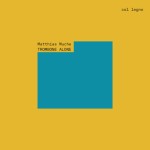
The trombone occupies a curious place in the collective imagination. In symphony orchestras it often announces destiny, catastrophe or divine judgement. In jazz it can swagger, growl and dance. In cartoons it has spent decades slipping on metaphorical banana peels. Poor instrument. It contains multitudes, yet is frequently reduced to comic glissandi or solemn fanfares. Cologne-based composer and trombonist Matthias Muche has devoted a significant part of his artistic practice to rescuing the trombone from such convenient stereotypes, treating it not merely as an instrument, but as a physical environment, a resonant architecture, almost a place one can inhabit.
"Trombone Alone", released by Col Legno, gathers five solo works that distil this vision into its most concentrated form. Muche, recipient of the WDR Jazz Prize for Improvisation in 2021, has developed his language through encounters with figures such as George Lewis, Vinko Globokar, Ray Anderson and Anthony Moore, musicians and thinkers who each, in their own way, questioned what an instrument could be. Here, however, theory quietly dissolves into experience. One does not listen to these pieces as much as enter them.
Recorded in the generous acoustic of a church in Bielefeld, the album immediately establishes space as an active participant. Reverberation is not a decorative afterthought but an essential material, a second performer answering, extending and occasionally contradicting the trombone. The opening "Solo BELLER", featuring spoken text by Anthony Moore, introduces this dimension with measured calm, as if mapping the room before setting out into it. It feels less like the beginning of a concert and more like crossing the threshold of an installation.
And perhaps installation is indeed the right word. These pieces are not organised around melody in the traditional sense, nor do they seek the dramatic arcs often expected from solo instrumental performances. Instead, Muche builds situations. Air, breath, metal, resonance and silence become compositional elements of equal importance. The trombone is extended through objects, altered air paths and electroacoustic interventions, redirecting sound back into the instrument's own body until it becomes difficult to distinguish cause from reflection.
This could sound forbiddingly academic on paper. Fortunately, sound possesses a stubborn resistance to paperwork.
"Solo GLEITER" unfolds like an exploration of invisible currents, tones sliding and bending as though searching for hidden passageways inside the instrument. "Solo QUATER" introduces greater density, yet never feels crowded; each sound appears carefully placed, like stones in a Zen garden where absence matters as much as presence. "Solo BUTTER", despite its deceptively soft title, contains some of the album's most fascinating textures, balancing fragility with a rough physicality that reminds the listener that music begins with breath pushing against resistance.
The closing "Solo GLOCKEN" brings bells into dialogue with the trombone, subtly dissolving the boundary between instrument and environment. By the end, one realises that the church itself has been performing all along. Buildings, after all, are merely very slow instruments waiting for someone to play them.
Muche's work is often described in terms of embodiment, and rightly so. There is an unmistakable sense of effort here: the movement of air, the pressure of lips against metal, the negotiation between body and object. Yet this never becomes a display of virtuosity in the conventional sense. There are no dazzling cascades of notes designed to provoke applause. In fact, "Trombone Alone" quietly questions the very idea of instrumental mastery. Technical brilliance is replaced by attentiveness, by an ethics of listening.
That may be the album's most valuable contribution. Contemporary life increasingly resembles a contest to determine who can demand our attention most aggressively. Notifications flash, algorithms insist, content accelerates. Muche offers the opposite: an invitation to slow perception down. These compositions do not tell the listener what to feel. They create conditions in which feeling may emerge naturally, unpredictably.
There is also an understated poetry in the album's brittleness. Sounds crack, fade, hesitate, reveal their material origins. Nothing is polished into anonymous perfection. Ancient Greek aesthetics associated beauty with a certain fragility, and "Trombone Alone" seems to understand this intuitively. A sound that risks disappearing often becomes more compelling than one that insists on its permanence.
Listeners familiar with Muche's large ensemble project BONECRUSHER, where these works have also been expanded for twelve trombones and percussion, may recognise some of the underlying ideas. Yet the solo versions possess a special clarity. Here, stripped of orchestral scale, the relationship between body, instrument and space becomes fully visible.
This is not an album for passive consumption. It asks for participation, or at least attention. But it rewards that attention generously. What begins as an exploration of the trombone gradually becomes an exploration of listening itself: how we perceive sound, how space shapes meaning, how silence alters memory.
In the end, "Trombone Alone" reminds us that music need not always rush toward melody, climax or resolution. Sometimes it is enough to stand in a room, listen carefully, and discover that even a single breath travelling through a length of brass can contain an entire landscape.
"Trombone Alone", released by Col Legno, gathers five solo works that distil this vision into its most concentrated form. Muche, recipient of the WDR Jazz Prize for Improvisation in 2021, has developed his language through encounters with figures such as George Lewis, Vinko Globokar, Ray Anderson and Anthony Moore, musicians and thinkers who each, in their own way, questioned what an instrument could be. Here, however, theory quietly dissolves into experience. One does not listen to these pieces as much as enter them.
Recorded in the generous acoustic of a church in Bielefeld, the album immediately establishes space as an active participant. Reverberation is not a decorative afterthought but an essential material, a second performer answering, extending and occasionally contradicting the trombone. The opening "Solo BELLER", featuring spoken text by Anthony Moore, introduces this dimension with measured calm, as if mapping the room before setting out into it. It feels less like the beginning of a concert and more like crossing the threshold of an installation.
And perhaps installation is indeed the right word. These pieces are not organised around melody in the traditional sense, nor do they seek the dramatic arcs often expected from solo instrumental performances. Instead, Muche builds situations. Air, breath, metal, resonance and silence become compositional elements of equal importance. The trombone is extended through objects, altered air paths and electroacoustic interventions, redirecting sound back into the instrument's own body until it becomes difficult to distinguish cause from reflection.
This could sound forbiddingly academic on paper. Fortunately, sound possesses a stubborn resistance to paperwork.
"Solo GLEITER" unfolds like an exploration of invisible currents, tones sliding and bending as though searching for hidden passageways inside the instrument. "Solo QUATER" introduces greater density, yet never feels crowded; each sound appears carefully placed, like stones in a Zen garden where absence matters as much as presence. "Solo BUTTER", despite its deceptively soft title, contains some of the album's most fascinating textures, balancing fragility with a rough physicality that reminds the listener that music begins with breath pushing against resistance.
The closing "Solo GLOCKEN" brings bells into dialogue with the trombone, subtly dissolving the boundary between instrument and environment. By the end, one realises that the church itself has been performing all along. Buildings, after all, are merely very slow instruments waiting for someone to play them.
Muche's work is often described in terms of embodiment, and rightly so. There is an unmistakable sense of effort here: the movement of air, the pressure of lips against metal, the negotiation between body and object. Yet this never becomes a display of virtuosity in the conventional sense. There are no dazzling cascades of notes designed to provoke applause. In fact, "Trombone Alone" quietly questions the very idea of instrumental mastery. Technical brilliance is replaced by attentiveness, by an ethics of listening.
That may be the album's most valuable contribution. Contemporary life increasingly resembles a contest to determine who can demand our attention most aggressively. Notifications flash, algorithms insist, content accelerates. Muche offers the opposite: an invitation to slow perception down. These compositions do not tell the listener what to feel. They create conditions in which feeling may emerge naturally, unpredictably.
There is also an understated poetry in the album's brittleness. Sounds crack, fade, hesitate, reveal their material origins. Nothing is polished into anonymous perfection. Ancient Greek aesthetics associated beauty with a certain fragility, and "Trombone Alone" seems to understand this intuitively. A sound that risks disappearing often becomes more compelling than one that insists on its permanence.
Listeners familiar with Muche's large ensemble project BONECRUSHER, where these works have also been expanded for twelve trombones and percussion, may recognise some of the underlying ideas. Yet the solo versions possess a special clarity. Here, stripped of orchestral scale, the relationship between body, instrument and space becomes fully visible.
This is not an album for passive consumption. It asks for participation, or at least attention. But it rewards that attention generously. What begins as an exploration of the trombone gradually becomes an exploration of listening itself: how we perceive sound, how space shapes meaning, how silence alters memory.
In the end, "Trombone Alone" reminds us that music need not always rush toward melody, climax or resolution. Sometimes it is enough to stand in a room, listen carefully, and discover that even a single breath travelling through a length of brass can contain an entire landscape.
Siril Malmedal Hauge & Kjetil Mulelid: I Remember Oranges
Artist: Siril Malmedal Hauge & Kjetil Mulelid (@)
Title: I Remember Oranges
Format: CD
Label: Svale Records (@)
Rated:
Title: I Remember Oranges
Format: CD
Label: Svale Records (@)
Rated:
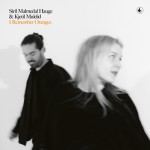
There is a peculiar courage in recording music that leaves its fingerprints intact. In an age where every breath can be corrected, every note aligned, and every silence treated as a production flaw, "I Remember Oranges" chooses a far more demanding path: it trusts the moment. Most of these performances were captured live, often in a single take, allowing hesitation, intuition and shared breathing to become part of the composition itself. It is less an album than a conversation that happened to be preserved.
That approach feels entirely natural for Norwegian vocalist and songwriter Siril Malmedal Hauge and pianist Kjetil Mulelid, whose musical relationship has quietly matured over more than a decade. Both have become defining figures of a new Scandinavian jazz generation, collecting critical acclaim, Spellemann nominations and international audiences without ever appearing interested in chasing fashionable trends. Their partnership, formally established as a duo in 2022 after years of collaborating in larger ensembles, is built on something less spectacular but infinitely more valuable: trust. It is the kind of musical trust that cannot be rehearsed into existence; it accumulates slowly through airports, soundchecks, missed trains, late-night conversations and hundreds of concerts.
The title, borrowed from Molly Drake's "I Remember", immediately reveals the album's emotional landscape. Memory here is not presented as nostalgia but as an imperfect, living organism. We rarely remember events exactly as they happened. Instead, we remember fragments: a colour, a scent, the texture of a voice, the impossible brightness of an orange in a foreign marketplace. Human memory has always been a terrible archivist and an excellent poet.
That idea quietly threads its way through the record. The original compositions and carefully chosen covers never compete for attention but seem to complete one another, forming a meditation on connection, absence and the curious way shared experiences eventually become private possessions. Even the album's sequencing feels carefully considered, flowing like recollections rather than chapters.
"Where Will You Go?" establishes the emotional vocabulary from the outset. Its lyrics contemplate loss without surrendering to despair, wondering whether those we miss survive in rain against a window, humming moons or the earth beneath our feet. Rather than dramatizing grief, Hauge approaches it with remarkable gentleness, acknowledging that memories rarely disappear. They simply drift in and out of focus.
Throughout the album, her voice refuses theatrical excess. She sings with extraordinary restraint, allowing emotional weight to emerge through nuance instead of volume. It is tempting to describe her delivery as fragile, but that would be misleading. There is considerable strength in resisting unnecessary emphasis. Like someone speaking quietly in a room where everyone is already listening, she understands that intimacy rarely requires amplification.
Opposite her, Mulelid proves once again why he has become one of Norway's most distinctive contemporary pianists. His playing constantly balances lyricism with harmonic curiosity. Classical influences remain evident, yet they never overshadow his improvisational instincts. Rather than accompanying the voice, his piano anticipates it, answers it, occasionally questions it. The silence between notes becomes as meaningful as the notes themselves.
The guest appearances deepen rather than interrupt the duo's language. Trumpeter Mathias Eick, whose unmistakably luminous tone has become synonymous with modern Nordic jazz, appears on "Cranes", adding another layer of longing to a composition already rich with imagery of migration, remembrance and continuity. The trumpet never dominates the piece; instead, it behaves like another memory floating across the horizon. Meanwhile, Johanne Flottorp's Hardanger fiddle on "Poem" introduces a subtle folk resonance that beautifully complements lyrics exploring vulnerability and the fear of exposing one's unguarded self. The traditional instrument feels less like an exotic colour and more like another emotional register within the conversation.
The repertoire also says much about the duo's artistic identity. Covering Ornette Coleman's almost ascetic "What Reason Could I Give?", Randy Newman's warmly human "Feels Like Home", Molly Drake's quietly devastating meditation on memory and, finally, "Moon River" could easily have resulted in an uneven collection of standards. Instead, every borrowed composition sounds as though it naturally belongs inside the same emotional architecture. They are interpreted rather than performed, absorbed into the duo's own vocabulary instead of preserved behind respectful glass.
The original songs arguably reveal even greater depth when viewed alongside the accompanying lyrics. "Ventetid", sung in Nynorsk, transforms waiting into an act of creation, colouring anticipation with hope rather than frustration. "La Petite Rose", inspired by "The Little Prince", reflects on lifelong friendship through images of planets drifting apart while memories continue orbiting one another. "Poem" may be the emotional centrepiece, asking one of the simplest yet most frightening questions possible: "If I show you who I really am, will you remain?" It is astonishing how much vulnerability can fit inside so few words.
Perhaps what makes "I Remember Oranges" so affecting is its complete lack of urgency. It never attempts to impress. Contemporary music often behaves like someone frantically waving both arms, desperate not to disappear beneath the endless flood of new releases. This album simply sits down beside you and waits. Eventually you realise you've stopped looking at your phone. A remarkable achievement, really. Entire mindfulness industries have built fortunes trying to accomplish exactly that.
Sonically, the production mirrors the philosophy behind the performances. There is air around every phrase, enough space for resonance to bloom naturally. Mike Hartung's recording, Bård Ingebrigtsen's mix and Helge Sten's mastering avoid polishing away the subtle imperfections that make these performances feel inhabited rather than manufactured.
Ultimately, "I Remember Oranges" reminds us that music does not always need to astonish in order to endure. Sometimes its greatest achievement lies in making us notice what already exists: the quiet miracle of listening closely, the peculiar architecture of memory, the fragile threads connecting one human being to another. Like the fruit in Molly Drake's song, these moments eventually fade from sight, but their colour lingers somewhere inside us.
Not every album demands repeated listening. Some simply earn it. This is one of them.
That approach feels entirely natural for Norwegian vocalist and songwriter Siril Malmedal Hauge and pianist Kjetil Mulelid, whose musical relationship has quietly matured over more than a decade. Both have become defining figures of a new Scandinavian jazz generation, collecting critical acclaim, Spellemann nominations and international audiences without ever appearing interested in chasing fashionable trends. Their partnership, formally established as a duo in 2022 after years of collaborating in larger ensembles, is built on something less spectacular but infinitely more valuable: trust. It is the kind of musical trust that cannot be rehearsed into existence; it accumulates slowly through airports, soundchecks, missed trains, late-night conversations and hundreds of concerts.
The title, borrowed from Molly Drake's "I Remember", immediately reveals the album's emotional landscape. Memory here is not presented as nostalgia but as an imperfect, living organism. We rarely remember events exactly as they happened. Instead, we remember fragments: a colour, a scent, the texture of a voice, the impossible brightness of an orange in a foreign marketplace. Human memory has always been a terrible archivist and an excellent poet.
That idea quietly threads its way through the record. The original compositions and carefully chosen covers never compete for attention but seem to complete one another, forming a meditation on connection, absence and the curious way shared experiences eventually become private possessions. Even the album's sequencing feels carefully considered, flowing like recollections rather than chapters.
"Where Will You Go?" establishes the emotional vocabulary from the outset. Its lyrics contemplate loss without surrendering to despair, wondering whether those we miss survive in rain against a window, humming moons or the earth beneath our feet. Rather than dramatizing grief, Hauge approaches it with remarkable gentleness, acknowledging that memories rarely disappear. They simply drift in and out of focus.
Throughout the album, her voice refuses theatrical excess. She sings with extraordinary restraint, allowing emotional weight to emerge through nuance instead of volume. It is tempting to describe her delivery as fragile, but that would be misleading. There is considerable strength in resisting unnecessary emphasis. Like someone speaking quietly in a room where everyone is already listening, she understands that intimacy rarely requires amplification.
Opposite her, Mulelid proves once again why he has become one of Norway's most distinctive contemporary pianists. His playing constantly balances lyricism with harmonic curiosity. Classical influences remain evident, yet they never overshadow his improvisational instincts. Rather than accompanying the voice, his piano anticipates it, answers it, occasionally questions it. The silence between notes becomes as meaningful as the notes themselves.
The guest appearances deepen rather than interrupt the duo's language. Trumpeter Mathias Eick, whose unmistakably luminous tone has become synonymous with modern Nordic jazz, appears on "Cranes", adding another layer of longing to a composition already rich with imagery of migration, remembrance and continuity. The trumpet never dominates the piece; instead, it behaves like another memory floating across the horizon. Meanwhile, Johanne Flottorp's Hardanger fiddle on "Poem" introduces a subtle folk resonance that beautifully complements lyrics exploring vulnerability and the fear of exposing one's unguarded self. The traditional instrument feels less like an exotic colour and more like another emotional register within the conversation.
The repertoire also says much about the duo's artistic identity. Covering Ornette Coleman's almost ascetic "What Reason Could I Give?", Randy Newman's warmly human "Feels Like Home", Molly Drake's quietly devastating meditation on memory and, finally, "Moon River" could easily have resulted in an uneven collection of standards. Instead, every borrowed composition sounds as though it naturally belongs inside the same emotional architecture. They are interpreted rather than performed, absorbed into the duo's own vocabulary instead of preserved behind respectful glass.
The original songs arguably reveal even greater depth when viewed alongside the accompanying lyrics. "Ventetid", sung in Nynorsk, transforms waiting into an act of creation, colouring anticipation with hope rather than frustration. "La Petite Rose", inspired by "The Little Prince", reflects on lifelong friendship through images of planets drifting apart while memories continue orbiting one another. "Poem" may be the emotional centrepiece, asking one of the simplest yet most frightening questions possible: "If I show you who I really am, will you remain?" It is astonishing how much vulnerability can fit inside so few words.
Perhaps what makes "I Remember Oranges" so affecting is its complete lack of urgency. It never attempts to impress. Contemporary music often behaves like someone frantically waving both arms, desperate not to disappear beneath the endless flood of new releases. This album simply sits down beside you and waits. Eventually you realise you've stopped looking at your phone. A remarkable achievement, really. Entire mindfulness industries have built fortunes trying to accomplish exactly that.
Sonically, the production mirrors the philosophy behind the performances. There is air around every phrase, enough space for resonance to bloom naturally. Mike Hartung's recording, Bård Ingebrigtsen's mix and Helge Sten's mastering avoid polishing away the subtle imperfections that make these performances feel inhabited rather than manufactured.
Ultimately, "I Remember Oranges" reminds us that music does not always need to astonish in order to endure. Sometimes its greatest achievement lies in making us notice what already exists: the quiet miracle of listening closely, the peculiar architecture of memory, the fragile threads connecting one human being to another. Like the fruit in Molly Drake's song, these moments eventually fade from sight, but their colour lingers somewhere inside us.
Not every album demands repeated listening. Some simply earn it. This is one of them.