
Wednesday, November 25, 2026
Browse by Genre
Industrial Music / Industrial Metal / Aggro Industrial / Electro Metal
Industrial Noise / Power Noise / Harsh Noise
Synth Pop / Electro Pop / Synth-Electronica
Techno / Trance / Goa / Drum'n'Bass / Jungle / Tribal / Trip-Hop
Ambient / Electronica / Ethereal / Dub / Soundscapes / Abstract
Experimental / Avantgarde / Weird & Wired / Glitch / Noise / Field Recording
Dark / Gothic / Wave / New Wave / Dark Wave / Industrial Gothic
New Music / Downtown / Avantgarde Jazz / New Classical / World
Search Reviews
Music Reviews
Henrik Olsson: Antumbra Ensemble
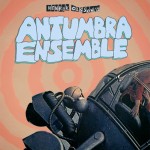
Artist: Henrik Olsson (@)
Title: Antumbra Ensemble
Format: CD + Download
Label: Cuneiform (http://www.cuneiformrecords.com/) (@)
Rated:

Title: Antumbra Ensemble
Format: CD + Download
Label: Cuneiform (http://www.cuneiformrecords.com/) (@)
Rated:
There are records that combine jazz, progressive rock, free improvisation and contemporary composition because their creators cannot decide which musical neighbourhood they would prefer to inhabit. Henrik Olsson has a rather more convincing reason: he appears to enjoy living in all of them, occasionally knocking down a dividing wall just to see what happens. "Antumbra Ensemble", his debut for Cuneiform Records, brings together eight compositions for a seven-piece Copenhagen group, drawing on an impressively broad musical vocabulary without turning the album into a competition in reference spotting. Henry Cow, Henry Threadgill, Sun Ra and Frank Zappa are among the obvious ancestors, but Olsson's achievement lies in using their adventurousness as a starting point rather than a set of instructions. The music is intricate, unpredictable and frequently noisy, yet it also has a strong appetite for melody, rhythmic propulsion and the occasional frankly outrageous groove. Avant-garde music, it turns out, need not spend its entire existence looking serious.
The Swedish-born, Copenhagen-based Olsson is hardly a newcomer to this territory. His previous projects include Penumbra Ensemble and Hand of Benediction, while his activities as a guitarist and improviser extend to OLSSON|RUBIN, EHM, Ytterlandet and collaborations with musicians from the Danish experimental and jazz scenes. He is also involved with Barefoot Records, the Copenhagen-based independent label and improvisers' collective. His electric guitar playing has long explored unconventional timbres and extended techniques, but his compositional work is equally important. Olsson has described himself as a composer first on this record, with the guitar serving the demands of the arrangements rather than automatically claiming the spotlight. That distinction explains much of the album's character: the music is not a succession of solos with occasional orchestral interruptions, but a carefully organised body of material in which individual gestures are constantly being redirected by the ensemble.
The opening “The Maneki-Neko Defect” makes its intentions clear in less than two minutes. Angular horn figures, abrupt rhythmic changes and a mischievous sense of timing establish a musical language that is both tightly controlled and cheerfully disruptive. The Japanese lucky-cat reference is an appropriate touch, although the track's gestures are rather less reassuring than a waving paw promising prosperity. “Homeshredder” takes the guitar further into abrasive territory, with Olsson's distorted, sharply articulated playing cutting across the brass section's compact interventions. The arrangement has the restless energy of a small orchestra that has discovered punk rock and is not entirely convinced that the conductor should remain employed. Yet its complexity never becomes an obstacle for its own sake. The musicians understand precisely when to lock into a figure and when to let it break apart.
“El Excavador de mi Corazon” offers a different perspective. Its more pronounced melodic character and hints of old-school R&B provide a welcome contrast to the opening tracks, while the horns bring a loose, almost theatrical quality to the arrangement. Olsson is particularly good at allowing a recognisable tune to emerge from an otherwise unstable musical environment. He does not treat accessibility as a concession to be apologised for; it is another compositional resource. This becomes even clearer in “Hey Pedro, It's Just Cosmic Dust”, the album's longest piece. An initially buoyant, Latin-tinged groove gradually acquires a more eccentric personality as the rhythm section, tuba and horns push the music into increasingly unpredictable territory. The piece is full of sharp turns and overlapping ideas, but its rhythmic foundation remains remarkably persuasive. Cosmic dust, apparently, has a fairly solid sense of percussion.
“Will Sommer” is another highlight, built around a winding guitar figure and a series of animated brass passages. Its melodic content is unusually immediate, although Olsson cannot resist introducing changes in direction just when the listener begins to feel comfortably settled. The ensemble's ability to negotiate these shifts is one of the record's greatest strengths. Michaela Turcerová's alto saxophone, Erik Kimestad Pedersen's trumpet, Petter HÄngsel's trombone and Kristian Tangvik's tuba form a remarkably flexible horn section, capable of producing both tightly coordinated passages and more unruly exchanges. Tangvik's tuba deserves particular attention. Rather than functioning as a conventional bass reinforcement, it frequently becomes a distinctive melodic and rhythmic presence, adding a slightly grotesque, almost cartoonish weight to the arrangements. Alongside Jeppe Skovbakke's electric bass and Rune Lohse's drums, it gives the group a sound that is unusually full for a septet.
“A Lesser-Known Tragedy (Part I & II)” introduces a more fractured atmosphere, moving between contrasting sections without losing its internal logic. The two-part construction allows Olsson to explore a wider emotional and dynamic range, while the ensemble's changing textures keep the piece from settling into a predictable progression. “The Final Night: Sugoi Yoru!” is similarly rich in contrasts, its more restrained guitar passages eventually giving way to assertive brass writing and a forceful collective finale. The closing “With Freedom, Flowers, Book and the Moon...øh...” provides an appropriately eccentric conclusion. Its title already suggests that the composer may have become distracted halfway through writing it, but the music is anything but casual. The track brings together several aspects of the album's vocabulary, balancing playful melodic gestures with more oblique passages and a distinctly Zappa-esque taste for unexpected juxtapositions.
What makes the record work is not simply the number of influences Olsson has absorbed, but the confidence with which he allows them to coexist without smoothing away their differences. The experimental rock heritage of Henry Cow, Threadgill's intricate ensemble writing, Sun Ra's melodic imagination and Zappa's fondness for absurdity are all relevant, but none provides a complete explanation. Olsson's guitar has a sharp, wiry personality, sometimes recalling Marc Ribot in its ability to move from a clear melodic phrase to something much more abrasive. His occasional synthesiser contributions add further colour without turning the arrangements into an exercise in electronic decoration. More importantly, the other musicians are never reduced to executing complicated instructions. Their individual contributions give the compositions much of their character, and the balance between written material and improvisational freedom feels genuinely productive.
There is a possible weakness in the album's abundance. With eight compositions packed with abrupt transitions, unusual combinations and constantly changing rhythmic patterns, the sheer density of ideas can occasionally make it difficult to identify which moments deserve the most attention. A little more space might have allowed certain passages to develop further, and the record's most immediately memorable melodies sometimes seem to disappear just when they have become properly acquainted with the listener. But this is a relatively minor reservation in an album whose principal pleasure lies precisely in its refusal to become predictable. Its complexity is not a badge of intellectual superiority, and its humour is never merely decorative. Olsson seems to understand that musical surprise works best when it is supported by a strong sense of proportion and an equally strong sense of fun.
"Antumbra Ensemble" is an unusually assured statement from a composer whose earlier work already suggested considerable ambition. It demonstrates that experimental music can be highly structured without becoming rigid, and that a sophisticated arrangement need not sacrifice physical excitement or melodic appeal. There is something refreshingly unpretentious about a record that can move from angular noise to a catchy horn theme, from intricate counterpoint to a groove that practically demands a dance floor, without feeling obliged to explain its behaviour. Olsson and his musicians have made a wonderfully unruly piece of work, but one with enough compositional intelligence to keep the disorder under control. Not every musical puzzle needs to be solved, particularly when the pieces are having this much fun.
IKSRE: in all her forms (sound meditations vol. 2)
Artist: IKSRE (@)
Title: in all her forms (sound meditations vol. 2)
Format: Tape + Download
Label: Constellation Tatsu (@)
Rated:

Title: in all her forms (sound meditations vol. 2)
Format: Tape + Download
Label: Constellation Tatsu (@)
Rated:
Water is an unusually accommodating subject for ambient music. It can be a landscape, a metaphor, a recording opportunity, a spiritual principle or simply an excuse to spend an hour listening to pleasant noises while the rest of the world continues to behave badly. Phoebe Dubar, the Australian musician and sound practitioner behind IKSRE, is aware of these possibilities, and "in all her forms (sound meditations vol. 2)" approaches the element from several directions at once. Conceived as a continuous sound bath, the album considers water's ability to change physical state without losing its essential composition. Liquid becomes ice, ice becomes vapour, vapour returns as rain; the transformation is constant, but the underlying substance remains. Dubar extends this idea to human experience, suggesting that adaptation need not mean the loss of identity. It is an appealing premise, particularly at a time when the planet's most basic resource is increasingly entangled with environmental destruction, political conflict and the unequal distribution of things that should never have become luxuries.
Dubar's background gives the project a more substantial foundation than the familiar new-age vocabulary might initially suggest. Classically trained as a violist at Melbourne's Victorian College of the Arts, she spent years performing in pop, rock, funk and other musical settings before developing IKSRE, an acronym for I Keep Seeing Rainbows Everywhere. The project emerged in 2019, partly in response to changes in her personal life and a growing commitment to yoga and meditation. Since then, she has developed a distinctive language combining strings, voice, bass-heavy electronics, field recordings and acoustic instruments associated with sound healing. She is also a certified practitioner who has been facilitating sound baths since 2019. This is not, then, an ambient musician borrowing a few singing bowls for decorative purposes. The practice informs the structure of the work, while her experience as a producer and instrumentalist prevents it from becoming a simple catalogue of therapeutic sound effects.
The album follows the general progression of a sound bath, but its twelve sections are not independent exercises. Their individual identities are important, yet the overall arrangement is designed to be experienced as a single extended composition. “Lake Shore” establishes the setting with layered voices, resonant bowls and field recordings from Gipsy Point in Victoria. Interestingly, the recording does not foreground the water itself. Birds, insects and the rustling of reeds provide the audible evidence of an ecosystem recovering from the devastating bushfires of 2019–20. This is a thoughtful opening choice: rather than presenting nature as a picturesque soundtrack, Dubar begins with the life that persists around a damaged environment. “Coral Seas” moves towards the Great Barrier Reef, incorporating the delicate sounds of fragments of coral meeting the shoreline. The piece's chiming details and subdued electronic presence give it a fragile beauty, although the bass and synthesiser work prevent the arrangement from becoming merely pastoral.
“Distant Waves” and “Gentle Rain” continue the gradual establishment of the album's meditative character, with slow harmonic movement, soft vocal layers and gently unfolding keyboard patterns. The music rarely insists on a strong melodic destination; instead, its interest lies in the way different frequencies and textures are allowed to coexist. “Forest Stream” introduces a more pronounced low-frequency pulse beneath the water recordings and singing bowls, while “Falling Snow” shifts towards a cooler, more crystalline arrangement of gongs and bells. The latter is especially effective in suggesting a change of physical state without resorting to an obvious musical illustration. There is no need for a synthesiser to imitate an avalanche or for a glacial voice to announce the arrival of winter. Dubar understands that suggestion is often more persuasive than sound effects with an explanatory label attached.
The central “Underwater” and “Ocean Wild” provide the album's most substantial change in scale. Their longer durations allow the electronic and acoustic elements to become more expansive, with processed water recordings, sustained tones and vocal gestures creating a sense of depth that is less concerned with literal marine geography than with the sensation of being immersed. “Ocean Wild” is particularly striking for the contrast between its more turbulent material and the human presence of the voice and string-like textures. The piece does not romanticise the sea as an endlessly benevolent force. Water can nurture, but it can also overwhelm, and the music occasionally allows that more unsettling aspect to emerge. This matters because the album's ecological concerns would otherwise risk being softened into a collection of attractive natural postcards.
“After the Rain” brings the voice further forward, layering Dubar's singing into a kind of wordless vocal architecture. “The Sun, The Waterhole” turns towards a more ceremonial atmosphere, with vocal lines that suggest ancient devotional music without settling into any identifiable religious tradition. The distinction is important: the album's spiritual dimension is present, but it does not demand adherence to a particular belief system. “Desert Frogs Reawaken” is one of the more unusual pieces, incorporating recordings of frogs and other sounds associated with the Australian environment where Dubar now lives. The title might suggest a slightly whimsical nature documentary, but the result is more subtle, with the small, irregular sounds of animal life becoming part of the composition's wider rhythmic fabric. Finally, “The Source” closes the work with a brief ceremonial gesture built around gongs and tingsha. Its inclusion came about after Dubar received a recording of the source of the Ganges from her meditation teacher. The album had originally been planned as eleven tracks; the twelfth arrived through a rather fortunate act of musical correspondence.
One of the record's most engaging qualities is the way Dubar introduces electronic elements into a format traditionally associated with acoustic instruments and live improvisation. She has explained that, while conducting sound baths, she sometimes imagines bass drones and synthesiser lines that the people in the room cannot hear. This album gives those imagined components an audible form. The Moog Mother-32, Teenage Engineering OP-1 Field, effects-treated vocals and monochord harp expand the familiar palette of bowls, gongs and handpan, creating a hybrid that is neither a conventional sound bath recording nor an ambient album merely dressed up in wellness terminology. James Bernard's mixing and mastering also help maintain a sense of balance between the field recordings, acoustic resonance and electronic layers. The sounds retain their individual character without becoming isolated exhibits in a museum of pleasant frequencies.
There is, inevitably, a question of how much the album's stated therapeutic intentions should influence its reception. Dubar draws on principles of brainwave entrainment and energetic healing, and the work is explicitly designed to encourage rest and meditation. Such claims deserve a little caution: the subjective experience of listening can be profound, but it should not be confused with established medical treatment. Fortunately, "in all her forms" does not depend on accepting a particular theory of healing to make musical sense. Its strongest moments are those in which the compositional decisions remain compelling even outside the context of a guided meditation. The shifts between the tracks, the relationship between natural recordings and electronic tones, and the changing prominence of the voice all provide reasons to listen beyond the desire to relax. It is possible to appreciate a singing bowl without expecting it to solve one's administrative problems, although the latter would certainly be a welcome development.
The album's principal limitation is also connected to its purpose. Its carefully maintained atmosphere can make the middle sections feel somewhat similar in emotional temperature, and the continuous format occasionally reduces the distinction between individual compositions. Those looking for sharper contrasts, more rhythmic activity or the darker experimental edges of contemporary ambient music may find the work too accommodating. Yet this consistency is not simply a failure of variation. A sound bath requires a different kind of musical organisation from a sequence of songs, and Dubar is clearly interested in sustaining attention without continually demanding it. The most successful passages achieve this through small changes in density, timbre and harmonic colour rather than dramatic gestures.
"in all her forms" ultimately succeeds because it treats meditation as a compositional discipline rather than an excuse to suspend musical judgement. Its environmental dimension is equally important. The field recordings connect the work to particular places, from the regenerating landscape around Gipsy Point to the Great Barrier Reef and the source of the Ganges. These are not interchangeable nature sounds. They carry geographical and ecological associations, reminding us that water is never merely an abstract symbol of renewal. It belongs somewhere, sustains particular forms of life, and can be threatened or withheld. The album's gentle character therefore contains a more serious proposition than its soothing surfaces might suggest: transformation is inevitable, but the conditions that make life possible are not guaranteed.
Dubar has made a record that can accompany an hour of deliberate stillness, but it does not ask the listener to disappear into a cloud of incense and good intentions. Its most persuasive moments retain the irregularity of the natural world, the warmth of a human voice and the occasional intrusion of an electronic frequency that refuses to behave like a decorative ornament. Water changes shape, but it does not become something else. Perhaps the same can be said of music: it can serve different purposes without surrendering its identity. And if this particular hour leaves the listener a little calmer, more attentive or simply less inclined to shout at the nearest electronic device, that is already a respectable achievement.
Sissi Rada: Nana Butu
Death has inspired a formidable amount of music, much of it convinced that the appropriate response is to become unbearably solemn. Sissi Rada takes a rather more intriguing route on "Nana Butu". Dedicated to her aunt, the album is conceived as an audio essay about crossing from the material world into whatever might lie beyond it. Its two vinyl sides represent these different territories: the first remains attached to earthly experience, affection and memory; the second turns towards a more elusive, celestial dimension. It is an ambitious framework, but Rada wisely avoids illustrating it too literally. There are no grand funeral gestures, no orchestral clouds parting on cue, no compulsory choir of anonymous angels. Instead, she creates a curious, frequently beautiful collection of songs and instrumental pieces in which grief, sensuality, humour and eccentricity occupy the same rather unusual household.
The background of Sissi Makropoulou, the musician working under the name Sissi Rada, helps explain the album's particular character. Born in Athens and active between Athens and Berlin, she is an accomplished classical harpist and composer whose career has included collaborations with major orchestras and conductors, alongside work with artists as disparate as Brian Eno, Lee “Scratch” Perry and Mouse on Mars' Andi Toma. Her electronic work has never been a simple rejection of classical discipline, nor does her classical training seem to impose conventional boundaries on her songwriting. In an interview for SHAPE+, she discussed the need to balance expression and form, regarding the two musical worlds as less opposed than they might initially appear. "Nana Butu" makes a persuasive case for that position. Its arrangements can be delicate and carefully constructed, yet the songs are allowed to wander into strange harmonic territory, abrupt changes of mood and occasional bursts of delightful theatricality.
“Ava Verum” opens with a distinctly unusual combination of vocal intimacy and electronic low-end, establishing a sound that could be described as avant-garde pop without making the phrase do all the work. Rada's voice is central, but rarely behaves like a conventional pop vocalist's instrument. It can appear suspended above the arrangement, then become part of its texture, moving between lyrical clarity and a more elusive, almost incantatory delivery. “FOGO” shifts towards richer, jazz-inflected harmonies, while “Benches” introduces a more theatrical instrumental character, its arrangement suggesting a miniature scene whose plot has conveniently been left to the listener. “Haint Harp”, the album's longest piece, is particularly revealing. Its title points towards the instrument most closely associated with Rada's classical identity, but the track is not simply a demonstration of virtuosity. The harp becomes part of a broader, carefully shaped musical language, and the fact that the album's Bandcamp edition includes the score for solo harp is a welcome invitation to look behind the finished composition.
The title track occupies an important position on the first side. Rather than treating its dedication as an opportunity for musical grandstanding, Rada keeps the piece intimate, allowing its emotional significance to emerge through restraint. There is something touching about the way the album honours a person through the act of making music, rather than attempting to construct a definitive portrait of someone who can no longer be asked to approve it. “After Sleeping” continues this more reflective mood, although the record never becomes trapped in a single emotional register. Its second half, beginning with “MI-MI”, is more unpredictable. Jay Glass Dubs contributes vocals to a piece whose bittersweet jazz harmonies are disturbed by less comfortable intervals, creating an attractive tension between familiarity and disorientation. The effect is not unlike hearing a well-mannered conversation gradually develop a rather interesting disagreement.
“She Reads Now”, composed with Theodor Milkov, adds marimba to the album's palette, introducing a different kind of physical resonance. The instrument's sharply defined attacks bring a pleasing clarity to the arrangement, while the collaboration avoids the feeling of an ornamental guest appearance. “FOMO” is among the more fanciful moments, with its unusual vocal character and almost animated, dreamlike atmosphere. The short “Message”, featuring Oï les Ox, is over before it can fully establish its own world, which is perhaps its one frustration. It feels like an intriguing fragment of a larger exchange. “Your Order at 4” then takes a sharper turn, its darker vocal and electronic character offering a welcome reminder that Rada's music does not depend on prettiness to hold attention. Finally, “Wooden Floors”, written with Charis Karantzas and featuring his piano, closes the record with a prepared-piano flourish that unsettles any expectation of a conventional resolution.
The collaborators are important, but the album remains unmistakably Rada's own. Her songwriting, production and vocal work provide its organising intelligence, while the contributions of Milkov, Oï les Ox, Jay Glass Dubs and Karantzas introduce different shades of personality without making the record feel like a compilation of unrelated encounters. Mastered by Stephan Mathieu, "Nana Butu" also benefits from an attention to detail that allows its acoustic and electronic elements to coexist without either being reduced to background decoration. The music moves between experimental pop, electroacoustic composition, avant-folk and something approaching chamber music, but these labels are useful only up to a point. Rada is not interested in demonstrating how many genres she can accommodate in forty minutes. She is more concerned with what happens when the conventions of songwriting are opened to less predictable forms of expression.
The two-sided concept is effective, although the distinction between the earthly and cosmic realms is not always as clear in the music as it is in the accompanying description. That ambiguity is ultimately a strength. Grief rarely respects the neat divisions we construct for it, and the living do not suddenly stop being physical, distracted, occasionally ridiculous creatures simply because they are thinking about death. The presence of a title such as “FOMO” or “Your Order at 4” within an album concerned with mortality is therefore more than a playful interruption. It suggests that the mundane world continues to exert its peculiar claims even when one's thoughts have moved elsewhere. There are messages to receive, meals to order, floors to walk across. The universe may be infinite, but somebody still has to deal with the delivery.
What makes "Nana Butu" resonate is its refusal to equate emotional depth with musical heaviness. Its more delicate passages are not necessarily its most moving, and its eccentric turns do not undermine the sincerity of the dedication. Instead, Rada allows the album to contain several different responses to absence: contemplation, affection, curiosity, sensual pleasure and a certain mischievous resistance to solemnity. The result is not a conventional requiem, nor a tidy statement about life after death. It is a record that understands remembrance as something active, capable of producing new forms rather than merely preserving old ones. If the departed leave anything behind, perhaps it is not a final answer but the impulse to keep creating, occasionally making a mess, and finding reasons to dance even when the music has become difficult to explain. Nana Butu, wherever she may be, seems to have left behind a rather good one.
Martin Virgo: Ghost Piano
There is something quietly amusing about a musician who has spent decades working in the elaborate machinery of pop production deciding, eventually, that what he really needs is a piano and a little peace. Martin Virgo is hardly a newcomer to the business of shaping sound. His career includes work with Björk on "Debut", collaborations with Nellee Hooper and Massive Attack, and, most memorably, the creation of Mono, whose "Formica Blues" became one of the more distinctive records to emerge from the late-nineties fascination with trip-hop and cinematic pop. Yet "Ghost Piano", his first solo album, takes a considerable step away from that territory. There are no sampled orchestras, programmed beats or carefully assembled layers here, just Virgo at a Steinway Model B grand piano, with Nick Cooper's cello making a single appearance on the title track. It is a deliberately reduced setting, although reduction should not be mistaken for a lack of ambition.
Virgo's classical training at the Guildhall School of Music provides the obvious starting point, but the album is less an exercise in academic retrospection than an attempt to reconnect with a particular musical sensibility. Chopin, Debussy and Erik Satie are its most visible presences, with Philip Glass and Brian Eno also among the influences Virgo has acknowledged. The result is a collection of eleven short compositions that favour melodic clarity, carefully balanced harmonies and an almost old-fashioned sense of musical proportion. The title suggests something spectral, and the music does occasionally seem to arrive from another period, though not necessarily from another world. Its imagined geography is recognisably Parisian, with the late nineteenth century serving as an atmospheric reference rather than a historical reconstruction. One can almost picture the absinthe, the smoky cafés and the artists congratulating one another on having invented modernity, probably before the bill arrives.
The opening “Paris 1889” establishes the album's temperament through a gently melancholic piano figure, its Satie reference more than a decorative name-check. Virgo's two explicit homages, this piece and “Le Chat Noir”, frame the record with an affectionate awareness of the French composer's peculiar ability to make simplicity feel both elegant and faintly unsettling. “Ancient Modern” introduces a broader harmonic vocabulary, while “Nocturne” and “Hymn” explore more familiar territory, allowing the piano's natural resonance and Virgo's melodic instincts to do most of the work. The pieces are generally brief, often little more than two or three minutes, and their compactness gives the album the character of a sequence of finely drawn studies rather than a continuous, large-scale composition. That brevity is both an advantage and a limitation: ideas are presented with economy, but some disappear just as they begin to suggest a more substantial development.
The title track is the collection's most distinctive departure from its otherwise solitary arrangement. Cooper's cello adds a darker, more tactile counterweight to the piano, subtly altering the emotional temperature without turning the piece into a conventional chamber duet. Elsewhere, Virgo allows a few unexpected accents to disturb the prevailing refinement. “La Goulue” carries the suggestion of a more animated, theatrical Paris, while “Lagom” introduces a less predictable harmonic character, and “Strange Tango” brings a distinctly nostalgic, almost cinematic sway. The latter could easily accompany a scene in which two people meet after many years and discover that the past has become considerably more expensive than they remember. “Improvisation”, closing the album, loosens the formal approach a little, though it remains within the same restrained expressive language.
What makes "Ghost Piano" particularly interesting is the relationship between Virgo's earlier career and the music presented here. His work with Björk, Massive Attack and Shara Nelson, as well as his own compositions for Mono, involved a sophisticated understanding of arrangement, atmosphere and the emotional possibilities of production. The cinematic quality of "Formica Blues" was never simply a matter of borrowing vintage samples or dressing songs in retro clothing; its appeal depended on the precision with which Virgo balanced melody, texture and a certain European romanticism. Those qualities have not disappeared. They have simply been transferred to a different instrument and a much smaller vocabulary. Even without the elaborate production that helped define his earlier work, Virgo retains a strong instinct for memorable melodic shapes and harmonic colour. The apparent simplicity of the album therefore conceals a considerable amount of accumulated experience.
There is also something appealingly stubborn about the decision to record the pieces live on an acoustic grand piano, away from the conveniences of digital production. It is not a manifesto against technology, nor does the album need to pretend that acoustic music is inherently more authentic than anything involving a computer. Rather, Virgo seems interested in discovering how much expressive detail can be carried by the instrument itself, and by the compositional decisions made before the recording begins. The piano is allowed to sound like a piano, with its physical weight, its decay and its capacity to make a single melodic line feel unexpectedly spacious. In an era when even a modest keyboard passage can be subjected to enough processing to qualify for its own passport, this directness has a certain appeal.
Still, the album's consistency occasionally comes close to uniformity. Its reflective mood rarely changes dramatically, and the concise structures do not always leave enough room for the compositions to develop beyond their initial attraction. Listeners looking for the rhythmic invention and layered production of Mono will find little of that here. But expecting "Ghost Piano" to reproduce "Formica Blues" in miniature would miss the point. This is not an attempt to revisit a successful formula, but to approach a musical past that existed before the demands of a professional pop career began to shape it.
Ultimately, "Ghost Piano" is a modest, carefully considered record whose pleasures lie in its melodic intelligence rather than in any desire to impress through complexity. Its ghosts are not particularly frightening, and they seem perfectly content to occupy the piano bench without demanding royalties. Virgo has produced an album that feels personal without becoming confessional, nostalgic without being trapped by nostalgia, and classical in its references without behaving like an examination paper. The result is a graceful return to first principles, though the person returning is clearly not the same musician who left them behind.
Roxanne Turcotte: Sillages
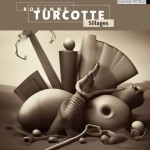
Roxanne Turcotte's idea of "cinemasonics" provides a useful key to the album. She describes an approach in which sound takes on the expressive role usually assigned to images, through overlapping layers, spatial organisation and the contrapuntal interaction of different timbres. The analogy with cinema is not simply about creating atmosphere or supplying imaginary pictures. It is about allowing several strands of material, each with its own history and identity, to develop simultaneously. In "Sillages", these strands include electronic constructions, recordings of everyday environments, animal calls, instrumental performances, fragments of speech and sounds whose original purpose may be difficult to identify. The result is a collection of six compositions that often feels closer to an edited documentary with an unusually adventurous soundtrack than to a conventional electroacoustic album.
Turcotte has a long history in this territory. Originally trained as a pianist at the Conservatoire de musique de Montréal, she went on to study electroacoustic composition with Marcelle Deschênes and Francis Dhomont at the Université de Montréal, becoming the first woman to obtain a master's degree in the discipline there in 1988. Her professional activity has extended into television, cinema, radio, theatre, dance, circus arts and multimedia installations. She has also received numerous distinctions, including the SOCAN Jan V. Matejcek Award for New Classical Music in 2021. Her work has consistently crossed the boundary between composition and sound design, and "Sillages" demonstrates how naturally she can move between those practices without reducing either to a supporting role.
“Gradation” opens the album with material drawn from two unusual instruments invented by Jean-François Laporte of Totem contemporain: the siren organ and the Babel table. Rather than treating their sounds as conventional instrumental performances, Turcotte selects recordings from an extensive sound bank and incorporates them into a composition concerned with escalation, transformation and eventual collapse. The piece develops through successive increases in intensity, suggesting a life cycle in which energy accumulates before subsiding into something more mysterious. Its imagery moves between mythical creatures, ritual, euphoria and extinction, but the music does not need to illustrate each reference literally. Its interest lies in the shifting relationship between recognisable gestures and less easily classified acoustic material. There is a certain irony in beginning a record about historical traces with instruments that sound as though they have arrived from a future civilisation whose technical documentation has been misplaced.
“Haïku” offers a more concentrated change of perspective. Lasting just over four minutes, it uses recordings made in and around Tokyo in 2025, combining urban and natural environments with fragments drawn from Turcotte's sound archive. Bells, voices and familiar objects become part of a miniature portrait of a place, but the composition is not simply a travel souvenir. Its references to ecological and human traces give the piece a more reflective dimension, while its brevity prevents the material from becoming over-explained. The work also acknowledges Belgian composer Annette Vande Gorne, whose "Haïkus" provided inspiration for some passages. It is a delicate interlude, though not an entirely tranquil one: cities have a habit of reminding us that even the most carefully composed moment is surrounded by other people's noise.
The album's central piece, “Artéfacts”, is also its most ambitious. Everyday objects, insects, recordings made during travels to the Seychelles and New Zealand, and fragments of spoken material are brought together in a composition that considers the relationship between human memory and the much longer history of life on Earth. Turcotte's fascination with cicadas is particularly revealing. Their extraordinary evolutionary age, underground development and brief adult existence provide a natural parallel for the way memories survive, sometimes long after the circumstances that produced them have disappeared. The piece also incorporates voices by actor Laurent Poitrenaux, excerpts from theatrical works and fragments of radio interviews recorded across several decades. These passages function as structural interruptions, but they also introduce a distinctly human dimension into the surrounding acoustic activity. Historical voices do not merely provide documentary evidence; they become performers in a composition whose cast includes insects, objects, machines and people who may no longer be alive. It is an expansive idea, and one that gives the album its strongest sense of purpose.
“Réel / Irréel” changes the scale again. Developed through the Sampo system, an electronic device designed by Alexander Mihalic to simplify the connection and control of acoustic instruments in live electronic performance, the work transforms the clarinet into an augmented instrument. Its title points towards the unstable relationship between the physical performer and the electronically modified result. The piece began as an exploration with clarinettist Laurent Fléchier and was later adapted into an imaginary duet involving bass clarinet and prerecorded video. The distinction between the instrument's natural voice and its electronically altered counterpart becomes a productive source of ambiguity. There is something pleasingly paradoxical about using technology designed to make live performance less cumbersome to create a work concerned with the uncertainty of what we are actually hearing.
“L'heure dorée” is among the album's most emotionally direct compositions. Its central instrument is the Armenian duduk, played here by Michel Dubeau, accompanied by Julien Grégoire on the udu and by a multichannel electronic component. The duduk's expressive, breath-like tone provides a melodic focus for a work that considers the landscapes of the Middle East and Armenia, while also addressing the human consequences of war, poverty and political oppression. Turcotte's text makes explicit reference to the suffering of Palestinians, Lebanese and Armenians, as well as the conditions faced by women in Afghanistan and Iran. The music's restrained sense of hope is therefore not an attempt to soften these realities. Rather, it gives the melody a fragile dignity, allowing the instrumental voice to carry an emotional weight that would be difficult to achieve through a more literal treatment. The recurring sound of sand, represented through recordings from the Îles-de-la-Madeleine and the movement of the udu, adds another geographical dimension to the composition. Different places meet without being confused with one another.
The closing “Forêt boréale” brings the album back to the natural environment, but with an intimacy that distinguishes it from the earlier travel recordings. Turcotte combines birdsongs with performances by four wind players, including flutes, ocarina and percussion, integrating processed instrumental sounds into the electronic composition. The work is dedicated in part to Chantal Dumas, whose radio piece "Le son-refuge" had a lasting influence on the composer. Turcotte's own experience volunteering at a wildlife rehabilitation centre also informs the piece. Her account of caring for injured birds, orphaned chicks and animals that have become dependent on human environments gives the composition a personal significance beyond the usual celebration of nature's beauty. Some of the birds she encountered had even learned to imitate mobile-phone ringtones and domestic sounds. One can hardly blame them: humans have been exporting their irritating habits into the natural world for quite some time. Yet the composition is not a complaint. Its exchanges between instrumentalists and recorded birds create a thoughtful musical relationship between human intervention and the independent activity of other species.
The album's dedication to Serge Arcuri, Chantal Dumas and several of Turcotte's mentors, including Francis Dhomont, Marcelle Deschênes, José Evangelista and Serge Garant, gives these different subjects an additional emotional connection. It is not a collection of memorial pieces in the conventional sense, but the presence of those who shaped the composer's life and artistic development is felt throughout. The recordings of voices, animals, instruments and environments all become part of a wider consideration of what survives and what disappears. The title "Sillages" is particularly appropriate in this respect: a wake is visible only because something has passed through a medium, leaving behind a temporary alteration. The original presence may be gone, but its effects remain perceptible.
There is, admittedly, a great deal happening here. The rapid changes of scale and subject, from the synthetic experiments of “Gradation” to the intimate instrumental writing of “L'heure dorée”, can make the album feel more like a carefully assembled exhibition than a continuous musical statement. The conceptual explanations are also unusually detailed, occasionally threatening to turn the listening experience into an exercise in reading the programme notes before allowing the music to speak. Yet Turcotte's compositional intelligence generally keeps these different strands from becoming an assortment of unrelated curiosities. Her ability to integrate environmental recordings, electronic transformations and live instrumental material gives the album a recognisable identity without forcing every composition into the same mould.
Released by empreintes DIGITALes, a label whose catalogue has been closely associated with electroacoustic and acousmatic music since 1990, "Sillages" is a persuasive example of how the documentary and the imaginative can coexist within a single musical language. Turcotte does not simply collect sounds from different locations and arrange them for aesthetic effect. She considers their origins, their cultural associations and the lives that have intersected with them, then gives those materials new relationships through composition. The album is intellectually generous without becoming entirely academic, and its occasional moments of beauty emerge from the specificity of what it contains rather than from any attempt to manufacture easy consolation. It leaves the impression of a world crowded with evidence of life, much of it overlooked, some of it already disappearing. Listening carefully is perhaps the least we can do.