
Saturday, November 7, 2026
Browse by Genre
Industrial Music / Industrial Metal / Aggro Industrial / Electro Metal
Industrial Noise / Power Noise / Harsh Noise
Synth Pop / Electro Pop / Synth-Electronica
Techno / Trance / Goa / Drum'n'Bass / Jungle / Tribal / Trip-Hop
Ambient / Electronica / Ethereal / Dub / Soundscapes / Abstract
Experimental / Avantgarde / Weird & Wired / Glitch / Noise / Field Recording
Dark / Gothic / Wave / New Wave / Dark Wave / Industrial Gothic
New Music / Downtown / Avantgarde Jazz / New Classical / World
Search Reviews
Music Reviews
Ned Milligan: Real Fun


There is something quietly radical about paying attention. Not the performative kind, with its compulsory documentation and the nagging suspicion that an experience hasn't properly happened until it has been posted somewhere, but the more difficult business of actually being there. Watching, listening, playing, doing something apparently insignificant with somebody you love. Ned Milligan’s "Real Fun" is an album built around this modest proposition, and its title is both disarmingly straightforward and rather more complicated than it first appears.
The record takes its inspiration from life with Milligan’s son, attempting to preserve moments of shared happiness without turning them into a collection of sentimental souvenirs. Yet the emotional ground is not entirely uncomplicated. The early deaths of Milligan’s parents, one sudden and the other following a slower passage, have become an unavoidable part of his experience of fatherhood. Their absence informs his relationship with his son, creating an understated conversation between generations: what we inherit, what we miss, what we manage to pass on, and the things we discover only when there is nobody left to ask. "Real Fun" does not attempt to resolve these questions. It allows them to coexist with the ordinary pleasure of being together, which is perhaps a more honest response than any grand musical statement could offer.
Milligan’s compositional vocabulary is ideally suited to this purpose. Working with autoharp, chimes, piano, field recordings, sampling and processing, he constructs pieces that feel assembled from the physical world rather than imposed upon it. Sounds are allowed to retain something of their original character, even as they become part of a carefully shaped musical environment. There is a gentle tension between documentary impulse and abstraction: the recordings are not simply presented as evidence of particular events, nor are they reduced to anonymous atmospheric decoration. They become musical participants, carrying the texture of a moment into a different kind of time.
The opening track, “The Opener”, establishes this approach with a measured, unhurried presence. Rather than announcing a grand theme, it eases the listener into Milligan’s particular way of arranging sound, where small details are given room to acquire significance. The album's pacing is deliberately flexible, moving between more developed instrumental passages and brief, almost incidental episodes. “Four Patch Snapdragons”, featuring Lake Mary, introduces Chaz Prymek’s lap steel and dobro, whose warmly resonant tones add a distinctly human touch to the composition. The strings do not dominate the arrangement; they seem to settle into it, as though they had always belonged there. The result is an intimate exchange between acoustic instruments and environmental sound, with neither side needing to prove its importance.
“Rolling A Drum Down A Hill” lasts barely a minute, but its brevity is part of the point. The title suggests an activity whose appeal is probably more obvious to the person doing it than to anyone obliged to explain it afterwards. There is a playful physicality to the piece, and the involvement of Milligan’s son Rory in the recording makes the relationship between music-making and shared activity particularly tangible. “Rainbow Rubberneckers” continues in a similarly attentive spirit, finding musical potential in the kind of everyday incident that might otherwise disappear before anyone has thought to give it a name. Milligan's gift is not to make every small occurrence sound monumental, but to recognise that it does not need to be monumental in the first place.
Halfway through, “oh nice, a postcard from andrew” provides a welcome change of authorship. The brief piece is entirely the work of andrew cs, whom Milligan invited to contribute as an admired fellow artist. Its postcard-like function is more than a convenient description: it feels like a small object sent from another sensibility, temporarily interrupting the album's personal narrative without breaking its intimacy. That Milligan chose to make room for another artist in a record so closely connected to his own family life is significant. Personal music need not be solitary music, and the contributions of friends can become part of the emotional architecture rather than merely decorative additions.
“Isn't That Something?” stretches out more patiently, with the assistance of Rory's recording work and a greater sense of space. The question in its title sounds spontaneous, almost conversational, and it captures something essential about the album's outlook: the capacity to be surprised by what is already in front of us. “Standing Center, Beaming”, featuring Zander Raymond's field recording and processing, further expands the palette, introducing another perspective into Milligan's acoustic and environmental arrangements. These collaborations never feel like guest appearances added to satisfy the credits. They are closer to small acts of participation, each bringing a different set of ears to an album whose subject is, ultimately, the experience of being together.
The emotional centre arrives with “A Moment With My Dad (An Abstraction To My Son)”. Its recording dates from January or February 2000, in New York, more than two decades before the sessions that produced most of the album. This temporal displacement gives the piece a particular weight. A voice from Milligan's past enters a work shaped by his present relationship with his son, creating an unusually direct connection between three generations. The title is carefully chosen: the recording is not presented as a complete portrait or a definitive statement about the past, but as something transformed by the act of passing it on. The father who is no longer here becomes, through sound, part of a conversation with a child who never had the chance to know him in the same way. It is a profoundly affecting idea, handled without theatrical emphasis.
After this moment, “We Need Groceries”, featuring M. Sage, returns to the domestic world with a title that could hardly be less ceremonious. There is a particular beauty in that choice. The practical business of buying food is not usually considered a suitable subject for an ambient composition, unless the supermarket has recently introduced a particularly adventurous synthesiser department. Yet the mundane is precisely where much of "Real Fun" finds its emotional substance. Life is not made exclusively of revelations; it is also made of errands, diversions, interruptions and the little rituals that become meaningful through repetition. Sage's guitar adds another gentle layer to the arrangement, while Milligan's treatment of recorded sound keeps the piece connected to the album's broader sense of lived experience.
The closing “I Love You, Bud” brings the record to an appropriately affectionate conclusion, with Rory contributing a guitar coda. It is difficult to imagine a more direct title, but the music avoids turning the sentiment into a grand finale. Instead, the closing gesture feels personal and unforced, as though the album were ending not with a declaration intended for an audience, but with something said to one particular person. That distinction is crucial. The record's emotional power comes from its specificity, not from any attempt to make its experiences universally applicable.
Milligan's wider work provides useful context for understanding this approach. A schoolteacher and musician, he has developed a distinctive practice around acoustically resonant instruments, environmental recordings and the transformation of sounds gathered from particular places. His 2023 album "Considerable", released by LAAPS, explored the relationship between outdoor recording, location and musical composition, treating the surrounding environment as an active element rather than a passive backdrop. The same interest in the dialogue between recorded reality and constructed sound remains central here, but the focus has shifted from geographical experience towards familial memory and shared time. Milligan is also the founder and curator of Florabelle, established in 2014, a label whose catalogue has become a valuable home for exploratory work by artists including M. Sage, Lia Kohl, Jason Calhoun and Josh Mason. His position as both musician and label curator gives "Real Fun" an additional dimension: it is a personal statement released through a platform built around the work of a wider creative community.
The album's ten pieces, recorded mostly in York, Maine, during 2024 and 2025, amount to around forty minutes of music. Taylor Deupree's mixing and mastering preserve the delicate balance between the acoustic material, processed elements and environmental detail without polishing away their physical character. The result is intimate without being claustrophobic, and reflective without becoming heavy-handed. Milligan's restraint is particularly effective because the subject matter could easily have encouraged a more overtly emotional treatment. Instead, he trusts the sounds themselves, and the relationships they suggest, to carry the weight.
There is, admittedly, a risk in making an album so closely tied to personal experience: the listener might feel like an uninvited guest at somebody else's family gathering. But "Real Fun" avoids that trap by refusing to explain every detail or insist on a particular emotional response. Its recordings are invitations rather than instructions. We do not need to know every story behind them to recognise the affection, curiosity and occasional melancholy that have shaped their arrangement.
What makes the album moving is not simply that it remembers a father or celebrates a son. It understands that these experiences are inseparable: the past is present in the way we care for those who come after us, while the future is already taking shape in the seemingly inconsequential activities of today. Milligan's music gives those activities room to breathe, without pretending that they can be preserved intact. Nothing here can stop time, and perhaps that is why the effort to pay attention feels so valuable.
"Real Fun" is a quietly generous record, one that finds considerable emotional depth in modest gestures and everyday sounds. Its joy is not an escape from grief, but something that exists alongside it, without apology. The title may sound like a casual observation, but the album makes a convincing case for treating it as a serious achievement. Sometimes the most meaningful thing an artist can do is resist the temptation to make life sound more extraordinary than it already is.
Felix Kubin & Asmus Tietchens: Senderkennungen
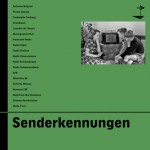
Artist: Felix Kubin & Asmus Tietchens (@)
Title: Senderkennungen
Format: LP
Label: aufabwegen (http://www.aufabwegen.com/)
Rated:

Title: Senderkennungen
Format: LP
Label: aufabwegen (http://www.aufabwegen.com/)
Rated:
There is a peculiar irony in composing a musical identity for a radio station. The whole point of the exercise is to make something instantly recognisable, a few seconds of sound that will lodge itself in the listener's memory and announce the arrival of a particular broadcaster. Ideally, it should be distinctive without becoming annoying, memorable without demanding too much attention. A rather difficult brief, then, for anyone with experimental tendencies. Felix Kubin and Asmus Tietchens have taken this modest exercise in acoustic branding and turned it into an elaborate investigation of musical identity, memory and deformation. "Senderkennungen", their first official collaborative album, begins with a series of miniature radio signatures composed by Kubin and proceeds to dismantle, stretch, distort and reassemble them with Tietchens. The result is a double album that treats the humble station jingle as a surprisingly fertile object of sonic archaeology. Somewhere, a marketing department is probably wondering what went wrong.
The two musicians hardly need an introduction to anyone familiar with the more eccentric corners of German electronic and experimental music. Born in Hamburg in 1947, Asmus Tietchens has been developing his singular approach to sound since the 1970s. His first solo album, "Nachtstücke", appeared in 1980, followed by a period of more rhythmically and harmonically oriented electronic music before "Formen letzter Hausmusik" (1984) established a much more radical direction. Since then, he has released an extraordinary number of recordings, exploring everything from everyday noises and acoustic debris to sine waves, industrial textures and carefully constructed electroacoustic abstractions. His work is often marked by a sceptical, occasionally bleak sensibility, with references to the Romanian philosopher Emil Cioran appearing throughout his discography. Tietchens has also received the prestigious Karl Sczuka Prize twice, for "Heidelberger Studien 1–6" and "Trois Dryades". He is an artist who has spent decades questioning what sound can be once it has been separated from the familiar functions we assign to it.
Felix Kubin, born in Hamburg in 1969, approaches the experimental tradition from a rather different direction. His musical activities began remarkably early, with homemade recordings on a four-track machine at the age of twelve. Since then, he has developed an unruly practice encompassing electronic pop, experimental radio plays, electroacoustic composition, orchestral writing, performance and interdisciplinary projects. His Gagarin Records label has provided an outlet for his own work and that of numerous fellow travellers, while his involvement in Hamburg's Papiripar festival reflects a longstanding interest in the exchange between music, performance and other artistic disciplines. Kubin's work thrives on the collision between seemingly incompatible contexts: avant-garde composition and pop culture, absurdist humour and serious sonic investigation, the concert hall and the club. His ability to shift expectations without losing his sense of play makes him an especially appropriate partner for Tietchens. Their friendship dates back to the early 1990s, but "Senderkennungen" is their first recorded collaboration presented as a joint album. A long courtship, certainly, although neither party appears particularly interested in conventional romantic gestures.
The concept is deceptively simple. Kubin originally composed a series of short "Senderkennungen", or station identifiers, commissioned by radio broadcasters seeking new acoustic signatures or a refresh of their existing sonic branding. Each miniature lasts approximately five seconds, functioning as the audible equivalent of a station logo. Some are tonal and melodic, others approach atonality or noise. These tiny compositions were subsequently selected as the source material for a second stage of work, in which Kubin and Tietchens transformed them into longer pieces. Their self-imposed rule was to preserve the recognisability of the original material while allowing virtually any form of manipulation: stretching, shortening, expansion, modification and rearrangement. Each resulting composition had to remain under three minutes. Such restrictions might sound like a bureaucratic nuisance, but here they provide the necessary friction. The musicians are free to interfere with the material, provided they do not completely erase its identity.
The first side of the album presents the original nineteen identifiers in rapid succession. "Antenne Belgrad", "Freies Danzig", "Funkstelle Freiburg", "Krimikanal", "Lumière de l'heure", "Monogramm 95,0" and the remaining titles form a peculiar miniature atlas of imaginary and real broadcasting territories. Their brevity gives them an almost ceremonial quality: each appears, establishes its character and disappears before the listener has time to become too comfortable. Some sound like fragments of electronic fanfares, others like miniature signals from an alternate history of broadcasting. There are tonal gestures, odd melodic turns, dissonant accents and little eruptions of synthetic activity. The pieces are too short to develop conventional structures, but their compressed forms make every detail significant. A single interval, timbral shift or unexpected noise can become the entire personality of a composition.
Heard consecutively, these originals also reveal how much identity can be communicated through remarkably little information. The difference between one station and another may be no more than a change in pitch, a different rhythmic accent or a slightly peculiar electronic timbre. Yet these tiny gestures are enough to establish a recognisable character. The effect is amusing, but also subtly unsettling. Modern life is saturated with acoustic logos, notification sounds, corporate jingles and other attempts to occupy the smallest available corners of our attention. Kubin's miniatures expose the artificiality of this process without becoming simple parodies of it. They are genuinely inventive little compositions, even when their intended function is essentially commercial. Their subsequent transformation makes the question of ownership and identity considerably less straightforward.
The second half of "Senderkennungen" is where the real conversation begins. The original material is no longer presented as a sequence of finished signals, but as something malleable, open to interference and reinterpretation. "Antenne Belgrad", for instance, expands into a longer construction in which the initial musical identity becomes the starting point for a more elaborate electronic environment. "Freies Danzig" and "Funkstelle Freiburg" undergo similar changes, their original gestures retained but placed in unfamiliar surroundings. The relationship between source and transformation is never entirely predictable. Sometimes the original character remains relatively clear; elsewhere, it appears only as a faint trace beneath layers of processing.
Tietchens' particular sensitivity to the physical properties of sound is crucial here. His interventions often seem less concerned with developing Kubin's material in a conventional compositional sense than with examining what happens when its internal structure is disturbed. A melodic fragment can become a mechanical pattern, a short tonal gesture can acquire an almost industrial weight, and a recognisable sequence may be reduced to a strange residue of its former self. Kubin's more playful and occasionally pop-oriented instincts provide a counterbalance, preventing the album from becoming an overly solemn exercise in sonic dissection. Their different sensibilities do not cancel each other out; they generate productive uncertainty.
The transformations of "Radio Dipol", "Radio Dreiton" and "Radio Osservazione" are particularly interesting in this respect. The latter is divided into two parts, suggesting that even the original identifiers do not necessarily possess a stable or singular destiny. Across the album, the musicians move between tonal fragments, noisy interventions, synthetic abstractions and more rhythmically defined passages. The pieces remain concise, but their brevity does not prevent them from becoming surprisingly complex. Indeed, the three-minute limit seems to encourage a certain compositional efficiency. Ideas are introduced, subjected to interference and withdrawn before they can become comfortable. The music rarely indulges in the sort of prolonged development that might turn the exercise into a demonstration of processing techniques. There is a welcome sense that both artists understand when to stop, an increasingly rare virtue in a world where every software plugin seems to encourage another fifteen minutes of exploration.
The later pieces, including "SFB", "Silverline 89", "Soft Per Minute", "Sonovox FM" and "Spektrum des Glaubens", continue to investigate the distance between a recognisable musical identity and its distorted reflection. Their titles retain the bureaucratic precision of the original commissions, while the sounds themselves become increasingly difficult to associate with any practical broadcasting purpose. The effect is not unlike listening to the internal machinery of a radio station after its presenters have gone home and the building has begun to dream. There is something faintly comic about the discrepancy between these administrative-sounding names and the strange acoustic worlds they introduce. A station called "Spektrum des Glaubens" might reasonably be expected to offer spiritual programming; here, it sounds more like an invitation to question whether the universe has correctly tuned its receiver.
The album's underlying subject is broader than radio, however. A station identifier is designed to establish continuity and recognition, but it also represents an act of exclusion: this is one station, not another; this is the signal you are meant to receive. By transforming these short compositions, Kubin and Tietchens expose the instability beneath that process. The original material remains present, but its meaning changes according to context, duration and treatment. A musical logo becomes a miniature composition, then a source for another composition, then something that may only vaguely resemble its starting point. Identity emerges as a process rather than a fixed property. This is a particularly appropriate subject for two artists whose careers have repeatedly involved dismantling the boundaries between noise and music, popular culture and experimental practice, composition and sonic research.
The double album is also an unusually satisfying example of a concept that genuinely generates musical material rather than merely providing a decorative explanation for it. The original identifiers are not simply included as an archival curiosity, nor are the longer versions conventional remixes intended to make the source material more palatable. The two approaches depend on each other. Hearing the miniatures first allows the listener to recognise the gestures that return later, while the transformed pieces retrospectively alter the perception of the originals. What initially sounds like a self-contained jingle may subsequently reveal itself as a fragment of a much stranger construction. The album therefore benefits from being heard in sequence, even if individual transformations can easily be revisited on their own.
There is, inevitably, a certain intellectual neatness to the project. Its rules are clear, its conceptual framework carefully articulated, and its two principal stages easy to understand. Yet the music avoids becoming an illustration of its own theoretical premise. The most compelling moments are those in which the relationship between source and result becomes uncertain, when the listener recognises something without being able to identify precisely what has survived. The work's humour also prevents its conceptual rigour from becoming oppressive. Kubin and Tietchens seem perfectly aware that the history of experimental music contains enough solemn declarations about the nature of sound to fill several radio frequencies. Their response is to make a game out of the machinery of recognition, without ever treating the results as disposable.
"Senderkennungen" is ultimately a meeting between two distinct musical temperaments, united by a long friendship and a shared suspicion of established categories. Tietchens brings his decades-long engagement with sound as physical material, while Kubin contributes a restless imagination shaped by electronic pop, radio culture and absurdist experimentation. Their first joint album does not attempt to reconcile their approaches into a single aesthetic. Instead, it creates a framework in which each can interfere with the other's ideas, allowing the original compositions to survive in altered forms. The limited edition of 300 copies seems almost perversely appropriate: an album about radio signals, transmission and acoustic identity destined to circulate among a relatively small number of physical listeners.
Perhaps the most satisfying aspect of "Senderkennungen" is that it turns a functional form of music into something genuinely unfamiliar without stripping away its original charm. The station identifiers retain their miniature melodic personalities, while the expanded versions reveal how much potential can be hidden inside a few seconds of sound. In an era when every platform, device and service insists on having its own sonic signature, Kubin and Tietchens offer a more interesting possibility: that identity might be something worth taking apart, if only to discover what else it can become. The radio may have lost some of its old magic, but its ghosts are clearly still broadcasting. And, judging by these transmissions, they have developed rather questionable taste in programming.
Steve Bates: An Infinite Antenna
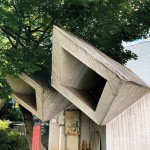
Artist: Steve Bates (@)
Title: An Infinite Antenna
Format: LP
Label: Constellation Records (@)
Rated:
Title: An Infinite Antenna
Format: LP
Label: Constellation Records (@)
Rated:
An antenna is supposed to receive something: a voice, a message, a fragment of information travelling through the air in search of a destination. Steve Bates seems less interested in what might be waiting at the other end than in the peculiar things that happen during reception. His second solo album for Constellation, "An Infinite Antenna", is a collection of twelve transmissions in which melodies emerge from interference, rhythms lose their footing, and fragments of the outside world are absorbed into an electronic language that refuses to stay in one place. The result is simultaneously more approachable and more elusive than his previous album for the label, "All The Things That Happen" (2022). There is more room for melody, more variation in instrumentation and a noticeably stronger sense of movement, but clarity remains a relative concept. The signal is improving; the message, naturally, is still a little suspicious.
Bates has an unusually productive relationship with the spaces between different artistic territories. A Montréal-based sound artist, musician, curator and researcher, he emerged from the anarcho-punk and post-hardcore communities of the Canadian Prairies, playing in bands including XOXO and Bulletproof Nothing. In 1998, he founded Winnipeg's Send + Receive festival, an important platform for experimental music and sound art that he directed for seven years. After moving to Montréal in 2005, he became Sound Coordinator at Concordia University's Hexagram, while developing a practice encompassing radio art, installations, field recordings, tape composition and collaborative work. He also runs The Dim Coast with artist jake moore, a publishing and curatorial platform for experimental music and sound art. His interests extend well beyond the usual concerns of electronic composition, encompassing communication systems, feedback, political and social structures, the experience of particular places and the sometimes unreliable workings of auditory perception. In other words, Bates has spent a long time thinking about what happens when information travels, breaks down or gets mistaken for something else. This album sounds like a rather convincing practical demonstration.
The contrast with "All The Things That Happen" is instructive. That 2022 release was built largely around the self-imposed limitations of a Casio SK-1 and computer, producing a concentrated body of abrasive, unstable ambient music. Here, Bates opens the doors to a wider collection of instruments and techniques: leftfield synthesizers, electric guitar, deconstructed drum machines, field recordings, no-input mixing and layers of radiostatic distortion. The expanded palette does not mean that he has abandoned the discipline of reduction. Quite the opposite: the twelve pieces are relatively concise, often lasting between two and four minutes, and the artist has spoken of wanting to retain something of punk's sense of duration rather than allowing every idea to develop into an extended ambient excursion. The influence of his musical beginnings is therefore audible not only in the distorted bass and broken rhythms, but also in the economy of the arrangements. There is a certain pleasure in hearing an artist who loves expansive drone music nevertheless resist the temptation to turn every passing thought into a twenty-minute event.
The material was gathered between 2023 and 2025, including recordings made during residencies and site-specific projects in Bosnia and Herzegovina, Austria, Greece and Saskatchewan. The cover photograph comes from Sarajevo, but the album is not a conventional collection of musical postcards. Instead, these recordings become components in a larger process of association, their original contexts gradually obscured by processing, layering and juxtaposition. Bates has described the underlying idea as something akin to slowly scanning a radio dial: not searching for one particular station, but allowing the ear to encounter unexpected fragments along the way. This gives the album an unusual coherence. Its pieces are distinct enough to function individually, yet their recurring timbres and shifting undercurrents create the impression of one continuous environment being examined from different angles.
The opening "Pink pink pink pink…pink pink" establishes this peculiar geography with glistening, slightly dissonant synthesizer tones. Its short duration gives it the quality of an unfinished thought, a delicate electronic construction that seems to dissolve almost as soon as it becomes recognisable. "Green as a ghost" darkens the atmosphere, introducing a deeper rumble, static interference and broken rhythmic gestures before piano chords briefly emerge towards the end. The transition is characteristic of Bates' approach: rather than developing a conventional theme, he allows one sound to alter the conditions under which the next can be heard. The pieces behave less like separate compositions than successive changes in atmospheric pressure.
"Battles and sieges and street trees" is particularly effective in its combination of low-end resonance and delicate melodic detail. Treated guitar and synthesizer fragments appear like small reflections caught in a murky surface, while the underlying field-recording textures suggest a much larger environment. There is a subtle tension between the title's suggestion of conflict and the almost contemplative quality of the music. The juxtaposition is not entirely comfortable, which is probably the point. Bates has a knack for making seemingly unrelated elements occupy the same acoustic space without forcing them into an obvious narrative.
The post-hardcore inheritance becomes more apparent in "Waste, songs of the world" and "Easier sad than done". Distorted bass, abrasive drum samples and fractured rhythmic patterns introduce a physicality that prevents the album from drifting into purely decorative ambient territory. Yet these are not straightforward exercises in electronic nostalgia. The rhythms are too unstable, the textures too contaminated, and the melodic fragments too elusive to provide the familiar satisfaction of a conventional rock arrangement. Bates seems to have retained the impulse to make noise, while becoming increasingly interested in what can happen after the noise has been taken apart. One could imagine the younger punk version of the artist approving of the distortion, although perhaps wondering why the drums have become so difficult to count.
"Mountain scene" and "Swiss apartment layouts" continue to shift the perspective, the former suggesting a more open, atmospheric space, the latter offering another of the album's curious titles. Bates has a talent for names that sound like fragments extracted from a notebook, an archive or a conversation overheard in passing. They are evocative without being explanatory, and often introduce a strange contrast with the music itself. "Decades of river widths" is another case in point: its title suggests an attempt to measure something that is constantly changing, while the sound seems to resist any stable point of reference. The music's recurring patterns provide a sense of continuity, but the details are in perpetual motion.
At just 1:45, "Disaster loans" is one of the album's shortest pieces and among its more overtly abrasive moments. Its distorted electronic bass and restless percussion have something of a miniature punk eruption about them, although the eruption has apparently taken place inside a malfunctioning radio. "Corporate activity, ancient shipwrecks" stretches the atmosphere again, combining suggestive low-frequency material with a more spacious, almost cinematic sense of suspension. The titles throughout the album invite associations with history, economics, geography and the detritus of human activity. They could easily belong to an eccentric researcher's filing system, although the music is considerably more interesting than any filing system has a right to be.
Then comes "Lettre d’amour à Fly Pan Am", a title that acknowledges the Montréal experimental rock group whose work has long occupied an interesting position between post-rock, noise and fractured song structures. Its presence feels appropriate within an album that repeatedly negotiates the relationship between abstract sound and the memory of more immediate musical forms. The piece does not simply imitate a recognisable style; rather, it belongs to the same general territory of restless construction, where melody and distortion are allowed to coexist without either becoming the unquestioned authority.
The closing "Swamps and factories" is the album's longest piece, and perhaps its most recognisable connection to the darker, more sustained sound of "All The Things That Happen". A dissonant, shimmering drone gradually establishes itself, its surface animated by subtle changes in texture and density. It feels like a return to familiar ground, but not quite a return to the same place. The preceding eleven pieces have widened the album's vocabulary, making this final stretch seem less like a destination than another possible frequency among many. There is no grand resolution, only the gradual persistence of sound after the more obvious signals have faded.
What makes "An Infinite Antenna" particularly engaging is the way Bates manages to reconcile two apparently contradictory impulses. On one hand, he is interested in the microscopic behaviour of sound: the grain of a recording, a tiny melodic fragment, the irregular pulse of a broken rhythm, the residue left behind by a process of transformation. On the other, his compositions evoke environments much larger than their individual components. A few seconds of distorted guitar can suggest an entire landscape; a low-frequency rumble can become a memory of industrial activity; a brief electronic figure can feel like a message arriving from a place that no longer exists. His sound art background is evident in this sensitivity to context and perception, but the album never feels like an academic exercise disguised as music. There is too much humour in its titles, too much physical energy in its rougher passages, and too much affection for the accidental pleasures of listening.
The record's diversity is also its strength. Some listeners may find the constant shifts in atmosphere less immersive than the more focused approach of its predecessor, while others will appreciate the additional melodic detail and the compactness of the arrangements. The transitions occasionally leave individual pieces feeling like glimpses rather than fully developed statements, but this is largely consistent with the album's underlying concept. Bates is not trying to build twelve self-contained worlds. He is collecting fragments from a much wider territory and allowing their connections to emerge through repetition, contrast and proximity.
Ultimately, "An Infinite Antenna" is a record about listening as an active, uncertain process. Its sounds are never entirely detached from the world, but neither are they straightforward representations of it. They arrive filtered through memory, technology, geography and personal history, carrying traces of places and experiences without revealing everything about their origins. Bates' punk background supplies the necessary impatience, his sound-art practice the curiosity, and his compositional instincts the ability to make these disparate impulses hold together. The album's title may promise an endless capacity for reception, but its real achievement lies in the selective intelligence of its transmissions. There is plenty of noise in the air already; the trick, as Bates demonstrates, is to discover which fragments deserve our attention.
Mats Erlandsson & Gus Loxbo: Minnets Långa Kedjor

Artist: Mats Erlandsson & Gus Loxbo (@)
Title: Minnets Långa Kedjor
Format: CD + Download
Label: XKatedral (@)
Rated:
Title: Minnets Långa Kedjor
Format: CD + Download
Label: XKatedral (@)
Rated:
There is something quietly unsettling about returning to a place that has not changed nearly as much as the person remembering it. The landscape may still be there, the hills and industrial scars apparently holding their ground, but the past has meanwhile been busy rearranging the furniture inside one's head. "Minnets Långa Kedjor" (roughly, "The Long Chains of Memory") takes this discrepancy as its point of departure, turning a shared geographical and personal history into an hour-long exercise in electroacoustic recollection. For Mats Erlandsson and Gus Loxbo, this is not merely a first recorded collaboration, but the public emergence of a musical relationship that has been developing for more than 25 years. Some friendships produce photographs, others produce music that sounds as though it has been unearthed from beneath an abandoned mine.
Both musicians have deep roots in Sweden's experimental and improvised music scenes. Erlandsson is a composer and sound artist associated with Stockholm's drone community, working with sustained tones, synthesis, field recordings and extensive tape processing. His catalogue includes "Gyttjans Topografi" (2023), while his wider practice moves between solo work and collaborations, often exploring the unstable border between acoustic material and its electronic mutation. Loxbo, meanwhile, is an experienced double bassist whose work includes the groups Pombo and Silence Blossoms. His solo album "Trådknaster" (2021), recorded by Erlandsson, offered a concentrated study of the instrument's less conventional possibilities, exposing the grain, friction and physical peculiarities of the double bass without relying on overdubs. Their familiarity is therefore not simply biographical: each has spent years helping the other reconsider what music can be, and what it might become when conventional instrumental roles are left at the door.
The album draws on their shared upbringing in Bergslagen, a historical mining region in central Sweden. This background is not used as a picturesque postcard or an invitation to indulge in nostalgic folklore. Rather, it supplies a loose network of associations: geographical memories, imagined histories, fragments of atmosphere and the peculiar emotional residue of places inhabited long ago. The original musical impulses were captured in a two-day session at Stockholm's Elektronmusikstudion, with Erlandsson on guitars and electronics and Loxbo on double bass. What emerged was then subjected to a substantial process of editing, arrangement, amplification and transformation, involving digital processing and analogue tape. The result is neither a straightforward document of improvisation nor a conventional studio composition. It occupies an intriguing middle ground, where spontaneous gestures are treated as raw matter and memory itself becomes a kind of editing tool.
That distinction matters. The music often feels as if it is being recalled rather than performed in the present tense. Sustained guitar tones and zither figures hover above the bass, which can sound like an enormous subterranean mechanism operating at a speed entirely indifferent to human urgency. Sometimes Loxbo's playing is recognisably instrumental; elsewhere, the double bass becomes a source of abrasive textures, granular scrapes and distorted low-frequency pressure. Erlandsson's processing does not simply decorate these sounds. It changes their apparent scale, distance and material identity, making it difficult to tell where an instrument ends and the surrounding acoustic environment begins. The listener is left with a landscape whose features keep shifting whenever one tries to identify them.
The opening "Dom gick upp på berget" establishes the album's measured approach, while "Trollkarlsklint" expands the vocabulary into something more imposing. Its extended duration allows the bass to move from scratchy, almost tactile gestures towards a much heavier presence, with the music gradually approaching the weight and slow-motion intensity of doom metal. The comparison is not merely a matter of volume or distortion. There is a similar fascination with duration, with the physical sensation of sound being held in place until it begins to exert pressure. Yet the piece does not settle into a recognisable metal structure. Its mass seems to emerge organically from the interaction, as though a geological formation had decided to make itself heard.
Elsewhere, the atmosphere becomes more elusive. "I Kopparkammaren" and "Flor" offer shorter episodes within the album's broader temporal architecture, while "HÄng blommor om halsen" moves towards a more subdued and suspended register. Erlandsson's sustained guitar tones and Loxbo's distant bass resonances create a strange intimacy, one that is less concerned with melodic development than with the gradual alteration of perspective. The music seems to withdraw from the listener, although its low frequencies remain stubbornly present. It is a useful reminder that quietness in drone music is not necessarily the absence of intensity. Sometimes the most unsettling thing in a room is the sound coming from the next one.
The title track brings the album's contrasting materials into particularly vivid contact. Delicate zither tones coexist with massive electric-guitar weight, a combination that might look absurd on paper but feels entirely natural within this musical environment. There is no attempt to reconcile fragility and heaviness; they are allowed to occupy the same space, like two incompatible memories that have somehow survived in the same mind. "Fallens dag" continues the slow, immersive approach, while "Hur långt har du kvar att gå?" introduces bells and additional accents from Daniel M Karlsson. Their delicate interventions add a further layer of detail before the bass returns with considerable force. The contrast is striking without becoming theatrical: the music has no need to wave its arms around to make its point.
Maria W Horn's narration adds another human dimension to the record. Rather than turning the pieces into conventional songs or supplying a literal narrative, her presence contributes to the sense of recollection and distance that runs throughout the album. The titles themselves suggest fragments of a larger, inaccessible story: climbing a hill, entering a copper chamber, hanging flowers around one's neck, asking how far one has left to walk. These are evocative images, but they resist being assembled into a neat sequence. The album is not a soundtrack to a journey with a clearly marked destination. It is closer to the experience of remembering a dream in which every location seems familiar, although none can be placed with certainty.
The final pair, "I askan" and "I symmetrisk skymning", brings the collection towards its conclusion without offering anything resembling a definitive resolution. The music retains its capacity to hover between recognisable instrumental gestures and transformed sound, between the intimate and the monumental. Even when the textures become more imposing, there is an underlying sense of restraint. Erlandsson's studio work is particularly effective in this respect: the transformations are extensive, but rarely feel like demonstrations of technical cleverness. They serve the material rather than demanding applause for themselves. This is a welcome attitude in experimental music, where the temptation to make every processing decision sound like a major philosophical discovery can occasionally become exhausting.
The production also highlights the unusual balance between the two musicians. Erlandsson's guitars, zither, percussion and analogue and digital synthesis provide a broad range of tonal environments, but Loxbo's double bass remains the album's physical anchor. Its low register can be ominous, its upper textures abrasive, and its occasional distortions almost unrecognisable. Yet the instrument never becomes a mere provider of cinematic menace. There is a sense of listening and response beneath the processing, a shared musical instinct that no amount of studio manipulation could manufacture from scratch. The additional contributions from Karlsson and Horn enrich the picture without disturbing the central relationship.
"Minnets Långa Kedjor" is a patient, carefully assembled work, and its 68-minute duration is part of its character rather than an endurance test imposed for experimental credibility. It asks for attention, certainly, but does not demand that every minute be treated as a revelation. Its strongest passages emerge through accumulation: a sustained note acquiring weight, a rough bass texture becoming almost environmental, a fragile detail suddenly illuminating an otherwise opaque stretch of sound. The combination of free improvisation, electroacoustic drone and doom-metal gravity is compelling precisely because none of these elements is allowed to dominate the others.
Ultimately, the album's most affecting quality lies in the way it treats memory as something active and imperfect. Erlandsson and Loxbo do not attempt to reconstruct their shared past in musical form, nor do they offer a nostalgic portrait of the place that shaped them. Instead, they take the impressions left behind and subject them to a process of distortion, magnification and reconsideration. The past becomes neither a safe refuge nor a reliable archive, but a substance that can still be handled, altered and heard from different angles. These long chains may bind the two musicians to a common origin, but they also provide enough slack for the music to wander somewhere unexpected. A fine achievement, and proof that sometimes the most productive way to revisit home is to make it sound like a place you have never quite been before.
Billy Gomberg: capacity

The word "capacity" can suggest a container, a limit, or the amount of something a person is able to hold. Billy Gomberg’s new album seems interested in all three meanings, though its nine pieces are less concerned with filling space than with discovering what space can contain. Sound is treated as a material with edges, weight and a certain capacity for surprise: tones emerge, flicker, break apart and settle into unexpected relationships. The music is abstract, but not remote; delicate, but not timid. It has the curious quality of a landscape seen through a window that has been cracked in just the right place.
Gomberg has spent more than two decades developing a practice that brings together synthesis, digital processing, acoustic recordings and improvisation. His work has appeared on labels including Students of Decay and Dinzu Artefacts, while his self-released recordings have documented a continuing exploration of modular synthesis and electroacoustic composition. He is also active in the collaborative project Fraufraulein with Anne Guthrie, whose work similarly considers how manipulated sound can retain a sense of physical origin. Gomberg’s musical activity has long been accompanied by photography, and his 2025 exhibition "Several Paths Together" at Indexical Gallery in Santa Cruz made that parallel practice especially visible.
"capacity" is his first proper album in four years, although the interval has hardly been a period of inactivity. Recent releases and performances have continued to explore long-form improvisation, recording and sound as a means of relating to places and experiences. Here, however, Gomberg chooses a more concise format. The nine tracks occupy just over thirty-four minutes, with most pieces lasting between three and five minutes. This is a meaningful shift for a musician whose work has often allowed sounds to develop at considerable length. Instead of asking the listener to settle into a single expansive environment, the album presents a sequence of small sonic situations, each with its own internal weather.
The opening "zero of" establishes the album’s delicate balance between movement and suspension. Its electronic textures possess a faintly unstable quality, as though the sound were being assembled from particles that have not quite agreed to remain in the same place. There is a gentle luminosity to the piece, but it is not the polished, frictionless glow sometimes associated with ambient electronics. Small irregularities keep appearing at the edges, interrupting the apparent calm. The result feels less like a pristine digital environment than a room illuminated by shifting light, where the furniture seems to change shape whenever one looks away.
"rose and nameless" moves through a more subdued register, its title suggesting a relationship between something recognisable and something that has resisted identification. The music seems to occupy that same uncertain space. Its tones are intimate, yet their origins remain difficult to pin down; the listener can sense the presence of a gesture without being able to say exactly what produced it. Gomberg’s approach to synthesis is particularly effective here because the technology never becomes the subject. The sounds do not announce their modular credentials, nor do they demand admiration for the machinery behind them. They simply behave in ways that feel emotionally and physically suggestive.
That distinction matters. Experimental electronic music can sometimes become fascinated with the devices that produce it, turning the studio into a kind of sonic showroom where every strange effect must be accompanied by a demonstration of the equipment responsible. Gomberg seems more interested in the expressive consequences of those sounds. The electronic details are present, but they are not presented as trophies. Instead, they function like marks on a surface: traces of activity that acquire meaning through their placement and relation to everything around them.
"sky in buckets version" offers one of the album’s more intriguing titles, evoking an image that is both absurd and oddly tangible. Its music seems to work through a similar tension between the expansive and the contained. The sounds have an open, airy quality, yet the composition remains compact, allowing fleeting gestures to appear and disappear without being stretched into extended demonstrations of atmosphere. There is a sense of motion, but not necessarily of travel. The piece seems to move by changing its perspective rather than its location.
"use thousand waves" introduces another variation on the album’s central concerns. Its title suggests multiplicity, but Gomberg avoids turning the music into a grand illustration of water or movement. Instead, the piece feels like an accumulation of small changes, each one altering the perception of what came before. This is one of the record’s most appealing qualities: it encourages close attention without making a spectacle of its own intricacy. The listener is not asked to solve a puzzle. There is no hidden message waiting to be uncovered by someone with a notebook, a magnifying glass and an alarming amount of free time. The pleasure lies in noticing how the sound changes while remaining recognisably itself.
"locals" brings the album’s interest in physical geography into sharper focus. Gomberg’s recordings draw on locations in San Francisco and Tokyo, while the work also acknowledges the Indigenous territories associated with the places where the material was gathered. The music does not function as a conventional field-recording document, however. Rather than offering a recognisable sound postcard, it absorbs environmental material into an abstract language. Place becomes less a subject to be represented than a set of conditions that shape the recording: distance, texture, movement, and the particular way sound occupies a space.
The shorter "dusk at the center" seems to turn inward. Its duration gives it the quality of a passing moment, a small pause within the album’s sequence. Gomberg’s music often works through the interplay of detail and stillness, and this piece is a particularly effective example of how little needs to happen for a sound to become compelling. The music does not need to swell or resolve in order to establish a sense of presence. It simply allows its materials to remain exposed long enough for their subtleties to become apparent.
"one from october" has the feeling of a fragment preserved from a particular time, though its title does not insist on a specific narrative. The piece seems to suggest memory without turning it into sentimentality. There is no attempt to recreate a past moment in full, only to retain something of its texture. This is where Gomberg’s photographic practice becomes especially relevant. His images and his music share an interest in what can be revealed by looking or listening closely, and in the possibility that a fragment may carry more emotional information than a complete account. The accompanying eight-page booklet of black-and-white photographs is therefore not merely an attractive extra for the vinyl edition. It extends the album’s visual and sonic inquiry into landscape, detail and the experience of noticing.
The title track, "overflows", appears near the end of the sequence, and its name offers a useful counterpoint to the album’s generally restrained scale. Capacity is not simply a matter of holding more; it can also involve reaching the point at which a container no longer contains what has been placed inside it. Gomberg’s music seems to understand that excess need not mean volume or density. Sometimes it is the accumulation of small gestures, each one adding a little more emotional or spatial information until the composition begins to feel larger than its duration. The closing "group buy tong" then brings the record to an end without making a grand announcement of completion. Its compact form leaves the listener with the impression of a thought that has been allowed to stop rather than forced to conclude.
Taylor Deupree’s mastering is an apt fit for this material. His work at 12k has long been associated with an attentive approach to detail and spatial definition, and "capacity" benefits from that sensitivity. The album’s textures retain their fine edges without becoming brittle, while the quieter elements are given enough presence to register as more than background decoration. The sound is intimate, but not artificially close; the music feels as though it occupies a space that the listener can approach without being invited to dominate.
There are echoes of artists such as Microstoria and Josh Mason in Gomberg’s use of glitch, fractured electronic gestures and unstable textures, but the album does not rely on those associations to establish its identity. Its strongest moments emerge from a more personal relationship between sound and place. The music seems to understand geography not as a collection of coordinates, but as an accumulation of experiences: the physical environment, the memory of being somewhere, the emotional associations attached to a particular moment. That gives "capacity" a quiet human quality, even when its sounds are abstract enough to resist conventional description.
The record is also refreshingly uninterested in making ambient music synonymous with relaxation. Its beauty is not always smooth, and its stillness is rarely absolute. Small disturbances remain present throughout, like the faint crackle of a thought that refuses to disappear. The music can be soothing, but it does not promise to make the listener more efficient, more serene or better prepared for the next round of administrative nonsense. It asks for attention rather than offering escape.
In the end, "capacity" is an album about the amount of meaning that can reside in a small gesture. Gomberg’s nine pieces do not attempt to overwhelm the listener with scale or duration. They work through suggestion, detail and the careful placement of sound, allowing the smallest shifts to acquire a surprising weight. It is a record that rewards patience without demanding solemnity, and one whose beauty comes not from an absence of disturbance but from the way disturbance becomes part of the whole. A modest container, perhaps, but one with a rather remarkable ability to hold the world.