
Tuesday, October 20, 2026
Browse by Genre
Industrial Music / Industrial Metal / Aggro Industrial / Electro Metal
Industrial Noise / Power Noise / Harsh Noise
Synth Pop / Electro Pop / Synth-Electronica
Techno / Trance / Goa / Drum'n'Bass / Jungle / Tribal / Trip-Hop
Ambient / Electronica / Ethereal / Dub / Soundscapes / Abstract
Experimental / Avantgarde / Weird & Wired / Glitch / Noise / Field Recording
Dark / Gothic / Wave / New Wave / Dark Wave / Industrial Gothic
New Music / Downtown / Avantgarde Jazz / New Classical / World
Search Reviews
Music Reviews
sachi's mirror: Talking in a Different Way
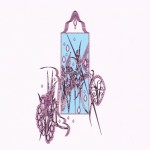
Artist: sachi's mirror
Title: Talking in a Different Way
Format: Tape + Download
Label: Constellation Tatsu (@)
Rated:


Title: Talking in a Different Way
Format: Tape + Download
Label: Constellation Tatsu (@)
Rated:
After nearly two decades of classical training and ensemble performance, Shaina Pan decided that the pursuit of becoming a symphony violinist was no longer worth the cost. There is something quietly radical about this decision, especially in a musical culture that tends to treat technical accomplishment as a lifetime contract: once you have learned the rules, you are apparently expected to spend the rest of your life demonstrating that you have learned them. Under the name sachi’s mirror, Pan has taken another route, combining her experience as a violinist with voice, electronics, field recordings and an increasing appetite for improvisation. "Talking in a Different Way", her debut full-length for Constellation Tatsu, is the result of that change in direction, a 35-minute collection of songs and vignettes that finds beauty in the imperfect, the uncertain and the things that emerge when nobody is obsessively checking whether everything is being done correctly.
The album began to take shape during a month-long residency in Vallejo, California, in spring 2025, and its ten pieces reflect a process in which composition and discovery are not mutually exclusive. Pan wrote, performed and recorded the material herself, with contributions from a small circle of musicians: Jas Stade on guitar, Rick Altieri on drums, Parker Richard on synthesizer, guitar and additional vocals, and David Alvarez on saxophone. Beau Sorenson mixed the album, with Sébastien Politi handling mastering. The result moves between experimental pop, ambient electronics, dream-pop and contemporary classical influences without treating any of these categories as a compulsory destination. Pan’s violin background remains audible in the attention given to string textures and tonal detail, but the music is no longer obliged to prove its credentials to an imaginary examination panel.
That freedom is particularly apparent in the relationship between Pan’s voice and the instrumental arrangements. Her singing occupies a curious position: intimate without becoming confessional in the conventional singer-songwriter sense, and often understated enough to blend into the surrounding textures rather than dominate them. The voice is not merely a delivery system for lyrics. It becomes another compositional element, capable of suggesting emotional proximity while leaving the actual feeling unresolved. This suits an album concerned with personal change and the question of how we relate to ourselves when the circumstances that once defined us begin to disappear. Pan approaches these subjects without the grand gestures that might turn uncertainty into a motivational poster. Change, after all, is rarely as tidy as the before-and-after photographs suggest.
“Promise” opens the album with a concise introduction to its peculiar balance of song and atmosphere. Rather than laying out a firm set of rules for what follows, it establishes a mood that feels both deliberate and slightly elusive. “Out Loud” brings the songwriting further into focus, giving the album a more immediate point of contact without abandoning its unusual textures. It is telling that the record can accommodate a recognisable pop sensibility while retaining the strangeness of its electronic and instrumental details. Pan does not seem interested in choosing between accessibility and experimentation, as though these were rival political parties whose supporters must never be seen sharing a table. She allows the two to coexist, and the music is more engaging for it.
“Nobody” and “Eyes” continue to explore the unstable boundary between song and sound study. Their titles evoke identity and perception, but the album avoids turning every track into a literal illustration of its name. Instead, the words acquire meaning through their relationship with the music, and the music remains sufficiently open to suggest more than one interpretation. Pan’s use of looping textures and sampled sounds contributes to this effect. Repetition can create familiarity, but it can also make a familiar thing seem strange by placing it in a new context. A small detail that might otherwise pass unnoticed becomes difficult to ignore once it returns, slightly altered, a few moments later. Memory behaves in much the same way, although it is generally less reliable about admitting when it has edited the evidence.
“Douse the Flame of Memory” makes that tension explicit. Its title suggests an attempt to extinguish the emotional force of recollection, but the very act of naming the flame gives it another moment of life. The music inhabits this contradiction rather than resolving it. There is a melancholy quality to Pan’s arrangements, yet it rarely becomes sentimental; the textures retain enough irregularity to resist the reassuring smoothness of nostalgia. This is not an album that mistakes the past for a more authentic version of the present. Instead, it considers how the past continues to shape the ways we hear and understand what is happening now, even when we would prefer to move on.
“Is That Really You?” extends the album’s interest in recognition and estrangement, with the addition of Alvarez’s saxophone contributing to the broader instrumental palette. The question could be directed towards another person, a remembered version of oneself, or the uneasy familiarity of a life that has changed without quite announcing the fact. Pan’s music is particularly effective when it allows these possibilities to remain open. She does not overburden the material with elaborate conceptual scaffolding; the emotional implications arise from the interplay between voice, timbre and the spaces surrounding them. The result feels personal without demanding that the listener treat every sound as a coded entry in the artist’s diary.
“Roulette” introduces a title associated with chance, risk and the uncomfortable realisation that not every outcome can be controlled. It is an apt idea for a musician moving away from a highly disciplined performance tradition towards a more intuitive practice. Improvisation here need not mean abandoning structure, just as structure need not mean eliminating surprise. Pan’s compositions retain a sense of arrangement and purpose, but their details seem to have been allowed room to develop beyond the strict requirements of technical polish. “Strange Pop” makes the album’s hybrid character especially clear: the language of pop remains available, but it is approached from an angle that prevents its conventions from becoming automatic. The strangeness is not an ornamental effect pasted onto an otherwise ordinary song. It is part of how the songs think.
The title track, “Talking in a Different Way”, gathers the album’s central concerns into a longer statement. Communication is not simply a matter of finding the correct words; it involves learning to listen differently, accepting that familiar forms of expression may no longer be adequate. This idea also describes Pan’s transition from classical performer to composer. Her earlier training has not become irrelevant, but its authority has changed. Technique is now one resource among several, rather than the ultimate judge of whether a musical gesture deserves to exist. There is a useful lesson here for anyone who has ever become so proficient at meeting expectations that the prospect of doing something else begins to feel like an administrative offence.
“Grasshopper” closes the record with a title that suggests small-scale movement and an alertness to the immediate environment. After the album’s more inward-looking moments, it offers a fitting conclusion without pretending that the preceding questions have been answered. Pan’s development is not presented as a triumphant escape from one musical identity into another. It is a continuing process of adjustment, involving the acceptance that a new direction may remain uncertain for some time. The brevity of the album helps: at around thirty-five minutes, its ideas are given space to register without being stretched into a grand statement about the human condition. Experimental musicians can sometimes make the mistake of assuming that a difficult idea automatically requires an enormous duration. Pan shows that a compact song can leave a substantial amount unresolved.
"Talking in a Different Way" also benefits from its place on Constellation Tatsu, a label whose catalogue has consistently made room for independent electronic music, ambient experiments and unusual approaches to pop. Pan’s record fits this environment while maintaining a distinct identity. Its appeal lies in the balance between delicacy and disruption, between the precision of a trained instrumentalist and the willingness to leave a sound imperfect. The music can be woozy, intimate and enigmatic, but it is not content to dissolve into pleasant background atmosphere. Its songs have shape, emotional direction and enough eccentric detail to reward repeated listening.
The most compelling aspect of the album is ultimately not its stylistic range but the attitude behind it. Pan has spent years learning how to make music within a demanding tradition, then begun to explore what happens when that knowledge is no longer used to police every decision. "Talking in a Different Way" does not celebrate amateurism or suggest that skill is an obstacle to creativity. It makes a subtler point: mastery becomes limiting when the desire to avoid mistakes is allowed to determine what can be attempted. Here, a rough edge can be expressive, a half-familiar sound can carry more emotional weight than a perfectly executed phrase, and a song can remain open without being unfinished. Pan’s debut full-length is a thoughtful, quietly adventurous work about the difficult business of becoming someone else without having to disown the person who came before. Its achievement is to make that process sound less like a dramatic reinvention than a series of small, necessary acts of attention.
The album began to take shape during a month-long residency in Vallejo, California, in spring 2025, and its ten pieces reflect a process in which composition and discovery are not mutually exclusive. Pan wrote, performed and recorded the material herself, with contributions from a small circle of musicians: Jas Stade on guitar, Rick Altieri on drums, Parker Richard on synthesizer, guitar and additional vocals, and David Alvarez on saxophone. Beau Sorenson mixed the album, with Sébastien Politi handling mastering. The result moves between experimental pop, ambient electronics, dream-pop and contemporary classical influences without treating any of these categories as a compulsory destination. Pan’s violin background remains audible in the attention given to string textures and tonal detail, but the music is no longer obliged to prove its credentials to an imaginary examination panel.
That freedom is particularly apparent in the relationship between Pan’s voice and the instrumental arrangements. Her singing occupies a curious position: intimate without becoming confessional in the conventional singer-songwriter sense, and often understated enough to blend into the surrounding textures rather than dominate them. The voice is not merely a delivery system for lyrics. It becomes another compositional element, capable of suggesting emotional proximity while leaving the actual feeling unresolved. This suits an album concerned with personal change and the question of how we relate to ourselves when the circumstances that once defined us begin to disappear. Pan approaches these subjects without the grand gestures that might turn uncertainty into a motivational poster. Change, after all, is rarely as tidy as the before-and-after photographs suggest.
“Promise” opens the album with a concise introduction to its peculiar balance of song and atmosphere. Rather than laying out a firm set of rules for what follows, it establishes a mood that feels both deliberate and slightly elusive. “Out Loud” brings the songwriting further into focus, giving the album a more immediate point of contact without abandoning its unusual textures. It is telling that the record can accommodate a recognisable pop sensibility while retaining the strangeness of its electronic and instrumental details. Pan does not seem interested in choosing between accessibility and experimentation, as though these were rival political parties whose supporters must never be seen sharing a table. She allows the two to coexist, and the music is more engaging for it.
“Nobody” and “Eyes” continue to explore the unstable boundary between song and sound study. Their titles evoke identity and perception, but the album avoids turning every track into a literal illustration of its name. Instead, the words acquire meaning through their relationship with the music, and the music remains sufficiently open to suggest more than one interpretation. Pan’s use of looping textures and sampled sounds contributes to this effect. Repetition can create familiarity, but it can also make a familiar thing seem strange by placing it in a new context. A small detail that might otherwise pass unnoticed becomes difficult to ignore once it returns, slightly altered, a few moments later. Memory behaves in much the same way, although it is generally less reliable about admitting when it has edited the evidence.
“Douse the Flame of Memory” makes that tension explicit. Its title suggests an attempt to extinguish the emotional force of recollection, but the very act of naming the flame gives it another moment of life. The music inhabits this contradiction rather than resolving it. There is a melancholy quality to Pan’s arrangements, yet it rarely becomes sentimental; the textures retain enough irregularity to resist the reassuring smoothness of nostalgia. This is not an album that mistakes the past for a more authentic version of the present. Instead, it considers how the past continues to shape the ways we hear and understand what is happening now, even when we would prefer to move on.
“Is That Really You?” extends the album’s interest in recognition and estrangement, with the addition of Alvarez’s saxophone contributing to the broader instrumental palette. The question could be directed towards another person, a remembered version of oneself, or the uneasy familiarity of a life that has changed without quite announcing the fact. Pan’s music is particularly effective when it allows these possibilities to remain open. She does not overburden the material with elaborate conceptual scaffolding; the emotional implications arise from the interplay between voice, timbre and the spaces surrounding them. The result feels personal without demanding that the listener treat every sound as a coded entry in the artist’s diary.
“Roulette” introduces a title associated with chance, risk and the uncomfortable realisation that not every outcome can be controlled. It is an apt idea for a musician moving away from a highly disciplined performance tradition towards a more intuitive practice. Improvisation here need not mean abandoning structure, just as structure need not mean eliminating surprise. Pan’s compositions retain a sense of arrangement and purpose, but their details seem to have been allowed room to develop beyond the strict requirements of technical polish. “Strange Pop” makes the album’s hybrid character especially clear: the language of pop remains available, but it is approached from an angle that prevents its conventions from becoming automatic. The strangeness is not an ornamental effect pasted onto an otherwise ordinary song. It is part of how the songs think.
The title track, “Talking in a Different Way”, gathers the album’s central concerns into a longer statement. Communication is not simply a matter of finding the correct words; it involves learning to listen differently, accepting that familiar forms of expression may no longer be adequate. This idea also describes Pan’s transition from classical performer to composer. Her earlier training has not become irrelevant, but its authority has changed. Technique is now one resource among several, rather than the ultimate judge of whether a musical gesture deserves to exist. There is a useful lesson here for anyone who has ever become so proficient at meeting expectations that the prospect of doing something else begins to feel like an administrative offence.
“Grasshopper” closes the record with a title that suggests small-scale movement and an alertness to the immediate environment. After the album’s more inward-looking moments, it offers a fitting conclusion without pretending that the preceding questions have been answered. Pan’s development is not presented as a triumphant escape from one musical identity into another. It is a continuing process of adjustment, involving the acceptance that a new direction may remain uncertain for some time. The brevity of the album helps: at around thirty-five minutes, its ideas are given space to register without being stretched into a grand statement about the human condition. Experimental musicians can sometimes make the mistake of assuming that a difficult idea automatically requires an enormous duration. Pan shows that a compact song can leave a substantial amount unresolved.
"Talking in a Different Way" also benefits from its place on Constellation Tatsu, a label whose catalogue has consistently made room for independent electronic music, ambient experiments and unusual approaches to pop. Pan’s record fits this environment while maintaining a distinct identity. Its appeal lies in the balance between delicacy and disruption, between the precision of a trained instrumentalist and the willingness to leave a sound imperfect. The music can be woozy, intimate and enigmatic, but it is not content to dissolve into pleasant background atmosphere. Its songs have shape, emotional direction and enough eccentric detail to reward repeated listening.
The most compelling aspect of the album is ultimately not its stylistic range but the attitude behind it. Pan has spent years learning how to make music within a demanding tradition, then begun to explore what happens when that knowledge is no longer used to police every decision. "Talking in a Different Way" does not celebrate amateurism or suggest that skill is an obstacle to creativity. It makes a subtler point: mastery becomes limiting when the desire to avoid mistakes is allowed to determine what can be attempted. Here, a rough edge can be expressive, a half-familiar sound can carry more emotional weight than a perfectly executed phrase, and a song can remain open without being unfinished. Pan’s debut full-length is a thoughtful, quietly adventurous work about the difficult business of becoming someone else without having to disown the person who came before. Its achievement is to make that process sound less like a dramatic reinvention than a series of small, necessary acts of attention.
Rapoon: Goodbye To Dreams Of Space

There comes a point in every expedition when the scenery begins to look suspiciously familiar, the provisions are running low, and the explorer wonders whether the destination was worth the trouble in the first place. Rapoon’s "Goodbye To Dreams Of Space" suggests a different response to this predicament: abandon the itinerary, let the engines idle, and see what the mind gets up to when nobody is asking it to arrive anywhere. Across ten compositions and a little over an hour, Robin Storey offers a contemplative variation on the ambient language he has cultivated for more than three decades. The result is not a farewell to the imagination’s more distant territories so much as a reconsideration of what we were hoping to find there.
Storey’s background helps explain the unusual balance between familiarity and estrangement that characterises the album. As a founding member of Zoviet France, he participated in an experimental practice that treated sound, texture and the physical presentation of recordings as inseparable parts of an artistic proposition. Since beginning Rapoon in 1992, he has developed a prolific solo catalogue that draws on ambient electronics, altered acoustic sources, looping rhythms and the resonances of musical traditions from different parts of the world. His work has moved through more rhythmic, industrial and overtly atmospheric territories over the years, but an interest in the suggestive potential of repetition has remained a constant. On "Goodbye To Dreams Of Space", that interest takes a gentler turn. The pulse persists, but it seems less intent on carrying us somewhere than on keeping the surrounding material awake.
The track titles establish an intriguing tension between cosmic fantasy and ordinary psychological experience. “A Sun Over Ice Rings” and “A Bar On Titan” suggest locations that might appeal to science-fiction illustrators, while “A Folded Hope”, “A Reminder Of Time” and “A Voice Decoded” turn towards more intimate abstractions. Yet the music does not attempt to illustrate a sequence of interstellar adventures. There are no dramatic take-offs, no orchestral announcements of alien civilisations, and no obvious musical equivalent of a spaceship passing through a wormhole at considerable expense. Instead, Storey works with pulsating ambient textures from which melodic fragments gradually emerge, hover and dissolve. The titles offer possible points of entry, but the sounds refuse to become their obedient servants.
“A Sun Over Ice Rings” opens the album with a measured sense of movement, establishing an atmosphere that feels spacious without becoming entirely weightless. The recurring pulse gives the music a bodily dimension, while the surrounding layers soften its edges and complicate its apparent direction. Storey has always understood that repetition need not mean immobility: a recurring figure can change its significance as the sounds around it shift, much as a familiar phrase acquires a different meaning when delivered by someone who has finally decided to tell the truth. Here, the process is quieter and less theatrical, but the principle remains. Small changes accumulate, and the listener gradually becomes aware of relationships that were not immediately apparent.
“A Message Lost” develops the album’s more elusive side. Its title might suggest a transmission that has failed to reach its recipient, but the piece is less concerned with absence than with the strange persistence of incomplete information. Melodic traces surface without fully establishing themselves, and the rhythmic undercurrent maintains a sense of continuity without providing a clear narrative. There is something peculiarly human about this: we are very good at extracting meaning from fragments, often before checking whether the fragments belong together. Storey gives that instinct room to operate, without supplying a definitive answer or turning ambiguity into an elaborate parlour game.
The more suggestive titles continue to shape the listener’s expectations. “A Bar On Titan” hints at the possibility of everyday life transplanted into an improbable setting, a place where someone might complain about the service while Saturn rises outside the window. The music, however, avoids such literal eccentricity. Its appeal lies in the tension between recognisable patterns and unfamiliar surroundings, with the rhythmic elements lending the material a quiet persistence. “A Folded Hope” and “A Reminder Of Time” shift the emphasis towards a more reflective mood, but Storey avoids the easy temptation to make introspection synonymous with solemnity. The atmosphere remains fluid, with enough rhythmic life to prevent the album from settling into the sort of immaculate stillness normally advertised by wellness retreats.
“A Voice Decoded” is particularly apt within this context. Rapoon’s sounds frequently suggest communication without supplying a message that can be translated into plain language. The electronic textures appear to carry traces of something once recognisable, but the act of processing has changed the terms of the encounter. This is not simply a question of obscurity for its own sake. Storey’s approach suggests that meaning can survive the loss of its original context, acquiring new associations in the process. A sound may no longer tell us what it once meant, yet it can still influence how we feel, what we imagine and what we notice next. Decoding, in this sense, does not necessarily restore the original message. Sometimes it creates another one.
The shorter “A Way Forward In Song” provides a modest change of pace, while “A Cold Depth” turns towards a more austere atmosphere. The contrast is subtle rather than dramatic, and that restraint is central to the record’s appeal. Storey does not arrange the pieces as episodes in a conventional story, with each track required to raise the stakes before the next can begin. Instead, they feel like different conditions within a continuous process of listening. “A March To Horizon” carries a stronger suggestion of forward motion, though the horizon remains characteristically difficult to reach. The final “A Last Dream Echoes” brings the sequence to a close without insisting on a grand conclusion. Its title might promise one last vision before waking, but the album is too perceptive to confuse an ending with an explanation.
There are, inevitably, moments when the sustained atmosphere risks becoming too comfortable with itself. Storey’s reliance on gradual development means that certain passages can seem to circle within a narrow emotional range, and listeners who prefer more sharply differentiated structures may find the hour-long format demanding. But the album’s relative lack of dramatic contrast is also part of its argument. Not every experience announces its significance through a sudden change of direction, and not every thought becomes clearer when subjected to a crescendo. The music rewards a form of attention that does not constantly demand novelty, even if it occasionally tests the listener’s willingness to remain patient.
Zoharum provides a fitting home for this release, given the Polish label’s sustained interest in experimental electronics, ambient music and the less easily classified regions between them. "Goodbye To Dreams Of Space" does not attempt to compete with the grandiose spectacle often associated with cosmic-themed music. Its sense of scale is inward and reflective, its rhythms more concerned with continuity than propulsion. Storey seems interested in what remains of an imagined destination once the excitement of getting there has faded, and in the possibility that the act of imagining was more valuable than the destination itself.
The album’s farewell is therefore less melancholy than its title initially suggests. Dreams of space are not necessarily discarded; they are allowed to lose their obligation to represent escape, progress or some improved version of existence. There is a quiet wisdom in that refusal to keep moving simply because movement has become the expected response. Rapoon has made a career of exploring the expressive possibilities of sound without requiring it to behave like conventional song, and here that freedom becomes a means of reflection rather than an invitation to drift indefinitely. "Goodbye To Dreams Of Space" may not provide a new universe to inhabit, but it offers a persuasive reason to stop demanding one. The stars can wait. They have been doing so for quite some time.
Storey’s background helps explain the unusual balance between familiarity and estrangement that characterises the album. As a founding member of Zoviet France, he participated in an experimental practice that treated sound, texture and the physical presentation of recordings as inseparable parts of an artistic proposition. Since beginning Rapoon in 1992, he has developed a prolific solo catalogue that draws on ambient electronics, altered acoustic sources, looping rhythms and the resonances of musical traditions from different parts of the world. His work has moved through more rhythmic, industrial and overtly atmospheric territories over the years, but an interest in the suggestive potential of repetition has remained a constant. On "Goodbye To Dreams Of Space", that interest takes a gentler turn. The pulse persists, but it seems less intent on carrying us somewhere than on keeping the surrounding material awake.
The track titles establish an intriguing tension between cosmic fantasy and ordinary psychological experience. “A Sun Over Ice Rings” and “A Bar On Titan” suggest locations that might appeal to science-fiction illustrators, while “A Folded Hope”, “A Reminder Of Time” and “A Voice Decoded” turn towards more intimate abstractions. Yet the music does not attempt to illustrate a sequence of interstellar adventures. There are no dramatic take-offs, no orchestral announcements of alien civilisations, and no obvious musical equivalent of a spaceship passing through a wormhole at considerable expense. Instead, Storey works with pulsating ambient textures from which melodic fragments gradually emerge, hover and dissolve. The titles offer possible points of entry, but the sounds refuse to become their obedient servants.
“A Sun Over Ice Rings” opens the album with a measured sense of movement, establishing an atmosphere that feels spacious without becoming entirely weightless. The recurring pulse gives the music a bodily dimension, while the surrounding layers soften its edges and complicate its apparent direction. Storey has always understood that repetition need not mean immobility: a recurring figure can change its significance as the sounds around it shift, much as a familiar phrase acquires a different meaning when delivered by someone who has finally decided to tell the truth. Here, the process is quieter and less theatrical, but the principle remains. Small changes accumulate, and the listener gradually becomes aware of relationships that were not immediately apparent.
“A Message Lost” develops the album’s more elusive side. Its title might suggest a transmission that has failed to reach its recipient, but the piece is less concerned with absence than with the strange persistence of incomplete information. Melodic traces surface without fully establishing themselves, and the rhythmic undercurrent maintains a sense of continuity without providing a clear narrative. There is something peculiarly human about this: we are very good at extracting meaning from fragments, often before checking whether the fragments belong together. Storey gives that instinct room to operate, without supplying a definitive answer or turning ambiguity into an elaborate parlour game.
The more suggestive titles continue to shape the listener’s expectations. “A Bar On Titan” hints at the possibility of everyday life transplanted into an improbable setting, a place where someone might complain about the service while Saturn rises outside the window. The music, however, avoids such literal eccentricity. Its appeal lies in the tension between recognisable patterns and unfamiliar surroundings, with the rhythmic elements lending the material a quiet persistence. “A Folded Hope” and “A Reminder Of Time” shift the emphasis towards a more reflective mood, but Storey avoids the easy temptation to make introspection synonymous with solemnity. The atmosphere remains fluid, with enough rhythmic life to prevent the album from settling into the sort of immaculate stillness normally advertised by wellness retreats.
“A Voice Decoded” is particularly apt within this context. Rapoon’s sounds frequently suggest communication without supplying a message that can be translated into plain language. The electronic textures appear to carry traces of something once recognisable, but the act of processing has changed the terms of the encounter. This is not simply a question of obscurity for its own sake. Storey’s approach suggests that meaning can survive the loss of its original context, acquiring new associations in the process. A sound may no longer tell us what it once meant, yet it can still influence how we feel, what we imagine and what we notice next. Decoding, in this sense, does not necessarily restore the original message. Sometimes it creates another one.
The shorter “A Way Forward In Song” provides a modest change of pace, while “A Cold Depth” turns towards a more austere atmosphere. The contrast is subtle rather than dramatic, and that restraint is central to the record’s appeal. Storey does not arrange the pieces as episodes in a conventional story, with each track required to raise the stakes before the next can begin. Instead, they feel like different conditions within a continuous process of listening. “A March To Horizon” carries a stronger suggestion of forward motion, though the horizon remains characteristically difficult to reach. The final “A Last Dream Echoes” brings the sequence to a close without insisting on a grand conclusion. Its title might promise one last vision before waking, but the album is too perceptive to confuse an ending with an explanation.
There are, inevitably, moments when the sustained atmosphere risks becoming too comfortable with itself. Storey’s reliance on gradual development means that certain passages can seem to circle within a narrow emotional range, and listeners who prefer more sharply differentiated structures may find the hour-long format demanding. But the album’s relative lack of dramatic contrast is also part of its argument. Not every experience announces its significance through a sudden change of direction, and not every thought becomes clearer when subjected to a crescendo. The music rewards a form of attention that does not constantly demand novelty, even if it occasionally tests the listener’s willingness to remain patient.
Zoharum provides a fitting home for this release, given the Polish label’s sustained interest in experimental electronics, ambient music and the less easily classified regions between them. "Goodbye To Dreams Of Space" does not attempt to compete with the grandiose spectacle often associated with cosmic-themed music. Its sense of scale is inward and reflective, its rhythms more concerned with continuity than propulsion. Storey seems interested in what remains of an imagined destination once the excitement of getting there has faded, and in the possibility that the act of imagining was more valuable than the destination itself.
The album’s farewell is therefore less melancholy than its title initially suggests. Dreams of space are not necessarily discarded; they are allowed to lose their obligation to represent escape, progress or some improved version of existence. There is a quiet wisdom in that refusal to keep moving simply because movement has become the expected response. Rapoon has made a career of exploring the expressive possibilities of sound without requiring it to behave like conventional song, and here that freedom becomes a means of reflection rather than an invitation to drift indefinitely. "Goodbye To Dreams Of Space" may not provide a new universe to inhabit, but it offers a persuasive reason to stop demanding one. The stars can wait. They have been doing so for quite some time.
Roman Leykam: Temporality

Time is usually treated as something that happens to us, an inconvenient arrangement of minutes that continues regardless of whether we have anything worthwhile to do with them. Roman Leykam proposes a more elastic experience on "Temporality", a ten-part exploration of guitar-generated sound in which duration becomes less a measurement than a condition to inhabit. Recorded in his studio in 2024 and mastered by Frank Meyer in 2025, the album unfolds across seventy-eight minutes of meditative, occasionally unsettling music, produced entirely by Leykam using an electric classical guitar and guitar synthesizer. There are no guest musicians to provide contrast, no vocals to explain the emotional weather, and few conventional melodic landmarks. Instead, Leykam builds extended sonic structures whose identity lies in their changing textures, their delicate instability and their refusal to hurry towards a destination.
The unusual character of his instrumentation is central to the experience. Leykam does not merely use electronic processing to decorate a guitar performance; the instrument becomes a means of generating sounds that may suggest strings, keyboards, distant mechanical activity or something harder to place. The distinction between source and result is deliberately blurred. A note can retain the physical trace of a plucked string while expanding into something diffuse and sustained, and a seemingly synthetic passage can carry the intimate irregularity of a human gesture. The music occupies the territory between deliberate construction and spontaneous discovery, with the guitar functioning as both an expressive instrument and a device for opening up unfamiliar timbral possibilities. There is a certain comic injustice in this: the guitarist has spent years mastering an instrument, only to discover that some of its most interesting qualities emerge when it stops behaving like a guitar.
The opening piece, “A Great Moment of Suspense”, establishes the album’s basic temperament. Suspense here does not require a looming catastrophe or a sudden orchestral sting. It develops through the persistence of sound, through gradual alterations that make an apparently stable texture feel less predictable than it first appeared. “From an Inner Vision” turns towards a more introspective atmosphere, although the title should not be mistaken for a promise of spiritual clarity. Leykam’s music is not especially interested in providing the listener with a neatly labelled emotional experience. Its calmness has complications, and its spaciousness does not always bring comfort. The sounds may float, but they do not necessarily make anyone feel lighter.
“Foray” introduces a more exploratory quality, its extended duration allowing the music to evolve without the need for a conventional sequence of themes. This is one of the album’s strengths: Leykam gives individual textures sufficient time to disclose their internal character, rather than treating them as stepping stones towards an obvious climax. Yet this approach also places considerable responsibility on the listener. When harmonic development and rhythmic direction are reduced, small changes must do more work, and not every moment carries equal expressive weight. There are passages in which the sustained atmosphere becomes compelling, and others where its insistence risks turning contemplation into a rather lengthy appointment with the same thought. Ambient music is often praised for creating space; the less frequently acknowledged problem is that space still needs something interesting to happen inside it.
The shorter “A Fleeting Glance” offers a useful change of scale before “Waters without Shores” returns to a more extended form. The latter title suggests boundlessness, but the music is more interesting when heard as a study of limits: how far a sound can stretch before losing its character, how much alteration it can withstand while retaining a recognisable origin. The guitar’s physical identity remains somewhere beneath the processing, even when its contours become difficult to follow. Leykam seems less concerned with simulating natural landscapes than with exploring the listener’s tendency to associate certain timbres with particular spaces. A sustained tone can imply distance; a rough edge can suggest proximity; a change in resonance can make the same sound seem to occupy an entirely different environment. None of these associations is fixed, and the album benefits from leaving them unresolved.
At thirteen minutes and thirty-seven seconds, “A Light Gap” is the record’s longest composition and one of its most suggestive titles. The phrase implies not a flood of illumination but a narrow opening, a small alteration in what can be perceived. That sense of partial access suits Leykam’s method, which rarely presents its material in a fully transparent form. Even when a passage seems tranquil, there is often a slight friction between the sustained surface and the irregular gestures beneath it. The effect is not dramatic enough to qualify as conflict, but it prevents the music from becoming entirely passive. “The Otherwise Overlooked” continues this attention to marginal details, inviting the ear to notice qualities that might disappear if the material were organised around more obvious musical events. The track title could almost serve as a description of the album’s compositional philosophy: the interest lies not in making every sound important, but in discovering what happens when an overlooked sound is given enough time to matter.
“Wide Sense” is particularly revealing because its guitar timbre approaches something more recognisably acoustic. Against the album’s stranger electronic colours, this relative familiarity becomes significant. It demonstrates that Leykam’s approach does not depend exclusively on unfamiliarity or technological transformation. The expressive possibilities of a recognisable instrument remain available, provided that its role is not reduced to supplying a melody on demand. “In a Familiar Way” complicates the matter again, since familiarity in this music is less a stable quality than a fleeting impression. Sounds seem recognisable without becoming entirely identifiable, as if memory had supplied the outline of an object but misplaced the object itself. The final “A Strong Unsteadyness” closes the album with a title that promises instability and a spelling that appears to have experienced a small one already. It is an appropriately human detail for a record whose textures frequently hover between control and uncertainty.
Leykam’s work sits within a long-standing interest in experimental ambient music, but "Temporality" is not simply an exercise in producing a soothing background. Its sustained forms can certainly encourage attentive, inward listening, yet the underlying sounds are often too peculiar and too changeable to function as uncomplicated relaxation. There is a difference between music that removes distractions and music that makes one more aware of how easily attention wanders. Leykam is more successful at the latter. His work asks the listener to remain with textures that may not reward immediate engagement, and to accept that their significance can emerge through duration rather than through a memorable refrain. This is a demanding proposition, especially across an album that approaches the practical limit of a conventional CD, but it also gives the record a coherence that a shorter collection of isolated sound experiments might lack.
The production and presentation reinforce the sense of a carefully considered solo undertaking. Leykam recorded and mixed the material himself, while Frank Meyer handled the mastering and collaborated with Leykam on the artwork; Leykam also supplied the photographs. The four-sided DigiSleeve edition gives the release a physical identity, although the music itself seems largely indifferent to the distinction between physical and virtual space. Its real subject is the way sound changes our perception of duration: how a few seconds can feel unusually extended, how a long passage can slip by almost unnoticed, and how repetition without literal recurrence can alter our sense of what has happened.
"Temporality" is not without its longueurs. Its reliance on gradual change sometimes leaves the atmosphere doing more work than the material can comfortably sustain, and listeners seeking strong melodic identities or sharply differentiated compositions may find the experience too diffuse. But Leykam’s patience is not merely a refusal to edit. At its best, the album reveals a thoughtful relationship between instrumental gesture, electronic transformation and the time needed for a sound to become perceptible in more than one way. It offers neither transcendence on demand nor the sort of meditative calm that could be packaged with a scented candle and a subscription plan. Instead, it presents time as something less obedient than the clock suggests: elastic, uneven and shaped by the quality of our attention. Seventy-eight minutes is a considerable investment, but Leykam’s most persuasive argument is that duration need not be justified by productivity. Sometimes listening is the activity, and the point is to discover how much can change while apparently very little happens.
The unusual character of his instrumentation is central to the experience. Leykam does not merely use electronic processing to decorate a guitar performance; the instrument becomes a means of generating sounds that may suggest strings, keyboards, distant mechanical activity or something harder to place. The distinction between source and result is deliberately blurred. A note can retain the physical trace of a plucked string while expanding into something diffuse and sustained, and a seemingly synthetic passage can carry the intimate irregularity of a human gesture. The music occupies the territory between deliberate construction and spontaneous discovery, with the guitar functioning as both an expressive instrument and a device for opening up unfamiliar timbral possibilities. There is a certain comic injustice in this: the guitarist has spent years mastering an instrument, only to discover that some of its most interesting qualities emerge when it stops behaving like a guitar.
The opening piece, “A Great Moment of Suspense”, establishes the album’s basic temperament. Suspense here does not require a looming catastrophe or a sudden orchestral sting. It develops through the persistence of sound, through gradual alterations that make an apparently stable texture feel less predictable than it first appeared. “From an Inner Vision” turns towards a more introspective atmosphere, although the title should not be mistaken for a promise of spiritual clarity. Leykam’s music is not especially interested in providing the listener with a neatly labelled emotional experience. Its calmness has complications, and its spaciousness does not always bring comfort. The sounds may float, but they do not necessarily make anyone feel lighter.
“Foray” introduces a more exploratory quality, its extended duration allowing the music to evolve without the need for a conventional sequence of themes. This is one of the album’s strengths: Leykam gives individual textures sufficient time to disclose their internal character, rather than treating them as stepping stones towards an obvious climax. Yet this approach also places considerable responsibility on the listener. When harmonic development and rhythmic direction are reduced, small changes must do more work, and not every moment carries equal expressive weight. There are passages in which the sustained atmosphere becomes compelling, and others where its insistence risks turning contemplation into a rather lengthy appointment with the same thought. Ambient music is often praised for creating space; the less frequently acknowledged problem is that space still needs something interesting to happen inside it.
The shorter “A Fleeting Glance” offers a useful change of scale before “Waters without Shores” returns to a more extended form. The latter title suggests boundlessness, but the music is more interesting when heard as a study of limits: how far a sound can stretch before losing its character, how much alteration it can withstand while retaining a recognisable origin. The guitar’s physical identity remains somewhere beneath the processing, even when its contours become difficult to follow. Leykam seems less concerned with simulating natural landscapes than with exploring the listener’s tendency to associate certain timbres with particular spaces. A sustained tone can imply distance; a rough edge can suggest proximity; a change in resonance can make the same sound seem to occupy an entirely different environment. None of these associations is fixed, and the album benefits from leaving them unresolved.
At thirteen minutes and thirty-seven seconds, “A Light Gap” is the record’s longest composition and one of its most suggestive titles. The phrase implies not a flood of illumination but a narrow opening, a small alteration in what can be perceived. That sense of partial access suits Leykam’s method, which rarely presents its material in a fully transparent form. Even when a passage seems tranquil, there is often a slight friction between the sustained surface and the irregular gestures beneath it. The effect is not dramatic enough to qualify as conflict, but it prevents the music from becoming entirely passive. “The Otherwise Overlooked” continues this attention to marginal details, inviting the ear to notice qualities that might disappear if the material were organised around more obvious musical events. The track title could almost serve as a description of the album’s compositional philosophy: the interest lies not in making every sound important, but in discovering what happens when an overlooked sound is given enough time to matter.
“Wide Sense” is particularly revealing because its guitar timbre approaches something more recognisably acoustic. Against the album’s stranger electronic colours, this relative familiarity becomes significant. It demonstrates that Leykam’s approach does not depend exclusively on unfamiliarity or technological transformation. The expressive possibilities of a recognisable instrument remain available, provided that its role is not reduced to supplying a melody on demand. “In a Familiar Way” complicates the matter again, since familiarity in this music is less a stable quality than a fleeting impression. Sounds seem recognisable without becoming entirely identifiable, as if memory had supplied the outline of an object but misplaced the object itself. The final “A Strong Unsteadyness” closes the album with a title that promises instability and a spelling that appears to have experienced a small one already. It is an appropriately human detail for a record whose textures frequently hover between control and uncertainty.
Leykam’s work sits within a long-standing interest in experimental ambient music, but "Temporality" is not simply an exercise in producing a soothing background. Its sustained forms can certainly encourage attentive, inward listening, yet the underlying sounds are often too peculiar and too changeable to function as uncomplicated relaxation. There is a difference between music that removes distractions and music that makes one more aware of how easily attention wanders. Leykam is more successful at the latter. His work asks the listener to remain with textures that may not reward immediate engagement, and to accept that their significance can emerge through duration rather than through a memorable refrain. This is a demanding proposition, especially across an album that approaches the practical limit of a conventional CD, but it also gives the record a coherence that a shorter collection of isolated sound experiments might lack.
The production and presentation reinforce the sense of a carefully considered solo undertaking. Leykam recorded and mixed the material himself, while Frank Meyer handled the mastering and collaborated with Leykam on the artwork; Leykam also supplied the photographs. The four-sided DigiSleeve edition gives the release a physical identity, although the music itself seems largely indifferent to the distinction between physical and virtual space. Its real subject is the way sound changes our perception of duration: how a few seconds can feel unusually extended, how a long passage can slip by almost unnoticed, and how repetition without literal recurrence can alter our sense of what has happened.
"Temporality" is not without its longueurs. Its reliance on gradual change sometimes leaves the atmosphere doing more work than the material can comfortably sustain, and listeners seeking strong melodic identities or sharply differentiated compositions may find the experience too diffuse. But Leykam’s patience is not merely a refusal to edit. At its best, the album reveals a thoughtful relationship between instrumental gesture, electronic transformation and the time needed for a sound to become perceptible in more than one way. It offers neither transcendence on demand nor the sort of meditative calm that could be packaged with a scented candle and a subscription plan. Instead, it presents time as something less obedient than the clock suggests: elastic, uneven and shaped by the quality of our attention. Seventy-eight minutes is a considerable investment, but Leykam’s most persuasive argument is that duration need not be justified by productivity. Sometimes listening is the activity, and the point is to discover how much can change while apparently very little happens.
David Vélez & Bruno Duplant: Tell Me About the Outside
Artist: David Vélez & Bruno Duplant (@)
Title: Tell Me About the Outside
Format: Download Only (MP3 + Lossless)
Label: Line (@)
Rated:
Title: Tell Me About the Outside
Format: Download Only (MP3 + Lossless)
Label: Line (@)
Rated:
The outside is a deceptively simple concept. There is the world beyond the window, the territory beyond the border, the life beyond the limits of our understanding. And then there is the outside we carry around with us: everything that refuses to fit into our explanations, politely or otherwise. Borrowing its title from Octavia E. Butler’s dystopian novel "Parable of the Sower", "Tell Me About the Outside" by David Vélez and Bruno Duplant approaches this uncertainty without offering the reassuring services of a tour guide. Across four pieces lasting just over forty-four minutes, the Colombian interdisciplinary artist and researcher and the French composer construct an electroacoustic environment in which sounds seem to have arrived from somewhere else, bringing no documentation of their journey.
Vélez’s work explores the relationships between sound, food, everyday life and the environments in which living things exist. His interest in listening extends beyond the conventional human perspective, attending to the often-overlooked acoustic dimensions of ecological and social systems. Duplant, meanwhile, treats composition as a way of inventing realities, with a practice shaped by literature, photography, memory and the intangible. Their collaboration brings these approaches together without forcing them into an obvious synthesis. One might expect a meeting between ecological inquiry and introspective abstraction to produce an illustrated philosophical essay. Instead, the two artists leave their materials open to interpretation, allowing their differences to generate productive uncertainty. The result is less concerned with identifying what we hear than with examining how we listen when identification fails.
The four tracks share the same title, distinguished only by their numbers, as if the question were being asked repeatedly because nobody has yet managed a satisfactory answer. There is no conventional narrative arc to follow. Sounds emerge, acquire a certain density, then hover or recede before their identities become clear. Electronic processing and more tactile noises occupy the same acoustic territory: faint contacts, grainy residues, minute shifts in texture. The latter never function as quaint reminders of the physical world interrupting the supposedly artificial domain of electronics. Both are material, both are subject to transformation, and neither enjoys automatic authority over the other. A sound need not announce its source to make its presence felt. Sometimes the ear receives a clue and the mind immediately starts inventing a suspect; the music has the good sense not to confirm the identification.
This restraint gives the album its particular tension. Its movements are gradual, but not necessarily soothing. The textures seem to hold their positions under pressure, with small changes carrying disproportionate weight. Rather than building towards climaxes, the pieces adjust their internal relationships, letting minute variations alter the listener’s sense of proximity and scale. There is a peculiar intimacy in this approach: details appear close enough to touch, yet remain stubbornly unavailable to inspection. The music does not turn obscurity into a cheap parlour trick, concealing a familiar object merely to congratulate itself when the audience cannot name it. Its ambiguity feels more fundamental. We are hearing something, but hearing is not the same as knowing what has happened.
Silence is crucial to this arrangement. The gaps between sounds are not neutral intervals waiting for the next event to fill them. They determine how much space a gesture occupies and how long its consequences linger in perception. The listener becomes increasingly alert to the relationship between an event and its surroundings, including those stretches in which apparently nothing occurs. This is where the album’s minimalism proves more demanding than its quiet surface initially suggests. It asks for attention without promising a reward at regular intervals, a radical proposition in an age when even the smallest delay is treated as a technical fault. Here, patience is not a virtue rewarded with revelation; it is simply the condition required to notice what was already there.
The influence of Duplant’s literary interests can be sensed in the album’s refusal to settle the distinction between the tangible and the imagined, while Vélez’s broader concerns give that uncertainty an ecological dimension. The outside is not necessarily a distant wilderness or an abstract metaphysical realm. It may be the surrounding world whose processes continue beyond the limits of human attention, or the unfamiliar activity concealed within apparently ordinary things. To listen differently is to admit that our experience of reality is partial, and that the inaudible is not necessarily the nonexistent. There is a quiet political implication here, too: deciding what counts as meaningful sound is also a way of deciding what deserves attention. The record makes no grand manifesto out of this proposition, which is fortunate. The world has enough manifestos already; some of them even come with accompanying merchandise.
Issued by LINE, a label whose catalogue has long explored the subtleties of minimalism and sound art, "Tell Me About the Outside" is particularly well suited to its setting. Its four extended but carefully bounded studies resist both ambient wallpaper and the more theatrical conventions of experimental electronics. There is atmosphere, certainly, but atmosphere is not the whole point. What matters is the uneasy balance between recognisable physical traces and sounds that seem to have slipped free of their origins. The album does not resolve that balance, nor does it need to. Its achievement lies in making uncertainty attentive rather than passive, and in suggesting that the unfamiliar may be approached without being conquered, labelled or converted into something conveniently legible.
By the time the shorter fourth piece arrives, the question has not disappeared; it has simply acquired more room around it. Vélez and Duplant offer no portrait of the outside, no map and certainly no promise that crossing a boundary will improve anyone’s life. They offer a practice of listening that takes the unknown seriously without turning it into an object of worship. The result is a restrained, quietly absorbing work whose mysteries are not puzzles waiting to be solved, but reminders that the world exceeds the categories we use to contain it. Sometimes the most honest answer to a question is not another statement, but the decision to keep listening.
Vélez’s work explores the relationships between sound, food, everyday life and the environments in which living things exist. His interest in listening extends beyond the conventional human perspective, attending to the often-overlooked acoustic dimensions of ecological and social systems. Duplant, meanwhile, treats composition as a way of inventing realities, with a practice shaped by literature, photography, memory and the intangible. Their collaboration brings these approaches together without forcing them into an obvious synthesis. One might expect a meeting between ecological inquiry and introspective abstraction to produce an illustrated philosophical essay. Instead, the two artists leave their materials open to interpretation, allowing their differences to generate productive uncertainty. The result is less concerned with identifying what we hear than with examining how we listen when identification fails.
The four tracks share the same title, distinguished only by their numbers, as if the question were being asked repeatedly because nobody has yet managed a satisfactory answer. There is no conventional narrative arc to follow. Sounds emerge, acquire a certain density, then hover or recede before their identities become clear. Electronic processing and more tactile noises occupy the same acoustic territory: faint contacts, grainy residues, minute shifts in texture. The latter never function as quaint reminders of the physical world interrupting the supposedly artificial domain of electronics. Both are material, both are subject to transformation, and neither enjoys automatic authority over the other. A sound need not announce its source to make its presence felt. Sometimes the ear receives a clue and the mind immediately starts inventing a suspect; the music has the good sense not to confirm the identification.
This restraint gives the album its particular tension. Its movements are gradual, but not necessarily soothing. The textures seem to hold their positions under pressure, with small changes carrying disproportionate weight. Rather than building towards climaxes, the pieces adjust their internal relationships, letting minute variations alter the listener’s sense of proximity and scale. There is a peculiar intimacy in this approach: details appear close enough to touch, yet remain stubbornly unavailable to inspection. The music does not turn obscurity into a cheap parlour trick, concealing a familiar object merely to congratulate itself when the audience cannot name it. Its ambiguity feels more fundamental. We are hearing something, but hearing is not the same as knowing what has happened.
Silence is crucial to this arrangement. The gaps between sounds are not neutral intervals waiting for the next event to fill them. They determine how much space a gesture occupies and how long its consequences linger in perception. The listener becomes increasingly alert to the relationship between an event and its surroundings, including those stretches in which apparently nothing occurs. This is where the album’s minimalism proves more demanding than its quiet surface initially suggests. It asks for attention without promising a reward at regular intervals, a radical proposition in an age when even the smallest delay is treated as a technical fault. Here, patience is not a virtue rewarded with revelation; it is simply the condition required to notice what was already there.
The influence of Duplant’s literary interests can be sensed in the album’s refusal to settle the distinction between the tangible and the imagined, while Vélez’s broader concerns give that uncertainty an ecological dimension. The outside is not necessarily a distant wilderness or an abstract metaphysical realm. It may be the surrounding world whose processes continue beyond the limits of human attention, or the unfamiliar activity concealed within apparently ordinary things. To listen differently is to admit that our experience of reality is partial, and that the inaudible is not necessarily the nonexistent. There is a quiet political implication here, too: deciding what counts as meaningful sound is also a way of deciding what deserves attention. The record makes no grand manifesto out of this proposition, which is fortunate. The world has enough manifestos already; some of them even come with accompanying merchandise.
Issued by LINE, a label whose catalogue has long explored the subtleties of minimalism and sound art, "Tell Me About the Outside" is particularly well suited to its setting. Its four extended but carefully bounded studies resist both ambient wallpaper and the more theatrical conventions of experimental electronics. There is atmosphere, certainly, but atmosphere is not the whole point. What matters is the uneasy balance between recognisable physical traces and sounds that seem to have slipped free of their origins. The album does not resolve that balance, nor does it need to. Its achievement lies in making uncertainty attentive rather than passive, and in suggesting that the unfamiliar may be approached without being conquered, labelled or converted into something conveniently legible.
By the time the shorter fourth piece arrives, the question has not disappeared; it has simply acquired more room around it. Vélez and Duplant offer no portrait of the outside, no map and certainly no promise that crossing a boundary will improve anyone’s life. They offer a practice of listening that takes the unknown seriously without turning it into an object of worship. The result is a restrained, quietly absorbing work whose mysteries are not puzzles waiting to be solved, but reminders that the world exceeds the categories we use to contain it. Sometimes the most honest answer to a question is not another statement, but the decision to keep listening.
Akira Film Script: SITE > Over Exposure

Artist: Akira Film Script
Title: SITE > Over Exposure
Format: Download Only (MP3 + Lossless)
Label: Driftworks/Audiobulb (@)
Rated:
Title: SITE > Over Exposure
Format: Download Only (MP3 + Lossless)
Label: Driftworks/Audiobulb (@)
Rated:
Memory has an irritating habit of improving the places we have left behind. A field that once seemed entirely unremarkable becomes an irreplaceable landscape; the hourly chime of a clock acquires the significance of a lost civilisation; the noise of a small plane passing overhead turns into a private message from a time when the future was still somebody else’s problem. Ryan Watts, recording as Akira Film Script, approaches this peculiar emotional accounting with "Over Exposure", an album built around his childhood home in Fremont, California. Its subject is not simply nostalgia, that reliable supplier of sentimental soft focus, but the quieter and more complicated need to revisit a place whose meaning has changed along with the person remembering it. The house is still there, but the field behind it has disappeared beneath new homes. The past remains accessible, although not quite in the form in which it was first experienced. Watts responds by documenting the surviving environment and shaping its ordinary sounds into eight pieces that resemble memories without attempting to turn them into a film with a reassuring ending.
The circumstances of the recording are central to the album. Watts wrote and assembled the music using a Teenage Engineering OP-1 Field, recorded the results directly to cassette through a Yamaha KX-W392 deck, and captured both the tape playback and the environmental material with a Zoom H5. He recorded in the rooms of his childhood home, as well as the garage and backyard, allowing birds, passing neighbours, wind, clock chimes and propeller aircraft to enter the compositions. The tracks were assembled without edits, preserving the small irregularities that digital production usually encourages us to remove: hiss, pops, abrupt beginnings and endings, the occasional sound that appears to have wandered in without an appointment. These details are not merely vintage decoration. Watts grew up listening to cassettes in this house, so the medium itself belongs to the experience he is trying to recover. The tape does not imitate an abstract idea of the past; it connects the recording process to the material habits of his own childhood.
There is a quietly intelligent irony in the title. "Over Exposure" suggests excessive visibility, the point at which too much light destroys the image it is supposed to reveal. Yet Watts is concerned with a place whose defining quality was its relative absence of stimulation. He remembers a neighbourhood insulated from the noise of the outside world, where the daytime quiet was interrupted only by modest, familiar events. In a culture that treats constant input as evidence of being alive, such an environment can sound almost implausibly luxurious. Silence has become something people purchase through expensive retreats, noise-cancelling headphones and elaborate wellness routines, whereas Watts remembers it as an ordinary feature of the day. His album tries to preserve that condition without pretending it can be recovered intact. The recordings are contemporary, the person making them has grown older, and the field that once bordered the property has been built over. Even a return to the original location is an encounter with change.
The eight tracks have coded titles rather than descriptive names, which discourages the listener from approaching them as a conventional sequence of scenes. There is no printed instruction telling us that one piece represents the kitchen, another the backyard, and another the precise moment when a particular memory supposedly occurred. Instead, the music invites a more tentative form of attention. Its sounds can suggest the dimensions of a room, the distance between the house and the street, or the way an otherwise quiet space changes when an outside event briefly passes through it. But the recordings are not presented as documentary evidence requiring the listener to identify each source. They are shaped impressions, part environmental record and part electronic composition, and the uncertainty between the two gives them much of their emotional character.
The shorter opening piece, "N2-16", functions like the initial adjustment of attention when entering a familiar place after an absence. It does not need to establish a grand atmosphere; its brevity makes the transition itself significant. The longer pieces that follow allow the ear to settle into a slower register, where apparently minor details become easier to distinguish. Watts avoids the temptation to make every sound announce its symbolic importance. A bird call does not have to stand for freedom, and the passing aircraft need not represent the inevitable departure from childhood. Sometimes a bird is simply a bird, which is no small achievement in a genre where every chirp can be recruited to perform unpaid philosophical labour.
The cassette texture contributes another layer of ambiguity. Its hiss and imperfections can evoke the familiar warmth of old recordings, but Watts is careful to preserve abrupt transitions and irregularities rather than polishing the material into a seamless ambient surface. The result feels less like a digitally manufactured dream of childhood than an attempt to hold still a particular stretch of time, knowing that the recording apparatus will leave its own marks on the result. The technology is modest in spirit even when it is capable of considerable sophistication. The OP-1 Field provides the means of constructing the compositions, while the cassette deck introduces a material history that belongs to the project rather than being added as an afterthought. The two processes meet in a productive tension: the work is carefully made, yet it allows evidence of its own making to remain audible.
This approach also gives the album an unusual relationship with domestic space. A house is often described through its occupants, its furnishings or its architectural features, but Watts attends to what happens when the occupants are absent. His visits to his parents’ home, timed for moments when they are away, are attempts to experience the old quiet without the ordinary activity of family life. There is something poignant, and faintly amusing, about having to schedule an appointment with one's own memories. The home becomes a place that can be revisited physically but only temporarily restored emotionally. Its rooms are still available, yet the person who once inhabited them has changed. The recording does not resolve this contradiction. It gives it duration.
The SITE project’s interest in the relationship between place and sound is particularly appropriate here. Watts is not attempting to create a universally recognisable portrait of suburban America, with its familiar cinematic mixture of lawn sprinklers, distant traffic and melancholy skies. The details matter because they belong to this particular home and to his relationship with it. That specificity does not prevent other listeners from finding their own associations. In fact, it makes that possibility more convincing. The listener does not need to have grown up in Fremont, lived beside a field or heard the same clock. What matters is the way ordinary sounds become charged through repeated exposure, until a detail that once escaped attention can later carry an almost unreasonable emotional weight.
The album’s restraint is both its strength and its limitation. Those expecting strong melodic development or clearly differentiated compositions may find the coded titles and relatively understated progression difficult to hold on to. The absence of edits also means that the pieces retain a degree of irregularity that a more conventional producer might have removed. But these qualities are consistent with Watts’s intention. He is not arranging a sequence of highlights from an idealised childhood. He is preserving the conditions under which quiet can be noticed, including the stretches in which apparently nothing happens. The challenge is to listen without demanding that every minute justify itself through a change of mood or a memorable event. That demand, after all, belongs to the same culture of constant stimulation from which the album offers a temporary retreat.
As Akira Film Script, Watts has pursued ambient and electronic music across a broad range of labels, with recurring interests in reflection, psychoacoustic detail and the restorative possibilities of listening. "Over Exposure" brings these concerns into a particularly personal focus. Its emotional content is not delivered through confession or a dramatic musical crescendo, but through the patient reconstruction of an environment. The cassette hiss does not magically return the listener to childhood, and the recording cannot restore the field that has vanished beneath new construction. What it can do is preserve the texture of an ordinary day, including its pauses and incidental sounds, before those details become available only through recollection.
Ultimately, "Over Exposure" is less about going back than about learning to hear what remains. Its quiet is not empty, nor is it an invitation to treat the past as a flawless refuge. It contains aircraft, clocks, neighbours, wind and the small imperfections of recording, all held together without forcing them into a neat narrative. Watts has made an album about a place that offered him shelter from the world, but the music’s value extends beyond the comfort of that memory. It reminds us that the significance of a place may reside in what we barely noticed while we were there. The field is gone, the child has grown up, and even the quiet has acquired a history. The tape keeps running anyway, collecting the little things that the future will eventually wish it had paid more attention to.
The circumstances of the recording are central to the album. Watts wrote and assembled the music using a Teenage Engineering OP-1 Field, recorded the results directly to cassette through a Yamaha KX-W392 deck, and captured both the tape playback and the environmental material with a Zoom H5. He recorded in the rooms of his childhood home, as well as the garage and backyard, allowing birds, passing neighbours, wind, clock chimes and propeller aircraft to enter the compositions. The tracks were assembled without edits, preserving the small irregularities that digital production usually encourages us to remove: hiss, pops, abrupt beginnings and endings, the occasional sound that appears to have wandered in without an appointment. These details are not merely vintage decoration. Watts grew up listening to cassettes in this house, so the medium itself belongs to the experience he is trying to recover. The tape does not imitate an abstract idea of the past; it connects the recording process to the material habits of his own childhood.
There is a quietly intelligent irony in the title. "Over Exposure" suggests excessive visibility, the point at which too much light destroys the image it is supposed to reveal. Yet Watts is concerned with a place whose defining quality was its relative absence of stimulation. He remembers a neighbourhood insulated from the noise of the outside world, where the daytime quiet was interrupted only by modest, familiar events. In a culture that treats constant input as evidence of being alive, such an environment can sound almost implausibly luxurious. Silence has become something people purchase through expensive retreats, noise-cancelling headphones and elaborate wellness routines, whereas Watts remembers it as an ordinary feature of the day. His album tries to preserve that condition without pretending it can be recovered intact. The recordings are contemporary, the person making them has grown older, and the field that once bordered the property has been built over. Even a return to the original location is an encounter with change.
The eight tracks have coded titles rather than descriptive names, which discourages the listener from approaching them as a conventional sequence of scenes. There is no printed instruction telling us that one piece represents the kitchen, another the backyard, and another the precise moment when a particular memory supposedly occurred. Instead, the music invites a more tentative form of attention. Its sounds can suggest the dimensions of a room, the distance between the house and the street, or the way an otherwise quiet space changes when an outside event briefly passes through it. But the recordings are not presented as documentary evidence requiring the listener to identify each source. They are shaped impressions, part environmental record and part electronic composition, and the uncertainty between the two gives them much of their emotional character.
The shorter opening piece, "N2-16", functions like the initial adjustment of attention when entering a familiar place after an absence. It does not need to establish a grand atmosphere; its brevity makes the transition itself significant. The longer pieces that follow allow the ear to settle into a slower register, where apparently minor details become easier to distinguish. Watts avoids the temptation to make every sound announce its symbolic importance. A bird call does not have to stand for freedom, and the passing aircraft need not represent the inevitable departure from childhood. Sometimes a bird is simply a bird, which is no small achievement in a genre where every chirp can be recruited to perform unpaid philosophical labour.
The cassette texture contributes another layer of ambiguity. Its hiss and imperfections can evoke the familiar warmth of old recordings, but Watts is careful to preserve abrupt transitions and irregularities rather than polishing the material into a seamless ambient surface. The result feels less like a digitally manufactured dream of childhood than an attempt to hold still a particular stretch of time, knowing that the recording apparatus will leave its own marks on the result. The technology is modest in spirit even when it is capable of considerable sophistication. The OP-1 Field provides the means of constructing the compositions, while the cassette deck introduces a material history that belongs to the project rather than being added as an afterthought. The two processes meet in a productive tension: the work is carefully made, yet it allows evidence of its own making to remain audible.
This approach also gives the album an unusual relationship with domestic space. A house is often described through its occupants, its furnishings or its architectural features, but Watts attends to what happens when the occupants are absent. His visits to his parents’ home, timed for moments when they are away, are attempts to experience the old quiet without the ordinary activity of family life. There is something poignant, and faintly amusing, about having to schedule an appointment with one's own memories. The home becomes a place that can be revisited physically but only temporarily restored emotionally. Its rooms are still available, yet the person who once inhabited them has changed. The recording does not resolve this contradiction. It gives it duration.
The SITE project’s interest in the relationship between place and sound is particularly appropriate here. Watts is not attempting to create a universally recognisable portrait of suburban America, with its familiar cinematic mixture of lawn sprinklers, distant traffic and melancholy skies. The details matter because they belong to this particular home and to his relationship with it. That specificity does not prevent other listeners from finding their own associations. In fact, it makes that possibility more convincing. The listener does not need to have grown up in Fremont, lived beside a field or heard the same clock. What matters is the way ordinary sounds become charged through repeated exposure, until a detail that once escaped attention can later carry an almost unreasonable emotional weight.
The album’s restraint is both its strength and its limitation. Those expecting strong melodic development or clearly differentiated compositions may find the coded titles and relatively understated progression difficult to hold on to. The absence of edits also means that the pieces retain a degree of irregularity that a more conventional producer might have removed. But these qualities are consistent with Watts’s intention. He is not arranging a sequence of highlights from an idealised childhood. He is preserving the conditions under which quiet can be noticed, including the stretches in which apparently nothing happens. The challenge is to listen without demanding that every minute justify itself through a change of mood or a memorable event. That demand, after all, belongs to the same culture of constant stimulation from which the album offers a temporary retreat.
As Akira Film Script, Watts has pursued ambient and electronic music across a broad range of labels, with recurring interests in reflection, psychoacoustic detail and the restorative possibilities of listening. "Over Exposure" brings these concerns into a particularly personal focus. Its emotional content is not delivered through confession or a dramatic musical crescendo, but through the patient reconstruction of an environment. The cassette hiss does not magically return the listener to childhood, and the recording cannot restore the field that has vanished beneath new construction. What it can do is preserve the texture of an ordinary day, including its pauses and incidental sounds, before those details become available only through recollection.
Ultimately, "Over Exposure" is less about going back than about learning to hear what remains. Its quiet is not empty, nor is it an invitation to treat the past as a flawless refuge. It contains aircraft, clocks, neighbours, wind and the small imperfections of recording, all held together without forcing them into a neat narrative. Watts has made an album about a place that offered him shelter from the world, but the music’s value extends beyond the comfort of that memory. It reminds us that the significance of a place may reside in what we barely noticed while we were there. The field is gone, the child has grown up, and even the quiet has acquired a history. The tape keeps running anyway, collecting the little things that the future will eventually wish it had paid more attention to.