
Browse by Genre
Industrial Music / Industrial Metal / Aggro Industrial / Electro Metal
Industrial Noise / Power Noise / Harsh Noise
Synth Pop / Electro Pop / Synth-Electronica
Techno / Trance / Goa / Drum'n'Bass / Jungle / Tribal / Trip-Hop
Ambient / Electronica / Ethereal / Dub / Soundscapes / Abstract
Experimental / Avantgarde / Weird & Wired / Glitch / Noise / Field Recording
Dark / Gothic / Wave / New Wave / Dark Wave / Industrial Gothic
New Music / Downtown / Avantgarde Jazz / New Classical / World
Search Reviews
Music Reviews
DELREI feat.Collin Hegna: Wicked Wicked Ways
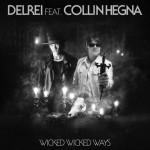
Artist: DELREI feat.Collin Hegna
Title: Wicked Wicked Ways
Format: Download Only (MP3 + Lossless)
Label: Projekt (@)
Rated:

Title: Wicked Wicked Ways
Format: Download Only (MP3 + Lossless)
Label: Projekt (@)
Rated:
There is a particular kind of darkness that belongs neither to horror nor to sadness. It is the darkness of memory when it refuses to leave. Not dramatic enough to become a tragedy, not distant enough to become a lesson. DELREI's "Wicked Wicked Ways" inhabits precisely that territory: a twilight landscape where desire and regret continue their endless dance, stepping on each other's feet while pretending to be in love.
Behind the project is Italian musician Alessandro Mercanzin, who has steadily developed a distinctive aesthetic that draws from post-punk, darkwave, Americana, and cinematic atmospheres without fully settling into any of them. His music often feels suspended between geographical and emotional coordinates, as if the European imagination were dreaming of the American frontier through the lens of a sleepless night. On this three-track EP, that vision becomes more focused and more confident.
The presence of Collin Hegna, known for his work with the legendary Portland collective Wovenhand, proves particularly significant. His voice carries a weathered gravity that perfectly suits these songs. Rather than dominating the material, he inhabits it like a ghost returning to a familiar house, recognizing every room yet feeling slightly unsettled by the passage of time.
The title track opens the EP with a slow-burning meditation on toxic attraction. Mercanzin avoids the temptation to portray emotional dysfunction as glamorous. Instead, the song captures the uncomfortable coexistence of fascination and self-preservation. The arrangement moves with deliberate restraint, allowing guitars, bass, and synthesizers to create an atmosphere that feels simultaneously intimate and expansive. One can almost picture a horizon at dusk, beautiful enough to admire, dangerous enough to avoid. Human beings, naturally, tend to walk straight toward it.
What distinguishes DELREI from many contemporary darkwave projects is his understanding of space. These songs are not overcrowded with effects or nostalgic references. Every instrument appears carefully placed, as if the silence surrounding the notes were as important as the notes themselves. The result is music that breathes. It lingers rather than rushes.
The brief instrumental interlude "In Darkness" functions as more than a transition. Lasting little more than a minute, it serves as a corridor between worlds. Rather than developing into a full composition, it presents a fragment, a glimpse through a partially opened door. Such restraint is refreshing in an era where every idea is expected to justify its existence through maximum exposure. Sometimes mystery remains the most effective special effect.
The EP reaches its emotional center with "Give Your Heart to Me". Here the themes of attachment, dependency, and surrender acquire an almost ceremonial quality. The inclusion of a spoken passage inspired by an ancient hymn introduces an unexpected spiritual dimension. What could have remained a simple tale of doomed romance becomes something broader: a reflection on the rituals through which human beings seek comfort, meaning, and protection, even when walking willingly into situations they know may wound them.
Throughout the record, one senses an artist increasingly comfortable with ambiguity. There are traces of post-punk's emotional austerity, dark Americana's expansive horizons, and dreamlike cinematic textures, yet none of these influences become dominant. Mercanzin assembles them into a language of his own, one that feels less concerned with genre than with mood.
At barely nine minutes in length, "Wicked Wicked Ways" could easily be dismissed as a minor release. That would be a mistake. Some works function not as destinations but as signposts, revealing the direction an artist intends to travel. This EP suggests that DELREI is refining a world rather than merely writing songs: a world populated by restless hearts, empty roads, half-remembered promises, and shadows that seem surprisingly reluctant to disappear.
The most compelling aspect of "Wicked Wicked Ways" is that it never treats darkness as an aesthetic accessory. Instead, it approaches it as a condition of human experience, one that can be unsettling, seductive, illuminating, and occasionally absurd all at once. Much like memory itself, the songs refuse to stay where they are placed. They follow the listener home.
Behind the project is Italian musician Alessandro Mercanzin, who has steadily developed a distinctive aesthetic that draws from post-punk, darkwave, Americana, and cinematic atmospheres without fully settling into any of them. His music often feels suspended between geographical and emotional coordinates, as if the European imagination were dreaming of the American frontier through the lens of a sleepless night. On this three-track EP, that vision becomes more focused and more confident.
The presence of Collin Hegna, known for his work with the legendary Portland collective Wovenhand, proves particularly significant. His voice carries a weathered gravity that perfectly suits these songs. Rather than dominating the material, he inhabits it like a ghost returning to a familiar house, recognizing every room yet feeling slightly unsettled by the passage of time.
The title track opens the EP with a slow-burning meditation on toxic attraction. Mercanzin avoids the temptation to portray emotional dysfunction as glamorous. Instead, the song captures the uncomfortable coexistence of fascination and self-preservation. The arrangement moves with deliberate restraint, allowing guitars, bass, and synthesizers to create an atmosphere that feels simultaneously intimate and expansive. One can almost picture a horizon at dusk, beautiful enough to admire, dangerous enough to avoid. Human beings, naturally, tend to walk straight toward it.
What distinguishes DELREI from many contemporary darkwave projects is his understanding of space. These songs are not overcrowded with effects or nostalgic references. Every instrument appears carefully placed, as if the silence surrounding the notes were as important as the notes themselves. The result is music that breathes. It lingers rather than rushes.
The brief instrumental interlude "In Darkness" functions as more than a transition. Lasting little more than a minute, it serves as a corridor between worlds. Rather than developing into a full composition, it presents a fragment, a glimpse through a partially opened door. Such restraint is refreshing in an era where every idea is expected to justify its existence through maximum exposure. Sometimes mystery remains the most effective special effect.
The EP reaches its emotional center with "Give Your Heart to Me". Here the themes of attachment, dependency, and surrender acquire an almost ceremonial quality. The inclusion of a spoken passage inspired by an ancient hymn introduces an unexpected spiritual dimension. What could have remained a simple tale of doomed romance becomes something broader: a reflection on the rituals through which human beings seek comfort, meaning, and protection, even when walking willingly into situations they know may wound them.
Throughout the record, one senses an artist increasingly comfortable with ambiguity. There are traces of post-punk's emotional austerity, dark Americana's expansive horizons, and dreamlike cinematic textures, yet none of these influences become dominant. Mercanzin assembles them into a language of his own, one that feels less concerned with genre than with mood.
At barely nine minutes in length, "Wicked Wicked Ways" could easily be dismissed as a minor release. That would be a mistake. Some works function not as destinations but as signposts, revealing the direction an artist intends to travel. This EP suggests that DELREI is refining a world rather than merely writing songs: a world populated by restless hearts, empty roads, half-remembered promises, and shadows that seem surprisingly reluctant to disappear.
The most compelling aspect of "Wicked Wicked Ways" is that it never treats darkness as an aesthetic accessory. Instead, it approaches it as a condition of human experience, one that can be unsettling, seductive, illuminating, and occasionally absurd all at once. Much like memory itself, the songs refuse to stay where they are placed. They follow the listener home.
Stine Janvin / Morten Joh: Or Gare: Funeral Procession Music from Ryfylke, Norway
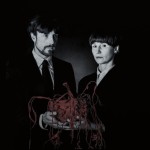
Artist: Stine Janvin / Morten Joh
Title: Or Gare: Funeral Procession Music from Ryfylke, Norway
Format: 12" + Download
Label: Futura Resistenza (@)
Rated:
Title: Or Gare: Funeral Procession Music from Ryfylke, Norway
Format: 12" + Download
Label: Futura Resistenza (@)
Rated:
Or Gare: Funeral Procession Music from Ryfylke, Norway is one of those rare records that seems to arrive from a place where time has stopped measuring itself. Not because it is nostalgic, but because it is concerned with something older than nostalgia: ritual. The album's source material comes from the "Liksong" tradition of Norway's Ryfylke region, funeral songs once performed while accompanying the dead on their final journey. Yet Stine Janvin and Morten Joh are not interested in historical reconstruction. They treat these remnants of collective memory as living matter, capable of transformation.
The result occupies a fascinating space between folk archaeology and speculative sound art. Ancient melodic contours emerge through synthesizers, tape manipulations, retuned percussion, and layers of voice that seem suspended between human presence and spectral resonance. It often feels as though centuries have folded onto one another, leaving medieval spirituality and contemporary electronics sharing the same dimly lit room.
For listeners familiar with Janvin's work, her approach will come as little surprise. Over the years she has established herself as one of the most distinctive vocal explorers in experimental music, constantly expanding the expressive possibilities of the voice beyond conventional singing. Here, however, she appears less concerned with individual expression than with collective remembrance. Her vocal performances rarely seek attention for themselves; instead, they function as conduits through which forgotten gestures and communal emotions are allowed to surface once more.
Morten Joh proves an ideal collaborator. His synthesizers, tape delays, and carefully sculpted textures never impose a modern framework upon the material. Rather, they illuminate its peculiar harmonic qualities, especially the unstable intervals that seem to hover perpetually between resolution and uncertainty. The music often inhabits spaces that Western ears instinctively try to categorize but never fully can. It is neither mournful nor consoling, neither sacred nor secular. Like grief itself, it refuses tidy definitions.
The album's sequencing mirrors the stages of a funeral procession, transforming the listening experience into a gradual passage. From departure through gathering, burial, reflection, and eventual acceptance, each piece contributes to a larger narrative arc. Yet this is not storytelling in the conventional sense. The progression feels more physical than narrative, as though one were walking slowly through changing weather, noticing how the landscape alters almost imperceptibly with every step.
Guest contributions from cellist Lucy Railton and guitarist Jules Reidy deepen the album's emotional palette without disturbing its remarkable cohesion. Their appearances feel less like featured performances than additional currents feeding an already flowing river.
What makes "Or Gare" particularly compelling is its treatment of slowness. Many contemporary recordings employ minimalism as an aesthetic choice; here slowness feels ethical. The music grants mourning the space it requires. Nothing is rushed toward catharsis. Nothing seeks dramatic effect. Instead, sounds unfold with the patient inevitability of a procession moving across a landscape shaped by generations of footsteps.
There is also something quietly radical in the album's relationship with memory. Janvin and Joh do not preserve tradition under glass. They allow it to evolve, to become strange again. Their reimagining acknowledges that cultural inheritance is never static. Songs survive not because they remain unchanged, but because each generation finds new ways to inhabit them.
Throughout "Or Gare", voices, electronics, and percussion create an atmosphere that is simultaneously intimate and immense. At times the music feels as though it is taking place inside a small wooden chapel; moments later it seems to expand across mountains, fjords, and centuries. The effect is deeply immersive, yet never overwhelming.
In the end, this is not an album about death so much as accompaniment. It understands that rituals exist not for the dead alone, but for those who remain behind, tasked with carrying memory forward. Janvin and Joh have transformed a nearly vanished musical practice into something unexpectedly vital: a work that listens as carefully to the past as it does to the future. In an age obsessed with acceleration, "Or Gare" moves with deliberate grace, reminding us that some journeys acquire their meaning precisely because they cannot be hurried.
The result occupies a fascinating space between folk archaeology and speculative sound art. Ancient melodic contours emerge through synthesizers, tape manipulations, retuned percussion, and layers of voice that seem suspended between human presence and spectral resonance. It often feels as though centuries have folded onto one another, leaving medieval spirituality and contemporary electronics sharing the same dimly lit room.
For listeners familiar with Janvin's work, her approach will come as little surprise. Over the years she has established herself as one of the most distinctive vocal explorers in experimental music, constantly expanding the expressive possibilities of the voice beyond conventional singing. Here, however, she appears less concerned with individual expression than with collective remembrance. Her vocal performances rarely seek attention for themselves; instead, they function as conduits through which forgotten gestures and communal emotions are allowed to surface once more.
Morten Joh proves an ideal collaborator. His synthesizers, tape delays, and carefully sculpted textures never impose a modern framework upon the material. Rather, they illuminate its peculiar harmonic qualities, especially the unstable intervals that seem to hover perpetually between resolution and uncertainty. The music often inhabits spaces that Western ears instinctively try to categorize but never fully can. It is neither mournful nor consoling, neither sacred nor secular. Like grief itself, it refuses tidy definitions.
The album's sequencing mirrors the stages of a funeral procession, transforming the listening experience into a gradual passage. From departure through gathering, burial, reflection, and eventual acceptance, each piece contributes to a larger narrative arc. Yet this is not storytelling in the conventional sense. The progression feels more physical than narrative, as though one were walking slowly through changing weather, noticing how the landscape alters almost imperceptibly with every step.
Guest contributions from cellist Lucy Railton and guitarist Jules Reidy deepen the album's emotional palette without disturbing its remarkable cohesion. Their appearances feel less like featured performances than additional currents feeding an already flowing river.
What makes "Or Gare" particularly compelling is its treatment of slowness. Many contemporary recordings employ minimalism as an aesthetic choice; here slowness feels ethical. The music grants mourning the space it requires. Nothing is rushed toward catharsis. Nothing seeks dramatic effect. Instead, sounds unfold with the patient inevitability of a procession moving across a landscape shaped by generations of footsteps.
There is also something quietly radical in the album's relationship with memory. Janvin and Joh do not preserve tradition under glass. They allow it to evolve, to become strange again. Their reimagining acknowledges that cultural inheritance is never static. Songs survive not because they remain unchanged, but because each generation finds new ways to inhabit them.
Throughout "Or Gare", voices, electronics, and percussion create an atmosphere that is simultaneously intimate and immense. At times the music feels as though it is taking place inside a small wooden chapel; moments later it seems to expand across mountains, fjords, and centuries. The effect is deeply immersive, yet never overwhelming.
In the end, this is not an album about death so much as accompaniment. It understands that rituals exist not for the dead alone, but for those who remain behind, tasked with carrying memory forward. Janvin and Joh have transformed a nearly vanished musical practice into something unexpectedly vital: a work that listens as carefully to the past as it does to the future. In an age obsessed with acceleration, "Or Gare" moves with deliberate grace, reminding us that some journeys acquire their meaning precisely because they cannot be hurried.
spalarnia: Tajemnica
Wojciech Kosma has built a multifaceted artistic practice that moves effortlessly between performance art, poetry, music, and choreography, yet under the alias spalarnia he seems less interested in demonstrating versatility than in cultivating vulnerability. His work has often explored intimacy as a space of both comfort and discomfort, and "Tajemnica" continues this trajectory with remarkable restraint. Released by the consistently adventurous Swiss imprint PrÄsens Editionen, the album feels less like a collection of songs and more like a series of emotional rooms, dimly lit and connected by invisible corridors.
The title translates as "Secret", though the record has little interest in the dramatic unveiling of hidden truths. Instead, Kosma treats secrecy as a condition of existence. Feelings remain partially obscured, desires are suggested rather than declared, and even moments of apparent clarity seem wrapped in a thin layer of mist. It is music that whispers not because it lacks confidence, but because it understands that some emotions become distorted when forced to speak too loudly. Humanity, after all, has a long history of turning love into public spectacle, usually with embarrassing results.
Musically, "Tajemnica" occupies an intriguing territory between ambient pop, experimental electronics, contemporary R&B, and traces of Eastern European folk melancholy. Yet none of these elements dominate. The arrangements remain sparse throughout, leaving generous amounts of space around each melodic gesture. Synthesizers drift like distant lights reflected on water, rhythms emerge and dissolve without insisting on their presence, and low frequencies provide a subtle gravitational pull beneath the songs. The production never seeks grandeur. Instead, it achieves something more difficult: emotional proximity.
Kosma's voice plays a central role in this effect. Delivered in Polish, his singing possesses a soft, almost tactile quality that transforms language into texture. For listeners unfamiliar with Polish, the words may remain partially inaccessible, but this becomes an advantage rather than an obstacle. Meaning arrives through inflection, breath, hesitation, and tone. The voice functions less as a vehicle for information than as an instrument of emotional architecture.
Tracks such as "Blizej" and "Jedyna" reveal Kosma's gift for balancing tenderness with unease. Melodies unfold slowly, never rushing toward resolution, while subtle rhythmic displacements prevent the songs from settling into predictable patterns. There is a curious sensation throughout the album that every gesture could either become an embrace or a farewell. The distinction often remains unresolved.
The emotional landscape grows even richer as the album progresses. "Ból" explores pain without indulging in melodrama, while "Schody" feels suspended between ascent and stagnation, its structure mirroring the uncertainty suggested by its title. The closing "Utopia" offers perhaps the album's most striking moment, not because it resolves the tensions that precede it, but because it accepts their permanence. Utopia here is not perfection; it is the fleeting possibility of coexistence with contradiction.
What makes "Tajemnica" particularly compelling is the way it refuses contemporary pop's obsession with certainty. In an era where emotions are often packaged into neat slogans and algorithm-friendly declarations, Kosma embraces ambiguity. Love, desire, loneliness, hope, and confusion are allowed to occupy the same space without being forced into hierarchy. The result feels surprisingly honest.
There are echoes of alternative pop, fragments of club music reduced to their emotional skeletons, and occasional hints of devotional music lurking beneath the surface. Yet the album never feels derivative. Kosma filters these influences through a distinctly personal sensibility shaped by his broader artistic practice. One senses the performer, the poet, and the choreographer all operating simultaneously, each contributing to a work that values gesture as much as sound.
"Tajemnica" succeeds precisely because it understands that intimacy is rarely neat. It is full of contradictions, irrational impulses, unfinished thoughts, and emotions that resist translation. Kosma transforms these uncertainties into something strangely luminous. The album does not reveal its secrets easily, but then the most meaningful secrets rarely volunteer themselves. They wait patiently, hidden in quiet corners, until someone is willing to listen closely enough.
The title translates as "Secret", though the record has little interest in the dramatic unveiling of hidden truths. Instead, Kosma treats secrecy as a condition of existence. Feelings remain partially obscured, desires are suggested rather than declared, and even moments of apparent clarity seem wrapped in a thin layer of mist. It is music that whispers not because it lacks confidence, but because it understands that some emotions become distorted when forced to speak too loudly. Humanity, after all, has a long history of turning love into public spectacle, usually with embarrassing results.
Musically, "Tajemnica" occupies an intriguing territory between ambient pop, experimental electronics, contemporary R&B, and traces of Eastern European folk melancholy. Yet none of these elements dominate. The arrangements remain sparse throughout, leaving generous amounts of space around each melodic gesture. Synthesizers drift like distant lights reflected on water, rhythms emerge and dissolve without insisting on their presence, and low frequencies provide a subtle gravitational pull beneath the songs. The production never seeks grandeur. Instead, it achieves something more difficult: emotional proximity.
Kosma's voice plays a central role in this effect. Delivered in Polish, his singing possesses a soft, almost tactile quality that transforms language into texture. For listeners unfamiliar with Polish, the words may remain partially inaccessible, but this becomes an advantage rather than an obstacle. Meaning arrives through inflection, breath, hesitation, and tone. The voice functions less as a vehicle for information than as an instrument of emotional architecture.
Tracks such as "Blizej" and "Jedyna" reveal Kosma's gift for balancing tenderness with unease. Melodies unfold slowly, never rushing toward resolution, while subtle rhythmic displacements prevent the songs from settling into predictable patterns. There is a curious sensation throughout the album that every gesture could either become an embrace or a farewell. The distinction often remains unresolved.
The emotional landscape grows even richer as the album progresses. "Ból" explores pain without indulging in melodrama, while "Schody" feels suspended between ascent and stagnation, its structure mirroring the uncertainty suggested by its title. The closing "Utopia" offers perhaps the album's most striking moment, not because it resolves the tensions that precede it, but because it accepts their permanence. Utopia here is not perfection; it is the fleeting possibility of coexistence with contradiction.
What makes "Tajemnica" particularly compelling is the way it refuses contemporary pop's obsession with certainty. In an era where emotions are often packaged into neat slogans and algorithm-friendly declarations, Kosma embraces ambiguity. Love, desire, loneliness, hope, and confusion are allowed to occupy the same space without being forced into hierarchy. The result feels surprisingly honest.
There are echoes of alternative pop, fragments of club music reduced to their emotional skeletons, and occasional hints of devotional music lurking beneath the surface. Yet the album never feels derivative. Kosma filters these influences through a distinctly personal sensibility shaped by his broader artistic practice. One senses the performer, the poet, and the choreographer all operating simultaneously, each contributing to a work that values gesture as much as sound.
"Tajemnica" succeeds precisely because it understands that intimacy is rarely neat. It is full of contradictions, irrational impulses, unfinished thoughts, and emotions that resist translation. Kosma transforms these uncertainties into something strangely luminous. The album does not reveal its secrets easily, but then the most meaningful secrets rarely volunteer themselves. They wait patiently, hidden in quiet corners, until someone is willing to listen closely enough.
Christophe Clébard: Le Futur C'est La Drogue
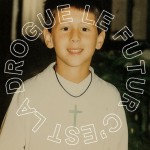
Artist: Christophe Clébard (@)
Title: Le Futur C'est La Drogue
Format: 12" + Download
Label: moli del tro
Rated:
Title: Le Futur C'est La Drogue
Format: 12" + Download
Label: moli del tro
Rated:
Christophe Clébard's sixth album arrives like a sleepless monologue muttered under flickering neon lights. Not the dramatic kind of insomnia celebrated by poets and filmmakers, but the more familiar modern variety: a mind looping endlessly through unresolved conversations, recurring fears, vanished faces, and the persistent suspicion that contemporary life has become a system of dependencies disguised as freedom.
The Belgium-based artist, originally from Italy, has spent years carving out a singular position within Europe's DIY underground, drawing equally from synth-punk, industrial minimalism, cold wave, and electronic repetition. On "Le Futur C'est La Drogue", he pushes these tendencies toward their most distilled form. The music rarely seeks complexity. Instead, it embraces obsession. Drum machines advance with stubborn determination, synthesizers oscillate between abrasion and hypnosis, and repetition becomes less a compositional device than a psychological condition.
The album's title might initially suggest social commentary, but the record operates on a far more intimate level. Addiction here appears not merely as substance dependency but as a broader human predicament. People become addicted to memories, to absence, to self-doubt, to routines, to the gaze of others, even to their own suffering. Throughout the album, characters seem trapped inside emotional feedback loops, unable to distinguish between comfort and confinement.
This theme emerges through Clébard's peculiar lyrical approach. His texts often reject conventional narrative structure, favouring fragmented thoughts, recurring images, abrupt associations, and simple phrases repeated until their meaning begins to mutate. What initially sounds naive gradually reveals itself as unsettlingly precise. Like certain forms of outsider art, the apparent simplicity conceals a deeper emotional complexity. The words do not describe anxiety; they perform it.
The music mirrors this strategy perfectly. Tracks unfold through insistence rather than development. Rhythms hammer away with mechanical persistence while battered synthesizer figures circle around unresolved emotional centres. Yet despite the album's bleak subject matter, there is something strangely inviting about its atmosphere. Clébard understands that despair often arrives dancing.
Several songs revolve around the instability of human connection. Encounters remain ambiguous, conversations seem incomplete, identities blur. People look at one another without necessarily understanding what they see. Relationships become mirrors reflecting uncertainty rather than clarity. Even love appears less as a destination than as a temporary shelter from existential weather.
The album's most moving moments emerge from its recurring fascination with solitude. Being alone is portrayed neither as tragedy nor liberation, but as a condition to be negotiated repeatedly. The protagonists inhabiting these songs appear suspended between a desire for intimacy and an equally powerful impulse toward withdrawal. It is a contradiction many listeners will recognise, whether they admit it or not.
Musically, Clébard's synth-punk framework occasionally brushes against electro, minimal wave, and industrial dance music, though never comfortably enough to settle into any category. "Disco Lento", appropriately enough, encapsulates much of the record's appeal. Its title suggests movement, but the music feels almost reluctant to move forward, caught between pleasure and paralysis. It is dance music for people contemplating their life choices while staring into a half-empty glass.
The collaboration with Chris Imler introduces a welcome dose of surrealism. Linguistic shifts and dislocated imagery create one of the album's most disorienting passages, reinforcing the sense that Clébard's universe obeys emotional logic rather than rational structure.
What ultimately distinguishes "Le Futur C'est La Drogue" is its refusal to beautify discomfort. Clébard does not package alienation as fashionable melancholy. His songs feel rough around the edges, occasionally awkward, sometimes repetitive to the point of irritation. But that irritation is often precisely the point. These tracks inhabit the same mental spaces as intrusive thoughts, recurring memories, and unanswered questions. They linger because they refuse resolution.
In an era when so much music seeks either escapism or certainty, Clébard offers neither. Instead, he presents a collection of damaged mantras, mechanical confessions, and nocturnal reflections that stare directly into contemporary restlessness. The future may indeed resemble a dependency, the album seems to suggest. But at least here the diagnosis arrives accompanied by a stubborn beat and enough dark humour to keep the lights on a little longer.
The Belgium-based artist, originally from Italy, has spent years carving out a singular position within Europe's DIY underground, drawing equally from synth-punk, industrial minimalism, cold wave, and electronic repetition. On "Le Futur C'est La Drogue", he pushes these tendencies toward their most distilled form. The music rarely seeks complexity. Instead, it embraces obsession. Drum machines advance with stubborn determination, synthesizers oscillate between abrasion and hypnosis, and repetition becomes less a compositional device than a psychological condition.
The album's title might initially suggest social commentary, but the record operates on a far more intimate level. Addiction here appears not merely as substance dependency but as a broader human predicament. People become addicted to memories, to absence, to self-doubt, to routines, to the gaze of others, even to their own suffering. Throughout the album, characters seem trapped inside emotional feedback loops, unable to distinguish between comfort and confinement.
This theme emerges through Clébard's peculiar lyrical approach. His texts often reject conventional narrative structure, favouring fragmented thoughts, recurring images, abrupt associations, and simple phrases repeated until their meaning begins to mutate. What initially sounds naive gradually reveals itself as unsettlingly precise. Like certain forms of outsider art, the apparent simplicity conceals a deeper emotional complexity. The words do not describe anxiety; they perform it.
The music mirrors this strategy perfectly. Tracks unfold through insistence rather than development. Rhythms hammer away with mechanical persistence while battered synthesizer figures circle around unresolved emotional centres. Yet despite the album's bleak subject matter, there is something strangely inviting about its atmosphere. Clébard understands that despair often arrives dancing.
Several songs revolve around the instability of human connection. Encounters remain ambiguous, conversations seem incomplete, identities blur. People look at one another without necessarily understanding what they see. Relationships become mirrors reflecting uncertainty rather than clarity. Even love appears less as a destination than as a temporary shelter from existential weather.
The album's most moving moments emerge from its recurring fascination with solitude. Being alone is portrayed neither as tragedy nor liberation, but as a condition to be negotiated repeatedly. The protagonists inhabiting these songs appear suspended between a desire for intimacy and an equally powerful impulse toward withdrawal. It is a contradiction many listeners will recognise, whether they admit it or not.
Musically, Clébard's synth-punk framework occasionally brushes against electro, minimal wave, and industrial dance music, though never comfortably enough to settle into any category. "Disco Lento", appropriately enough, encapsulates much of the record's appeal. Its title suggests movement, but the music feels almost reluctant to move forward, caught between pleasure and paralysis. It is dance music for people contemplating their life choices while staring into a half-empty glass.
The collaboration with Chris Imler introduces a welcome dose of surrealism. Linguistic shifts and dislocated imagery create one of the album's most disorienting passages, reinforcing the sense that Clébard's universe obeys emotional logic rather than rational structure.
What ultimately distinguishes "Le Futur C'est La Drogue" is its refusal to beautify discomfort. Clébard does not package alienation as fashionable melancholy. His songs feel rough around the edges, occasionally awkward, sometimes repetitive to the point of irritation. But that irritation is often precisely the point. These tracks inhabit the same mental spaces as intrusive thoughts, recurring memories, and unanswered questions. They linger because they refuse resolution.
In an era when so much music seeks either escapism or certainty, Clébard offers neither. Instead, he presents a collection of damaged mantras, mechanical confessions, and nocturnal reflections that stare directly into contemporary restlessness. The future may indeed resemble a dependency, the album seems to suggest. But at least here the diagnosis arrives accompanied by a stubborn beat and enough dark humour to keep the lights on a little longer.
The Holy Sun Opera House: s/t
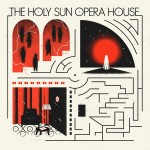
Artist: The Holy Sun Opera House (@)
Title: s/t
Format: CD & 12" + Download
Label: Hologram Opera (@)
Rated:
Title: s/t
Format: CD & 12" + Download
Label: Hologram Opera (@)
Rated:
It is rare that I do a review of an album without receiving a physical copy of the release, and lord knows I receive enough email promos from promoters, publicity agents, bands and other music hustlers. Most of them aren't even in the genres Chain D.L.K. covers, but this one qualifies. The Holy Sun Opera House is not an opera company or a cult religious organization, but rather a music project consisting of classically trained soprano and drummer Krissy Barker and composer dl Salo, out of Los Angeles. Together they weave symphonic synths and operatic vocals with heavy drums. What got me was the publicist/promotor's FFO: early Dead Can Dance, Fever Ray, Klaus Nomi. Forgive my ignorance but I have no idea who Fever Ray is, so I watched a few of their videos. Interesting experimental music both sonically and visually out of Sweden with a pretty good following, but this review is not about Fever Ray so check them out on your own time. Just looking for a frame of reference here and I got one.
The album consists of nine tracks and according to info on the duo's Bandcamp site, "The self-produced album was conceptualized as a way to describe an obsessive mind with music and inspired by the recurring dreams of singer Krissy Barker. In it is a realm of shifting rooms, dilapidated houses and passages. These unsettled rooms and spaces pose a striking confrontation of fear and anxiety from deep within." Fair enough. Opening track, "Voice of Gob" sounds heavily gothic from the get-go; heavy orchestrated synth strings with Krissy's angelic voice emerging. It's slow and stately with a simple but effective melody, and they use a real choir for backing vocals. Nice! "Passage II" is sort of an experimental drone piece of cake with operatic voice icing. The singing on "Latched On" is more pop than opera at first but once the orchestration comes in it turns operatic, quite dolorous over all. The title of the next track, "Decrepit Mansion" may seem on the nose (like something off a Halloween sound effects album) but the 3 lines of lyrics sung repeatedly in rounds has nothing to do with decrepit mansions or haunted houses, but about things one does not normally notice. Rather cool in its own way. Has anyone seen or heard the "Witch in the Attic" ? I knew there was someone there, breathing heavily at night while I'm trying to sleep, invading my dreams and turning them into nightmares. The track is a percussion-less dreamscape transitionally leading into "The Attic." The orchestration here is full-on and may remind you somewhat of early Dead Can Dance, Arcana, Gitane DeMone or even Diamanda Galas. Krissy's vibrato is intense and the music is gothic as fuck.
The penultimate song on the album is "Room That Wasn't There Before, " a cool cross between pop and opera with a very memorable melody. My only complaint about it is that the rhythm track is severely buried beneath the orchestration. A remix of this one is sorely needed. With only two tracks left, the tail of the previous slides smoothly into "Passage I" (odd that it comes after "Passage II"), another kind of orchestral ambient drone piece using cathedral-like chord progressions, which I suppose echoes the "Holy Sun" part of the group's name. Finally, there is "Room with the Rain," sung throughout in the operatic mode with a dirgy pace and symphonic orchestration. Not nearly as compelling as "Room That Wasn't There Before " but atmospherically poignant nevertheless. The Holy Sun Opera House is absolutely a project worth checking out. In spite of a few minor flaws (namely, more oomph in the percussion/rhythm department) this album holds up very well, especially for fans of the non-pop-rock gothic. (In days gone by labels such as 4AD, World Serpent or Cold Meat Industry would have signed this act in a heartbeat.) The Holy Sun Opera House is likely to appeal more to European audiences than U.S. listeners but don't let that dissuade you. There aren't many operatic rock outfits out there as a Google search will attest. (Try it; you'll get only mediocre results such as The Who's 'Tommy' and Queen's "Bohemian Rhapsody.") With the full complement of media options available (LP, CD, cassette, digital) you have no reason not to go for it.
The album consists of nine tracks and according to info on the duo's Bandcamp site, "The self-produced album was conceptualized as a way to describe an obsessive mind with music and inspired by the recurring dreams of singer Krissy Barker. In it is a realm of shifting rooms, dilapidated houses and passages. These unsettled rooms and spaces pose a striking confrontation of fear and anxiety from deep within." Fair enough. Opening track, "Voice of Gob" sounds heavily gothic from the get-go; heavy orchestrated synth strings with Krissy's angelic voice emerging. It's slow and stately with a simple but effective melody, and they use a real choir for backing vocals. Nice! "Passage II" is sort of an experimental drone piece of cake with operatic voice icing. The singing on "Latched On" is more pop than opera at first but once the orchestration comes in it turns operatic, quite dolorous over all. The title of the next track, "Decrepit Mansion" may seem on the nose (like something off a Halloween sound effects album) but the 3 lines of lyrics sung repeatedly in rounds has nothing to do with decrepit mansions or haunted houses, but about things one does not normally notice. Rather cool in its own way. Has anyone seen or heard the "Witch in the Attic" ? I knew there was someone there, breathing heavily at night while I'm trying to sleep, invading my dreams and turning them into nightmares. The track is a percussion-less dreamscape transitionally leading into "The Attic." The orchestration here is full-on and may remind you somewhat of early Dead Can Dance, Arcana, Gitane DeMone or even Diamanda Galas. Krissy's vibrato is intense and the music is gothic as fuck.
The penultimate song on the album is "Room That Wasn't There Before, " a cool cross between pop and opera with a very memorable melody. My only complaint about it is that the rhythm track is severely buried beneath the orchestration. A remix of this one is sorely needed. With only two tracks left, the tail of the previous slides smoothly into "Passage I" (odd that it comes after "Passage II"), another kind of orchestral ambient drone piece using cathedral-like chord progressions, which I suppose echoes the "Holy Sun" part of the group's name. Finally, there is "Room with the Rain," sung throughout in the operatic mode with a dirgy pace and symphonic orchestration. Not nearly as compelling as "Room That Wasn't There Before " but atmospherically poignant nevertheless. The Holy Sun Opera House is absolutely a project worth checking out. In spite of a few minor flaws (namely, more oomph in the percussion/rhythm department) this album holds up very well, especially for fans of the non-pop-rock gothic. (In days gone by labels such as 4AD, World Serpent or Cold Meat Industry would have signed this act in a heartbeat.) The Holy Sun Opera House is likely to appeal more to European audiences than U.S. listeners but don't let that dissuade you. There aren't many operatic rock outfits out there as a Google search will attest. (Try it; you'll get only mediocre results such as The Who's 'Tommy' and Queen's "Bohemian Rhapsody.") With the full complement of media options available (LP, CD, cassette, digital) you have no reason not to go for it.