
Browse by Genre
Industrial Music / Industrial Metal / Aggro Industrial / Electro Metal
Industrial Noise / Power Noise / Harsh Noise
Synth Pop / Electro Pop / Synth-Electronica
Techno / Trance / Goa / Drum'n'Bass / Jungle / Tribal / Trip-Hop
Ambient / Electronica / Ethereal / Dub / Soundscapes / Abstract
Experimental / Avantgarde / Weird & Wired / Glitch / Noise / Field Recording
Dark / Gothic / Wave / New Wave / Dark Wave / Industrial Gothic
New Music / Downtown / Avantgarde Jazz / New Classical / World
Search Reviews
Music Reviews
OD: Svalr

Artist: OD
Title: Svalr
Format: Download Only (MP3 + Lossless)
Label: Driftworks/Audiobulb (@)
Rated:

Title: Svalr
Format: Download Only (MP3 + Lossless)
Label: Driftworks/Audiobulb (@)
Rated:
Most travel albums promise transportation. They invite listeners to visit distant places without leaving their chairs, a service humanity seems increasingly fond of. Why endure freezing temperatures, unpredictable weather, and the possibility of being stared down by a polar bear when a pair of headphones can simulate the experience with considerably lower insurance costs?
Yet "Svalr", the debut release by OD, is not interested in tourism. It is interested in presence.
OD is the musical alias of Alex O'Donovan, whose contribution to the collaborative SITE series, curated by Driftworks and Audiobulb, takes listeners to the Arctic archipelago of Svalbard. The premise of the series is deceptively simple: artists transform a specific location into an audio-geography, blending environmental recordings and artistic interpretation into a portrait of place. What makes "Svalr" remarkable is how thoroughly it embraces both halves of that equation. This is neither a straightforward field-recording document nor a conventional ambient album. It exists somewhere in between, where observation becomes composition and landscape becomes memory.
The project emerged from an expedition undertaken alongside sculptor and installation artist Andreea Ionascu. Armed with an arsenal of recording devices that sounds more like scientific equipment than musical gear, O'Donovan collected sounds from glaciers, fjords, wildlife, permafrost, underwater environments, and human infrastructure. Hydrophones listened beneath the water's surface, geophones traced subterranean vibrations, electromagnetic microphones intercepted technological signals, and custom-built devices captured details that normally escape human perception.
The result is an album that often feels less like listening and more like eavesdropping on the hidden conversations of matter itself.
One of the most fascinating ideas behind "Svalr" is the discovery of an unexpected harmonic relationship across the environment. Ice, rock formations, human constructions, frozen terrain, and animal life appeared to resonate within similar tonal regions, creating an accidental orchestra assembled by geology rather than intention. O'Donovan's compositional approach respects this phenomenon. Rather than overwhelming the source material with excessive processing, he allows these natural resonances to remain central, adding only restrained electronic interventions where necessary.
"Arrival" opens the record with a sense of cautious wonder. The sounds feel suspended between documentation and dream, as though the listener is adjusting to an environment where familiar acoustic reference points no longer apply. The Arctic appears not as a postcard landscape but as a living system, vast enough to dwarf human perspective.
Throughout the album, time behaves strangely. Perhaps this reflects the reality of Svalbard itself, where continuous daylight during parts of the year erodes ordinary temporal boundaries. Tracks unfold without obvious destinations, drifting between textural subtlety and moments of looming tension. Listening becomes an exercise in recalibrating perception. The ear stops searching for events and begins noticing conditions.
"Impermanence" and "Pale" are especially effective in this regard. Their restrained atmospheres evoke environments that appear static from a distance but reveal constant microscopic activity when examined closely. Ice shifts. Water moves. Wind reshapes surfaces. Nothing is truly still, even when everything appears frozen.
The album's centrepiece, "Crushing", extends this idea into more dramatic territory. Lasting nearly ten minutes, it captures the overwhelming physical presence of the Arctic landscape without resorting to cinematic spectacle. Noise emerges not as aggression but as pressure. The track feels geological rather than musical, unfolding with the indifferent force of natural processes that existed long before human observers arrived and will continue long after they leave.
What distinguishes "Svalr" from many environmental recordings is its awareness of contradiction. Svalbard may appear remote, but the album repeatedly reminds us that remoteness no longer guarantees isolation. Human influence reaches even here, filtering into fragile ecosystems through climate change, technology, and global interconnectedness. The landscape becomes a witness to consequences generated thousands of miles away. In this sense, the album quietly addresses the Anthropocene without turning itself into a lecture. The message resides within the sounds themselves.
The closing track, "Permabloom", offers no easy resolution. Instead, it leaves the listener suspended between fragility and endurance. The title itself suggests a paradox: permanence and transformation occupying the same space. It is an appropriate conclusion for a work preoccupied with environments that seem eternal yet are changing before our eyes.
What makes "Svalr" memorable is not simply its technical achievement or its field-recording pedigree. It is the humility embedded within the project. O'Donovan approaches the Arctic not as a conqueror, documentarian, or environmental spokesperson, but as an attentive listener. The album repeatedly suggests that landscapes possess their own forms of expression, provided someone is willing to slow down enough to hear them.
In an age obsessed with louder signals, faster communication, and constant visibility, "Svalr" proposes a different relationship with the world. It asks us to pay attention to what exists beneath perception, to the vibrations hidden inside ice, water, stone, and silence. The experience is less like visiting a place than like briefly sharing its nervous system.
For forty minutes, the Arctic does not become understandable. It becomes audible. That turns out to be far more interesting.
Yet "Svalr", the debut release by OD, is not interested in tourism. It is interested in presence.
OD is the musical alias of Alex O'Donovan, whose contribution to the collaborative SITE series, curated by Driftworks and Audiobulb, takes listeners to the Arctic archipelago of Svalbard. The premise of the series is deceptively simple: artists transform a specific location into an audio-geography, blending environmental recordings and artistic interpretation into a portrait of place. What makes "Svalr" remarkable is how thoroughly it embraces both halves of that equation. This is neither a straightforward field-recording document nor a conventional ambient album. It exists somewhere in between, where observation becomes composition and landscape becomes memory.
The project emerged from an expedition undertaken alongside sculptor and installation artist Andreea Ionascu. Armed with an arsenal of recording devices that sounds more like scientific equipment than musical gear, O'Donovan collected sounds from glaciers, fjords, wildlife, permafrost, underwater environments, and human infrastructure. Hydrophones listened beneath the water's surface, geophones traced subterranean vibrations, electromagnetic microphones intercepted technological signals, and custom-built devices captured details that normally escape human perception.
The result is an album that often feels less like listening and more like eavesdropping on the hidden conversations of matter itself.
One of the most fascinating ideas behind "Svalr" is the discovery of an unexpected harmonic relationship across the environment. Ice, rock formations, human constructions, frozen terrain, and animal life appeared to resonate within similar tonal regions, creating an accidental orchestra assembled by geology rather than intention. O'Donovan's compositional approach respects this phenomenon. Rather than overwhelming the source material with excessive processing, he allows these natural resonances to remain central, adding only restrained electronic interventions where necessary.
"Arrival" opens the record with a sense of cautious wonder. The sounds feel suspended between documentation and dream, as though the listener is adjusting to an environment where familiar acoustic reference points no longer apply. The Arctic appears not as a postcard landscape but as a living system, vast enough to dwarf human perspective.
Throughout the album, time behaves strangely. Perhaps this reflects the reality of Svalbard itself, where continuous daylight during parts of the year erodes ordinary temporal boundaries. Tracks unfold without obvious destinations, drifting between textural subtlety and moments of looming tension. Listening becomes an exercise in recalibrating perception. The ear stops searching for events and begins noticing conditions.
"Impermanence" and "Pale" are especially effective in this regard. Their restrained atmospheres evoke environments that appear static from a distance but reveal constant microscopic activity when examined closely. Ice shifts. Water moves. Wind reshapes surfaces. Nothing is truly still, even when everything appears frozen.
The album's centrepiece, "Crushing", extends this idea into more dramatic territory. Lasting nearly ten minutes, it captures the overwhelming physical presence of the Arctic landscape without resorting to cinematic spectacle. Noise emerges not as aggression but as pressure. The track feels geological rather than musical, unfolding with the indifferent force of natural processes that existed long before human observers arrived and will continue long after they leave.
What distinguishes "Svalr" from many environmental recordings is its awareness of contradiction. Svalbard may appear remote, but the album repeatedly reminds us that remoteness no longer guarantees isolation. Human influence reaches even here, filtering into fragile ecosystems through climate change, technology, and global interconnectedness. The landscape becomes a witness to consequences generated thousands of miles away. In this sense, the album quietly addresses the Anthropocene without turning itself into a lecture. The message resides within the sounds themselves.
The closing track, "Permabloom", offers no easy resolution. Instead, it leaves the listener suspended between fragility and endurance. The title itself suggests a paradox: permanence and transformation occupying the same space. It is an appropriate conclusion for a work preoccupied with environments that seem eternal yet are changing before our eyes.
What makes "Svalr" memorable is not simply its technical achievement or its field-recording pedigree. It is the humility embedded within the project. O'Donovan approaches the Arctic not as a conqueror, documentarian, or environmental spokesperson, but as an attentive listener. The album repeatedly suggests that landscapes possess their own forms of expression, provided someone is willing to slow down enough to hear them.
In an age obsessed with louder signals, faster communication, and constant visibility, "Svalr" proposes a different relationship with the world. It asks us to pay attention to what exists beneath perception, to the vibrations hidden inside ice, water, stone, and silence. The experience is less like visiting a place than like briefly sharing its nervous system.
For forty minutes, the Arctic does not become understandable. It becomes audible. That turns out to be far more interesting.
Uhushuhu feat. Prorok: To Those Lost in the Woods
Artist: Uhushuhu feat. Prorok (@)
Title: To Those Lost in the Woods
Format: CD + Download
Label: Owl Totem Recordings (@)
Rated:

Title: To Those Lost in the Woods
Format: CD + Download
Label: Owl Totem Recordings (@)
Rated:
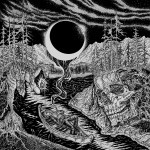
Wow! It's been ages since I've heard anything from Uhushuhu, formerly of St. Petersburg, Russia, now located now in Dilijan, Armenia, for obvious reasons. Way back when Uhushuhu was one of the prominent luminaries on the marvelous Russian label, Zhelezobeton, run by Artem O. At this point in time the Uhushuhu project consists of Pavel Dombrovsky – lyrics, guitars, bass, melodica, drums, synthesizers, field recordings, samples, mixing; D. Rylov (Prorok) – spoken word, vocal processing; Dmitry N. Shilov (Neznamo) – bass , synthesizers; K. Borozda – guitar. Being out of the Uhushuhu loop for so long, I really didn't know what to expect. The artist(s) describe 'To Those Lost in the Woods' as "A tense musical and poetic journey through the night." Opening track, "How Mine Smothers in You" begins with an ominous atmosphere, and then a spoken word voice-over in Russian. Fortunately Uhushuhu provides an English translation on their Bandcamp site. It's quite poetic but also quite dark, and too lengthy to quote much of it here but the first stanza should give you a taste.
"How mine in you smolders in a northwesterly wind,
How the dead at morning no longer begin,
How puddles hold water, how milk fills a dish,
How firewood flames, how butterflies wish.
So the leaves, so the sand,
So a god grown tired of his plan.
So a stream through the trees does it go,
Filling furrows where buckwheat will grow."
While the first track is primarily atmospheric, "Soil" has a repeating bass or low guitar line with sustained synth string pad. It sounds like something out of a Twin Peaks soundtrack. Once again there is a Russian voice-over. The gloominess is palpable and pervasive. In the middle a riffing saxophone emerges. Perfect. Color me impressed. NeXT, we're headed "Down The River" with a broader musical palette on this one. Again there is a Russian recitation, but the music is more like hypnotic ambient krautrock. "Foliage" sounds like it was based on a folk tune and has a kind of Slavic melody to it. I don't know why this one has me thinking of Mortiis, but it does.
We are back in dark ambient territory on "Ryba," and yes, there is another Russian recitation. They're beginning to grow on me and sort of add a documentary cinematic touch. "After a Beetle" is industrial dark ambient with ritual acoustic percussion (some sort of hand drums) and a distant flute. I can picture sullen men in a circle with painted faces perhaps imbibing some sort of psychedelic brew. What strange ceremonial ritual is taking place? Inquiring minds want to know! Whew! After all that I'm ready to "Fall Asleep," the title of the final track on the album. Uhushuhu is back to a more melodic format on this one with a repeating guitar figure in the forefront. It's kind of bittersweet and dream-like. Nice, and the perfect way to end this extraordinary album. Another one mastered to perfection by Peter Andersson. Although it helps, I don't think you have to understand Russian to appreciate 'To Those Lost in the Woods' A surprisingly delightful work, in the darkest of of ways.
"How mine in you smolders in a northwesterly wind,
How the dead at morning no longer begin,
How puddles hold water, how milk fills a dish,
How firewood flames, how butterflies wish.
So the leaves, so the sand,
So a god grown tired of his plan.
So a stream through the trees does it go,
Filling furrows where buckwheat will grow."
While the first track is primarily atmospheric, "Soil" has a repeating bass or low guitar line with sustained synth string pad. It sounds like something out of a Twin Peaks soundtrack. Once again there is a Russian voice-over. The gloominess is palpable and pervasive. In the middle a riffing saxophone emerges. Perfect. Color me impressed. NeXT, we're headed "Down The River" with a broader musical palette on this one. Again there is a Russian recitation, but the music is more like hypnotic ambient krautrock. "Foliage" sounds like it was based on a folk tune and has a kind of Slavic melody to it. I don't know why this one has me thinking of Mortiis, but it does.
We are back in dark ambient territory on "Ryba," and yes, there is another Russian recitation. They're beginning to grow on me and sort of add a documentary cinematic touch. "After a Beetle" is industrial dark ambient with ritual acoustic percussion (some sort of hand drums) and a distant flute. I can picture sullen men in a circle with painted faces perhaps imbibing some sort of psychedelic brew. What strange ceremonial ritual is taking place? Inquiring minds want to know! Whew! After all that I'm ready to "Fall Asleep," the title of the final track on the album. Uhushuhu is back to a more melodic format on this one with a repeating guitar figure in the forefront. It's kind of bittersweet and dream-like. Nice, and the perfect way to end this extraordinary album. Another one mastered to perfection by Peter Andersson. Although it helps, I don't think you have to understand Russian to appreciate 'To Those Lost in the Woods' A surprisingly delightful work, in the darkest of of ways.
SWEDEK: M * L * K

There are albums that politely invite the listener inside. "M * L * K" is not one of them. It opens the door, removes the floor, rearranges the walls while you are entering, and then seems genuinely surprised that anyone expected a conventional room in the first place.
That attitude is entirely fitting for SWEDEK, the Austrian improvisational trio formed by Helmut Kaplan, Wernfried Lackner, and Dieta Mattersdorfer. Between them lies a long history of experimental practice: multimedia art, electroacoustic composition, loop-based sound manipulation, free improvisation, real-time data sonification, noise, and electronics. These are musicians who have spent decades investigating what happens when systems behave unexpectedly. Predictability is not merely absent from "M * L * K"; it feels actively discouraged.
The album arrives with a manifesto-like disclaimer that warns listeners against expecting familiar structures. Curiously, the warning proves both accurate and misleading. Traditional forms are indeed scarce. There are no reassuring choruses, no narrative arcs, no obvious destinations. Yet the record is far from chaotic. What emerges instead is a different kind of order, one operating beneath the surface like root systems hidden beneath a forest floor.
Recorded live over two days in Graz without overdubs, the album captures improvisation in a particularly honest state. Nothing feels corrected, polished into submission, or forced into predetermined shapes. The music retains the awkwardness, surprise, and occasional instability that accompany genuine discovery. One gets the impression that the performers are exploring the terrain at precisely the same moment as the audience.
The track titles form an intriguing sequence: "Small", "Pearl", "Cream", "Ivory", "Eggshell", "Bone", "Powder", "Colorless". At first glance they resemble paint samples accidentally left in a hardware store after an avant-garde intervention. Yet they suggest a gradual bleaching process, a movement toward reduction, subtraction, and dissolution. The album itself mirrors this trajectory, stripping away certainty until only texture, gesture, and interaction remain.
What makes "M * L * K" compelling is the way it continually shifts between microscopic and panoramic listening. A fragment of bass emerges, electronics flutter briefly into focus, a guitar gesture appears and vanishes before it can establish meaning. Sounds rarely remain long enough to become familiar. The listener is forced to abandon the habit of anticipation and instead inhabit the present moment. Human beings generally dislike this. We spend enormous amounts of energy predicting the future, often incorrectly. SWEDEK removes that luxury.
The trio's interplay is remarkable precisely because it avoids the obvious. Rather than building toward climaxes, the musicians often seem fascinated by unstable states. A texture begins to cohere, only to be interrupted by an unexpected intervention. A rhythm threatens to emerge, then dissolves back into abstraction. The music behaves like a living organism continually changing its shape to avoid classification.
There is also a subtle humour running through the record. Not the kind that announces itself through irony or parody, but a more elusive playfulness. Certain passages feel as though the musicians are testing ideas simply to see what happens next. One can almost hear curiosity operating as a compositional principle. The result is music that occasionally stumbles into beauty by refusing to chase it directly.
Helmut Kaplan's long engagement with loops and collage techniques casts a shadow across the proceedings, while Wernfried Lackner's background in electronic experimentation and Dieta Mattersdorfer's experience within electroacoustic and improvised music contribute to a constantly shifting balance between organic and synthetic sound sources. Yet individual identities ultimately become secondary. SWEDEK functions less as three performers than as a temporary ecosystem.
The album's greatest achievement may be its resistance to interpretation. Many experimental releases invite listeners to decode hidden meanings or conceptual frameworks. "M * L * K" seems content to exist before explanation arrives. Its structures reveal themselves only through attention, not analysis. Like watching clouds, listening becomes an exercise in recognising patterns without demanding permanence.
By the time "Colorless" concludes the journey, nothing has been resolved in any conventional sense. But resolution was never the point. The album is interested in process rather than outcome, in movement rather than destination. It proposes that meaning can emerge from interaction itself, without requiring a final statement to validate the experience.
In a cultural landscape increasingly dominated by algorithms designed to predict our preferences before we discover them ourselves, "M * L * K" feels quietly rebellious. It celebrates uncertainty. It values accidents. It trusts improvisation. Most importantly, it reminds us that not every path needs a map, and not every sound needs to justify its existence.
Sometimes a thing wriggles away just as you think you've understood it. SWEDEK appears to regard that not as a problem, but as the entire point.
That attitude is entirely fitting for SWEDEK, the Austrian improvisational trio formed by Helmut Kaplan, Wernfried Lackner, and Dieta Mattersdorfer. Between them lies a long history of experimental practice: multimedia art, electroacoustic composition, loop-based sound manipulation, free improvisation, real-time data sonification, noise, and electronics. These are musicians who have spent decades investigating what happens when systems behave unexpectedly. Predictability is not merely absent from "M * L * K"; it feels actively discouraged.
The album arrives with a manifesto-like disclaimer that warns listeners against expecting familiar structures. Curiously, the warning proves both accurate and misleading. Traditional forms are indeed scarce. There are no reassuring choruses, no narrative arcs, no obvious destinations. Yet the record is far from chaotic. What emerges instead is a different kind of order, one operating beneath the surface like root systems hidden beneath a forest floor.
Recorded live over two days in Graz without overdubs, the album captures improvisation in a particularly honest state. Nothing feels corrected, polished into submission, or forced into predetermined shapes. The music retains the awkwardness, surprise, and occasional instability that accompany genuine discovery. One gets the impression that the performers are exploring the terrain at precisely the same moment as the audience.
The track titles form an intriguing sequence: "Small", "Pearl", "Cream", "Ivory", "Eggshell", "Bone", "Powder", "Colorless". At first glance they resemble paint samples accidentally left in a hardware store after an avant-garde intervention. Yet they suggest a gradual bleaching process, a movement toward reduction, subtraction, and dissolution. The album itself mirrors this trajectory, stripping away certainty until only texture, gesture, and interaction remain.
What makes "M * L * K" compelling is the way it continually shifts between microscopic and panoramic listening. A fragment of bass emerges, electronics flutter briefly into focus, a guitar gesture appears and vanishes before it can establish meaning. Sounds rarely remain long enough to become familiar. The listener is forced to abandon the habit of anticipation and instead inhabit the present moment. Human beings generally dislike this. We spend enormous amounts of energy predicting the future, often incorrectly. SWEDEK removes that luxury.
The trio's interplay is remarkable precisely because it avoids the obvious. Rather than building toward climaxes, the musicians often seem fascinated by unstable states. A texture begins to cohere, only to be interrupted by an unexpected intervention. A rhythm threatens to emerge, then dissolves back into abstraction. The music behaves like a living organism continually changing its shape to avoid classification.
There is also a subtle humour running through the record. Not the kind that announces itself through irony or parody, but a more elusive playfulness. Certain passages feel as though the musicians are testing ideas simply to see what happens next. One can almost hear curiosity operating as a compositional principle. The result is music that occasionally stumbles into beauty by refusing to chase it directly.
Helmut Kaplan's long engagement with loops and collage techniques casts a shadow across the proceedings, while Wernfried Lackner's background in electronic experimentation and Dieta Mattersdorfer's experience within electroacoustic and improvised music contribute to a constantly shifting balance between organic and synthetic sound sources. Yet individual identities ultimately become secondary. SWEDEK functions less as three performers than as a temporary ecosystem.
The album's greatest achievement may be its resistance to interpretation. Many experimental releases invite listeners to decode hidden meanings or conceptual frameworks. "M * L * K" seems content to exist before explanation arrives. Its structures reveal themselves only through attention, not analysis. Like watching clouds, listening becomes an exercise in recognising patterns without demanding permanence.
By the time "Colorless" concludes the journey, nothing has been resolved in any conventional sense. But resolution was never the point. The album is interested in process rather than outcome, in movement rather than destination. It proposes that meaning can emerge from interaction itself, without requiring a final statement to validate the experience.
In a cultural landscape increasingly dominated by algorithms designed to predict our preferences before we discover them ourselves, "M * L * K" feels quietly rebellious. It celebrates uncertainty. It values accidents. It trusts improvisation. Most importantly, it reminds us that not every path needs a map, and not every sound needs to justify its existence.
Sometimes a thing wriggles away just as you think you've understood it. SWEDEK appears to regard that not as a problem, but as the entire point.
Nichola Scrutton: Scenes from the Blue

There are albums that attempt to transport the listener somewhere else. Scenes from the Blue does something more peculiar: it slowly dissolves the distinction between "somewhere else" and "somewhere inside". Over the course of eight interconnected pieces, Glasgow-based composer and sound artist Nichola Scrutton constructs a listening environment where geography and psychology seem to overlap like two transparencies placed on the same projector.
Scrutton has spent years working across electroacoustic composition, sound installation, improvisation, and interdisciplinary performance. That breadth of experience is evident here, not because the album feels eclectic, but because it demonstrates an unusual confidence in allowing different sonic languages to coexist without forcing them into a hierarchy. Environmental recordings, vocal fragments, acoustic resonances, and electronic processing appear less as individual elements than as members of a quietly shifting ecosystem.
The title immediately points toward colour, but blue functions here less as a palette than as a state of mind. Each track suggests a different emotional temperature. Some feel expansive and open-ended, others intimate and enclosed. Together they form a sequence that resembles a collection of half-remembered dreams documented before daylight has the chance to organise them into a coherent narrative.
One of the album's most striking qualities is its treatment of space. Many contemporary ambient releases rely on vastness as an aesthetic shortcut, stretching sounds across enormous digital horizons. Scrutton's spaces are more ambiguous. They breathe, contract, and occasionally become claustrophobic. The listener is never entirely certain whether a sound originates from a distant landscape or from a room only a few metres away. That uncertainty generates much of the record's quiet tension.
Water appears throughout the album as a recurring presence, though rarely in a straightforward or descriptive manner. Rather than functioning as scenery, it behaves almost like memory itself: constantly moving, impossible to grasp, returning in altered forms. Sounds emerge from its surface and disappear beneath it. Voices drift through the mix like thoughts that arrive uninvited and leave before they can be fully understood.
The shorter pieces serve an important structural purpose. They interrupt the flow without breaking it, creating moments of suspension that resemble pauses in conversation. Meanwhile, the longer tracks unfold with remarkable patience. Nothing feels rushed. Scrutton seems entirely unconcerned with modern expectations of constant stimulation, which is refreshing in an age where even silence is often expected to justify its existence.
What distinguishes Scenes from the Blue from many works operating in similar territory is its emotional subtlety. The album never dictates what the listener should feel. There are traces of melancholy, certainly, but also curiosity, comfort, vulnerability, and wonder. The emotional landscape remains fluid. Like looking at the sea under changing weather conditions, the same view can suggest different meanings depending on the moment one encounters it.
There is also something quietly cinematic about the record, though not in the conventional soundtrack sense. It evokes the feeling of watching scenes whose narrative has been removed, leaving only atmosphere, gesture, and implication. The listener becomes responsible for assembling connections, filling gaps, and deciding whether the story unfolds externally or internally.
By the time Blue-Black brings the journey to a close, Scenes from the Blue feels less like a collection of compositions than a temporary state of perception. The album leaves no grand statement behind. Instead, it offers something rarer: a space for reflection that remains open after the music has ended.
Like the colour that gives it its title, the record resists a single definition. It shifts with the light, revealing different contours each time it is approached. That quality makes Scenes from the Blue not merely an album to hear, but one to inhabit.
Scrutton has spent years working across electroacoustic composition, sound installation, improvisation, and interdisciplinary performance. That breadth of experience is evident here, not because the album feels eclectic, but because it demonstrates an unusual confidence in allowing different sonic languages to coexist without forcing them into a hierarchy. Environmental recordings, vocal fragments, acoustic resonances, and electronic processing appear less as individual elements than as members of a quietly shifting ecosystem.
The title immediately points toward colour, but blue functions here less as a palette than as a state of mind. Each track suggests a different emotional temperature. Some feel expansive and open-ended, others intimate and enclosed. Together they form a sequence that resembles a collection of half-remembered dreams documented before daylight has the chance to organise them into a coherent narrative.
One of the album's most striking qualities is its treatment of space. Many contemporary ambient releases rely on vastness as an aesthetic shortcut, stretching sounds across enormous digital horizons. Scrutton's spaces are more ambiguous. They breathe, contract, and occasionally become claustrophobic. The listener is never entirely certain whether a sound originates from a distant landscape or from a room only a few metres away. That uncertainty generates much of the record's quiet tension.
Water appears throughout the album as a recurring presence, though rarely in a straightforward or descriptive manner. Rather than functioning as scenery, it behaves almost like memory itself: constantly moving, impossible to grasp, returning in altered forms. Sounds emerge from its surface and disappear beneath it. Voices drift through the mix like thoughts that arrive uninvited and leave before they can be fully understood.
The shorter pieces serve an important structural purpose. They interrupt the flow without breaking it, creating moments of suspension that resemble pauses in conversation. Meanwhile, the longer tracks unfold with remarkable patience. Nothing feels rushed. Scrutton seems entirely unconcerned with modern expectations of constant stimulation, which is refreshing in an age where even silence is often expected to justify its existence.
What distinguishes Scenes from the Blue from many works operating in similar territory is its emotional subtlety. The album never dictates what the listener should feel. There are traces of melancholy, certainly, but also curiosity, comfort, vulnerability, and wonder. The emotional landscape remains fluid. Like looking at the sea under changing weather conditions, the same view can suggest different meanings depending on the moment one encounters it.
There is also something quietly cinematic about the record, though not in the conventional soundtrack sense. It evokes the feeling of watching scenes whose narrative has been removed, leaving only atmosphere, gesture, and implication. The listener becomes responsible for assembling connections, filling gaps, and deciding whether the story unfolds externally or internally.
By the time Blue-Black brings the journey to a close, Scenes from the Blue feels less like a collection of compositions than a temporary state of perception. The album leaves no grand statement behind. Instead, it offers something rarer: a space for reflection that remains open after the music has ended.
Like the colour that gives it its title, the record resists a single definition. It shifts with the light, revealing different contours each time it is approached. That quality makes Scenes from the Blue not merely an album to hear, but one to inhabit.
One Leg One Eye: ...And Take The Black Worm With Me
Artist: One Leg One Eye
Title: ...And Take The Black Worm With Me
Format: CD + Download
Label: Cold Spring (@)
Rated:
Title: ...And Take The Black Worm With Me
Format: CD + Download
Label: Cold Spring (@)
Rated:
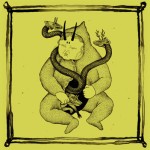
Irish folk music has spent the last decade wandering into stranger territories, but few records sound as though they were unearthed from beneath the floorboards of an abandoned chapel during a thunderstorm. "...And Take The Black Worm With Me", the remarkable solo work of Ian Lynch under his One Leg One Eye moniker, feels less like an album than a prolonged séance conducted with rusted instruments, decaying memories, and whatever spirits still linger in Dublin's forgotten industrial spaces.
Lynch is already known as a founding member of Lankum, a band that helped drag traditional Irish music away from tourist-pub nostalgia and into darker, more unsettling territory. Yet even listeners familiar with Lankum’s fascination for drone, repetition, and sonic abrasion may find themselves startled by the singular bleakness of this work. Critics frequently highlighted its ability to merge traditional song forms with immense walls of drone and blackened atmospherics, creating something simultaneously ancient and disturbingly contemporary.
The album opens with "Glistening, She Emerges", and immediately any expectation of conventional folk music is buried beneath layers of hurdy-gurdy resonance, uilleann pipe overtones, tape manipulations, and subterranean frequencies. The effect resembles entering a cave where someone has been singing continuously for centuries. Not singing for entertainment, mind you. Singing because stopping would awaken something unpleasant.
What makes "...And Take The Black Worm With Me" so compelling is its refusal to separate beauty from dread. Lynch understands that many old folk songs were never particularly interested in comforting anyone. Death, exile, ghosts, poverty, madness: these themes were not aesthetic accessories but daily realities. Rather than modernising traditional music, Lynch strips it back to its psychological core. Songs such as "Bold And Undaunted Youth" and "I'd Rather Be Tending My Sheep" feel suspended outside linear time, their melodies emerging through thick layers of echo and distortion like messages transmitted from a collapsing century.
The production by John Murphy deserves particular mention. Every drone seems alive. Every harmonic interaction vibrates with microscopic movement. The shruti box, concertina, field recordings, and tape textures form a continuously shifting environment where no sound remains stable for long. Even silence feels occupied. One gets the impression that the room itself is listening.
There is also something deeply physical about the album. Much contemporary drone music often ends up resembling architectural renderings: impressive structures that leave little emotional residue. Lynch's work is different. The frequencies feel bodily. They press against the chest. They resonate in the stomach. They occasionally produce the sensation that the building around you has developed opinions.
The contributions from Laurie Sue Shanaman and Ruth Clinton deepen the record's spectral character. Clinton's organ work in particular introduces a liturgical dimension that never fully resolves into either sacred or profane territory. The music exists somewhere between church, ruin, and dream.
What is perhaps most impressive is how personal the album feels despite its monumental scale. The field recordings captured in abandoned spaces, including the warehouse where Lynch's father once worked, infuse the music with a sense of inherited memory. The album becomes a dialogue between family history, Irish folklore, urban decay, and spiritual excavation. Several reviews noted how these environments seep directly into the atmosphere of the record, making place itself feel like an active participant.
The newly expanded Cold Spring edition, which adds the exclusive "Sympathetic Invertebrate Ritual", only reinforces the album's strange coherence. The title alone sounds like an occult ceremony accidentally approved by a local council committee. Yet within the context of this record, it feels perfectly natural.
If much contemporary folk seeks authenticity through preservation, "...And Take The Black Worm With Me" seeks it through transformation. Lynch treats tradition not as a museum object but as a living, mutating organism capable of absorbing drone music, black metal aesthetics, environmental sound, and existential unease without losing its essential character.
The result is one of those rare albums that feels simultaneously prehistoric and futuristic. It sounds like forgotten folklore being transmitted through damaged machinery. Like a ballad sung by a ghost operating heavy industrial equipment after the end of the world. And somehow, against all reasonable expectations, it is profoundly moving.
A harrowing, immersive, and strangely beautiful work that reminds us that beneath every folk tradition lies a darkness older than any nation, patiently waiting to sing again.
Lynch is already known as a founding member of Lankum, a band that helped drag traditional Irish music away from tourist-pub nostalgia and into darker, more unsettling territory. Yet even listeners familiar with Lankum’s fascination for drone, repetition, and sonic abrasion may find themselves startled by the singular bleakness of this work. Critics frequently highlighted its ability to merge traditional song forms with immense walls of drone and blackened atmospherics, creating something simultaneously ancient and disturbingly contemporary.
The album opens with "Glistening, She Emerges", and immediately any expectation of conventional folk music is buried beneath layers of hurdy-gurdy resonance, uilleann pipe overtones, tape manipulations, and subterranean frequencies. The effect resembles entering a cave where someone has been singing continuously for centuries. Not singing for entertainment, mind you. Singing because stopping would awaken something unpleasant.
What makes "...And Take The Black Worm With Me" so compelling is its refusal to separate beauty from dread. Lynch understands that many old folk songs were never particularly interested in comforting anyone. Death, exile, ghosts, poverty, madness: these themes were not aesthetic accessories but daily realities. Rather than modernising traditional music, Lynch strips it back to its psychological core. Songs such as "Bold And Undaunted Youth" and "I'd Rather Be Tending My Sheep" feel suspended outside linear time, their melodies emerging through thick layers of echo and distortion like messages transmitted from a collapsing century.
The production by John Murphy deserves particular mention. Every drone seems alive. Every harmonic interaction vibrates with microscopic movement. The shruti box, concertina, field recordings, and tape textures form a continuously shifting environment where no sound remains stable for long. Even silence feels occupied. One gets the impression that the room itself is listening.
There is also something deeply physical about the album. Much contemporary drone music often ends up resembling architectural renderings: impressive structures that leave little emotional residue. Lynch's work is different. The frequencies feel bodily. They press against the chest. They resonate in the stomach. They occasionally produce the sensation that the building around you has developed opinions.
The contributions from Laurie Sue Shanaman and Ruth Clinton deepen the record's spectral character. Clinton's organ work in particular introduces a liturgical dimension that never fully resolves into either sacred or profane territory. The music exists somewhere between church, ruin, and dream.
What is perhaps most impressive is how personal the album feels despite its monumental scale. The field recordings captured in abandoned spaces, including the warehouse where Lynch's father once worked, infuse the music with a sense of inherited memory. The album becomes a dialogue between family history, Irish folklore, urban decay, and spiritual excavation. Several reviews noted how these environments seep directly into the atmosphere of the record, making place itself feel like an active participant.
The newly expanded Cold Spring edition, which adds the exclusive "Sympathetic Invertebrate Ritual", only reinforces the album's strange coherence. The title alone sounds like an occult ceremony accidentally approved by a local council committee. Yet within the context of this record, it feels perfectly natural.
If much contemporary folk seeks authenticity through preservation, "...And Take The Black Worm With Me" seeks it through transformation. Lynch treats tradition not as a museum object but as a living, mutating organism capable of absorbing drone music, black metal aesthetics, environmental sound, and existential unease without losing its essential character.
The result is one of those rare albums that feels simultaneously prehistoric and futuristic. It sounds like forgotten folklore being transmitted through damaged machinery. Like a ballad sung by a ghost operating heavy industrial equipment after the end of the world. And somehow, against all reasonable expectations, it is profoundly moving.
A harrowing, immersive, and strangely beautiful work that reminds us that beneath every folk tradition lies a darkness older than any nation, patiently waiting to sing again.