
Browse by Genre
Industrial Music / Industrial Metal / Aggro Industrial / Electro Metal
Industrial Noise / Power Noise / Harsh Noise
Synth Pop / Electro Pop / Synth-Electronica
Techno / Trance / Goa / Drum'n'Bass / Jungle / Tribal / Trip-Hop
Ambient / Electronica / Ethereal / Dub / Soundscapes / Abstract
Experimental / Avantgarde / Weird & Wired / Glitch / Noise / Field Recording
Dark / Gothic / Wave / New Wave / Dark Wave / Industrial Gothic
New Music / Downtown / Avantgarde Jazz / New Classical / World
Search Reviews
Music Reviews
bod kin: s/t


There is a peculiar kind of ambition at work in this self titled album, the debut full-length under Dario Gatto’s bod kin alias. Not the ambition of scale, nor the grandiose urge to overwhelm through sheer volume. Rather, it is the ambition of someone attempting to build a machine from fragments while simultaneously documenting its collapse. A very human pastime, really: spending years assembling a structure only to discover that the cracks were part of the design all along.
Gatto, a Milan-based composer whose activities range from shoegaze-inflected electronics and live coding to electroacoustic composition, approaches sound here less as a sequence of events than as a field of unstable relationships. His academic background in contemporary composition is evident, yet "bod kin" never feels trapped inside the sterile glass cabinet where experimental music occasionally locks itself for safekeeping. Instead, these six tracks remain stubbornly alive, twitching, mutating and occasionally misbehaving.
The album’s conceptual core revolves around control and its inevitable failure. bod kin's own description speaks of attempting to harness an impossibly fluctuating sonic instinct, and that tension becomes audible from the opening moments. Beats appear as if assembled from damaged circuitry. Harmonic material emerges briefly through clouds of abrasion before being swallowed again by noise. Rhythms refuse stable footing. The music seems caught between architecture and erosion, as though every structure is being simultaneously designed and dismantled.
What makes this release particularly compelling is its refusal to choose between brutality and delicacy. Tracks like “fragile” and “fragment:passacaglia” suggest forms inherited from older musical traditions, but they arrive filtered through post-grime disintegration and industrial residue. The result is neither nostalgic nor futurist. It inhabits a strange middle ground where medieval ghosts, tracker software logic and broken bass frequencies appear to share the same cramped apartment.
The influence of the Dirtywave M8 tracker is more than a technical footnote. The album often feels composed from the inside of the machine itself, embracing the tracker’s grid-based mentality while constantly sabotaging its inherent rigidity. Sequences splinter into noisy cut-ups, abrupt edits become compositional gestures, and microscopic details acquire an almost disproportionate significance. Viewed from a distance, everything appears blurred; examined closely, every scratch and rupture acquires surgical sharpness.
Yet despite the album’s fascination with fragmentation, there is an emotional undercurrent running beneath the static. “cura:organo” in particular introduces a fleeting sense of vulnerability, as if some damaged sacred music had survived a catastrophic hard-drive failure. Even the closing “sctrr”, brief as it is, feels less like a conclusion than a transmission abruptly interrupted. Not because the story is unfinished, but because completion was never part of the project’s vocabulary.
There is a tendency among listeners to treat noise and power electronics as confrontational genres, forms of sonic hostility aimed at the audience. bod kin proposes something subtler. The aggression here is not directed outward. It is directed at certainty itself. Every texture challenges fixed interpretation. Every rhythm questions its own existence. Every moment seems aware that permanence is an illusion.
In that sense, the album functions almost as a musical essay on instability. Not an academic one, despite the intellectual framework surrounding it, but a deeply tactile and physical exploration of what happens when composition stops pretending that order can ever be complete. The album does not resolve its contradictions. It lives inside them.
For listeners seeking clean narratives, identifiable grooves or reassuring destinations, this record may feel like trying to read a map while someone continuously redraws the borders. For everyone else, this album offers a fascinating glimpse into a sound world where fragmentation becomes form, noise becomes language, and uncertainty becomes the only reliable guide. In an age obsessed with optimization and precision, there is something strangely refreshing about music that proudly admits it has no idea where it is going, yet somehow arrives exactly where it needs to be.
Gatto, a Milan-based composer whose activities range from shoegaze-inflected electronics and live coding to electroacoustic composition, approaches sound here less as a sequence of events than as a field of unstable relationships. His academic background in contemporary composition is evident, yet "bod kin" never feels trapped inside the sterile glass cabinet where experimental music occasionally locks itself for safekeeping. Instead, these six tracks remain stubbornly alive, twitching, mutating and occasionally misbehaving.
The album’s conceptual core revolves around control and its inevitable failure. bod kin's own description speaks of attempting to harness an impossibly fluctuating sonic instinct, and that tension becomes audible from the opening moments. Beats appear as if assembled from damaged circuitry. Harmonic material emerges briefly through clouds of abrasion before being swallowed again by noise. Rhythms refuse stable footing. The music seems caught between architecture and erosion, as though every structure is being simultaneously designed and dismantled.
What makes this release particularly compelling is its refusal to choose between brutality and delicacy. Tracks like “fragile” and “fragment:passacaglia” suggest forms inherited from older musical traditions, but they arrive filtered through post-grime disintegration and industrial residue. The result is neither nostalgic nor futurist. It inhabits a strange middle ground where medieval ghosts, tracker software logic and broken bass frequencies appear to share the same cramped apartment.
The influence of the Dirtywave M8 tracker is more than a technical footnote. The album often feels composed from the inside of the machine itself, embracing the tracker’s grid-based mentality while constantly sabotaging its inherent rigidity. Sequences splinter into noisy cut-ups, abrupt edits become compositional gestures, and microscopic details acquire an almost disproportionate significance. Viewed from a distance, everything appears blurred; examined closely, every scratch and rupture acquires surgical sharpness.
Yet despite the album’s fascination with fragmentation, there is an emotional undercurrent running beneath the static. “cura:organo” in particular introduces a fleeting sense of vulnerability, as if some damaged sacred music had survived a catastrophic hard-drive failure. Even the closing “sctrr”, brief as it is, feels less like a conclusion than a transmission abruptly interrupted. Not because the story is unfinished, but because completion was never part of the project’s vocabulary.
There is a tendency among listeners to treat noise and power electronics as confrontational genres, forms of sonic hostility aimed at the audience. bod kin proposes something subtler. The aggression here is not directed outward. It is directed at certainty itself. Every texture challenges fixed interpretation. Every rhythm questions its own existence. Every moment seems aware that permanence is an illusion.
In that sense, the album functions almost as a musical essay on instability. Not an academic one, despite the intellectual framework surrounding it, but a deeply tactile and physical exploration of what happens when composition stops pretending that order can ever be complete. The album does not resolve its contradictions. It lives inside them.
For listeners seeking clean narratives, identifiable grooves or reassuring destinations, this record may feel like trying to read a map while someone continuously redraws the borders. For everyone else, this album offers a fascinating glimpse into a sound world where fragmentation becomes form, noise becomes language, and uncertainty becomes the only reliable guide. In an age obsessed with optimization and precision, there is something strangely refreshing about music that proudly admits it has no idea where it is going, yet somehow arrives exactly where it needs to be.
One Leg One Eye: ...And Take The Black Worm With Me
Artist: One Leg One Eye
Title: ...And Take The Black Worm With Me
Format: CD + Download
Label: Cold Spring (@)
Rated:
Title: ...And Take The Black Worm With Me
Format: CD + Download
Label: Cold Spring (@)
Rated:
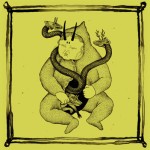
Irish folk music has spent the last decade wandering into stranger territories, but few records sound as though they were unearthed from beneath the floorboards of an abandoned chapel during a thunderstorm. "...And Take The Black Worm With Me", the remarkable solo work of Ian Lynch under his One Leg One Eye moniker, feels less like an album than a prolonged séance conducted with rusted instruments, decaying memories, and whatever spirits still linger in Dublin's forgotten industrial spaces.
Lynch is already known as a founding member of Lankum, a band that helped drag traditional Irish music away from tourist-pub nostalgia and into darker, more unsettling territory. Yet even listeners familiar with Lankum’s fascination for drone, repetition, and sonic abrasion may find themselves startled by the singular bleakness of this work. Critics frequently highlighted its ability to merge traditional song forms with immense walls of drone and blackened atmospherics, creating something simultaneously ancient and disturbingly contemporary.
The album opens with "Glistening, She Emerges", and immediately any expectation of conventional folk music is buried beneath layers of hurdy-gurdy resonance, uilleann pipe overtones, tape manipulations, and subterranean frequencies. The effect resembles entering a cave where someone has been singing continuously for centuries. Not singing for entertainment, mind you. Singing because stopping would awaken something unpleasant.
What makes "...And Take The Black Worm With Me" so compelling is its refusal to separate beauty from dread. Lynch understands that many old folk songs were never particularly interested in comforting anyone. Death, exile, ghosts, poverty, madness: these themes were not aesthetic accessories but daily realities. Rather than modernising traditional music, Lynch strips it back to its psychological core. Songs such as "Bold And Undaunted Youth" and "I'd Rather Be Tending My Sheep" feel suspended outside linear time, their melodies emerging through thick layers of echo and distortion like messages transmitted from a collapsing century.
The production by John Murphy deserves particular mention. Every drone seems alive. Every harmonic interaction vibrates with microscopic movement. The shruti box, concertina, field recordings, and tape textures form a continuously shifting environment where no sound remains stable for long. Even silence feels occupied. One gets the impression that the room itself is listening.
There is also something deeply physical about the album. Much contemporary drone music often ends up resembling architectural renderings: impressive structures that leave little emotional residue. Lynch's work is different. The frequencies feel bodily. They press against the chest. They resonate in the stomach. They occasionally produce the sensation that the building around you has developed opinions.
The contributions from Laurie Sue Shanaman and Ruth Clinton deepen the record's spectral character. Clinton's organ work in particular introduces a liturgical dimension that never fully resolves into either sacred or profane territory. The music exists somewhere between church, ruin, and dream.
What is perhaps most impressive is how personal the album feels despite its monumental scale. The field recordings captured in abandoned spaces, including the warehouse where Lynch's father once worked, infuse the music with a sense of inherited memory. The album becomes a dialogue between family history, Irish folklore, urban decay, and spiritual excavation. Several reviews noted how these environments seep directly into the atmosphere of the record, making place itself feel like an active participant.
The newly expanded Cold Spring edition, which adds the exclusive "Sympathetic Invertebrate Ritual", only reinforces the album's strange coherence. The title alone sounds like an occult ceremony accidentally approved by a local council committee. Yet within the context of this record, it feels perfectly natural.
If much contemporary folk seeks authenticity through preservation, "...And Take The Black Worm With Me" seeks it through transformation. Lynch treats tradition not as a museum object but as a living, mutating organism capable of absorbing drone music, black metal aesthetics, environmental sound, and existential unease without losing its essential character.
The result is one of those rare albums that feels simultaneously prehistoric and futuristic. It sounds like forgotten folklore being transmitted through damaged machinery. Like a ballad sung by a ghost operating heavy industrial equipment after the end of the world. And somehow, against all reasonable expectations, it is profoundly moving.
A harrowing, immersive, and strangely beautiful work that reminds us that beneath every folk tradition lies a darkness older than any nation, patiently waiting to sing again.
Lynch is already known as a founding member of Lankum, a band that helped drag traditional Irish music away from tourist-pub nostalgia and into darker, more unsettling territory. Yet even listeners familiar with Lankum’s fascination for drone, repetition, and sonic abrasion may find themselves startled by the singular bleakness of this work. Critics frequently highlighted its ability to merge traditional song forms with immense walls of drone and blackened atmospherics, creating something simultaneously ancient and disturbingly contemporary.
The album opens with "Glistening, She Emerges", and immediately any expectation of conventional folk music is buried beneath layers of hurdy-gurdy resonance, uilleann pipe overtones, tape manipulations, and subterranean frequencies. The effect resembles entering a cave where someone has been singing continuously for centuries. Not singing for entertainment, mind you. Singing because stopping would awaken something unpleasant.
What makes "...And Take The Black Worm With Me" so compelling is its refusal to separate beauty from dread. Lynch understands that many old folk songs were never particularly interested in comforting anyone. Death, exile, ghosts, poverty, madness: these themes were not aesthetic accessories but daily realities. Rather than modernising traditional music, Lynch strips it back to its psychological core. Songs such as "Bold And Undaunted Youth" and "I'd Rather Be Tending My Sheep" feel suspended outside linear time, their melodies emerging through thick layers of echo and distortion like messages transmitted from a collapsing century.
The production by John Murphy deserves particular mention. Every drone seems alive. Every harmonic interaction vibrates with microscopic movement. The shruti box, concertina, field recordings, and tape textures form a continuously shifting environment where no sound remains stable for long. Even silence feels occupied. One gets the impression that the room itself is listening.
There is also something deeply physical about the album. Much contemporary drone music often ends up resembling architectural renderings: impressive structures that leave little emotional residue. Lynch's work is different. The frequencies feel bodily. They press against the chest. They resonate in the stomach. They occasionally produce the sensation that the building around you has developed opinions.
The contributions from Laurie Sue Shanaman and Ruth Clinton deepen the record's spectral character. Clinton's organ work in particular introduces a liturgical dimension that never fully resolves into either sacred or profane territory. The music exists somewhere between church, ruin, and dream.
What is perhaps most impressive is how personal the album feels despite its monumental scale. The field recordings captured in abandoned spaces, including the warehouse where Lynch's father once worked, infuse the music with a sense of inherited memory. The album becomes a dialogue between family history, Irish folklore, urban decay, and spiritual excavation. Several reviews noted how these environments seep directly into the atmosphere of the record, making place itself feel like an active participant.
The newly expanded Cold Spring edition, which adds the exclusive "Sympathetic Invertebrate Ritual", only reinforces the album's strange coherence. The title alone sounds like an occult ceremony accidentally approved by a local council committee. Yet within the context of this record, it feels perfectly natural.
If much contemporary folk seeks authenticity through preservation, "...And Take The Black Worm With Me" seeks it through transformation. Lynch treats tradition not as a museum object but as a living, mutating organism capable of absorbing drone music, black metal aesthetics, environmental sound, and existential unease without losing its essential character.
The result is one of those rare albums that feels simultaneously prehistoric and futuristic. It sounds like forgotten folklore being transmitted through damaged machinery. Like a ballad sung by a ghost operating heavy industrial equipment after the end of the world. And somehow, against all reasonable expectations, it is profoundly moving.
A harrowing, immersive, and strangely beautiful work that reminds us that beneath every folk tradition lies a darkness older than any nation, patiently waiting to sing again.
T.C.O. (aka Mirco Magnani): The Die (special Edition)
Artist: T.C.O. (aka Mirco Magnani)
Title: The Die (special Edition)
Format: Download Only (MP3 only)
Label: Undogmatisch (@)
Rated:

Title: The Die (special Edition)
Format: Download Only (MP3 only)
Label: Undogmatisch (@)
Rated:
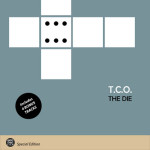
Originally released in 2010 via The Centrifuge and now revived by Undogmatisch, "The Die" sits in that slightly awkward historical pocket where digital production had already matured, but hadn’t yet been flattened by algorithmic sameness. You can hear it immediately: the textures are precise but not over-polished, the structures deliberate but not overly optimized for attention spans that barely exist anymore.
Magnani’s approach to electronic composition here feels almost architectural. Tracks like “PAIR” and “TRILUX” are built from clean, interlocking elements that suggest order without ever settling into predictability. There’s a faint electro pulse running through the record, but it’s constantly being nudged off-center by small disruptions, tonal shifts, rhythmic hesitations. It’s as if the music is testing its own balance, just to prove it doesn’t depend on stability.
“TWO BEASTS” and “OXIGENS” lean into a more kinetic energy, but even at their most propulsive, they resist becoming functional in the usual dancefloor sense. This isn’t music that wants to serve a crowd. It’s more interested in constructing a space and then quietly observing how you move inside it. Not exactly generous, but certainly consistent.
What makes this reissue worth your already overburdened attention is not nostalgia, but perspective. The additional remixes - produced by Magnani himself between 2010 and 2011 - don’t feel like afterthoughts. They act more like parallel drafts, alternate angles on the same set of ideas. You hear a producer circling his own material, testing elasticity, seeing how far a structure can be stretched before it loses coherence. Sometimes it nearly does. That’s part of the appeal.
There’s also a certain restraint throughout the record that feels almost unfashionable now. No excessive layering, no desperate need to fill every frequency. Space is allowed to exist, which in 2026 feels borderline radical. The tracks breathe, pause, reconsider. They don’t rush toward a payoff, which might frustrate anyone expecting immediate gratification. That sounds like a them problem.
Magnani’s broader trajectory - spanning experimental electronics and a steady, somewhat understated presence in the underground - makes "The Die" read less like an isolated statement and more like a foundational document. You can trace later tendencies in minimal electro and abstract techno back to this kind of thinking, even if no one is eager to admit it. Influence is rarely credited where it should be. Convenient, that.
In the end, this special edition doesn’t try to modernize the album. It doesn’t need to. If anything, it highlights how little the core ideas have aged. Precision, tension, and a mild distrust of obvious resolution still hold up. Annoyingly well, in fact.
So here it is again: not louder, not bigger, just quietly insisting on its place. You can ignore it, like most things that don’t shout. It won’t take it personally.
Magnani’s approach to electronic composition here feels almost architectural. Tracks like “PAIR” and “TRILUX” are built from clean, interlocking elements that suggest order without ever settling into predictability. There’s a faint electro pulse running through the record, but it’s constantly being nudged off-center by small disruptions, tonal shifts, rhythmic hesitations. It’s as if the music is testing its own balance, just to prove it doesn’t depend on stability.
“TWO BEASTS” and “OXIGENS” lean into a more kinetic energy, but even at their most propulsive, they resist becoming functional in the usual dancefloor sense. This isn’t music that wants to serve a crowd. It’s more interested in constructing a space and then quietly observing how you move inside it. Not exactly generous, but certainly consistent.
What makes this reissue worth your already overburdened attention is not nostalgia, but perspective. The additional remixes - produced by Magnani himself between 2010 and 2011 - don’t feel like afterthoughts. They act more like parallel drafts, alternate angles on the same set of ideas. You hear a producer circling his own material, testing elasticity, seeing how far a structure can be stretched before it loses coherence. Sometimes it nearly does. That’s part of the appeal.
There’s also a certain restraint throughout the record that feels almost unfashionable now. No excessive layering, no desperate need to fill every frequency. Space is allowed to exist, which in 2026 feels borderline radical. The tracks breathe, pause, reconsider. They don’t rush toward a payoff, which might frustrate anyone expecting immediate gratification. That sounds like a them problem.
Magnani’s broader trajectory - spanning experimental electronics and a steady, somewhat understated presence in the underground - makes "The Die" read less like an isolated statement and more like a foundational document. You can trace later tendencies in minimal electro and abstract techno back to this kind of thinking, even if no one is eager to admit it. Influence is rarely credited where it should be. Convenient, that.
In the end, this special edition doesn’t try to modernize the album. It doesn’t need to. If anything, it highlights how little the core ideas have aged. Precision, tension, and a mild distrust of obvious resolution still hold up. Annoyingly well, in fact.
So here it is again: not louder, not bigger, just quietly insisting on its place. You can ignore it, like most things that don’t shout. It won’t take it personally.
Daniel Szwed: Standard Cap
There’s a special category of “side projects” that artists describe as a "break", a palate cleanser, a moment of relief from more demanding work. "Standard Cap" by Daniel Szwed belongs to that category in theory. In practice, it sounds like the kind of break where you go outside to clear your head and end up shouting at the sky.
Originally released in a tiny tape edition - because of course it was - this second solo outing now resurfaces in a more accessible format via Rope Worm, still carrying the residue of its initial intention: something immediate, unfiltered, almost inconveniently direct. Conceived during sessions for the more elaborate "Sun’s Mother", it functions less as a companion piece and more as a deliberate stripping-down, like removing insulation just to see what kind of noise leaks through.
The setup is deceptively simple: drums, synths, vocals. No conceptual overload, no decorative excess. And yet, from the opening moments of “Standard Cap 1”, it’s clear that restraint here doesn’t mean minimalism in the polite sense. It means pressure. Repetition locks in quickly, rhythms hammer rather than groove, and the synth layers grind against them with a stubborn, metallic persistence.
Szwed’s approach to structure feels almost willfully blunt. Each of the six tracks sits around the same duration, titled with an efficiency that borders on indifference. No narrative cues, no emotional signposting. Just iteration. But within that repetition, small instabilities emerge - shifts in texture, slight ruptures in rhythm, moments where the system seems to falter before reasserting itself. It’s not evolution so much as controlled erosion.
The industrial and noise elements aren’t deployed as aesthetic markers so much as working conditions. This isn’t “influenced by” anything in a referential way; it’s built from the same logic: friction, density, refusal. The drums feel physical, almost claustrophobic, while the synths oscillate between drone and abrasion. Vocals, when they appear, are less communicative than symptomatic - signals of strain rather than carriers of meaning.
There’s something oddly methodical about the whole thing. Despite its rawness, "Standard Cap" never collapses into chaos. It holds its form with a kind of stubborn discipline, as if Szwed is testing how much repetition and distortion a structure can withstand before it loses coherence. The answer, apparently, is quite a lot.
The production - handled by a certain Jessica at Where is the Studio, according to release notes - maintains that balance between immediacy and control. Nothing feels overly polished, but nothing feels accidental either. It’s rough by design, not by limitation.
As a “mind refresher”, this is almost comically intense. If this is what Szwed does to relax, one can only assume the main project operates somewhere near tectonic levels of pressure. But that’s precisely what gives "Standard Cap" its peculiar clarity. By removing layers of intention, it reveals a core impulse: to push sound until it resists, then keep going.
It’s not inviting. It doesn’t pretend to be. But it is focused, consistent, and strangely honest in its refusal to offer anything beyond its own internal logic.
Six tracks, minimal variation, maximum insistence. A break, apparently.
Originally released in a tiny tape edition - because of course it was - this second solo outing now resurfaces in a more accessible format via Rope Worm, still carrying the residue of its initial intention: something immediate, unfiltered, almost inconveniently direct. Conceived during sessions for the more elaborate "Sun’s Mother", it functions less as a companion piece and more as a deliberate stripping-down, like removing insulation just to see what kind of noise leaks through.
The setup is deceptively simple: drums, synths, vocals. No conceptual overload, no decorative excess. And yet, from the opening moments of “Standard Cap 1”, it’s clear that restraint here doesn’t mean minimalism in the polite sense. It means pressure. Repetition locks in quickly, rhythms hammer rather than groove, and the synth layers grind against them with a stubborn, metallic persistence.
Szwed’s approach to structure feels almost willfully blunt. Each of the six tracks sits around the same duration, titled with an efficiency that borders on indifference. No narrative cues, no emotional signposting. Just iteration. But within that repetition, small instabilities emerge - shifts in texture, slight ruptures in rhythm, moments where the system seems to falter before reasserting itself. It’s not evolution so much as controlled erosion.
The industrial and noise elements aren’t deployed as aesthetic markers so much as working conditions. This isn’t “influenced by” anything in a referential way; it’s built from the same logic: friction, density, refusal. The drums feel physical, almost claustrophobic, while the synths oscillate between drone and abrasion. Vocals, when they appear, are less communicative than symptomatic - signals of strain rather than carriers of meaning.
There’s something oddly methodical about the whole thing. Despite its rawness, "Standard Cap" never collapses into chaos. It holds its form with a kind of stubborn discipline, as if Szwed is testing how much repetition and distortion a structure can withstand before it loses coherence. The answer, apparently, is quite a lot.
The production - handled by a certain Jessica at Where is the Studio, according to release notes - maintains that balance between immediacy and control. Nothing feels overly polished, but nothing feels accidental either. It’s rough by design, not by limitation.
As a “mind refresher”, this is almost comically intense. If this is what Szwed does to relax, one can only assume the main project operates somewhere near tectonic levels of pressure. But that’s precisely what gives "Standard Cap" its peculiar clarity. By removing layers of intention, it reveals a core impulse: to push sound until it resists, then keep going.
It’s not inviting. It doesn’t pretend to be. But it is focused, consistent, and strangely honest in its refusal to offer anything beyond its own internal logic.
Six tracks, minimal variation, maximum insistence. A break, apparently.
Łubin: Cargo
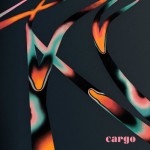
There’s something oddly reassuring about trains. Not the delays, obviously, or the existential dread of platform announcements, but the rhythm: that stubborn, repetitive insistence that something is moving forward, whether you understand the destination or not. Lubin builds "Cargo" entirely inside that logic, and then quietly dismantles it.
This third album is less about trains as objects and more about trains as systems of thought. Over nearly a year of field recordings and compositional work, Lubin reduces railway sound to its skeletal essence: pulses, friction, metallic breath. What remains is not documentary in the traditional sense, but something closer to an internalized infrastructure. The railway stops being a place and becomes a condition.
The track titles - "201 E", "ST 44", "TEM 2" - read like technical labels, almost bureaucratic in their precision. And yet the music they contain is anything but rigid. Beneath the mechanical naming lies a fluid, unstable sound world where glitchy electronics dissolve into field recordings and back again. It’s as if the machines themselves were trying to remember how they sound.
Opening pieces establish the central grammar: repetition as propulsion, texture as narrative. The rhythmic patterns mimic the cadence of wheels on tracks, but never settle into something comfortably loopable. There’s always a slight misalignment, a micro-hesitation that keeps the listener alert. You’re not riding the train. You’re listening from inside its nervous system.
What’s interesting is how "Cargo" avoids the obvious romanticism of travel. No sweeping vistas, no sentimental departures. Movement here is stripped of spectacle. It becomes cyclical, almost claustrophobic. The sense of journey is present, but without arrival. A loop rather than a line.
At times, the album drifts into something resembling a dream of industry: blurred edges, softened impacts, a kind of low-resolution memory of machinery. The glitch elements don’t disrupt so much as corrode, gently destabilizing the rhythmic grid. It’s minimalism, but with a faint anxiety running underneath, like a system that knows it might fail but keeps running anyway.
There’s a quiet intelligence in how Lubin handles time. Tracks stretch without feeling long, compress without feeling abrupt. The longest piece, "Newag 15D", unfolds like a slow recalibration of perception. By the end, rhythm no longer feels like something external. It has migrated inward, syncing with the body in a way that is slightly unsettling if you think about it too much.
If there’s humor here, it’s buried deep. The idea of turning freight trains into introspective, almost meditative compositions carries a certain dry absurdity. Industrial logistics reimagined as emotional cartography. Somewhere, a cargo manifest is being read as poetry.
What "Cargo" ultimately suggests is that infrastructure is never just functional. It accumulates memory, symbolism, even a kind of unconscious meaning. By focusing so closely on the sonic residue of railways, Lubin exposes the thin line between movement and stasis, between system and experience.
It’s not a journey in the traditional sense. More like being gently locked inside a moving mechanism and realizing, after a while, that you’ve started to breathe with it.
This third album is less about trains as objects and more about trains as systems of thought. Over nearly a year of field recordings and compositional work, Lubin reduces railway sound to its skeletal essence: pulses, friction, metallic breath. What remains is not documentary in the traditional sense, but something closer to an internalized infrastructure. The railway stops being a place and becomes a condition.
The track titles - "201 E", "ST 44", "TEM 2" - read like technical labels, almost bureaucratic in their precision. And yet the music they contain is anything but rigid. Beneath the mechanical naming lies a fluid, unstable sound world where glitchy electronics dissolve into field recordings and back again. It’s as if the machines themselves were trying to remember how they sound.
Opening pieces establish the central grammar: repetition as propulsion, texture as narrative. The rhythmic patterns mimic the cadence of wheels on tracks, but never settle into something comfortably loopable. There’s always a slight misalignment, a micro-hesitation that keeps the listener alert. You’re not riding the train. You’re listening from inside its nervous system.
What’s interesting is how "Cargo" avoids the obvious romanticism of travel. No sweeping vistas, no sentimental departures. Movement here is stripped of spectacle. It becomes cyclical, almost claustrophobic. The sense of journey is present, but without arrival. A loop rather than a line.
At times, the album drifts into something resembling a dream of industry: blurred edges, softened impacts, a kind of low-resolution memory of machinery. The glitch elements don’t disrupt so much as corrode, gently destabilizing the rhythmic grid. It’s minimalism, but with a faint anxiety running underneath, like a system that knows it might fail but keeps running anyway.
There’s a quiet intelligence in how Lubin handles time. Tracks stretch without feeling long, compress without feeling abrupt. The longest piece, "Newag 15D", unfolds like a slow recalibration of perception. By the end, rhythm no longer feels like something external. It has migrated inward, syncing with the body in a way that is slightly unsettling if you think about it too much.
If there’s humor here, it’s buried deep. The idea of turning freight trains into introspective, almost meditative compositions carries a certain dry absurdity. Industrial logistics reimagined as emotional cartography. Somewhere, a cargo manifest is being read as poetry.
What "Cargo" ultimately suggests is that infrastructure is never just functional. It accumulates memory, symbolism, even a kind of unconscious meaning. By focusing so closely on the sonic residue of railways, Lubin exposes the thin line between movement and stasis, between system and experience.
It’s not a journey in the traditional sense. More like being gently locked inside a moving mechanism and realizing, after a while, that you’ve started to breathe with it.