
Wednesday, June 10, 2026
Browse by Genre
Industrial Music / Industrial Metal / Aggro Industrial / Electro Metal
Industrial Noise / Power Noise / Harsh Noise
Synth Pop / Electro Pop / Synth-Electronica
Techno / Trance / Goa / Drum'n'Bass / Jungle / Tribal / Trip-Hop
Ambient / Electronica / Ethereal / Dub / Soundscapes / Abstract
Experimental / Avantgarde / Weird & Wired / Glitch / Noise / Field Recording
Dark / Gothic / Wave / New Wave / Dark Wave / Industrial Gothic
New Music / Downtown / Avantgarde Jazz / New Classical / World
Search Reviews
Music Reviews
Stabbed by Prongs: Static Skin
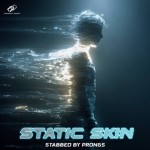
Artist: Stabbed by Prongs (@)
Title: Static Skin
Format: Download Only (MP3 + Lossless)
Label: self-released
Rated:


Title: Static Skin
Format: Download Only (MP3 + Lossless)
Label: self-released
Rated:
There is a long tradition in industrial music of treating human relationships as collateral damage. Machines grind, cities decay, systems collapse, and somewhere in the background a couple is having a very bad conversation under fluorescent lighting. "Static Skin", the second full-length release from Stabbed By Prongs, turns that perspective inside out. The machinery remains, humming ominously beneath the surface, but the real fractures occur between people.
Stabbed By Prongs is the studio project of Buffalo-based musician and producer Craig Drabik. After years spent playing in various bands before stepping away from music, he returned to creative work during the pandemic, channeling both personal reflection and the broader social unease of the period into a dark electronic project. While the DNA of industrial heavyweights and 1990s electronic acts remains present, "Static Skin" feels less like an exercise in genre revival and more like an attempt to explore emotional vulnerabilities through mechanical means.
The album thrives on contrast. EBM-driven percussion collides with electro textures, industrial grit meets moments of unexpected warmth, and a rotating cast of vocalists continually shifts the emotional perspective. Rather than presenting a single narrator, the record unfolds like a collection of interconnected viewpoints, each illuminating a different facet of intimacy, insecurity, longing, or disillusionment.
Opening track "Corpus" establishes the album's psychological territory immediately. Beneath its darkly seductive atmosphere lies a portrait of uncertainty and self-doubt. The music projects strength while simultaneously revealing the cracks underneath, creating a tension that becomes one of the album's defining characteristics.
"Another Realm" follows with a more melancholic tone, exploring emotional distance in an age where communication has never been easier and genuine connection often feels strangely elusive. The track captures the peculiar loneliness of trying to maintain closeness across invisible barriers, transforming digital-era intimacy into something both hopeful and fragile.
One of the album's greatest strengths is its use of multiple vocalists. Returning collaborators Ry White, Andy Breton, Kimberly Kornmeier, and Lail Brown each bring distinct personalities to the material, while Gabrielle Emerson's contribution adds a fresh dimension. Their varied performances prevent the album from becoming emotionally monochromatic, allowing each track to occupy its own psychological landscape.
The expansive "Pyromancer" provides one of the record's most intriguing detours. Moving away from straightforward industrial aggression, it drifts into a hypnotic electro-trip-hop environment where atmosphere becomes as important as rhythm. The track unfolds gradually, less interested in immediate impact than in creating a slow-burning sense of immersion.
Elsewhere, "Violent Delights" examines the corrosive dynamics of manipulation and emotional control. Rather than depicting conflict as explosive drama, the song presents it as something methodical and consuming, a process that quietly reshapes ident. The longing expressed here is not entirely comforting; it exists alongside the risk of losing oneself in another person. That ambiguity gives the finale its power. The album repeatedly returns to the idea that intimacy can be both refuge and threat, sanctuary and erosion.
What makes "Static Skin" particularly effective is its refusal to choose between emotional honesty and dancefloor energy. The rhythms remain kinetic, often forceful, yet the record's real momentum comes from its exploration of human connection. Every beat seems to push outward while every lyric pulls inward.
The result is an album that understands a curious truth about industrial and dark electronic music: beneath the machinery, beneath the distortion, beneath the synthetic surfaces, there is often a deeply human concern. "Static Skin" embraces that contradiction. It is an album of hard edges surrounding fragile emotions, a collection of songs where movement and introspection coexist without cancelling one another out.
Rather than merely revisiting the sounds of classic industrial and electro traditions, Stabbed By Prongs uses them as a framework for examining contemporary anxieties about identity, trust, and connection. The record leaves behind a lingering impression that the most complex systems are not technological at all, but emotional. Those systems are messy, unpredictable, and prone to failure. They are also the reason albums like "Static Skin" resonate long after the final beat fades.
Stabbed By Prongs is the studio project of Buffalo-based musician and producer Craig Drabik. After years spent playing in various bands before stepping away from music, he returned to creative work during the pandemic, channeling both personal reflection and the broader social unease of the period into a dark electronic project. While the DNA of industrial heavyweights and 1990s electronic acts remains present, "Static Skin" feels less like an exercise in genre revival and more like an attempt to explore emotional vulnerabilities through mechanical means.
The album thrives on contrast. EBM-driven percussion collides with electro textures, industrial grit meets moments of unexpected warmth, and a rotating cast of vocalists continually shifts the emotional perspective. Rather than presenting a single narrator, the record unfolds like a collection of interconnected viewpoints, each illuminating a different facet of intimacy, insecurity, longing, or disillusionment.
Opening track "Corpus" establishes the album's psychological territory immediately. Beneath its darkly seductive atmosphere lies a portrait of uncertainty and self-doubt. The music projects strength while simultaneously revealing the cracks underneath, creating a tension that becomes one of the album's defining characteristics.
"Another Realm" follows with a more melancholic tone, exploring emotional distance in an age where communication has never been easier and genuine connection often feels strangely elusive. The track captures the peculiar loneliness of trying to maintain closeness across invisible barriers, transforming digital-era intimacy into something both hopeful and fragile.
One of the album's greatest strengths is its use of multiple vocalists. Returning collaborators Ry White, Andy Breton, Kimberly Kornmeier, and Lail Brown each bring distinct personalities to the material, while Gabrielle Emerson's contribution adds a fresh dimension. Their varied performances prevent the album from becoming emotionally monochromatic, allowing each track to occupy its own psychological landscape.
The expansive "Pyromancer" provides one of the record's most intriguing detours. Moving away from straightforward industrial aggression, it drifts into a hypnotic electro-trip-hop environment where atmosphere becomes as important as rhythm. The track unfolds gradually, less interested in immediate impact than in creating a slow-burning sense of immersion.
Elsewhere, "Violent Delights" examines the corrosive dynamics of manipulation and emotional control. Rather than depicting conflict as explosive drama, the song presents it as something methodical and consuming, a process that quietly reshapes ident. The longing expressed here is not entirely comforting; it exists alongside the risk of losing oneself in another person. That ambiguity gives the finale its power. The album repeatedly returns to the idea that intimacy can be both refuge and threat, sanctuary and erosion.
What makes "Static Skin" particularly effective is its refusal to choose between emotional honesty and dancefloor energy. The rhythms remain kinetic, often forceful, yet the record's real momentum comes from its exploration of human connection. Every beat seems to push outward while every lyric pulls inward.
The result is an album that understands a curious truth about industrial and dark electronic music: beneath the machinery, beneath the distortion, beneath the synthetic surfaces, there is often a deeply human concern. "Static Skin" embraces that contradiction. It is an album of hard edges surrounding fragile emotions, a collection of songs where movement and introspection coexist without cancelling one another out.
Rather than merely revisiting the sounds of classic industrial and electro traditions, Stabbed By Prongs uses them as a framework for examining contemporary anxieties about identity, trust, and connection. The record leaves behind a lingering impression that the most complex systems are not technological at all, but emotional. Those systems are messy, unpredictable, and prone to failure. They are also the reason albums like "Static Skin" resonate long after the final beat fades.
Dekad: A Distorted View
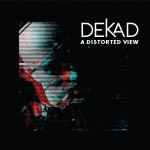
Before writing anything about Dekad’s new album, I would like to express my solidarity with BOREDOMproduct, which had to suspend its label activities for a year after being affected by the wildfire that struck a vast area of Marseille in the summer of 2025. That said, let’s turn to J.B. Lacassagne’s project, here assisted by Member U-0176 on production. The new album A Distorted View arrives four years after Nowhere Lines and three years after Videodrama, the album by The Overlookers, a project formed by J.B. together with Creature XY of Foretaste. A Distorted View finds its strength in the instrumental department, where E.B.M. and synth-pop blend as if it were a collaboration between Depeche Mode’s Black Celebration era and early And One (I’m not sure why, but the track “I Should Have” particularly brought this comparison to mind). The sounds are never banal, and the rhythmic sections are meticulously crafted: instead of standard kick and snare patterns, you’ll often hear processed and modified percussive elements. This richness intertwines beautifully with the synth textures, creating a never-dull sonic tapestry that shifts with each track. In my opinion, this is the album’s greatest asset, along with its consistently catchy and inventive melodies. Lyrically, rather than depicting specific situations, the songs explore emotional states that highlight the fragility and uncertainty of the human psyche during personal crises triggered by relationships or social circumstances. To give you an idea, here’s an excerpt from “Crystal”: “Reality’s collapsing / My mind slowly fracturing / Shadows in the corner of my eyes / Whispers linger in my ears / Fading illusion / Broken confusion / In a distorted state / Nothing is ever straight". The only "weak" point lies in the vocal delivery, which remains within a fairly narrow harmonic range throughout the album. This makes the voice sound somewhat uniform from track to track. This is the reason why I’m deducting half a point from my overall score. Nevertheless, A Distorted View is undoubtedly an album that deserves your attention.
The Fair Attempts: Null Guide
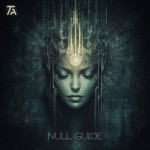
Artist: The Fair Attempts
Title: Null Guide
Format: Download Only (MP3 + Lossless)
Label: Starwing Digital
Rated:
Title: Null Guide
Format: Download Only (MP3 + Lossless)
Label: Starwing Digital
Rated:
If you’re looking for comfort, "Null Guide" is not your album. It doesn’t soothe, it doesn’t reassure, and it certainly doesn’t pretend things are fine. It stands there, arms crossed, pointing at the cracks in the walls and asking why you’re still calling it a house.
The Fair Attempts, the project of Timo Haakana and Starwing, has always operated with a strong conceptual backbone, but here that framework hardens into something closer to a manifesto. Their dystopian universe, already mapped out in fragments across earlier works and Starwing’s writing, becomes less speculative and more diagnostic. This is no longer “a possible future.” It feels like a report written from inside the present, just with the politeness stripped away.
Musically, the record plants itself firmly in the intersection of industrial rock, EBM, and darkwave, but it’s not interested in nostalgia. The machinery is familiar, sure: pounding rhythms, serrated synth lines, vocals that oscillate between command and collapse. But there’s a certain exhaustion baked into the production, as if the system keeps running not because it works, but because no one knows how to shut it down.
The opening tracks waste no time setting the tone. "Nothing’s Gonna Be Alright" is about as subtle as a siren in a concrete tunnel. It leans into repetition not just as a hook, but as a psychological tactic, hammering the same phrase until it stops feeling like a statement and starts sounding like a condition. There’s a strange clarity in that bluntness. No metaphors to hide behind, just a flat refusal of optimism.
"Freedom’s Just a Word You Say" sharpens the critique, dissecting language itself as a tool of control. The lyrics flirt with Orwellian territory, but without the academic distance. This isn’t theory, it’s lived disorientation. Words lose their anchor, meanings slip, and what’s left is a kind of semantic fatigue. The music mirrors that instability, shifting between tight, almost danceable structures and moments that feel deliberately off-balance.
By the time "Ghost Within" arrives, the focus turns inward. The external dystopia folds into something more psychological, more intimate. The “enemy” is no longer just systemic; it’s internalized, parasitic. The track plays like a quiet admission that the line between oppression and self-sabotage is thinner than anyone would like to admit.
Mid-album, "Never Again" and "It’s All Fraud" push the nihilistic thread to its logical extreme. Here, the record risks collapsing under its own weight, flirting with total negation. But instead of becoming monotonous, it gains a strange momentum. The refusal of meaning becomes its own kind of meaning, a negative space that the listener is forced to navigate. It’s not pleasant, but it is effective.
There’s also a certain dark humor lurking beneath the surface, though you have to be paying attention to catch it. Lines that verge on the absurd, exaggerated hostility, the almost theatrical intensity. It’s as if the album is aware of how far it’s pushing things and occasionally smirks at its own severity. Not enough to break the mood, just enough to keep it from becoming self-parody.
"Shadowplay" and "Anniversary of Our Destruction" expand the album’s scope again, reconnecting the personal and the societal. Time loops, cycles repeat, nothing resolves. The sense of déjà vu isn’t accidental. It’s structural. You’re not moving forward; you’re circling a drain that looks suspiciously like history.
The title track, "Null Guide", functions as a kind of thesis. Guidance, in this world, is either absent or corrupted. The idea of an external compass is dismantled, replaced by something more ambiguous: an inward turn that may or may not lead anywhere useful. It’s one of the few moments where the album allows a hint of ambiguity that isn’t immediately crushed.
By the closing stretch, particularly "The Curse" and "Inward", the record has stripped itself down to something raw and exposed. The aggression hasn’t disappeared, but it’s been internalized. What began as confrontation ends as introspection, though not the comforting kind. More like staring into a mirror that refuses to flatter you.
What makes "Null Guide" compelling isn’t just its sonic force, but its refusal to offer easy exits. Many records in this space gesture toward darkness as an aesthetic. Here, it feels structural, almost philosophical. The band isn’t asking you to agree, exactly. They’re asking you to sit with the discomfort long enough to recognize parts of it.
It’s not a fun listen, unless your idea of fun involves existential dread set to a very steady beat. But it is a coherent one. And in a landscape where meaning is often diluted into background noise, there’s something almost refreshing about an album that insists, repeatedly, that the signal is still there. You just might not like what it’s saying.
The Fair Attempts, the project of Timo Haakana and Starwing, has always operated with a strong conceptual backbone, but here that framework hardens into something closer to a manifesto. Their dystopian universe, already mapped out in fragments across earlier works and Starwing’s writing, becomes less speculative and more diagnostic. This is no longer “a possible future.” It feels like a report written from inside the present, just with the politeness stripped away.
Musically, the record plants itself firmly in the intersection of industrial rock, EBM, and darkwave, but it’s not interested in nostalgia. The machinery is familiar, sure: pounding rhythms, serrated synth lines, vocals that oscillate between command and collapse. But there’s a certain exhaustion baked into the production, as if the system keeps running not because it works, but because no one knows how to shut it down.
The opening tracks waste no time setting the tone. "Nothing’s Gonna Be Alright" is about as subtle as a siren in a concrete tunnel. It leans into repetition not just as a hook, but as a psychological tactic, hammering the same phrase until it stops feeling like a statement and starts sounding like a condition. There’s a strange clarity in that bluntness. No metaphors to hide behind, just a flat refusal of optimism.
"Freedom’s Just a Word You Say" sharpens the critique, dissecting language itself as a tool of control. The lyrics flirt with Orwellian territory, but without the academic distance. This isn’t theory, it’s lived disorientation. Words lose their anchor, meanings slip, and what’s left is a kind of semantic fatigue. The music mirrors that instability, shifting between tight, almost danceable structures and moments that feel deliberately off-balance.
By the time "Ghost Within" arrives, the focus turns inward. The external dystopia folds into something more psychological, more intimate. The “enemy” is no longer just systemic; it’s internalized, parasitic. The track plays like a quiet admission that the line between oppression and self-sabotage is thinner than anyone would like to admit.
Mid-album, "Never Again" and "It’s All Fraud" push the nihilistic thread to its logical extreme. Here, the record risks collapsing under its own weight, flirting with total negation. But instead of becoming monotonous, it gains a strange momentum. The refusal of meaning becomes its own kind of meaning, a negative space that the listener is forced to navigate. It’s not pleasant, but it is effective.
There’s also a certain dark humor lurking beneath the surface, though you have to be paying attention to catch it. Lines that verge on the absurd, exaggerated hostility, the almost theatrical intensity. It’s as if the album is aware of how far it’s pushing things and occasionally smirks at its own severity. Not enough to break the mood, just enough to keep it from becoming self-parody.
"Shadowplay" and "Anniversary of Our Destruction" expand the album’s scope again, reconnecting the personal and the societal. Time loops, cycles repeat, nothing resolves. The sense of déjà vu isn’t accidental. It’s structural. You’re not moving forward; you’re circling a drain that looks suspiciously like history.
The title track, "Null Guide", functions as a kind of thesis. Guidance, in this world, is either absent or corrupted. The idea of an external compass is dismantled, replaced by something more ambiguous: an inward turn that may or may not lead anywhere useful. It’s one of the few moments where the album allows a hint of ambiguity that isn’t immediately crushed.
By the closing stretch, particularly "The Curse" and "Inward", the record has stripped itself down to something raw and exposed. The aggression hasn’t disappeared, but it’s been internalized. What began as confrontation ends as introspection, though not the comforting kind. More like staring into a mirror that refuses to flatter you.
What makes "Null Guide" compelling isn’t just its sonic force, but its refusal to offer easy exits. Many records in this space gesture toward darkness as an aesthetic. Here, it feels structural, almost philosophical. The band isn’t asking you to agree, exactly. They’re asking you to sit with the discomfort long enough to recognize parts of it.
It’s not a fun listen, unless your idea of fun involves existential dread set to a very steady beat. But it is a coherent one. And in a landscape where meaning is often diluted into background noise, there’s something almost refreshing about an album that insists, repeatedly, that the signal is still there. You just might not like what it’s saying.
CYLiX: Beta Life

Titles matter. They’re the first small lie or truth a record tells you. Calling an album "Beta Life" suggests transition, instability, a version not quite finished. Which is either refreshingly honest or a clever way to excuse your flaws in advance. Fortunately, CYLiX don’t hide behind the concept. They lean into it.
Based in Athens, the trio - Harry G on vocals, plasmaG on keyboards, Elias C. on drums - arrive here after a debut that already positioned them within the darker corners of synthpop and EBM. Their trajectory isn’t accidental. Collaborations, remixes, festival appearances, the slow accumulation of credibility within a scene that tends to remember everything and forgive very little. "Beta Life" feels like the moment where that groundwork either crystallizes or collapses. Thankfully, it chooses the former.
“Devotion” opens with a familiar grammar: pulsing electronics, melodic restraint, a voice that balances between detachment and longing. It doesn’t try to reinvent the genre, which is probably wise. Instead, it sharpens it. There’s a clarity in the production that suggests lessons learned from the lineage of bands orbiting Front 242, particularly in how rhythm and atmosphere negotiate space.
“End Of Decay” and “As if I Had Your Wings” deepen that approach, layering emotional directness over structured electronic frameworks. CYLiX understand something crucial: in this territory, excess kills tension. So they hold back just enough. Melodies are present but not overindulgent, hooks emerge but don’t insist on being remembered forever. It’s a controlled burn.
“In this Prison” and “A Dying Love” lean more heavily into the thematic core. There’s a persistent sense of confinement, emotional and psychological, that runs through the album. Not in a theatrical, gothic way, but in something closer to quiet endurance. The kind of sadness that doesn’t perform, it just stays.
“Distorted Memories” and “Broken” play with texture and structure, introducing subtle variations that prevent the album from flattening into uniformity. These are not radical departures, but small shifts in tone and pacing that suggest a band aware of its own boundaries and willing to test them without breaking the frame entirely.
By the time “Endless Skies” arrives, there’s a hint of expansion, a slight opening in what has been a fairly enclosed emotional landscape. It doesn’t resolve anything, but it offers perspective, which is sometimes the closest thing to relief this kind of music allows.
The closing stretch - “Always never”, “Spent”, “Down the Drain” - returns to a more introspective space, though by now the album’s logic is clear. This is not about transformation in a dramatic sense. It’s about persistence, about continuing within a state rather than escaping it.
What "Beta Life" does well is avoid the trap of nostalgia as mere imitation. Yes, the DNA of classic synthpop and EBM is present, unavoidable even. But CYLiX treat it as a framework, not a script. There are echoes of the past, but they’re filtered through a contemporary sensibility that favors precision over excess.
Is it groundbreaking? Not particularly. But it doesn’t need to be. It’s coherent, focused, and emotionally consistent, which in a genre often caught between homage and stagnation is already a small achievement.
“Beta” implies something unfinished. Here, it feels more like a state of becoming. Not quite resolved, not entirely stable, but moving forward anyway. Which, if we’re being honest, is about as accurate a description of life as you’re going to get from a synthpop record.
Based in Athens, the trio - Harry G on vocals, plasmaG on keyboards, Elias C. on drums - arrive here after a debut that already positioned them within the darker corners of synthpop and EBM. Their trajectory isn’t accidental. Collaborations, remixes, festival appearances, the slow accumulation of credibility within a scene that tends to remember everything and forgive very little. "Beta Life" feels like the moment where that groundwork either crystallizes or collapses. Thankfully, it chooses the former.
“Devotion” opens with a familiar grammar: pulsing electronics, melodic restraint, a voice that balances between detachment and longing. It doesn’t try to reinvent the genre, which is probably wise. Instead, it sharpens it. There’s a clarity in the production that suggests lessons learned from the lineage of bands orbiting Front 242, particularly in how rhythm and atmosphere negotiate space.
“End Of Decay” and “As if I Had Your Wings” deepen that approach, layering emotional directness over structured electronic frameworks. CYLiX understand something crucial: in this territory, excess kills tension. So they hold back just enough. Melodies are present but not overindulgent, hooks emerge but don’t insist on being remembered forever. It’s a controlled burn.
“In this Prison” and “A Dying Love” lean more heavily into the thematic core. There’s a persistent sense of confinement, emotional and psychological, that runs through the album. Not in a theatrical, gothic way, but in something closer to quiet endurance. The kind of sadness that doesn’t perform, it just stays.
“Distorted Memories” and “Broken” play with texture and structure, introducing subtle variations that prevent the album from flattening into uniformity. These are not radical departures, but small shifts in tone and pacing that suggest a band aware of its own boundaries and willing to test them without breaking the frame entirely.
By the time “Endless Skies” arrives, there’s a hint of expansion, a slight opening in what has been a fairly enclosed emotional landscape. It doesn’t resolve anything, but it offers perspective, which is sometimes the closest thing to relief this kind of music allows.
The closing stretch - “Always never”, “Spent”, “Down the Drain” - returns to a more introspective space, though by now the album’s logic is clear. This is not about transformation in a dramatic sense. It’s about persistence, about continuing within a state rather than escaping it.
What "Beta Life" does well is avoid the trap of nostalgia as mere imitation. Yes, the DNA of classic synthpop and EBM is present, unavoidable even. But CYLiX treat it as a framework, not a script. There are echoes of the past, but they’re filtered through a contemporary sensibility that favors precision over excess.
Is it groundbreaking? Not particularly. But it doesn’t need to be. It’s coherent, focused, and emotionally consistent, which in a genre often caught between homage and stagnation is already a small achievement.
“Beta” implies something unfinished. Here, it feels more like a state of becoming. Not quite resolved, not entirely stable, but moving forward anyway. Which, if we’re being honest, is about as accurate a description of life as you’re going to get from a synthpop record.
Nullgrim: Black Key
Artist: Nullgrim (@)
Title: Black Key
Format: Download Only (MP3 + Lossless)
Label: Inner Demons Records
Title: Black Key
Format: Download Only (MP3 + Lossless)
Label: Inner Demons Records
I was unfamiliar with this artist, but they hail from Moscow, Russia and describe themselves as a "Dark techno project." The label describes the release thus: "This project is a dreamy, hazy nightmare that tells the story of the real and virtual worlds of the post-apocalyptic Soviet Union after nuclear war. It explores abandoned networks filled with sentient remnants of once-human inhabitants, introduces posthuman horrors, and leaves the listener with a hypnotic, eerie, and slightly unsettling taste." Well, let's give it a listen and see what we have here.
I am old enough to remember duck and cover drills and living with the specter of nuclear holocaust hanging over us. This release consists of one 3-minute track, "Black Key," and the music is nowhere as bleak as what I was expecting. This is some good heavy, melodic techno-industrial. If you miss the mixture of industrial and goth that Cleopatra Records used to throw down, this may scratch that itch. This makes me want to hear more from the artist, which is always a good start.
I am old enough to remember duck and cover drills and living with the specter of nuclear holocaust hanging over us. This release consists of one 3-minute track, "Black Key," and the music is nowhere as bleak as what I was expecting. This is some good heavy, melodic techno-industrial. If you miss the mixture of industrial and goth that Cleopatra Records used to throw down, this may scratch that itch. This makes me want to hear more from the artist, which is always a good start.